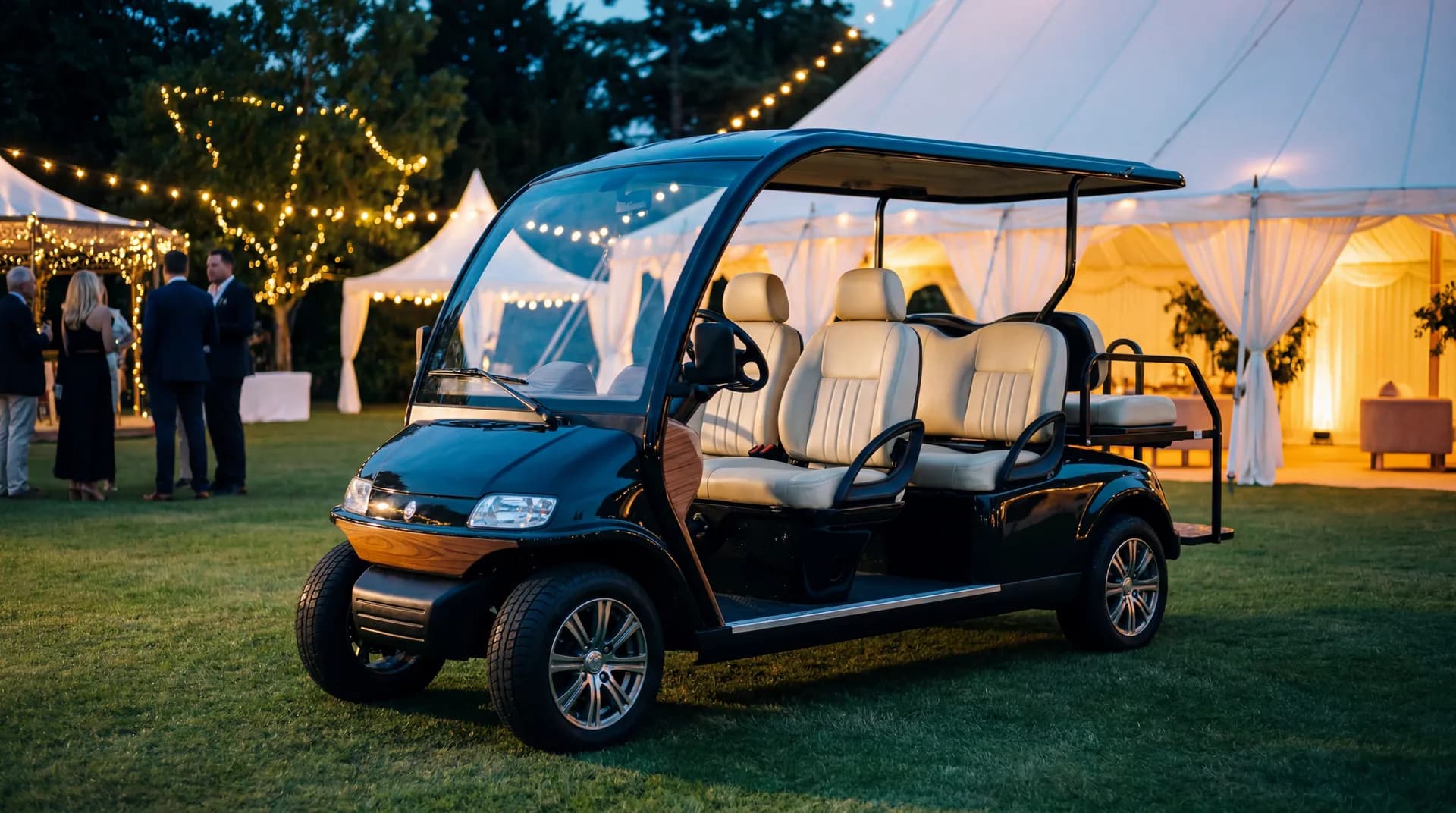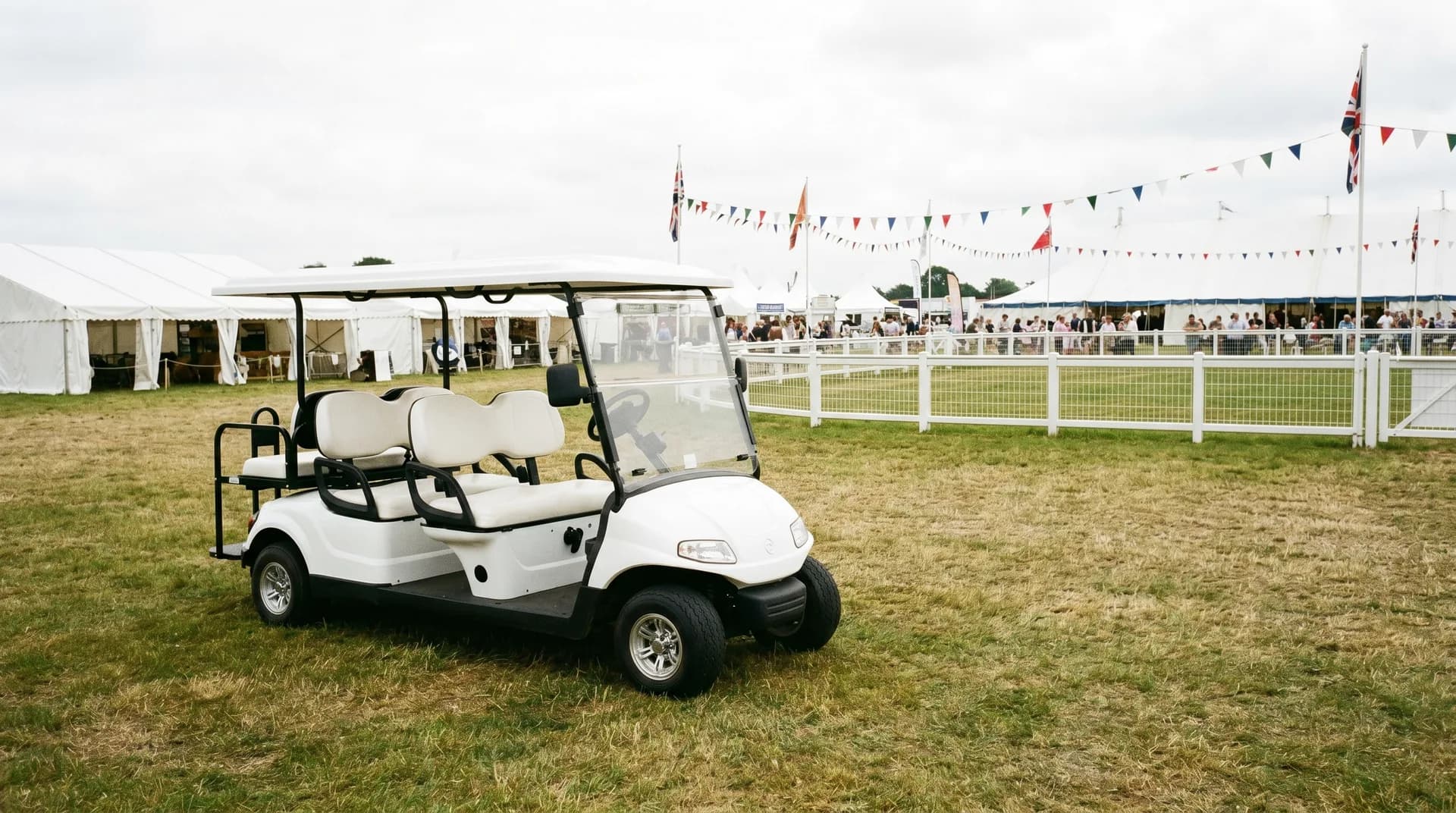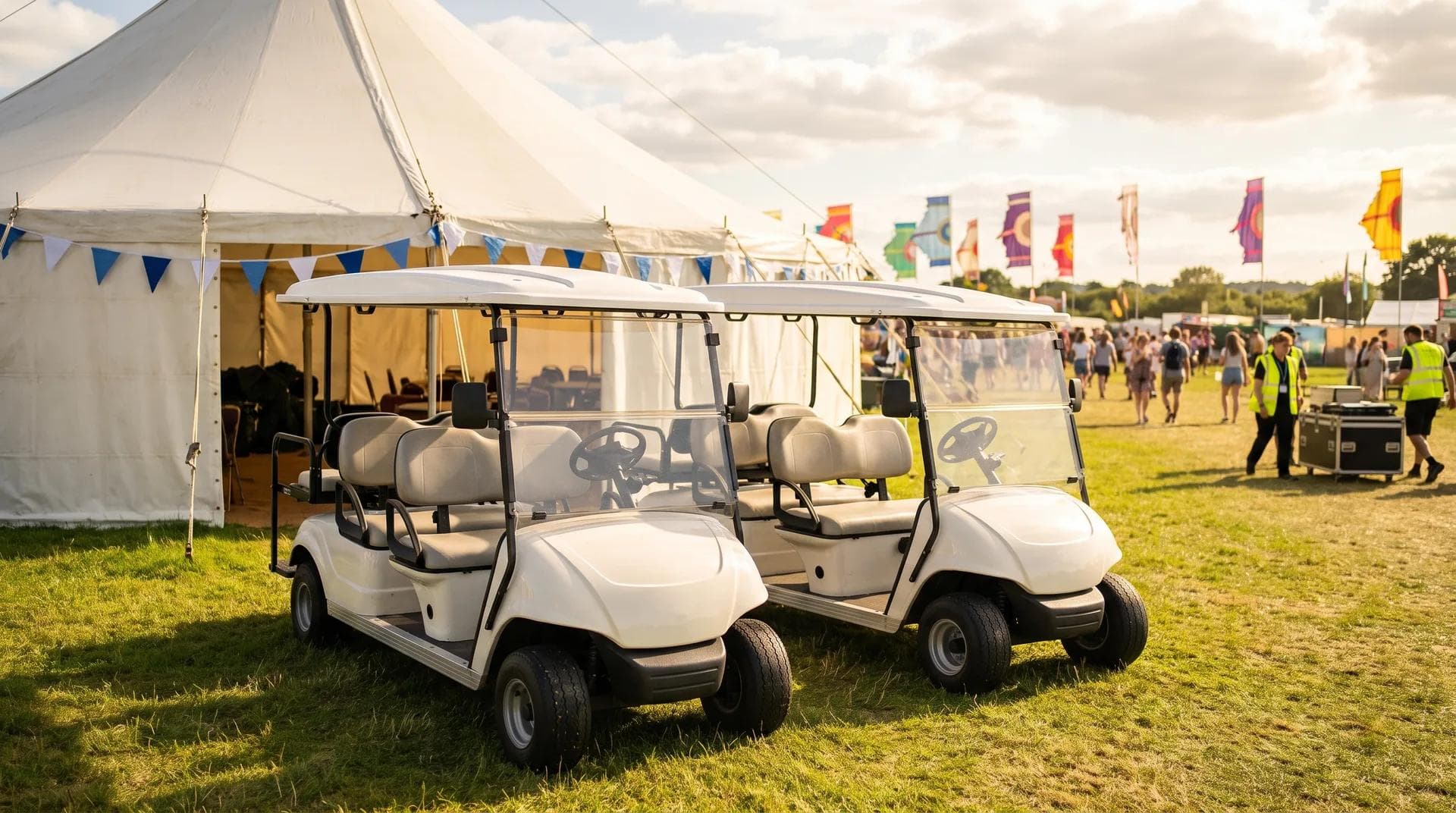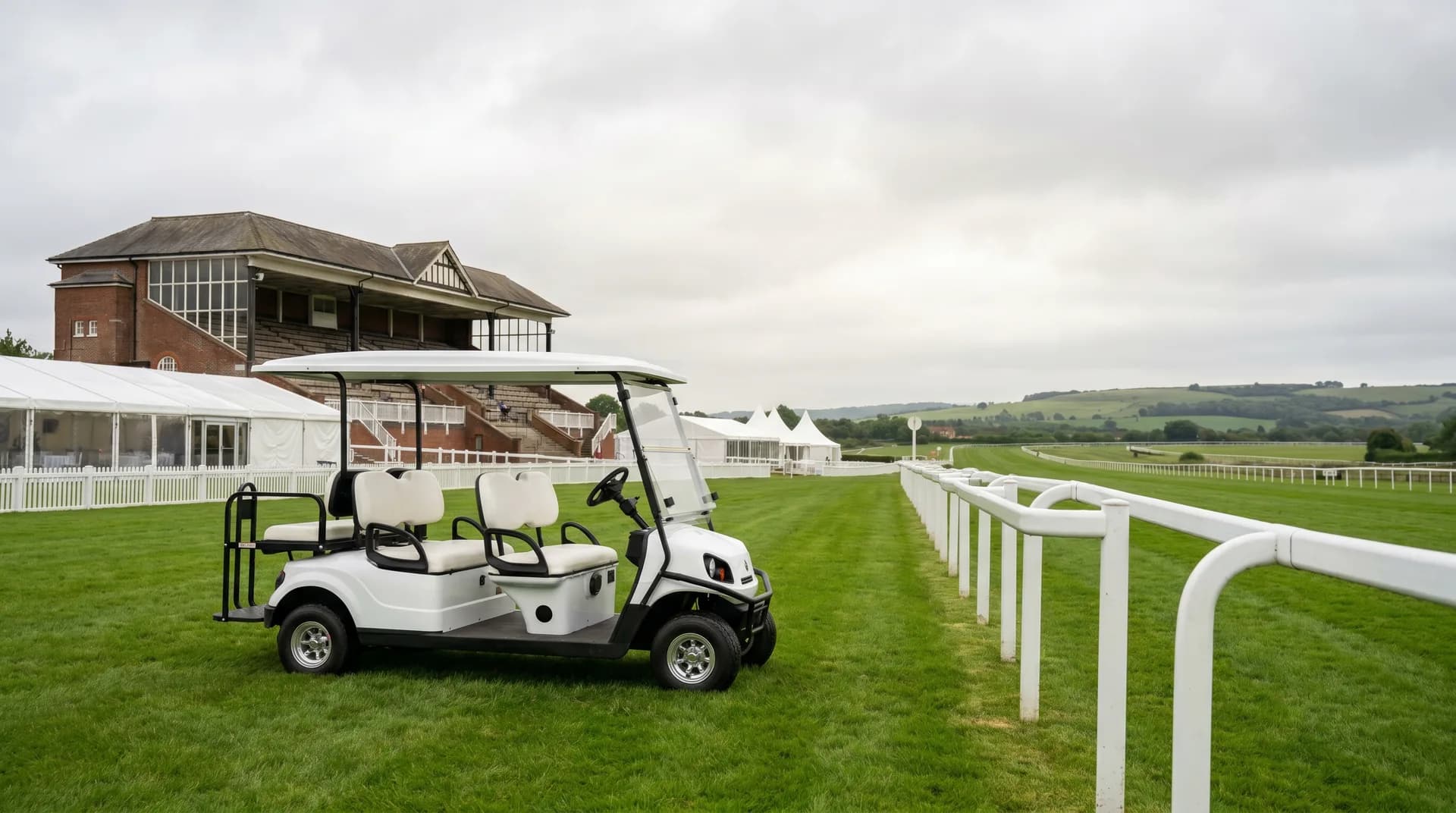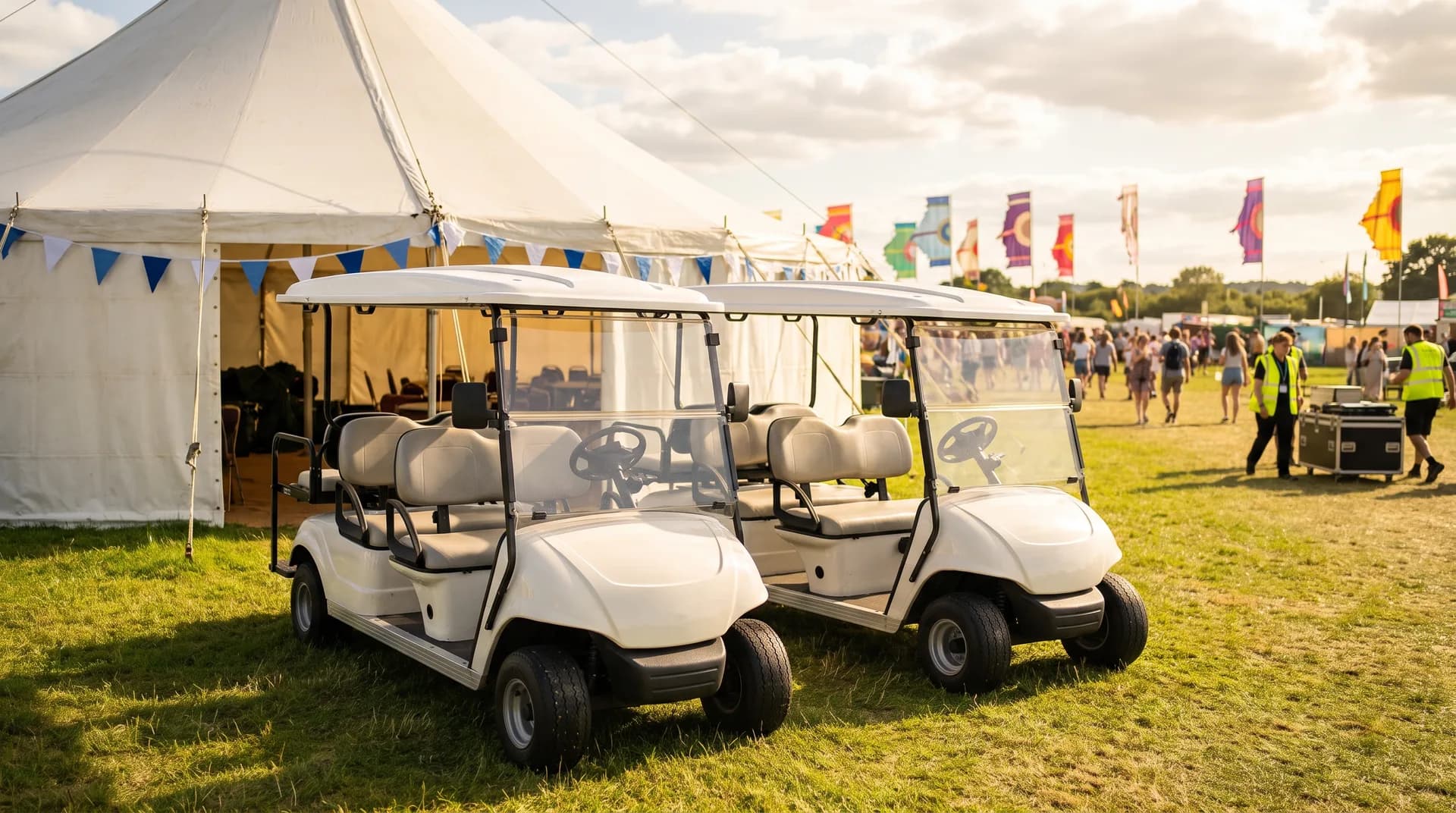
The short version of an event cart hire checklist: fix your numbers and vehicle mix about eight weeks out, confirm site access and drivers at four weeks, tie down charging, insurance and contacts in the final week, brief and inspect on the day, and close out damage and feedback afterwards. Everything below expands each stage into the specific questions worth asking, so nothing surfaces for the first time at 7am on event day. If you are new to how the process works end to end, read our guide to how event cart hire works alongside this one.
- Eight weeks out: fix quantities, seat mix and hire dates, and get a written quote.
- Four weeks out: confirm site access, ground conditions, storage and who will drive.
- One week out: tie down delivery windows, charging points, insurance and key contacts.
- Event day: walk the handover, check condition together, brief every driver.
- Afterwards: agreed collection, condition sign-off and honest feedback for next year.
The event cart hire checklist: eight weeks out
Start with the only two questions that really move the price: how many golf carts, and for how long. Work from jobs, not guesswork: VIP shuttles, crew and production runs, accessibility support and site management each justify their own vehicles, and our guide on how many golf carts your event needs walks through the sizing logic. Decide the seat mix at the same time, two-seaters for site crew, four and six-seaters for guest shuttles, load-bed vehicles for kit. Then get a written quote covering delivery, collection and the full hire period, not just the event days; the event cart hire calculator gives an indicative figure in minutes. Booking early matters most for summer weekends, when demand across weddings, festivals and shows overlaps.
Four weeks out: access, ground and drivers
A month out, turn to the site itself. Confirm how a delivery vehicle reaches the drop-off point: gate widths, height barriers, soft ground and one-way systems all matter to the transport that brings the golf carts in. Agree where vehicles will be stored overnight, secure, and ideally under cover or close to power. Then settle who drives. Most hirers require drivers to hold a full driving licence and be briefed before use, and your event insurance may add conditions of its own, so nominate named drivers now rather than improvising on the day; our guide on who can drive a hire cart covers the detail. If ground conditions are doubtful, a wet field, gravel paths, steep sections, say so now, because tire and vehicle choice can be adjusted at this stage and cannot on the morning.
One week out: charging, insurance and contacts
The final week is confirmation, not decision. Tie down the delivery window and the collection window in writing, with a named contact and phone number on both sides. Confirm charging: how many sockets, where, and whether the overnight location has power, an ordinary 13-amp socket per vehicle is the usual requirement, but the hirer will confirm for the specific fleet. Check your insurance paperwork covers hired-in plant or that the hirer's cover applies, and be clear where the excess sits. Finally, circulate a one-page brief to everyone who will drive: speed expectations, passenger limits, no-go areas, and where vehicles are parked and charged. Ten minutes of writing here saves an hour of confusion on the day.
Event day, and closing out your cart hire checklist
On delivery, walk the handover with the driver: check each vehicle's condition together, photograph any existing marks, count keys and chargers, and confirm the collection arrangement before signing. Brief every driver in person, however short the brief, and make one person owner of the fleet for the day, keys, charging rota, and the authority to park a vehicle that is being driven badly. After the event, reverse the process: vehicles back at the agreed point, charged if that was agreed, a joint condition check at collection, and any damage acknowledged on the spot rather than disputed by email a fortnight later. Before any of that, though, settle the paperwork the venue will ask for: our guide to risk assessing golf carts at events covers the hazards and controls, and event traffic management and cart routes covers the routing that makes most of those controls unnecessary. Then spend five minutes on honest notes while it is fresh, what ran short, what stood idle, which routes churned, because next year's booking is only ever this year's numbers, corrected.
Frequently asked questions
How far in advance should I book golf carts for an event?+
Around eight weeks is comfortable for most events, and earlier is safer for summer weekends when demand peaks across weddings, festivals and shows. Late bookings can often still be served, but with less choice of seat mix.
What do I need to have ready on site for hire golf carts?+
A delivery point a transporter can reach, secure overnight storage, and charging, typically an ordinary 13-amp socket per vehicle overnight. Confirm the specifics with your hirer for the fleet you book.
Who is allowed to drive a hired cart at an event?+
Policies vary, but most hirers require a full driving licence and a briefing before use, and your event insurance may add its own conditions. Nominate named drivers in advance and brief them on the day.
What happens if a hire cart is damaged during the event?+
The hire agreement sets out responsibility and any excess. Protect yourself with a joint condition check and photographs at handover and again at collection, so both sides agree what changed during the hire.
Should golf carts be returned charged?+
It depends on the agreement: some hirers collect regardless of charge, others ask for vehicles to be plugged in overnight before collection. Confirm which applies in the final week so it is not a surprise.
Get your event fleet booked
Tell us your dates, your site and the jobs the golf carts must do, and we will confirm availability and a written quote for the full hire period.
Related solutions
Ready to explore what we build?
See the vehicles and the setting this applies to, or get a tailored quote built around your site.
Ready to find the right golf cart?
Tell us how and where it will work and we will specify a vehicle and a tailored quote built around you. Every build comes with a 3-year warranty and a 24-hour priority call-out.
Our guides are written and reviewed by the Hawke Electric Vehicles team, the people who specify, build, deliver and support the vehicles. We focus on honest, practical advice and flag where a figure depends on the build rather than guessing.
More guides by Hawke