If you are hiring golf carts for a UK event, somebody is going to ask you for a golf cart risk assessment. It might be the venue, the local authority, the safety advisory group, your insurer, or your own head office. The request is usually reasonable and rarely as onerous as it sounds, because the hazards involved in running a small fleet of low-speed vehicles around an event site are well understood and the controls are mostly common sense written down. This guide sets out the hazards that genuinely matter, the controls that work in practice rather than only on paper, and what a usable assessment actually contains. One important caveat before we start: this is general guidance to help you prepare, not a substitute for an assessment carried out by a competent person with knowledge of your specific site, event and organization.
- Vehicle and pedestrian interaction is the dominant hazard at events, not vehicle failure.
- The most effective controls are segregation, speed, and authorised drivers, in that order.
- Write down who may drive, how they are briefed, and how you record that briefing.
- Reversing, blind corners, crowd surges at gate opening and closing, and after-dark operation deserve their own lines.
- Ask your hire supplier for their vehicle documentation; it evidences part of your assessment but does not replace it.
Why event golf carts need their own risk assessment
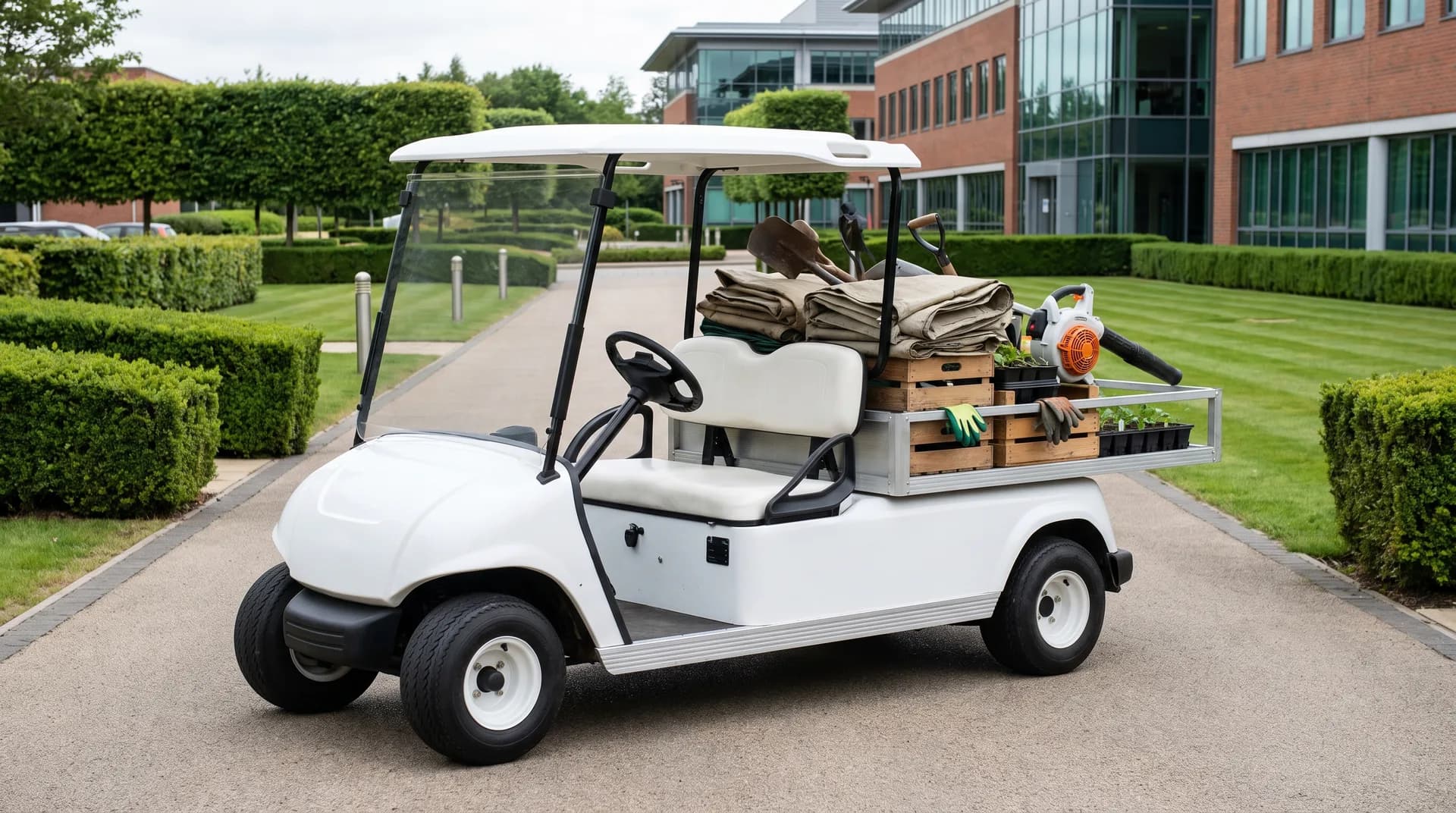
A cart at an event does something no other vehicle on site does: it operates continuously, at low speed, in areas full of pedestrians who are not expecting a vehicle. Delivery lorries come and go on a managed route at managed times. Golf Carts live among the crowd all day. That is exactly why they are useful, and exactly why they need assessing separately from your general site traffic plan. The other reason is more practical: golf carts are frequently driven by people who are not professional drivers, are unfamiliar with the vehicle, may be tired at the end of a long shift, and are often carrying passengers rather than cargo. None of this makes them dangerous, and the safety record of well-run event cart operations is good. It makes them an activity that deserves five minutes of structured thought rather than none.
The hazards that genuinely matter
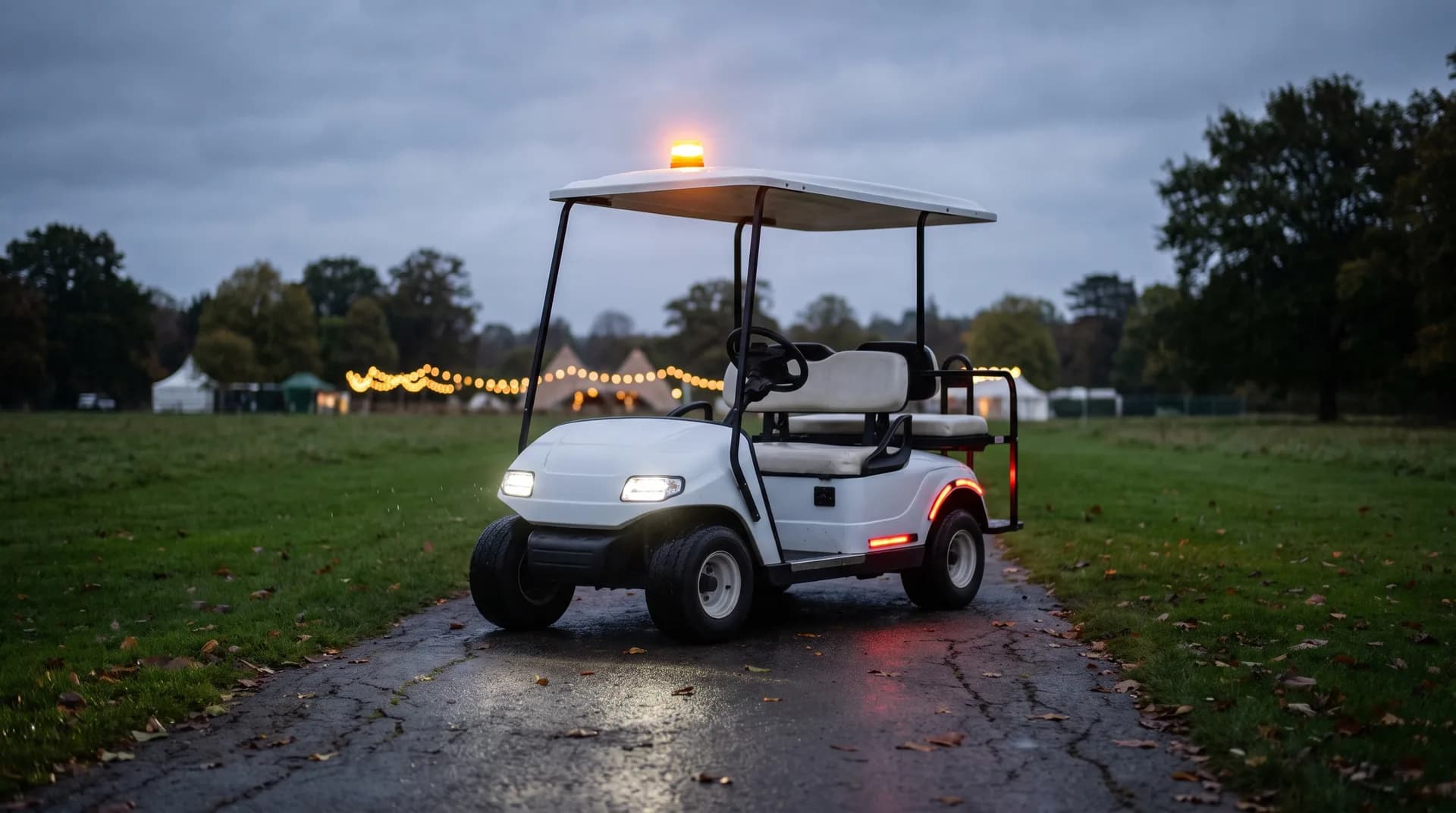
Six hazards do most of the work in a realistic event cart assessment. Pedestrian contact is first and dominant: a slow vehicle among distracted people, particularly at the moments when crowds surge, gates opening, a headline act finishing, a show ring emptying. Reversing is second, because visibility rearward on a loaded cart is poor and reversing incidents are disproportionately common across all vehicle types. Overloading and unsecured loads are third, covering both too many passengers and kit stacked where it should not be. Terrain is fourth: slopes, ruts, kerbs, cambers and wet grass all change the vehicle's behaviour. Inappropriate driving is fifth, and it is usually a briefing failure rather than a character failure. And after-dark operation is sixth, since visibility of the vehicle to pedestrians is the specific problem, not the driver's visibility of the route. Our guide to golf cart safety rules for events expands on the operational side.
- What it is
- Vehicle and pedestrian conflict
- Controls that work in practice
- Defined routes, marshals at pinch points, walking pace in crowds, no movement during peak surges
- What it is
- Poor rearward visibility
- Controls that work in practice
- Avoid reversing by design, turning circles planned in, banksman for any blind reverse
- What it is
- Too many passengers or unsecured kit
- Controls that work in practice
- Stated seat limit enforced, no standing, no riding on load beds, loads secured
- What it is
- Loss of grip or stability
- Controls that work in practice
- Route survey, avoid cross-slopes, keep to surveyed routes, tire choice for the ground
- What it is
- Untrained person at the controls
- Controls that work in practice
- Named authorised driver list, keys controlled, recorded briefing
- What it is
- Vehicle not seen by pedestrians
- Controls that work in practice
- Lighting, reflective markings, high-visibility, reduced routes
- What it is
- Electrical and manual handling
- Controls that work in practice
- Designated charging area, supplier instructions followed, no public access
| What it is | Controls that work in practice | |
|---|---|---|
| Pedestrian contact in crowds | Vehicle and pedestrian conflict | Defined routes, marshals at pinch points, walking pace in crowds, no movement during peak surges |
| Reversing incidents | Poor rearward visibility | Avoid reversing by design, turning circles planned in, banksman for any blind reverse |
| Overloading | Too many passengers or unsecured kit | Stated seat limit enforced, no standing, no riding on load beds, loads secured |
| Terrain and slopes | Loss of grip or stability | Route survey, avoid cross-slopes, keep to surveyed routes, tire choice for the ground |
| Unauthorised or unbriefed drivers | Untrained person at the controls | Named authorised driver list, keys controlled, recorded briefing |
| Operation after dark | Vehicle not seen by pedestrians | Lighting, reflective markings, high-visibility, reduced routes |
| Charging and battery handling | Electrical and manual handling | Designated charging area, supplier instructions followed, no public access |
Controls in order of effectiveness
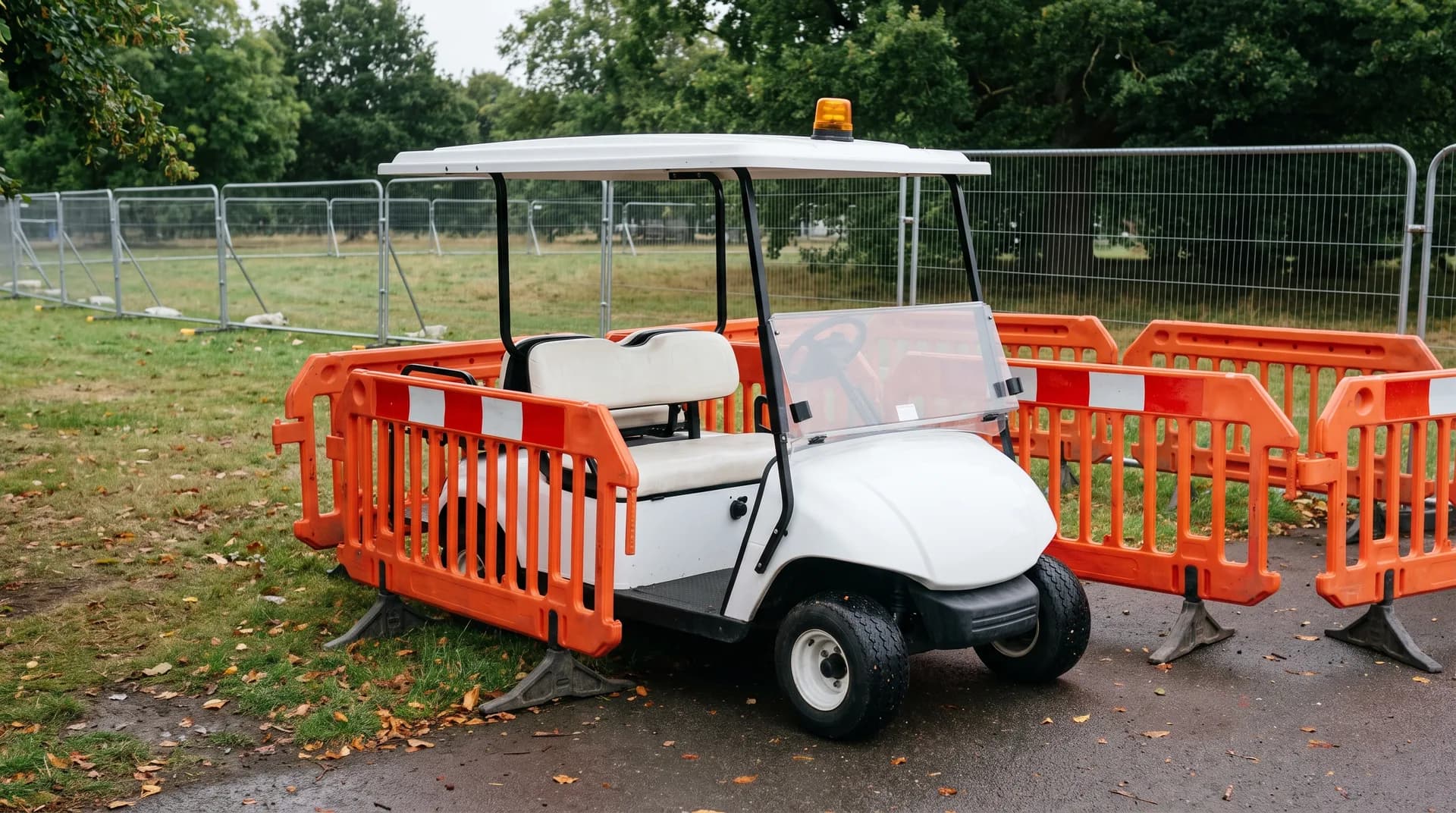
Not all controls are equal, and a good assessment reflects that. Segregation is the most effective single measure: if the cart route and the pedestrian flow do not cross, the dominant hazard largely disappears. Where they must cross, do it at defined, marshalled points rather than everywhere. Speed is second, and the honest control is not a number on a sign but a rule people understand, walking pace wherever there are pedestrians, and a briefed maximum elsewhere. Authorised drivers is third: a named list, keys that are not left in vehicles, and a short recorded briefing before anyone drives. Scheduling is fourth and underrated, because simply not moving vehicles during the ten minutes when a crowd surges removes the worst window entirely. Vehicle condition and lighting sit below those, not because they do not matter but because a well-maintained hire fleet arrives with them already addressed. Our traffic management guide covers routing in detail.
Drivers: authorisation, briefing and records
The single question most often asked by a venue is who is driving, and the single most common gap in event paperwork is that nobody wrote down the answer. Decide your rules, put them in the assessment, and apply them: who is permitted to drive, what minimum age you are setting, whether you require a full driving licence, whether volunteers are permitted, and whether anyone who has consumed alcohol is excluded, which at a hospitality event should be an explicit line rather than an assumption. Then brief every driver before their first shift, covering the route, the crowd rules, reversing, passenger limits, what to do in an incident and who to call. Keep a signed list. It takes ten minutes on the morning and it is the difference between a defensible operation and an awkward conversation. The rules on who can drive a hire cart set the baseline; your event may need to be stricter.
What your hire supplier contributes, and what they cannot
A professional hire supplier contributes real evidence to your assessment: vehicles maintained and checked before dispatch, a handover that covers controls and safe use, documentation on the vehicles supplied, and their own insurance position. Ask for that documentation when you book rather than the day before, and file it with your assessment. What a supplier cannot do is assess your site, your crowd, your routes, your staffing and your event, because those are the variables that actually determine the risk, and they are yours. Be wary of any supplier who offers you a completed risk assessment for your event; at best it is a generic template that will not survive contact with a licensing officer, and at worst it invites you to adopt someone else's judgement about a site they have never seen. The right relationship is that they evidence the vehicle and you assess the operation.
What a usable event cart risk assessment contains
- The activity described plainly: how many vehicles, doing what, where, when and for how long
- Who is at risk: public, staff, contractors, performers, children, people with reduced mobility
- Each significant hazard with existing controls and any further action needed
- Routes and segregation, including crossing points and how they are marshalled
- Speed rules and the specific times vehicles will not move at all
- Authorised driver criteria, the named list and how briefings are recorded
- Loading rules: seat limits, no standing, no riding on load beds, securing kit
- Adverse weather and after-dark arrangements, including when operations reduce or stop
- Charging arrangements and who has access to the charging area
- Incident and emergency procedure, including who to call and how the fleet is stood down
- Who wrote it, when, and when it will be reviewed
Making the assessment useful rather than decorative
The test of an assessment is not whether it satisfies the venue, it is whether the person driving a cart at nine on Saturday evening behaves differently because of it. That means the controls have to be things people can actually do: a route they can follow, a rule they can remember, a limit they can see, a person they can call. Assessments fail when they are written to be filed rather than briefed. Write yours in the language you will use in the driver briefing, keep it to the hazards that genuinely exist on your site, and review it after the event with the people who drove, because they will tell you which controls held and which were quietly ignored. Then tell your hire supplier what you learned; the good ones adjust the specification next time. If you are still shaping the operation, our organizer's checklist covers the wider planning.
Frequently asked questions
Do I need a risk assessment for golf carts at an event?+
If you are an employer or an event organizer, you have a duty to assess the risks of your activities, and golf carts operating among the public are an activity worth assessing specifically. Venues, licensing authorities and insurers commonly ask to see one. It must be produced by someone competent for your site.
What are the main hazards of using golf carts at events?+
Pedestrian contact in crowded areas is the dominant hazard, followed by reversing, overloading and unsecured loads, terrain such as slopes and ruts, unauthorised or unbriefed drivers, and reduced visibility after dark. Charging arrangements are worth a line of their own.
Can my hire company provide the risk assessment?+
They can and should provide documentation on the vehicles, their maintenance and their insurance position, which evidences part of your assessment. They cannot assess your site, crowds, routes and staffing, because those determine the actual risk and they belong to you as the organizer.
Who is allowed to drive a cart at an event?+
That is a decision you make and record. Set your own criteria on minimum age, driving licence, volunteers and alcohol, brief every driver before their first shift, keep a signed authorised driver list, and control the keys so unbriefed people cannot simply take a vehicle.
What speed should event golf carts be limited to?+
The workable rule is walking pace anywhere pedestrians are present, with a briefed maximum on segregated routes. A rule people understand and can apply is more effective than a number on a sign, and scheduling vehicles not to move during crowd surges removes the worst window altogether.
Hiring golf carts for an event?
Tell us the site, the crowd and the job, and we will supply documented, maintained vehicles with a proper handover so your assessment has real evidence behind it.
Related solutions
Ready to explore what we build?
See the vehicles and the setting this applies to, or get a tailored quote built around your site.
Ready to find the right golf cart?
Tell us how and where it will work and we will specify a vehicle and a tailored quote built around you. Every build comes with a 3-year warranty and a 24-hour priority call-out.
Our guides are written and reviewed by the Hawke Electric Vehicles team, the people who specify, build, deliver and support the vehicles. We focus on honest, practical advice and flag where a figure depends on the build rather than guessing.
More guides by Hawke