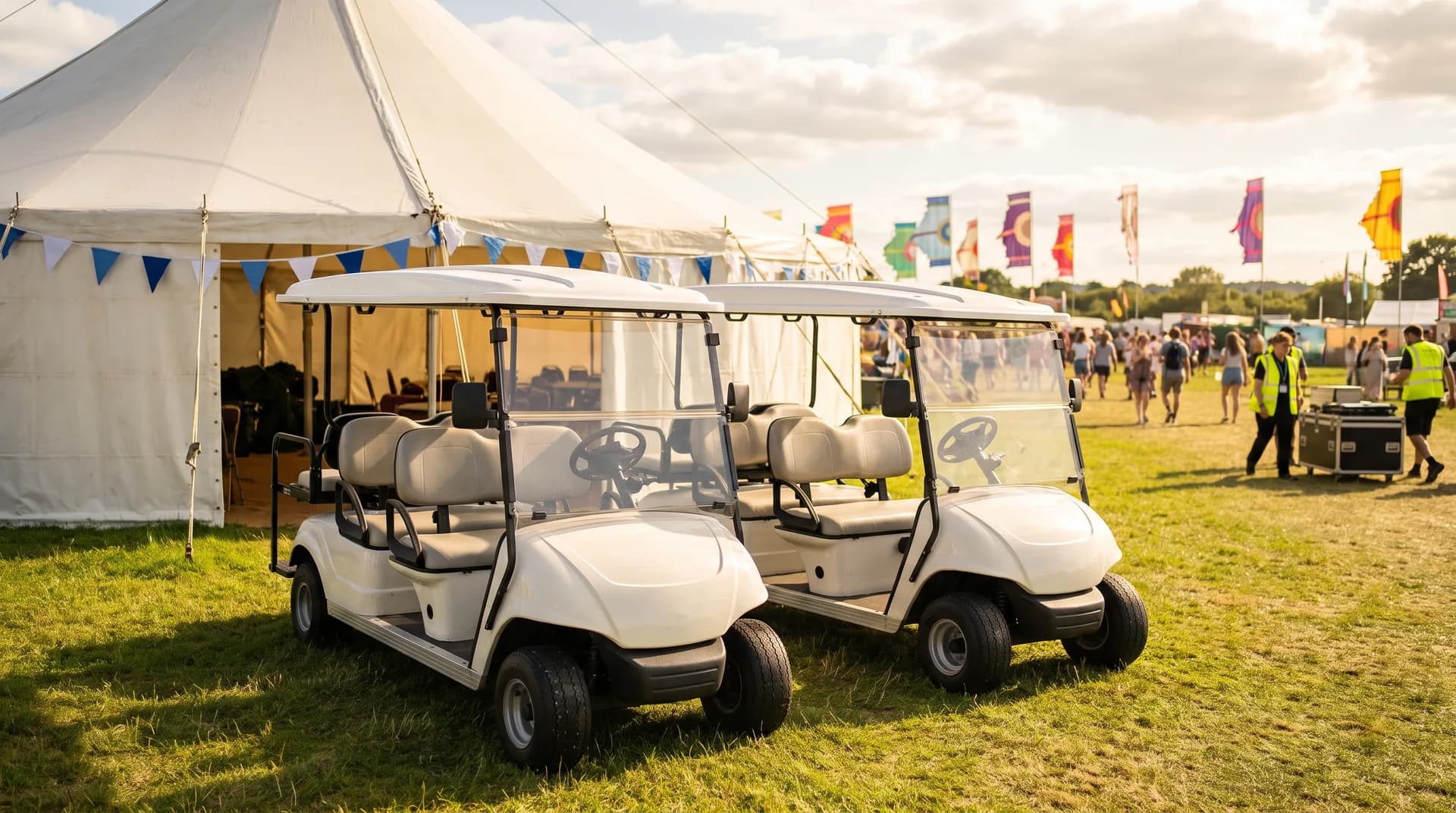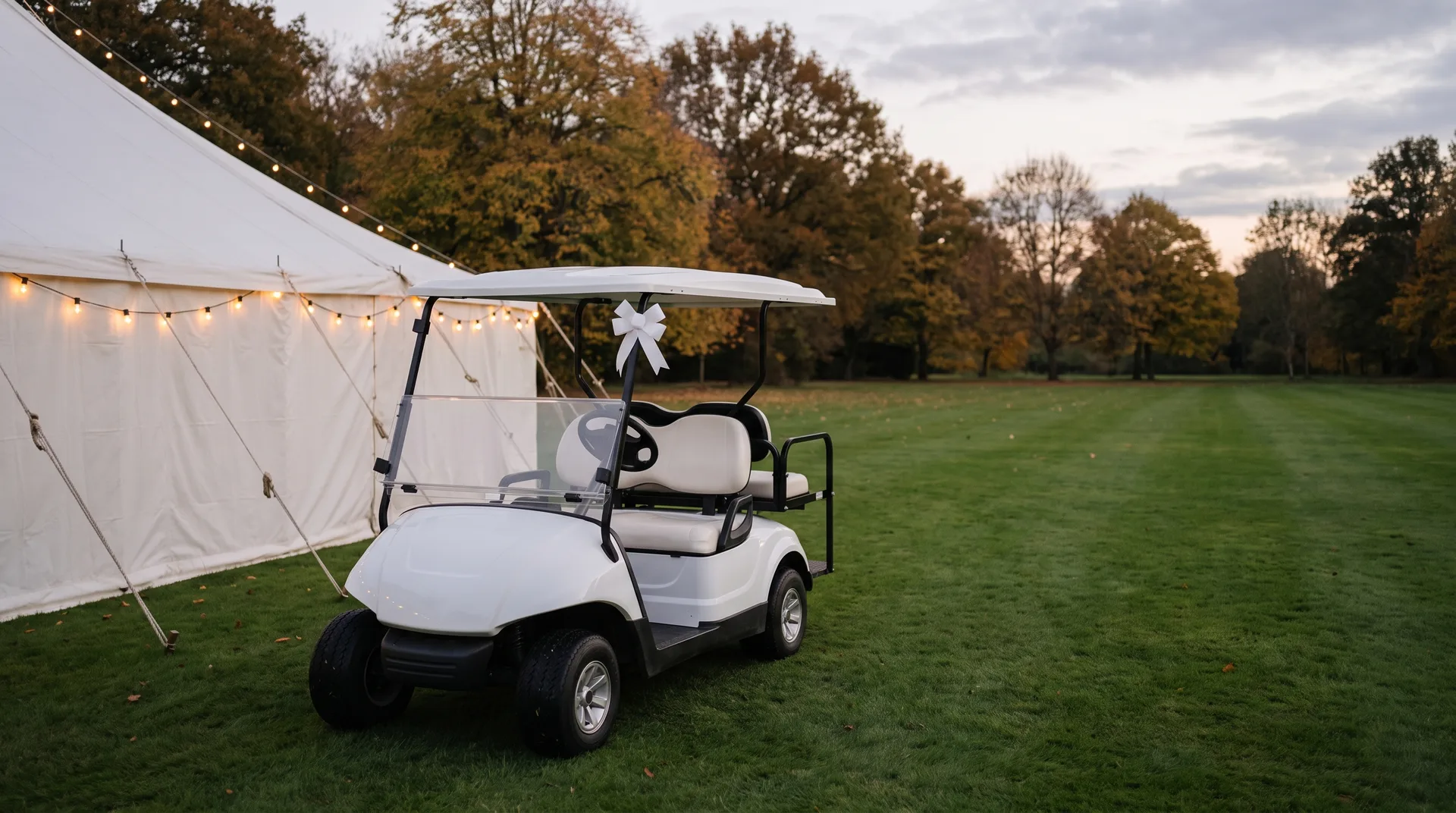
For an event management company, the answer to own or hire is usually both, in a particular shape: own a small core of golf carts that work most weeks of your season, and cross-hire everything above that line per event. The reasoning is utilisation. A cart you own costs the same whether it is working a festival or sitting in a lock-up, so ownership only beats hiring once a vehicle is booked enough weeks a year to spread its cost thinner than the hire fees it replaces. Below that threshold, hiring wins on flexibility and cash; above it, owning wins on margin and control. This guide works through the maths with an illustrative example, then the practicalities that decide it in real life: storage, transport between sites, branding swaps and what a mixed agency fleet should actually contain.
- Own the golf carts you use most working weeks; cross-hire the peak. Utilisation, not preference, decides where the line sits.
- Run the break-even honestly: purchase cost spread over life and residual value, against the hire fees the vehicle replaces.
- Storage and transport between events are real costs of ownership that agencies underestimate, price them in.
- Owned golf carts take permanent livery or magnetic panels for per-client branding swaps; hired ones are generic.
- A useful agency core is passenger golf carts plus at least one utility vehicle, the load-carrier works every build and breakdown.
The utilisation maths behind event company golf carts
Here is the shape of the calculation, with round numbers that are illustrative only, your own hire rates, purchase prices and season length will move every figure. Suppose a six-seat passenger cart costs £18,900 to buy, our S6 starts there, and you expect to run it for five years and then sell it, so the capital it consumes is the purchase price less residual value, spread over five seasons, call it £3,000 a season for the illustration, plus insurance, servicing and charging. Suppose the same class of vehicle costs a few hundred pounds a week to cross-hire in season. The comparison is then simple: multiply your realistic weekly hire cost by the number of weeks a year the vehicle would genuinely be booked on your events. If that annual hire bill comfortably exceeds the ownership cost per season, the vehicle wants to be owned; if it does not, keep hiring. Most agencies find the first one or two vehicles clear the bar easily, they work every event, and each additional vehicle clears it less comfortably, which is why the answer is a core fleet plus cross-hire.
Storage, transport and the hidden line items
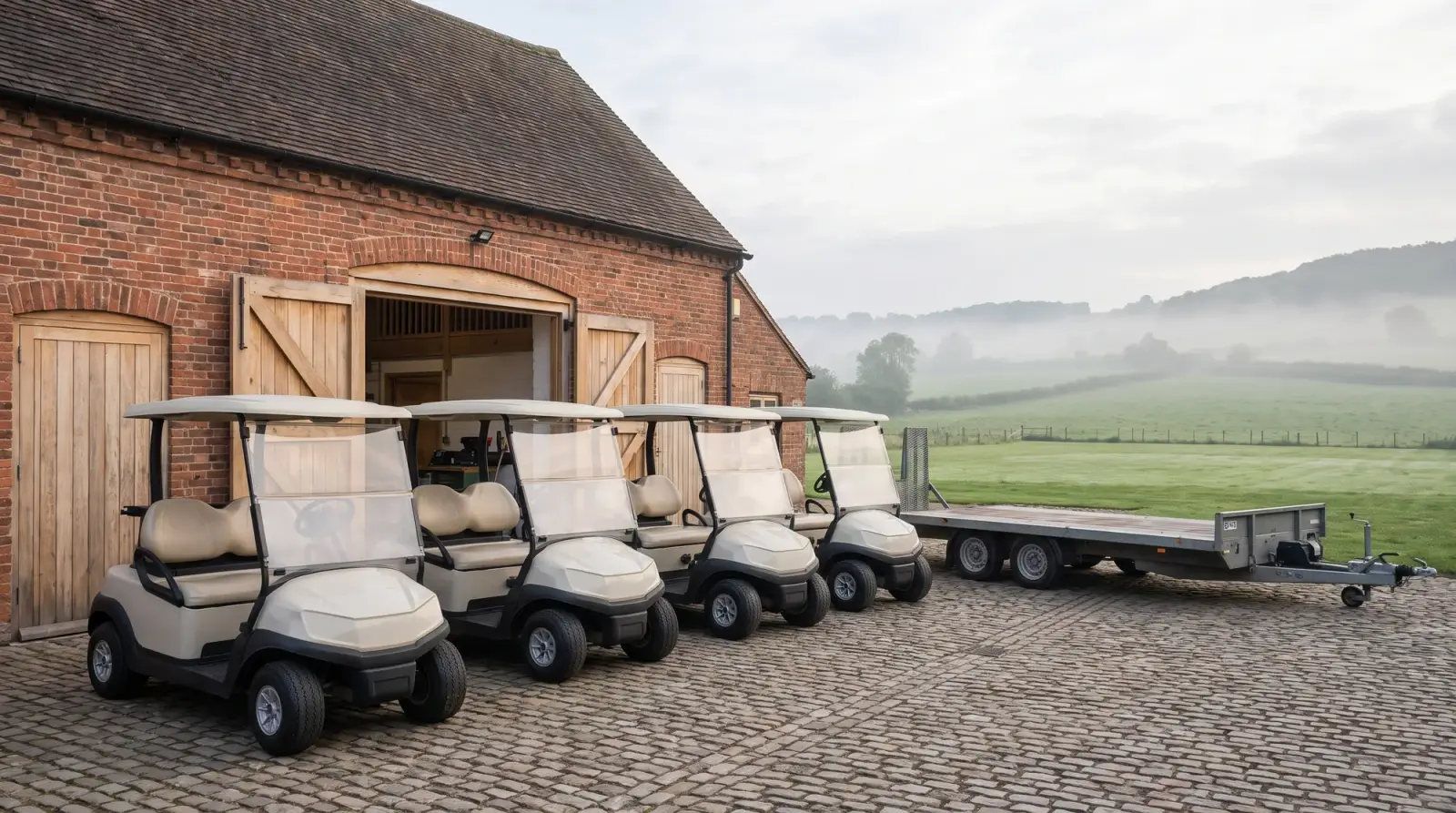
The hire fee you avoid by owning is not pure saving, because ownership has costs that hiring hides. Golf Carts live somewhere between events: a secure yard, unit or lock-up, with charging, and that space has a rent. They move between sites on a trailer or transport you must own, hire or subcontract, and a plant trailer, the towing vehicle capacity and the driver time are real line items, our guide to transporting a cart covers the practical side. They need servicing, winter storage care and someone whose job it is to check them out and back in. None of this kills the case, an agency with a yard and trucks already absorbs most of it, but an agency with neither should price storage and movement honestly before buying, because a hire company's fee includes delivery, collection and maintenance that you are about to take on yourself. This is also the honest difference between your position and a hire operator's: our guide to starting a cart hire business covers the economics of hiring golf carts out as the business, whereas an agency owns vehicles to serve its own events, and only needs utilisation from its own calendar, not a rental market.
Branding swaps: making one fleet serve many clients
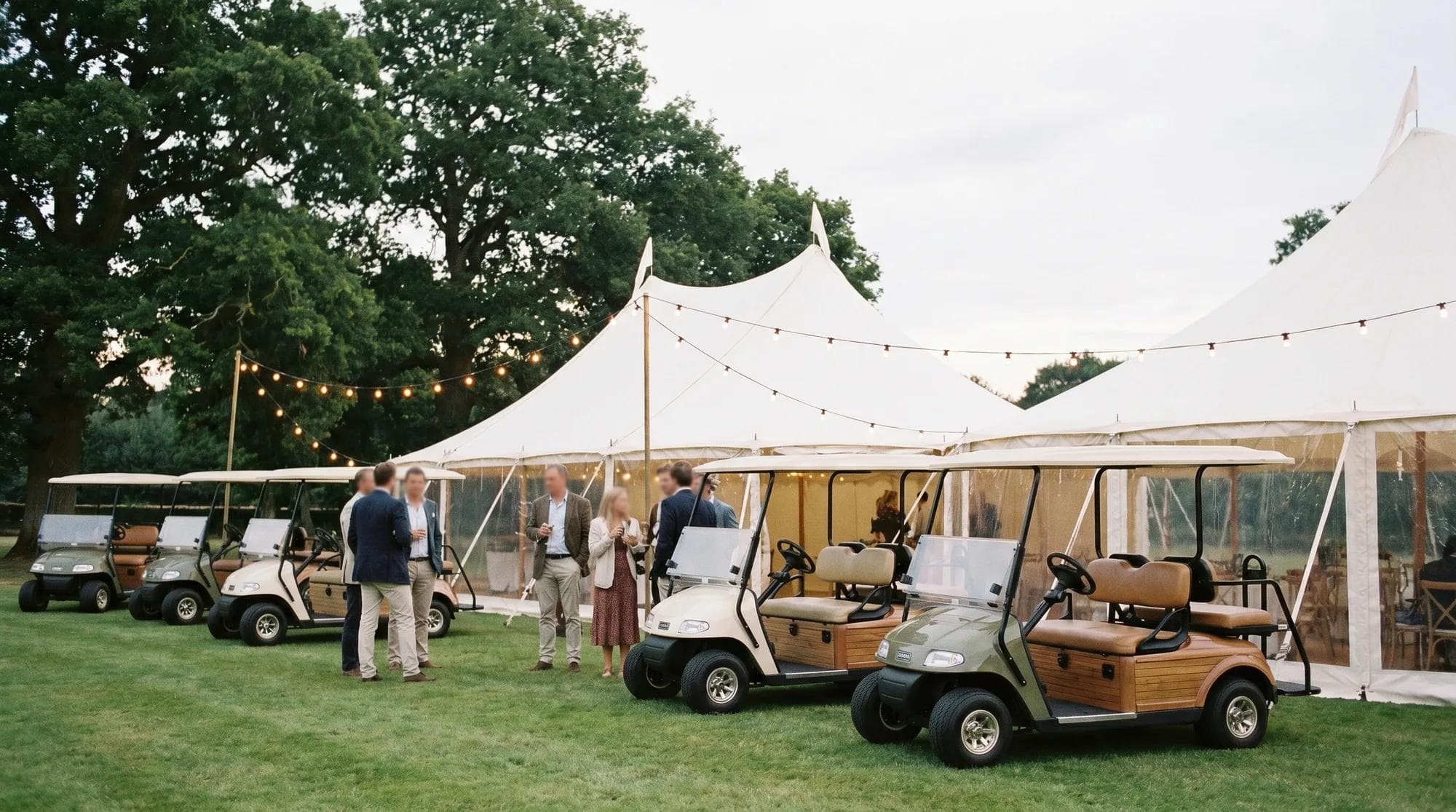
An owned fleet can carry your livery permanently, which turns every site move into visibility, or it can be built to rebrand per event. The practical approach is a clean base color with magnetic panels, removable wraps or interchangeable valances carrying the client or sponsor branding for each event, swapped in the yard between jobs. Sponsors pay real money for on-site vehicle branding at festivals and corporate events, and an agency that can deliver branded golf carts as part of the package is selling something a generic cross-hired vehicle cannot match, hired golf carts arrive in the hire company's colors, and most operators understandably limit what you may apply to them. If branded vehicles are part of your offer, that alone can justify owning the core fleet.
- Owned core fleet
- Capital spread over seasons, plus running costs
- Cross-hire per event
- Per-event fee, delivery included
- Owned core fleet
- Yours: idle weeks cost you
- Cross-hire per event
- The hire company's
- Owned core fleet
- Permanent livery or per-client swap panels
- Cross-hire per event
- Hire company colors, limited changes
- Owned core fleet
- Guaranteed, it is your vehicle
- Cross-hire per event
- Subject to the market, book early
- Owned core fleet
- Your cost and your problem
- Cross-hire per event
- Included in the fee
- Owned core fleet
- Vehicles used most working weeks
- Cross-hire per event
- Peaks, one-offs and distant sites
| Owned core fleet | Cross-hire per event | |
|---|---|---|
| Cost shape | Capital spread over seasons, plus running costs | Per-event fee, delivery included |
| Utilisation risk | Yours: idle weeks cost you | The hire company's |
| Branding | Permanent livery or per-client swap panels | Hire company colors, limited changes |
| Availability in peak season | Guaranteed, it is your vehicle | Subject to the market, book early |
| Storage and transport | Your cost and your problem | Included in the fee |
| Best for | Vehicles used most working weeks | Peaks, one-offs and distant sites |
What a mixed event management fleet should contain
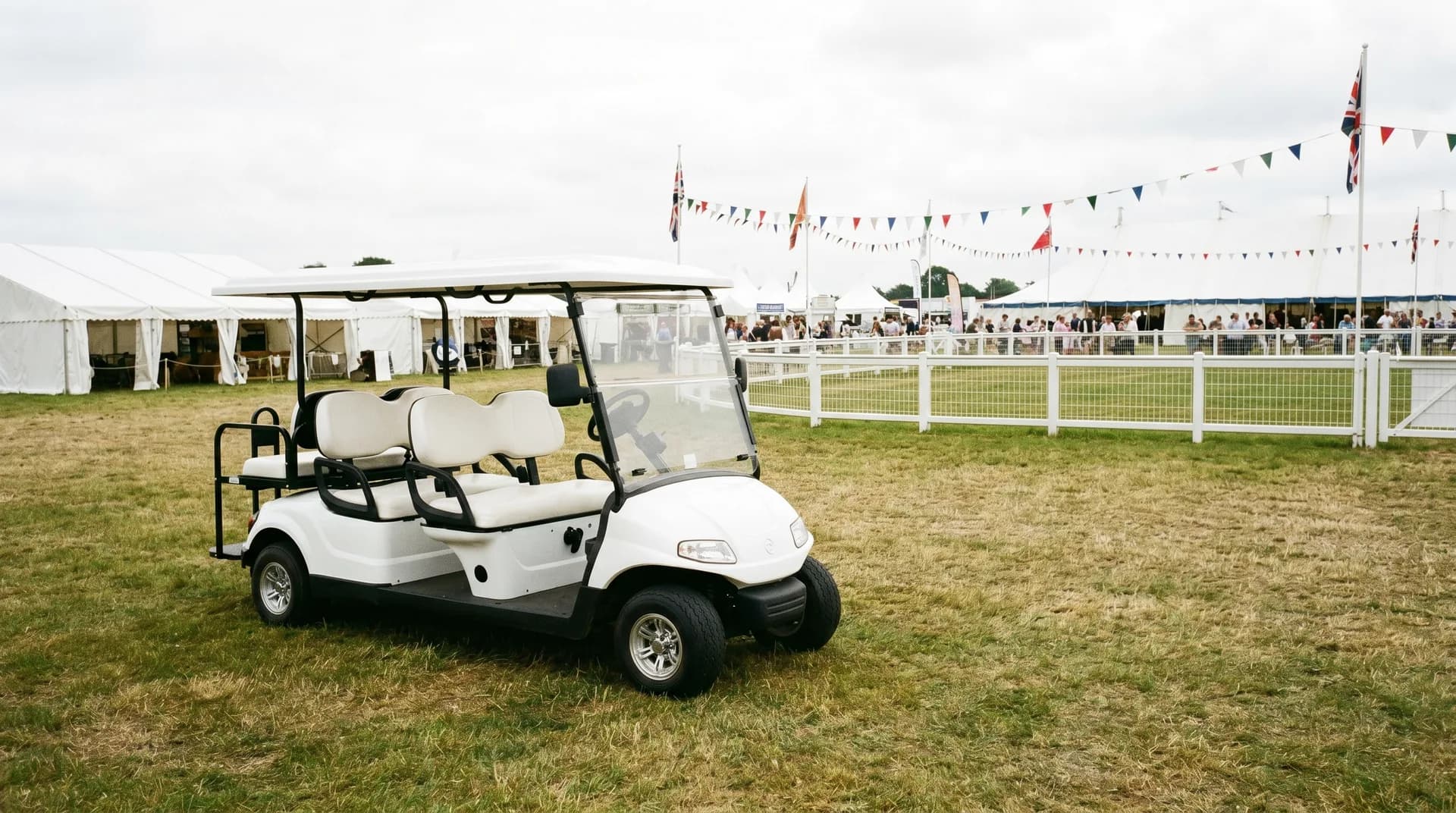
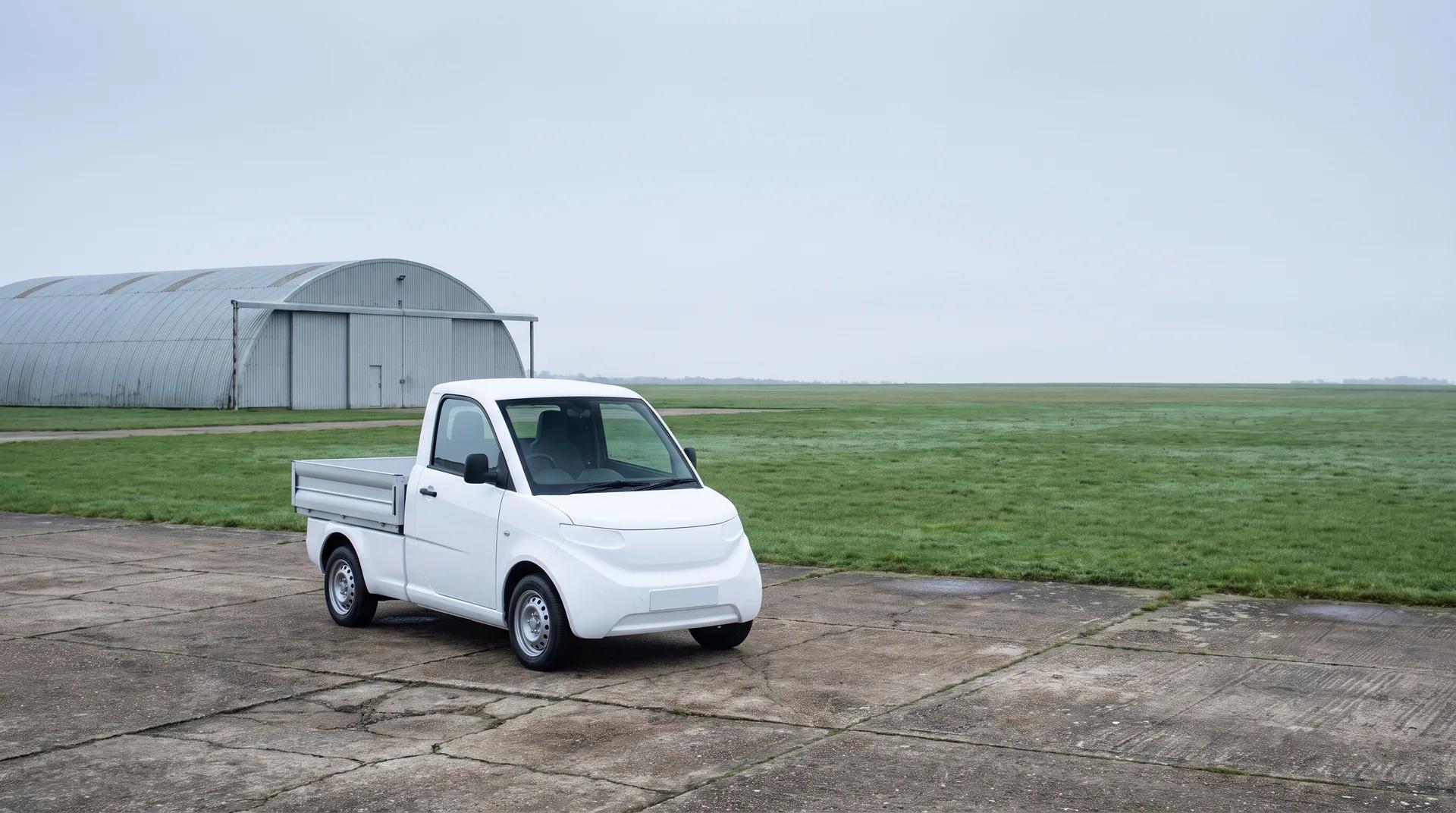
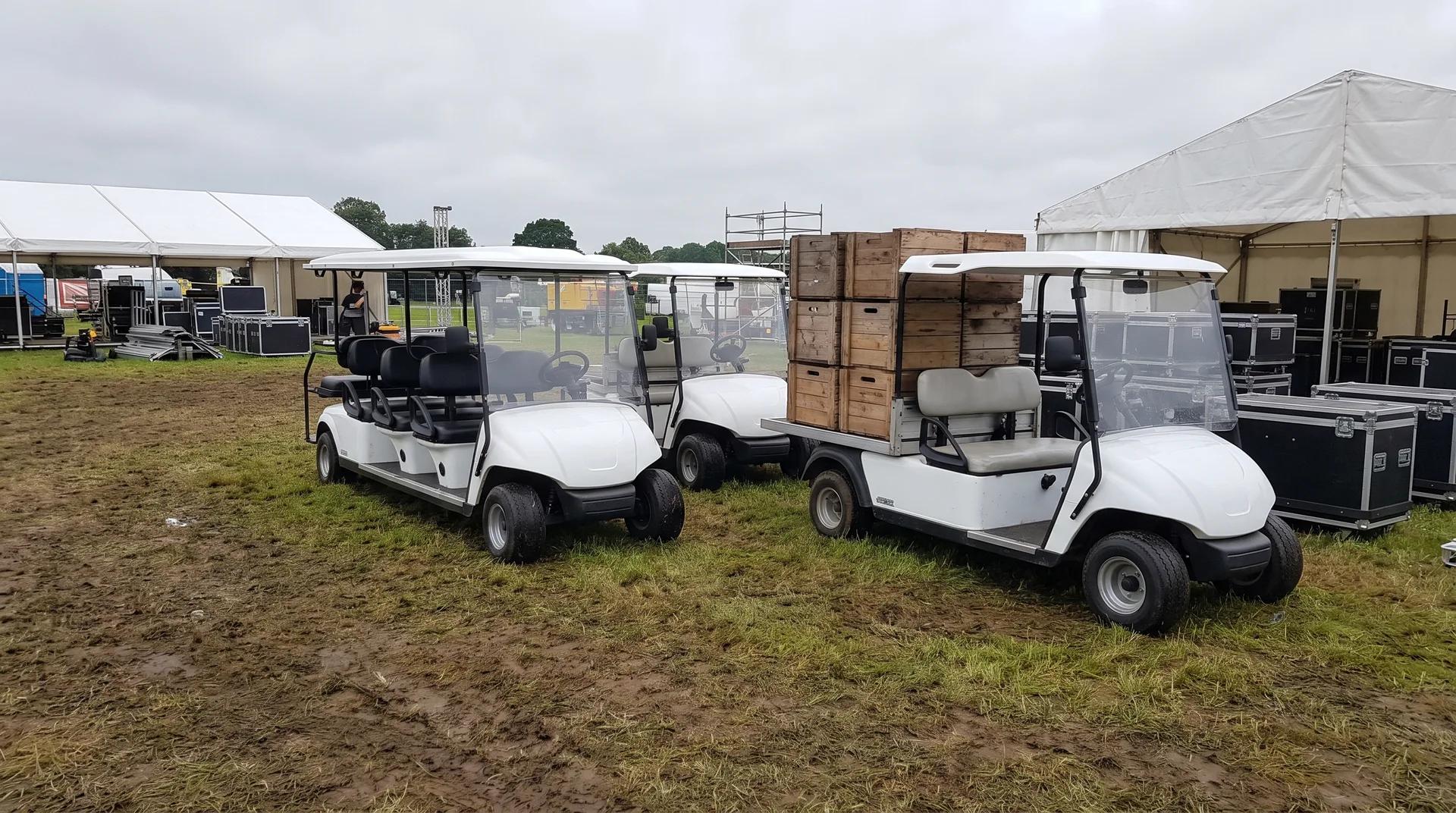
Agencies buy passenger seats and forget the load bed. A working core fleet is usually two thirds passenger golf carts, four and six-seaters for VIP moves, crew shuttles and accessibility, and at least one utility vehicle with a load bed, because the build and breakdown days are where a load-carrier works hardest: cable runs, barrier sections, water, waste and the ten thousand small moves of a site build. As markers, four-seaters start from £14,900, six-seaters from £18,900 and our S2 Pickup utility from £15,900. Size the owned core to your quietest realistic season, then cross-hire upwards per event using the numbers in our guide to how many golf carts an event needs, and place peak hire orders early, because festival-season supply tightens. For the hire layer itself, event cart hire covers what we supply.
Frequently asked questions
How many golf carts should an event agency own?+
Only as many as would be genuinely booked most weeks of your season, for most agencies that is a small core of one to four vehicles, with everything above it cross-hired per event. Run the utilisation maths per vehicle, not for the fleet as a whole.
At what point does owning beat hiring?+
When a vehicle's realistic annual hire bill, weekly hire cost times weeks genuinely booked, comfortably exceeds its ownership cost per season, purchase less residual spread over its life, plus storage, transport, insurance and servicing. The first vehicle usually clears the bar easily; the fifth rarely does.
Can we brand owned golf carts per client?+
Yes, that is one of ownership's real advantages. A clean base livery with magnetic panels or removable wraps lets one fleet carry different client or sponsor branding at each event, which hired vehicles generally cannot offer.
What should the first owned vehicle be?+
A strong case exists for a utility vehicle with a load bed rather than a passenger cart: it works every build and breakdown day, not just the show days. Passenger seats are easier to cross-hire at short notice than a load-carrier on a build weekend.
Is this the same as starting a cart hire business?+
No. A hire business needs utilisation from the rental market; an agency fleet only needs utilisation from your own event calendar, which is easier to forecast. If you find your golf carts idle, hiring them out is a possible sideline, and our hire-business guide covers what that really involves.
Price your core fleet
Tell us your season, your event calendar and the mix of passenger and load work, and we will specify and price an owned core, and cover the cross-hire layer for your peaks.
Related solutions
Ready to explore what we build?
See the vehicles and the setting this applies to, or get a tailored quote built around your site.

Ready to find the right golf cart?
Tell us how and where it will work and we will specify a vehicle and a tailored quote built around you. Every build comes with a 3-year warranty and a 24-hour priority call-out.
Our guides are written and reviewed by the Hawke Electric Vehicles team, the people who specify, build, deliver and support the vehicles. We focus on honest, practical advice and flag where a figure depends on the build rather than guessing.
More guides by Hawke