Gas or electric is the first real decision in buying a golf cart, and it gets argued about far more than it needs to be. For most buyers the answer falls out of three practical facts: whether you have somewhere convenient to plug in, how far you actually travel between stops, and whether noise matters where you live. Get those three straight and the rest of the comparison mostly settles itself.
- Electric wins for neighborhood, community and course use, which is most buyers.
- Gas wins where there is no practical charging, or where you cover long distances all day.
- Electric is quieter, cheaper to run and needs far less routine maintenance.
- Gas refuels in a minute; electric needs hours, which only matters if you run it hard.
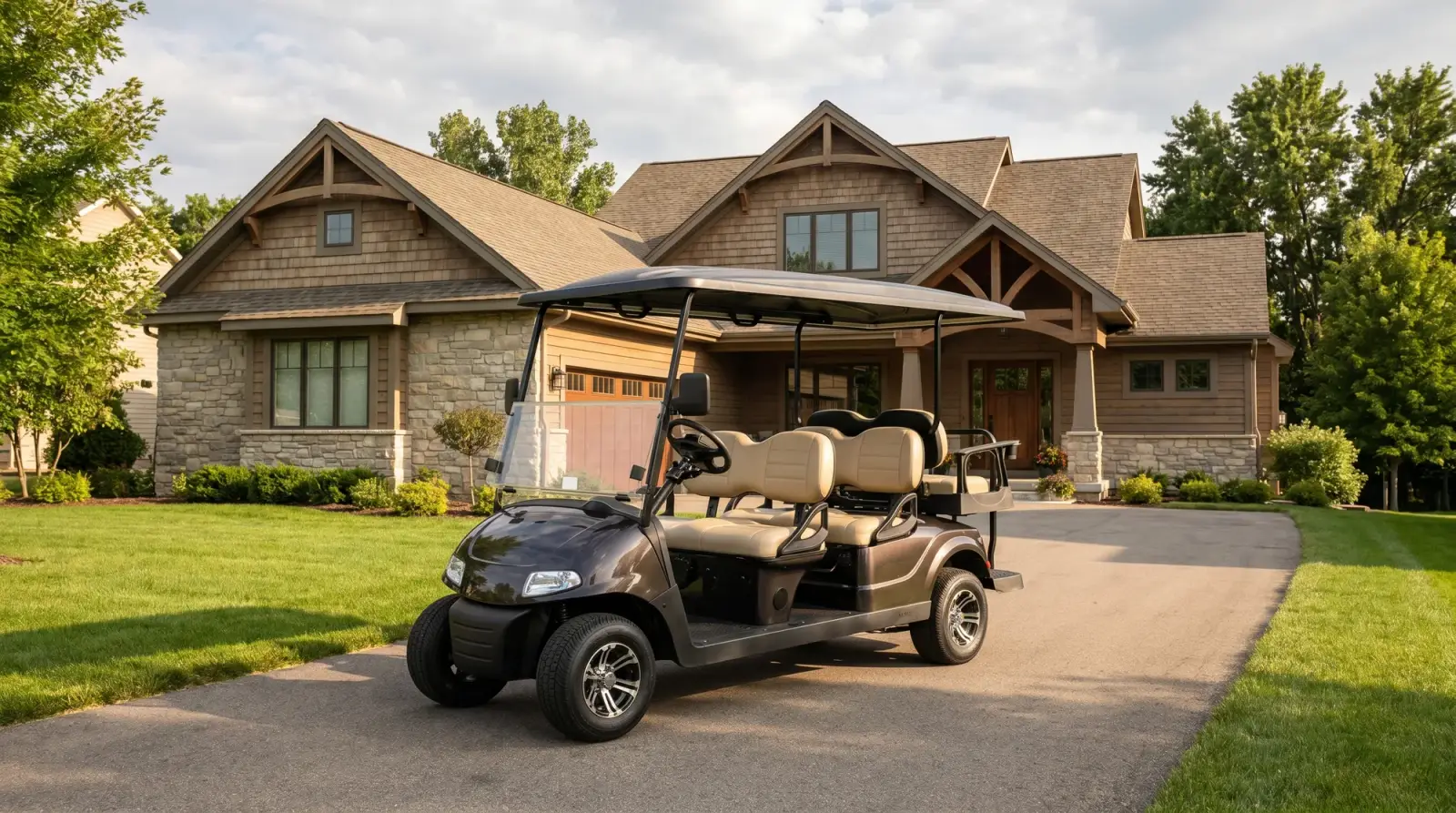
- Many HOAs and communities restrict gas carts on noise or emissions grounds, so check first.
Start with charging, not with the carts
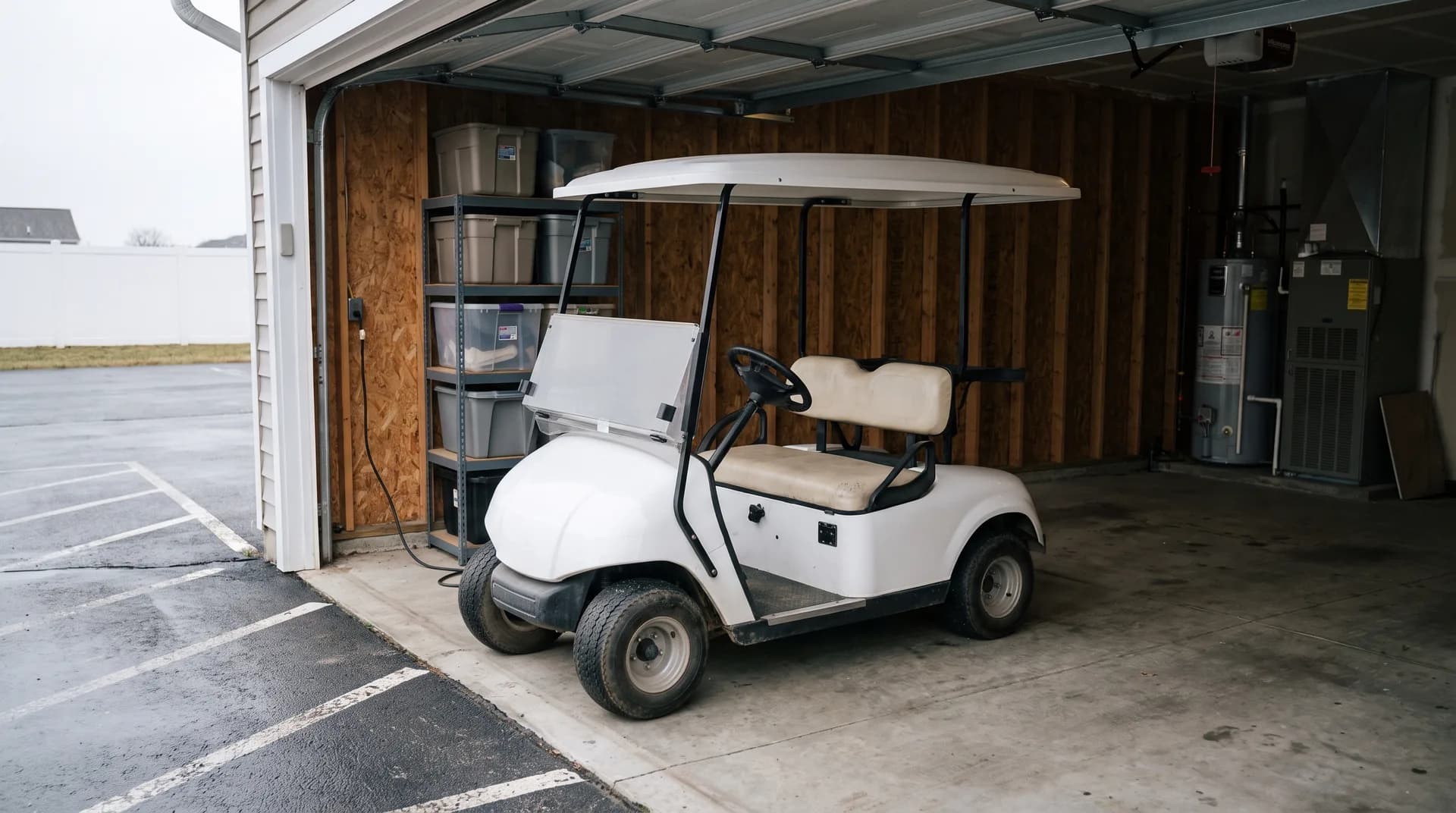
The single most useful question is where the cart will live overnight. If it can sit in a garage, carport or shed within reach of a standard outlet, electric becomes the straightforward choice and most of gas's advantages evaporate. If the cart lives at the far end of a property, in a barn with no power, or moves between locations that have no outlet, gas removes a daily problem that no amount of range will solve. Buyers routinely make this decision by comparing spec sheets when the answer is sitting in their own garage.
How the two compare where it counts
- Electric
- Hours on a standard outlet, done overnight
- Gas
- A minute at a can or pump
- Electric
- Enough for a full round and typical neighborhood use
- Gas
- Longer, and extendable instantly
- Electric
- Nearly silent
- Gas
- Audible, and noticeable near homes and greens
- Electric
- None at the cart
- Gas
- Exhaust, which rules out enclosed spaces
- Electric
- Minimal, mostly checks and battery care
- Gas
- Oil, filters, plugs, belts, fuel system
- Electric
- Battery pack replacement
- Gas
- Engine and drivetrain wear over time
- Electric
- Immediate
- Gas
- Builds with revs
- Electric
- Rarely restricted
- Gas
- Often restricted on noise or emissions
| Electric | Gas | |
|---|---|---|
| Refuel or recharge | Hours on a standard outlet, done overnight | A minute at a can or pump |
| Range per fill | Enough for a full round and typical neighborhood use | Longer, and extendable instantly |
| Noise | Nearly silent | Audible, and noticeable near homes and greens |
| Emissions | None at the cart | Exhaust, which rules out enclosed spaces |
| Routine maintenance | Minimal, mostly checks and battery care | Oil, filters, plugs, belts, fuel system |
| Biggest single cost | Battery pack replacement | Engine and drivetrain wear over time |
| Torque from a standstill | Immediate | Builds with revs |
| Community restrictions | Rarely restricted | Often restricted on noise or emissions |
The case for electric
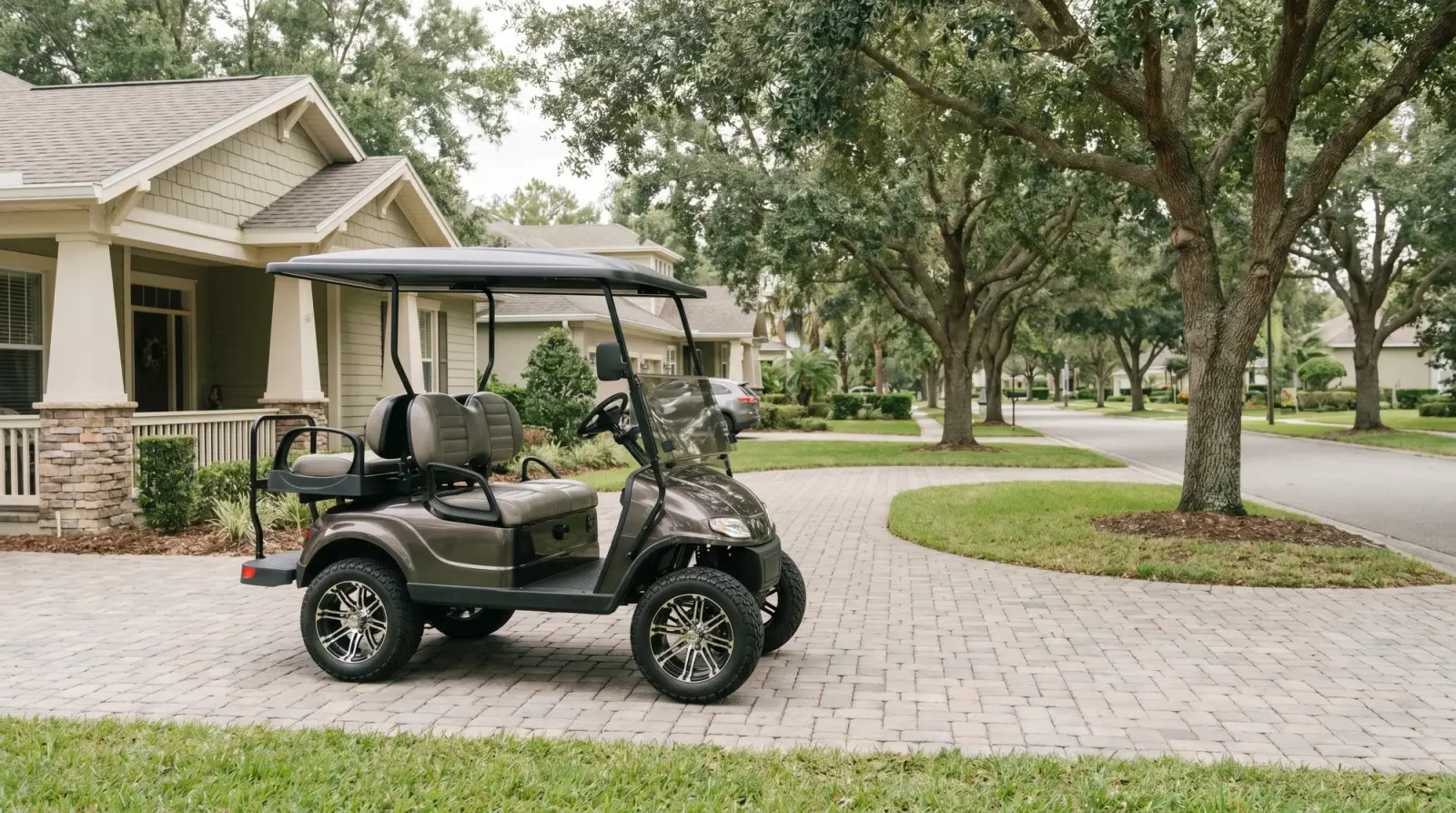
Electric carts suit the way most people actually use them. Trips are short and frequent, the cart returns to the same place every night, and it sits idle for long stretches. That pattern plays to every electric strength: overnight charging costs very little, there is nothing to go stale in a fuel system, and there is almost no routine servicing beyond checking brakes, tires and looking after the batteries. Electric is also quiet, which matters more than buyers expect. On a course during play, in a gated community at seven in the morning, or moving guests around a resort, near-silence is a feature people notice and appreciate.
The case for gas
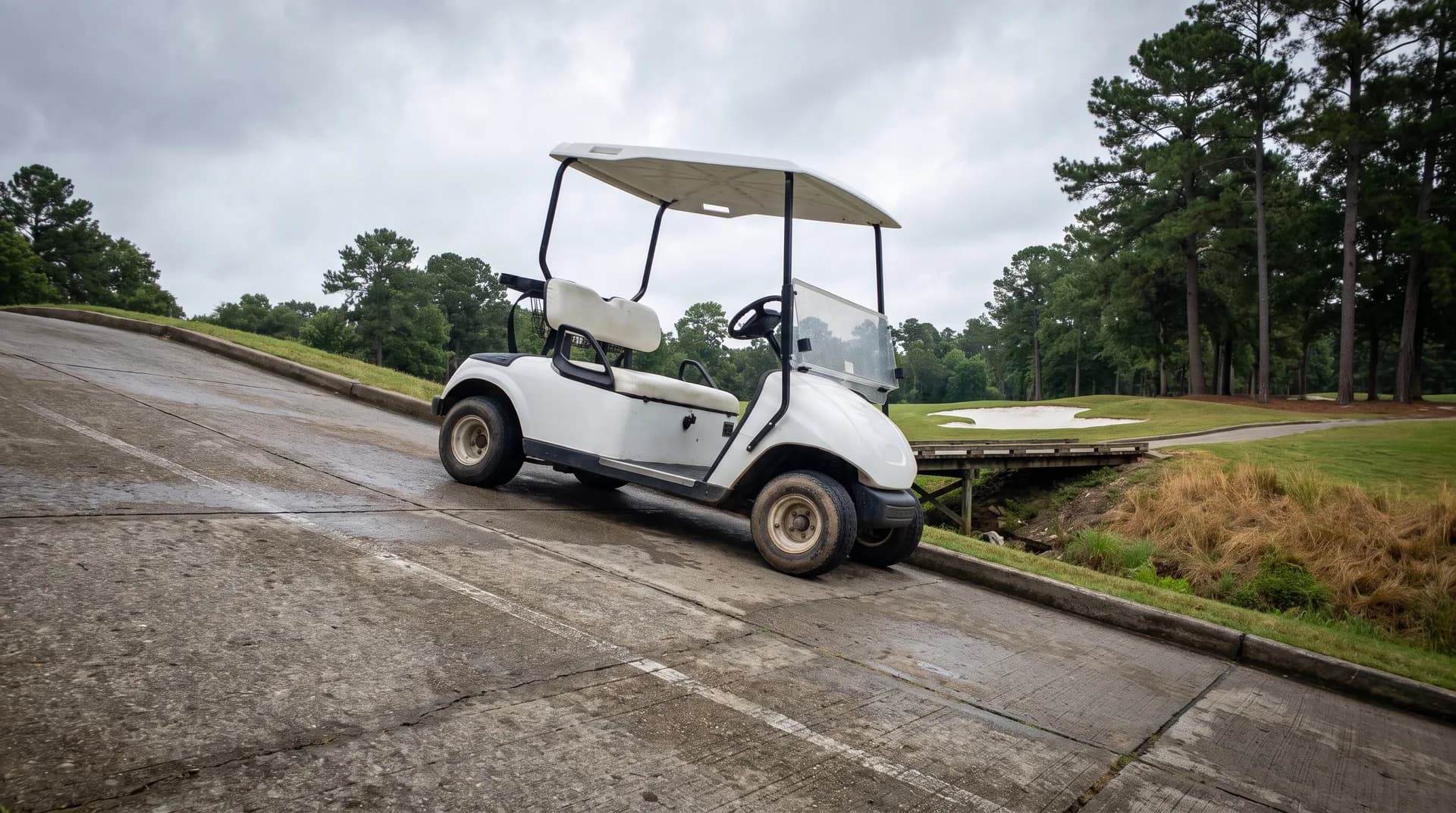
Gas earns its place in specific situations rather than as a general default. Large properties, farms and working sites where the cart runs all day and stops only to refuel are the clearest case, because a five-minute fill beats an overnight charge when the work does not pause. Anywhere without practical power is another. Gas also tends to be less bothered by sustained heavy loads and long climbs, and it does not care how many consecutive hours you ask of it. Against that, you are accepting noise, exhaust, and a maintenance schedule that genuinely needs following.
Cost, over the life of the cart
Up front the two are broadly comparable for similar specifications, and the differences show up over the years you own it. Electric costs very little to run day to day and asks for one large payment when the battery pack reaches the end of its life. Gas costs more every week in fuel and routine service parts, and spreads its bigger repairs across an engine, a fuel system and a transmission. Which totals higher depends heavily on how much you use it: light users almost always come out ahead on electric, while very heavy all-day users narrow the gap. Our running cost comparison works through it properly.
Resale
Electric carts dominate the US used market, which cuts both ways. There are more buyers when you sell, and there is also more competition, so condition and battery evidence matter a great deal to the price you get. A used electric cart with a documented, recently replaced pack sells noticeably better than an identical one with a pack of unknown age. Gas carts are a thinner market: fewer buyers, but also fewer sellers, so a good one in a region where gas is popular can hold up well.
A simple decision rule
- 01
Can you charge where it sleeps?
If no, and you cannot easily change that, buy gas. Nothing else in this comparison outweighs a cart you cannot conveniently charge.
- 02
Are gas carts allowed where you will use it?
If your community, park or course restricts them, buy electric. Confirm this in writing rather than assuming.
- 03
Do you run it for hours without a break?
If yes, most days, gas is worth serious consideration. If it is short trips with long gaps, electric is clearly better.
- 04
Does noise matter to anyone nearby?
Neighbors, guests, golfers and livestock all notice a gas engine. If any of them are in the picture, that is a point for electric.
- 05
Otherwise, buy electric.
For the large majority of US buyers, electric is quieter, cheaper to run, simpler to maintain and easier to resell.
Frequently asked questions
Is a gas or electric golf cart better?+
Electric is better for most buyers, because typical use is short frequent trips from a place with power, and electric is quieter, cheaper to run and needs far less maintenance. Gas is better where there is no practical charging or where the cart runs all day without stopping.
Do electric golf carts have enough range?+
For a full round of golf and normal neighborhood use, comfortably. Range becomes a real constraint only if you cover long distances continuously without a chance to recharge, which is where gas has a genuine advantage.
Are gas golf carts allowed in gated communities?+
Often not, or only with restrictions, because of noise and exhaust. Rules vary by community and by course, so confirm what is permitted where you will actually use the cart before you buy.
Which is cheaper to own, gas or electric?+
Electric usually, because charging costs little and routine maintenance is minimal, offset by one large battery replacement. Heavy all-day users narrow the gap, since fuel is easier to add than charge time.
Which holds its value better?+
Electric has the deeper used market, so it sells more easily, but condition and documented battery health drive the price heavily. Gas is thinner on both sides, which makes prices less predictable in either direction.
Not sure which fits your setup?
Tell us where the cart will live, how far you travel and what the rules are where you are. We will give you a straight recommendation, including when neither option is the right buy.
Related solutions
Ready to explore what we build?
See the vehicles and the setting this applies to, or get a tailored quote built around your site.
Ready to find the right golf cart?
Tell us how and where it will work and we will specify a vehicle and a tailored quote built around you. Every build comes with a 3-year warranty and a 24-hour priority call-out.
Our guides are written and reviewed by the Hawke Electric Vehicles team, the people who specify, build, deliver and support the vehicles. We focus on honest, practical advice and flag where a figure depends on the build rather than guessing.
More guides by Hawke