Most gas versus electric cost comparisons stop at the pump and the outlet, which is the smallest and least interesting part of the difference. The costs that actually separate the two arrive on different schedules: gas asks for small amounts often, electric asks for very little for years and then one substantial payment. Comparing them fairly means putting both on the same footing.
- Charging an electric cart costs a small fraction of fueling a gas one, per mile.
- Gas maintenance is regular and modest; electric maintenance is minimal.
- The battery pack is electric's dominant cost and it is scheduled, not unexpected.
- Light and moderate users almost always pay less overall with electric.
- Very heavy continuous users narrow the gap, mostly on charge time rather than money.
The four cost buckets
- Electric
- Low; overnight charging on a standard outlet
- Gas
- Higher and ongoing, and follows the fuel price
- Electric
- Brakes, tires, bearings, battery care
- Gas
- All of that plus oil, filters, plugs, belts, fuel system
- Electric
- Battery pack replacement, on a known cycle
- Gas
- Engine and drivetrain work, on an unknown one
- Electric
- Charging time, planned overnight
- Gas
- Fuel system faults after standing, often unplanned
| Electric | Gas | |
|---|---|---|
| Energy | Low; overnight charging on a standard outlet | Higher and ongoing, and follows the fuel price |
| Routine service | Brakes, tires, bearings, battery care | All of that plus oil, filters, plugs, belts, fuel system |
| Major cost event | Battery pack replacement, on a known cycle | Engine and drivetrain work, on an unknown one |
| Downtime | Charging time, planned overnight | Fuel system faults after standing, often unplanned |
Energy: the easy part
Charging an electric cart is genuinely cheap. A full charge draws a modest amount of electricity, and for typical neighborhood or course use the weekly cost is small enough that most owners never notice it on a utility bill. Gas is not expensive either in absolute terms, but it is several times more per mile and it tracks pump prices, so it is both higher and less predictable. If energy were the only line item, electric would win comfortably and the comparison would be over. It is not, which is why the argument persists.
Maintenance: the part people underestimate
An electric cart has very little to service. There is no oil to change, no filters, no spark plugs, no belts, no carburetor and no exhaust. What it needs is brakes checked and adjusted, tires, bearings and suspension looked after, the charging system verified and, on lead-acid packs, proper water and charge discipline. A gas cart needs all the same chassis work plus a genuine engine service schedule, and unlike a car nobody reminds you. Skipped gas maintenance is where a cheap cart becomes an expensive one. Our maintenance comparison breaks down the schedules side by side.
The battery, and why it is not a surprise
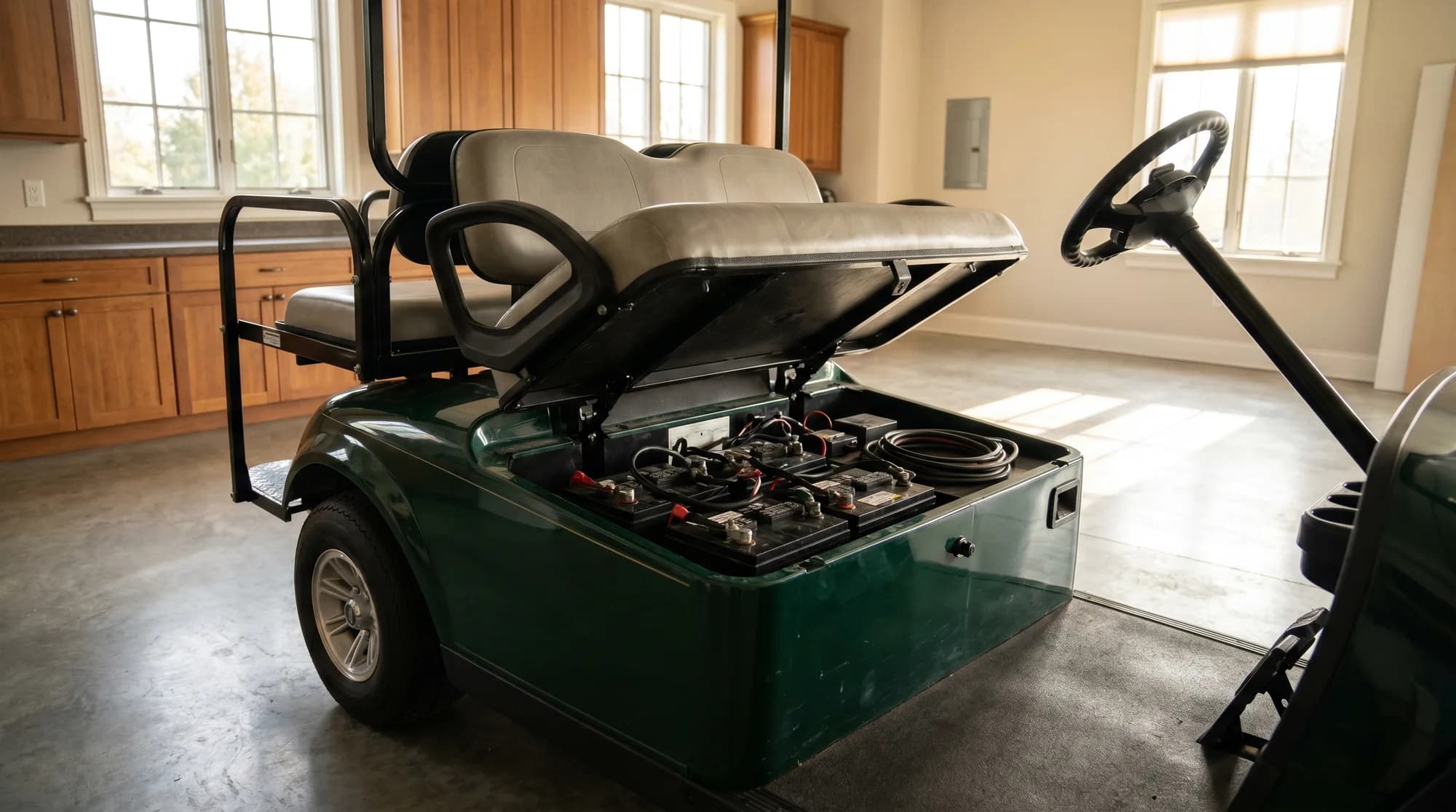
Electric's dominant cost is the traction battery pack, and it is worth being clear that this is a scheduled consumable rather than a failure. A pack has a finite life in charge cycles and degrades on a calendar too, so it will need replacing at some point regardless of how carefully you drive. Treated as a planned cost spread across the years you own the cart, it slots into the comparison normally. Treated as an unexpected repair, it feels like a disaster and skews people's judgment of electric carts generally. Lithium packs typically last considerably longer than lead-acid, which changes the arithmetic meaningfully over a long ownership.
Costs both sides forget
Three recur. Tires wear on both and are due more often than owners expect on a cart that covers real distance. Brakes are cheap and safety critical on both and are the most commonly deferred item. And storage matters for both in different ways: an electric cart wants to be somewhere it can stay on charge, while a gas cart left standing with old fuel develops starting and carburetor problems that cost more to fix than the fuel was ever worth. Neither of these shows up in a spec-sheet comparison and both show up in a bank statement.
Who comes out ahead
Light and moderate users, which covers most private owners, almost always pay less overall with electric, because the energy saving and the near-absence of routine servicing compound over years while the battery replacement is a single event. Very heavy users who run a cart continuously through long working days narrow the gap, though what usually decides it for them is not money but charge time, since a cart that must stop for hours is a cart that is not working. Fleet operators tend to land on electric for a mix of running cost, noise and predictability, and then manage battery replacement as a planned cycle rather than an event.
Frequently asked questions
How much does it cost to charge a golf cart?+
A small amount per charge on a standard outlet, and for typical neighborhood or course use most owners never notice it on their utility bill. It is several times cheaper per mile than fueling an equivalent gas cart.
Is an electric golf cart cheaper to maintain than gas?+
Considerably. There is no oil, filters, plugs, belts, carburetor or exhaust to service. Both need brakes, tires, bearings and suspension attention, but the gas cart adds a full engine service schedule on top.
How often do golf cart batteries need replacing?+
It depends on chemistry, use and charging discipline, and lithium generally lasts substantially longer than lead-acid. Treat it as a scheduled consumable on a known cycle rather than an unexpected repair.
Does a gas golf cart cost more over ten years?+
For light and moderate use, usually yes, because fuel and routine servicing accumulate steadily while electric's big cost is a single battery replacement. Very heavy continuous use narrows the gap.
What running cost do owners most often forget?+
Tires and brakes on both, and standing damage: an electric cart left off charge or a gas cart left with stale fuel will both cost money that never appears in a spec-sheet comparison.
Want the numbers for your situation?
Tell us how far you travel, how often, and where the cart will be kept. We will give you an honest cost picture rather than a sales pitch for whichever one we happen to have.
Related solutions
Ready to explore what we build?
See the vehicles and the setting this applies to, or get a tailored quote built around your site.

Ready to find the right golf cart?
Tell us how and where it will work and we will specify a vehicle and a tailored quote built around you. Every build comes with a 3-year warranty and a 24-hour priority call-out.
Our guides are written and reviewed by the Hawke Electric Vehicles team, the people who specify, build, deliver and support the vehicles. We focus on honest, practical advice and flag where a figure depends on the build rather than guessing.
More guides by Hawke