Security is the least glamorous line in an event cart hire and the one most likely to cost you money. The vehicles are portable, valuable, easy to move quietly and, on a multi-day site, routinely left in a field for eight hours a night with nobody watching them. Add the fact that hire agreements commonly exclude theft from unsecured locations, and an unplanned approach to overnight storage becomes a genuine financial exposure rather than a housekeeping detail. The good news is that the controls are cheap and mostly procedural. This guide covers key control during the day, compounds and overnight storage, the charging area, what your agreement is likely to expect of you, and the specific risks on long build sites.
- Most hire agreements exclude or limit theft from unsecured locations, which puts overnight storage squarely on you.
- Key control during the day matters more than fencing at night; keys left in vehicles are the commonest route to an incident.
- One compound for parking and charging is easier to secure, easier to supervise and easier to audit.
- Do a nightly count of vehicles, keys and chargers, and record it; disputes are settled by records, not recollection.
- Build and derig nights are the highest-risk periods, not show nights, because the site is quiet and access is loose.
Read the theft clause before you plan the security
Start here, because it determines how much effort is worth spending. Hire agreements commonly place theft from unsecured locations outside cover, and define what secure means, sometimes tightly. That means the practical question is not just how do we reduce risk, it is what does our agreement require of us, and are we doing it? Find the clause, read the definition, and ask your supplier directly what they expect: fenced compound, locked gates, security presence, keys held centrally, vehicles immobilised. Then either meet it or negotiate it before the fleet arrives. Discovering after an incident that your storage did not meet the definition is the expensive way to learn this, and it can leave you carrying the full value of a vehicle. Our guides to hire terms and hire insurance cover the surrounding clauses.
Key control is the daytime control that matters
Overnight security gets the attention; daytime key control prevents more incidents. The failure mode is mundane: a driver stops for two minutes, leaves the key in, and the vehicle is taken for a joyride by someone who is not on your authorised driver list, or is simply gone. Nothing about that requires an organized thief. The controls are equally mundane and very effective. Keys live with a named person or on a controlled board, not in the vehicle. Vehicles are keyed out and back with a signature, which takes seconds and creates a record. Drivers are briefed that leaving a key in an unattended vehicle is not acceptable, and that includes at the catering van. And spare keys are held centrally rather than distributed for convenience. Set this up on the morning of delivery, alongside the authorised driver list in your risk assessment, and it becomes normal within an hour.
Event cart security: the overnight compound
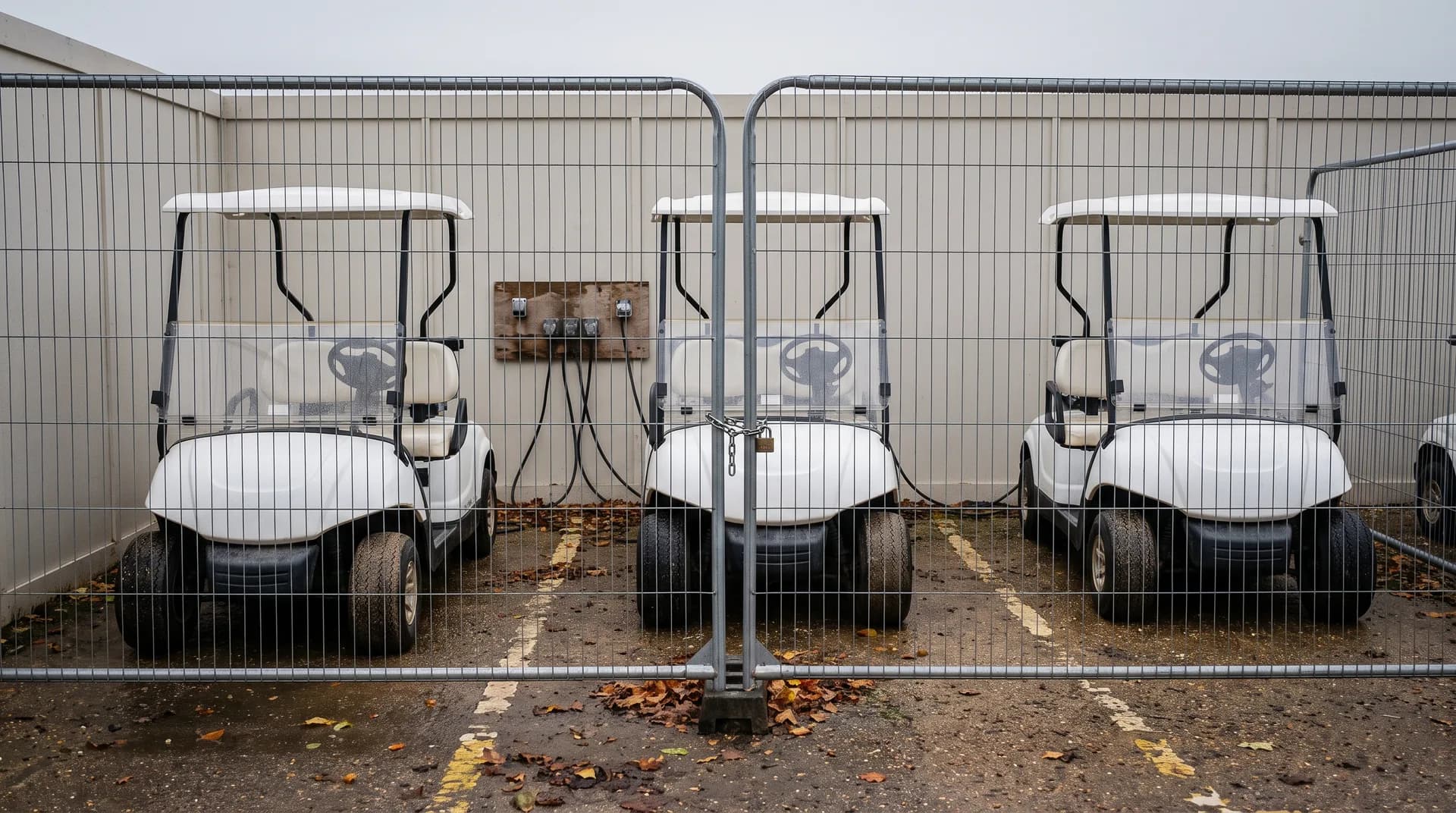
The practical answer for most events is a single compound that serves as both the parking area and the charging area, positioned somewhere that is already inside your secure perimeter and already passed by security patrols. Combining the two is not a compromise, it is better: vehicles have to be somewhere with power anyway, and one location is easier to fence, light, supervise and count than several. Choose the site for four things: it is inside your existing secure line, it has or can have suitable power, it has a hard or reliable surface so vehicles are not being retrieved from mud at six in the morning, and it is not so remote that using it becomes a chore drivers will avoid. Fence it or use existing structures, light it, and control access so that only the transport team goes in. If you have a security provider on site, put the compound on their patrol route explicitly rather than hoping.
- What it prevents
- Opportunist use, unauthorised drivers, most incidents
- Effort
- Minimal, procedural
- What it prevents
- Overnight theft, wandering vehicles
- Effort
- Moderate, usually reuses existing fencing
- What it prevents
- Overnight theft on quiet sites
- Effort
- Minimal if security is already on site
- What it prevents
- Disputes at collection, slow discovery of a loss
- Effort
- Ten minutes a night
- What it prevents
- Opportunist entry, and trip hazards for your own team
- Effort
- Low if power is already there
- What it prevents
- Determined theft of a specific vehicle
- Effort
- Higher, worth it for long or remote builds
| What it prevents | Effort | |
|---|---|---|
| Key control and sign-out | Opportunist use, unauthorised drivers, most incidents | Minimal, procedural |
| Single fenced compound | Overnight theft, wandering vehicles | Moderate, usually reuses existing fencing |
| On patrol route | Overnight theft on quiet sites | Minimal if security is already on site |
| Nightly count and record | Disputes at collection, slow discovery of a loss | Ten minutes a night |
| Lighting the compound | Opportunist entry, and trip hazards for your own team | Low if power is already there |
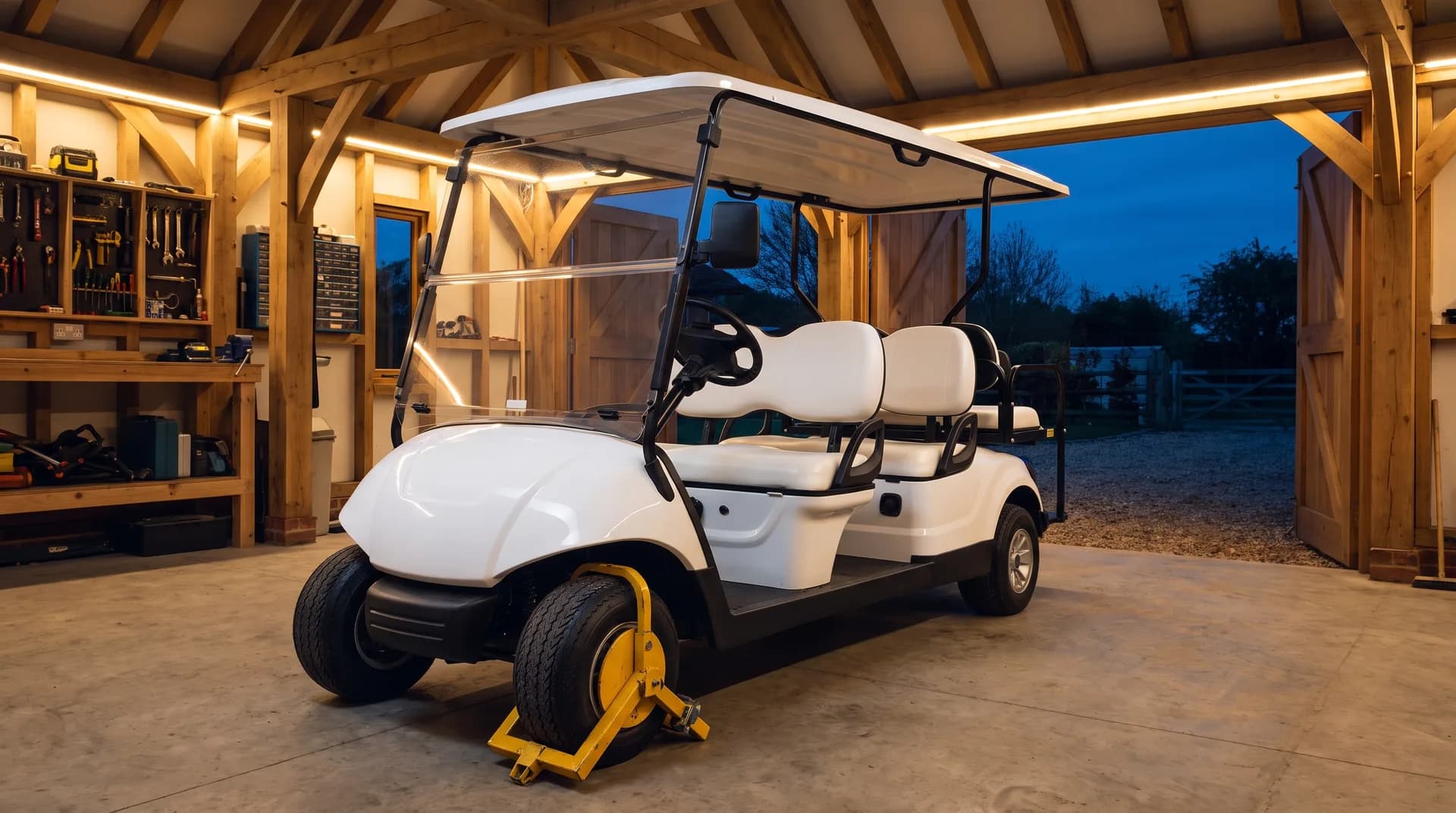
| Wheel locks or immobilisers | Determined theft of a specific vehicle | Higher, worth it for long or remote builds |
Charging safely and securely in the same place
The charging area is where security and safety overlap, so treat it as one problem. It needs enough sockets at the right rating for the whole fleet, cabling routed so nobody trips over it and nothing sits in standing water, and no public access at all. Follow the supplier's charging instructions to the letter, because on a multi-day hire correct charging is generally your responsibility and battery damage from getting it wrong tends to sit on the hirer's side of the agreement. Assign it to a named person rather than assuming it will happen: on a long build, the single most common cause of a fleet underperforming is nobody actually being responsible for plugging vehicles in at the end of a sixteen-hour day. Our guide to powering event golf carts on site covers the electrical planning in detail.
Build and derig are the risky nights
Counter-intuitively, show nights are usually the safest. The site is full, security is at maximum, lighting is on and everybody is awake. The risk sits in the build and derig period, when the site is quiet at three in the morning, the perimeter may not be complete, contractors come and go with legitimate access, and security cover is often lighter than during the show. If your hire spans a long build, as most large events do, plan security for that period specifically rather than assuming the show-time arrangements apply throughout. That usually means the compound goes in early, the patrol route includes it from day one, and key control starts on the day of delivery rather than on the day the public arrive. Our build and derig guide covers the wider planning for that phase.
Count everything, every night
The last control is the simplest and the most often skipped: a nightly count, written down. Vehicles, keys, chargers and accessories, checked against the handover list, recorded with a date and a name. It takes ten minutes and it does three useful things. It finds a loss the night it happens rather than at collection, when the trail is cold. It settles disputes with records rather than recollection, which is the whole point of the timestamped photographs you took at handover. And it makes the transport team visibly responsible for the fleet, which changes behaviour more than any policy. Hand the list to your supplier at collection alongside the vehicles, and the collection process, which is where hire relationships most often sour, becomes a formality. Our guide on what happens if you damage a hire cart explains why the record matters, and our festival hire and resort park pages cover the multi-day sites where overnight security matters most.
Frequently asked questions
Who is responsible if a hire cart is stolen at an event?+
Usually the hirer, and often entirely so if the vehicle was taken from an unsecured location, because hire agreements commonly exclude or limit theft in those circumstances. Read the clause and the definition of secure before the fleet arrives, and either meet it or agree something different in writing.
How do you secure golf carts overnight at an event?+
A single fenced, lit compound inside your existing secure perimeter, serving as both the parking and charging area, on your security provider's patrol route, with access limited to the transport team. Add a nightly count of vehicles, keys and chargers, recorded and signed.
Should keys be left in event golf carts during the day?+
No. Keys left in unattended vehicles are the most common route to an incident, and it rarely involves an organized thief. Keep keys with a named person or on a controlled board, sign them out and back, and brief drivers that leaving a key in is not acceptable anywhere on site.
Where should golf carts be charged on an event site?+
In the same secure compound where they are parked, with enough sockets at the right rating, cabling routed away from foot traffic and standing water, and no public access. Assign charging to a named person, because on a long build it is the task most often assumed rather than done.
When are golf carts most at risk of theft at an event?+
During build and derig rather than show nights. The site is quiet, the perimeter may be incomplete, contractors have legitimate access and security cover is often lighter. Put the compound and key control in place from the day of delivery, not from the day the public arrive.
Planning a multi-day hire?
Tell us the site, the build period and your storage arrangements, and we will set out the security expectations plainly before the fleet arrives.
Related solutions
Ready to explore what we build?
See the vehicles and the setting this applies to, or get a tailored quote built around your site.
Ready to find the right golf cart?
Tell us how and where it will work and we will specify a vehicle and a tailored quote built around you. Every build comes with a 3-year warranty and a 24-hour priority call-out.
Our guides are written and reviewed by the Hawke Electric Vehicles team, the people who specify, build, deliver and support the vehicles. We focus on honest, practical advice and flag where a figure depends on the build rather than guessing.
More guides by Hawke