A golf cart hire agreement is shorter than a car hire contract but it carries the same weight, and most of the questions hirers ask afterwards are answered in clauses they skimmed at the start. The typical agreement covers six things: when the hire starts and ends, how delivery and collection work, who is allowed to drive, how insurance and damage responsibility are split, who charges the batteries, and what happens if plans change. This guide walks through each clause in plain English so you know what you are agreeing to and which questions to ask. One caveat runs through the whole piece: terms vary between suppliers and between private, event and long-term hires, so treat this as a map of what to look for, and confirm the specifics in your own hire agreement.
- The hire period clause defines exactly when your responsibility starts and ends, including overruns.
- Delivery windows and site access requirements are contractual, tell the supplier about gates, gradients and ground conditions up front.
- Authorised driver clauses matter: an unlisted driver can void the cover you are relying on.
- Insurance is split between supplier and hirer in different ways, find the excess and your maximum exposure.
- Cancellation terms usually scale with notice, book early but know the schedule before you sign.
The hire period: when cart hire terms start the clock
The hire period sounds like the simplest clause and catches the most people out. It defines when the vehicle becomes your responsibility, often from delivery rather than first use, and when that responsibility ends, usually at collection, not when your event finishes. Check three things. First, whether the period is measured in calendar days, event days or 24-hour blocks, because a weekend event can span four chargeable days once build-up and breakdown are counted. Second, what happens if you overrun: most agreements provide for additional charges if the golf carts are not ready for collection when agreed. Third, where the vehicles must be at the end, gathered at an agreed point, charged or not, keys returned how. None of this is complicated, but it is all contractual, so confirm it in your hire agreement rather than assuming.
Delivery windows, site access and handover
Delivery clauses typically commit the supplier to a window rather than a moment, and commit you to making the site accessible within it. That means telling the supplier honestly about access before the day: locked gates, height barriers, soft ground, steep ramps and long carries from the nearest hard standing all change how delivery works, and surprises at the gate are the most common cause of delivery friction. The handover itself matters more than it looks. A proper handover records the condition of each vehicle, confirms charge state, and walks someone on your side through controls and any site-specific instructions. Take your own photos at handover, they are your evidence if condition is disputed later, and make sure the person receiving the golf carts is someone with the authority to sign. Our guide to how event cart hire works walks through the full delivery-to-collection cycle.
Authorised drivers and insurance in cart hire terms
Two clauses do the heavy lifting on risk, and they work together. The authorised drivers clause defines who may drive: commonly a minimum age, sometimes a driving licence requirement, sometimes a named list or a briefing requirement for event staff. It matters because the insurance arrangements in the next clause are usually conditional on it, damage or injury caused by an unauthorised driver can leave you carrying costs you believed were covered. Read who can drive a hire cart before you promise colleagues a go. The insurance clause then sets out the split: what the supplier's cover handles, what excess you are liable for per incident, and what falls to you entirely, often theft from unsecured locations, damage from misuse, or use outside the agreed site. The numbers and structures vary widely, so find the excess figure, work out your worst-case exposure, and see our hire insurance guide for the typical patterns. If anything is ambiguous, ask in writing before you sign.
Charging responsibilities
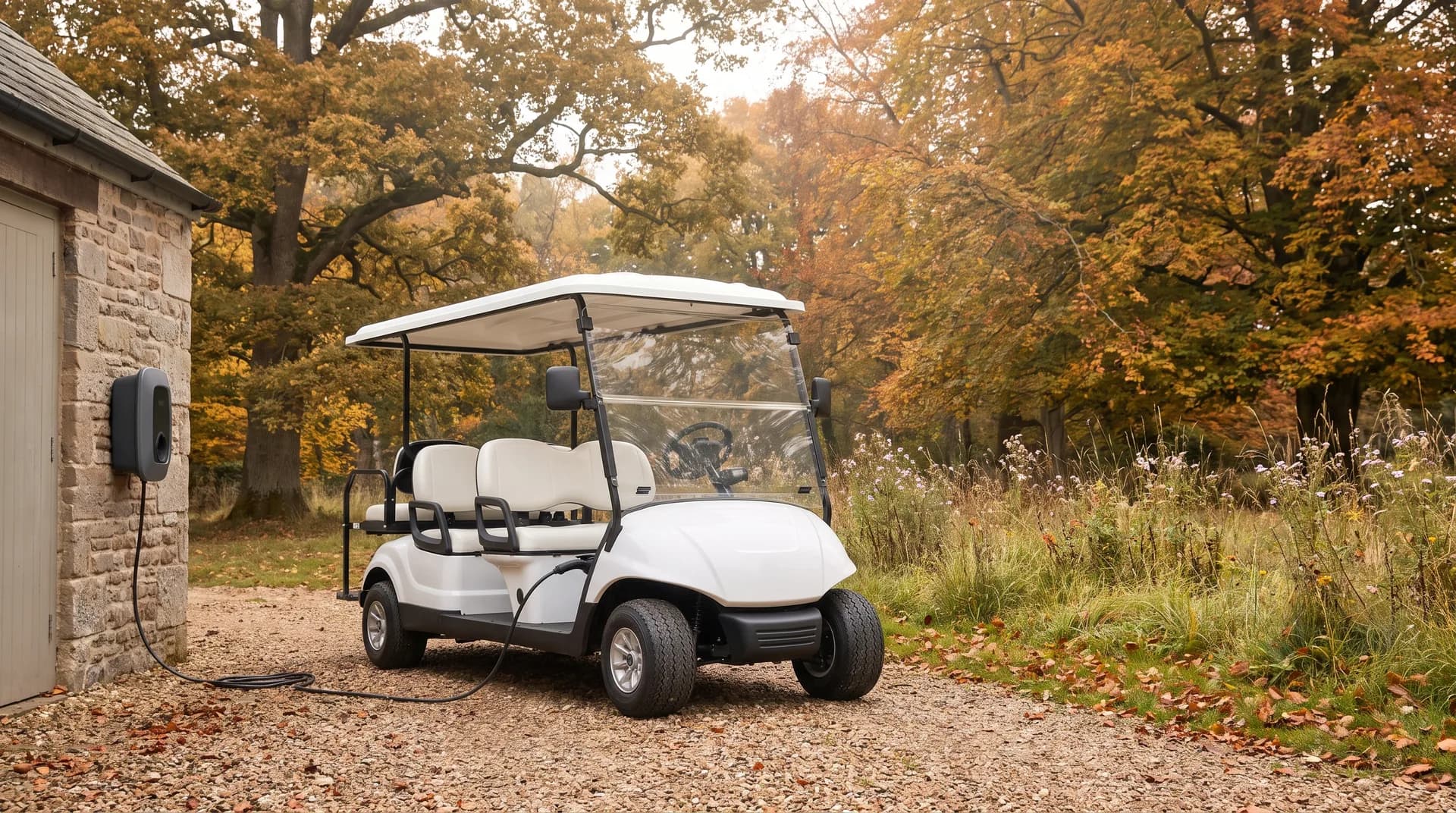
Electric fleets add a clause gas hire never needed: who charges the golf carts, and how. On short hires the vehicles may arrive charged and simply need to last the day; on multi-day hires you will usually take on overnight charging, which means the agreement will expect suitable sockets, a secure charging area and adherence to the supplier's charging instructions. Take the instructions seriously, correct charging is typically your responsibility once the fleet is on site, and battery damage from ignoring them tends to sit on the hirer's side of the line. Practical questions to settle up front: how many sockets are needed and at what rating, how long a full charge takes, whether the chargers travel with the golf carts, and what to do if a vehicle runs flat mid-day. A supplier who asks about your power before quoting is a good sign.
Cancellation, changes and the clauses people skip
Cancellation terms usually scale with notice: the closer to delivery, the more of the hire fee is retained, with the schedule set out in the agreement. Weather clauses are worth reading for outdoor events, cancelling because of rain is normally still a cancellation unless the agreement says otherwise. Change clauses cover adding or removing golf carts, extending the hire, or moving dates, all usually possible with notice and sometimes with revised pricing. Finally, skim the quieter clauses: where the golf carts may and may not be used, prohibitions on towing or overloading, subletting bans, and what the supplier can do if vehicles are misused. None of it is designed to trap you; it is designed to make responsibilities clear. The hirers who have a smooth experience are the ones who read the agreement, asked two or three questions, and told the supplier the truth about their site. Two clauses deserve a guide of their own: our deposits and payment guide explains what each payment is for and why a damage deposit is not the same as an insurance excess, and our bad-weather contingency guide covers what the weather clause actually means for an outdoor event. If you are weighing regular hire against ownership, our hire versus buy guide sets out where the crossover sits, and when you are ready, start with a hire quote.
Frequently asked questions
Are cart hire terms negotiable?+
Sometimes, particularly on larger or repeat hires. Delivery windows, driver arrangements and change terms are the most commonly flexed. Ask before signing; changes agreed in writing beat verbal assurances every time.
When does my responsibility for the golf carts actually start?+
Commonly at delivery or handover, not first use, and it typically runs until collection. The exact trigger points are defined in your hire agreement, so confirm them rather than assuming.
What happens if I need the golf carts for longer than booked?+
Most agreements allow extensions with notice, subject to availability and additional charges, and provide for overrun charges if vehicles are not ready for collection. Contact the supplier as early as possible rather than presenting an overrun as a surprise.
Who is responsible for charging hire golf carts?+
On multi-day hires, usually the hirer, following the supplier's charging instructions, with the supplier providing chargers. Confirm socket requirements and charging duties in your hire agreement before delivery day.
What should I check before signing a cart hire agreement?+
Five things: exactly when the hire period starts and ends, the delivery window and what your site must provide, who may drive, the insurance split and your excess, and the cancellation schedule. If any answer is unclear, ask in writing.
Hire with terms you can actually read
Tell us about your event, site and dates and we will quote clearly, with the responsibilities spelled out in plain English before you commit.
Related solutions
Ready to explore what we build?
See the vehicles and the setting this applies to, or get a tailored quote built around your site.

Ready to find the right golf cart?
Tell us how and where it will work and we will specify a vehicle and a tailored quote built around you. Every build comes with a 3-year warranty and a 24-hour priority call-out.
Our guides are written and reviewed by the Hawke Electric Vehicles team, the people who specify, build, deliver and support the vehicles. We focus on honest, practical advice and flag where a figure depends on the build rather than guessing.
More guides by Hawke