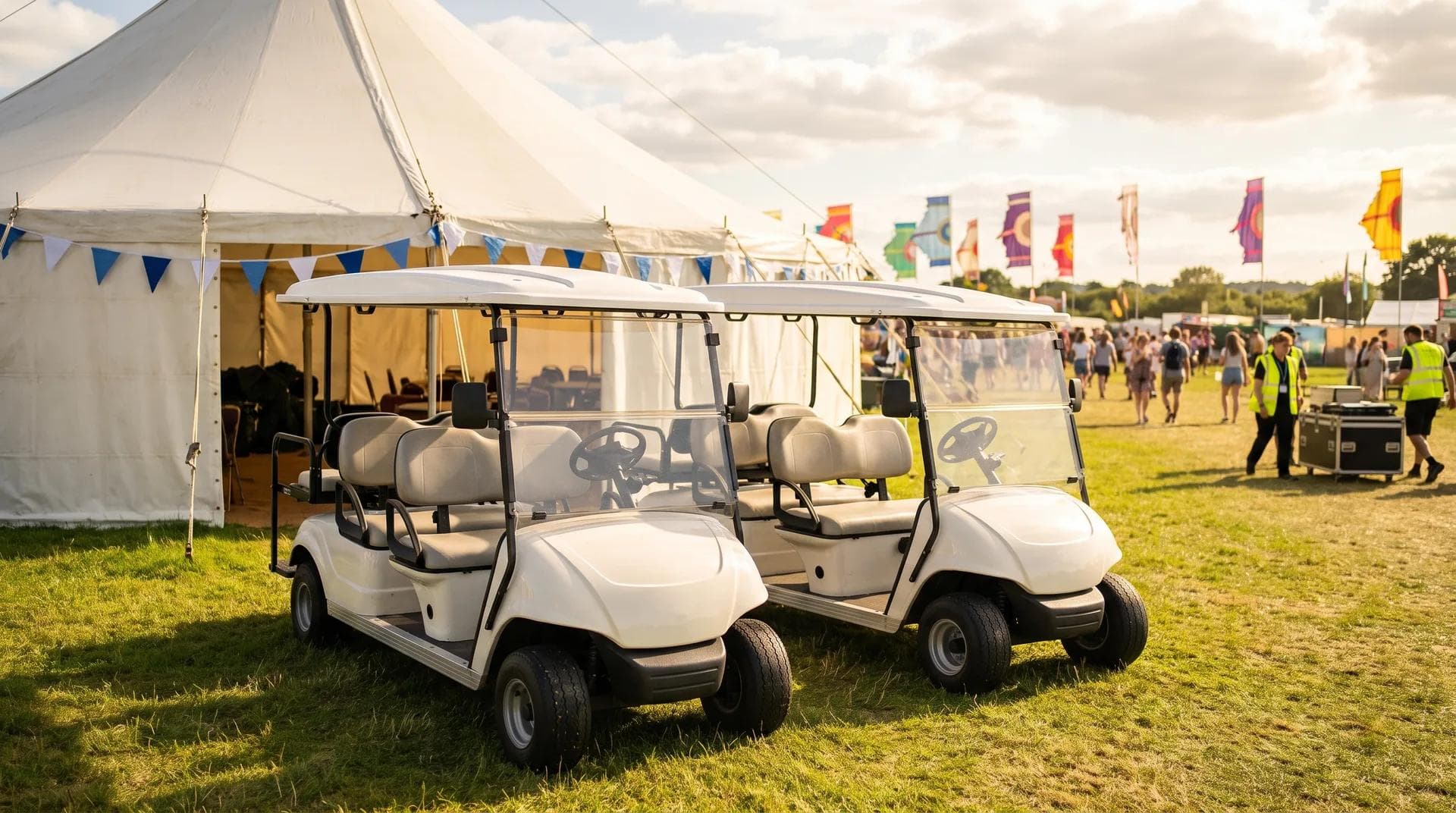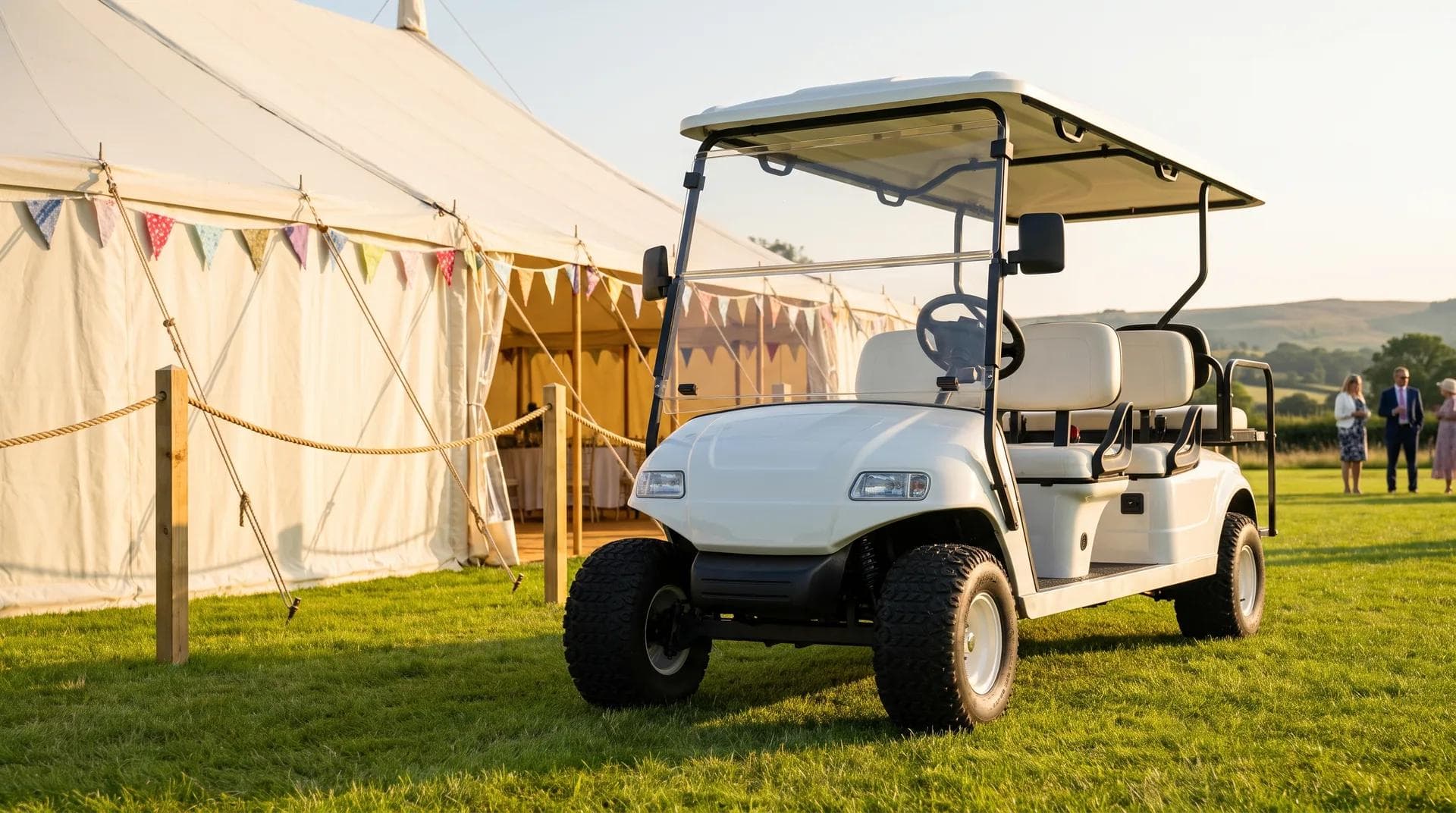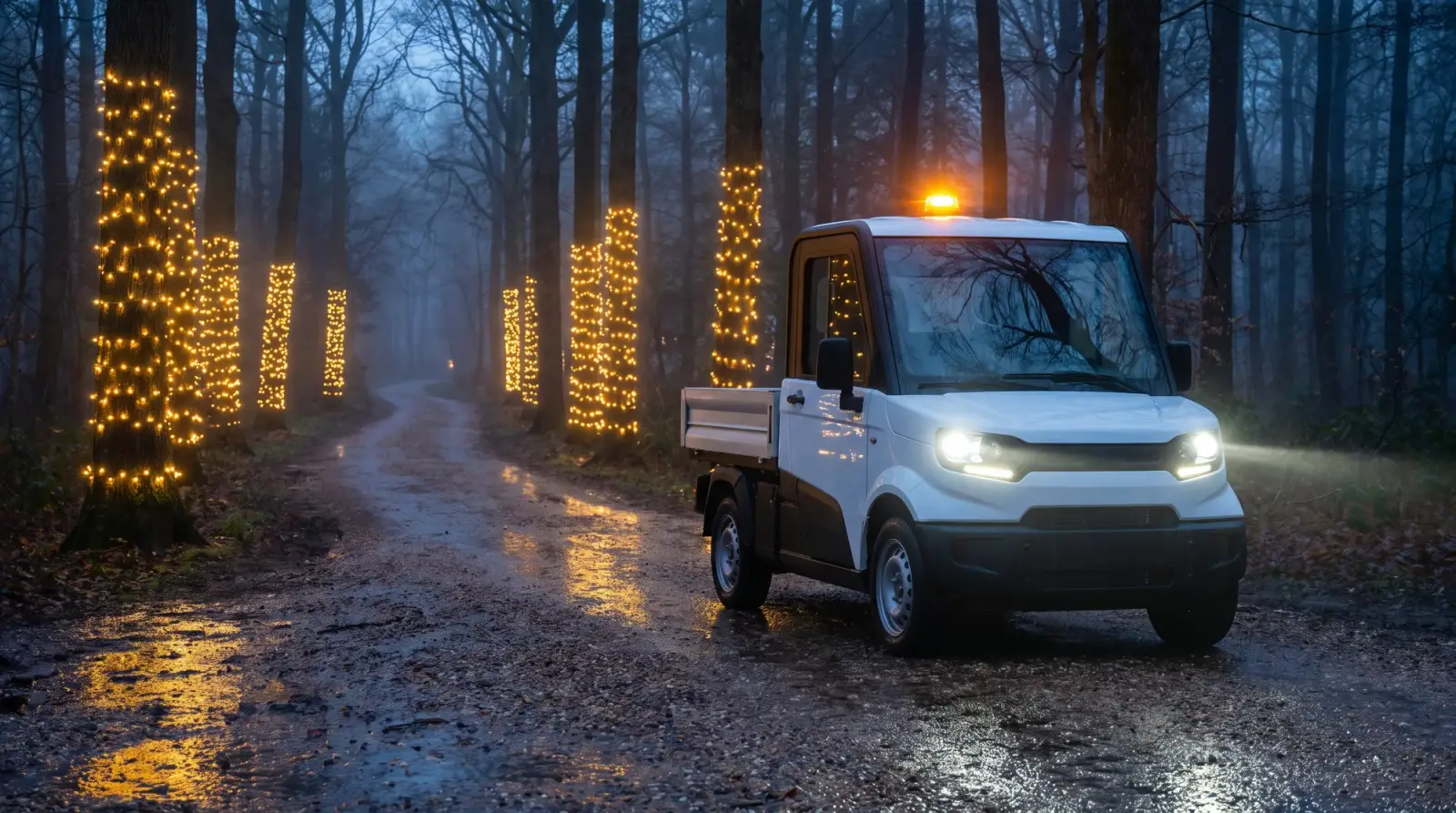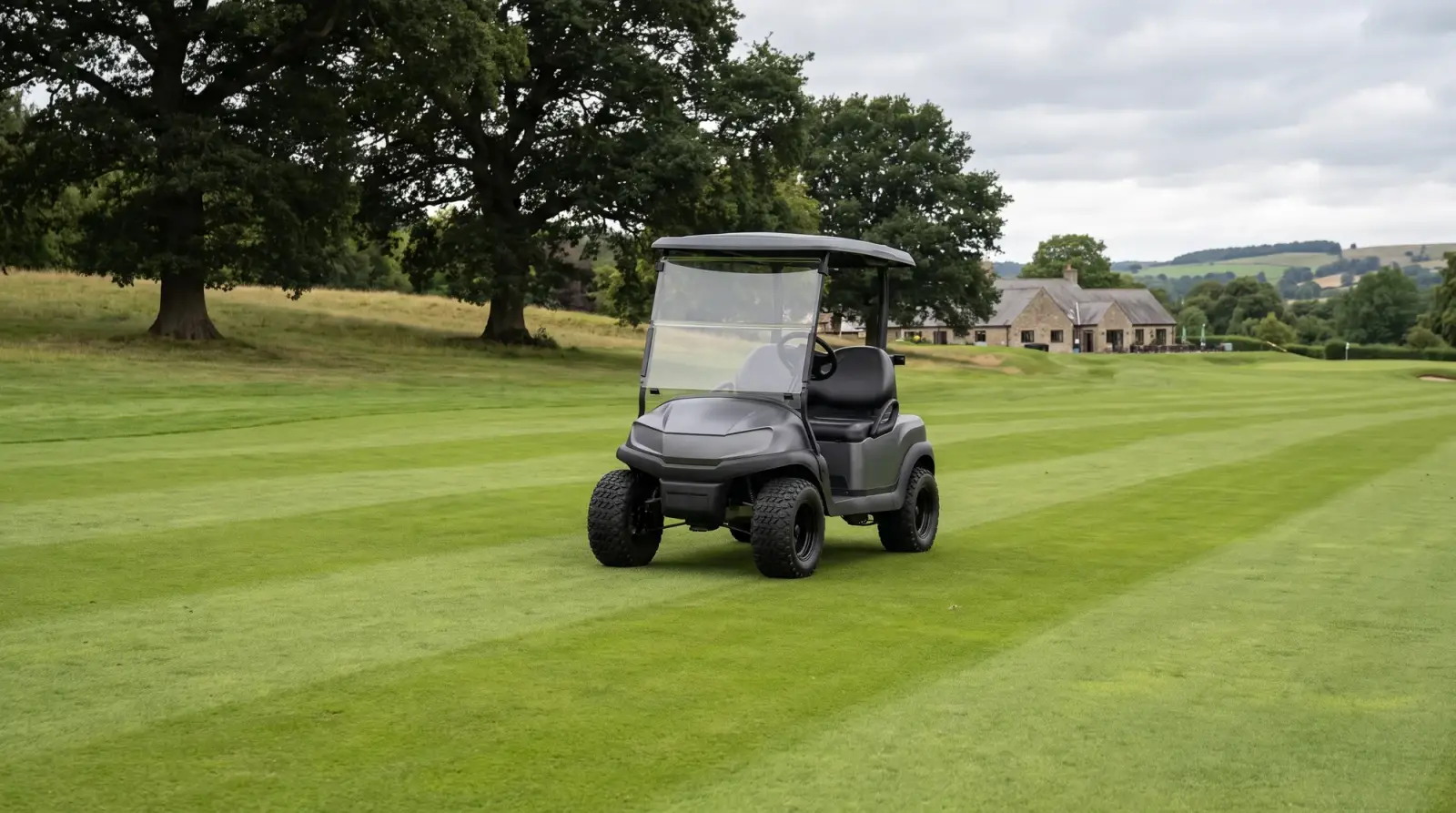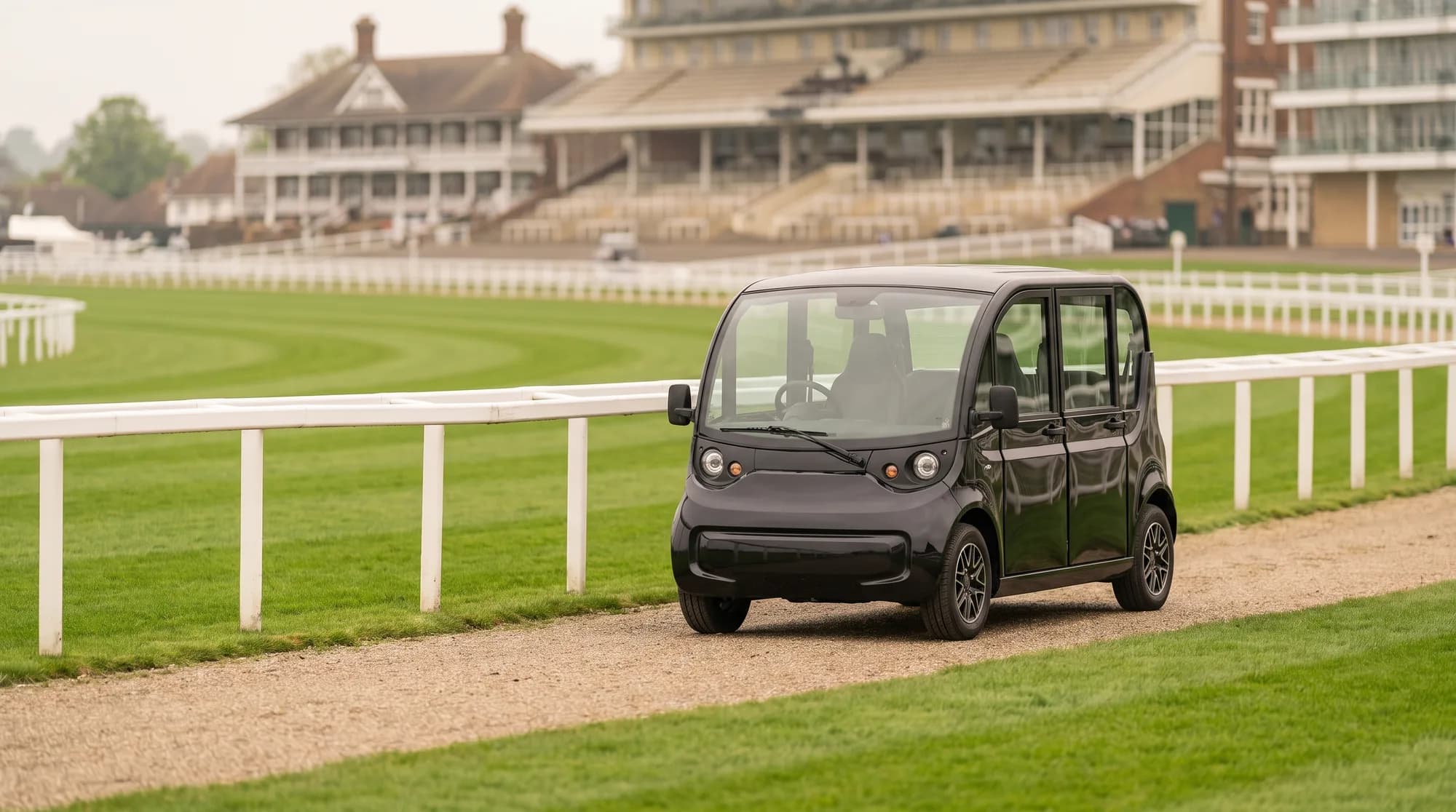
Britain's 59 licensed racecourses all wrestle with the same raceday logistics problem: thousands of guests, long distances between car parks and enclosures, and half a metric ton of flight animal that spooks at engine noise. Electric golf carts answer all three at once, which is why they're steadily replacing diesel utility vehicles at courses from Ascot-scale festivals down to country point-to-points.
This guide is for the people who actually run racedays: operations and estates managers deciding what to put on the fleet. We'll cover the jobs golf carts do, why quiet drive matters so much around horses, what size vehicles suit a 1 to 2 miles circuit, and the buy-versus-hire question that every finance director asks in the same meeting.
- Raceday cart jobs split five ways: guest shuttles, stewards and medics, vet runs between stables and course, hospitality deliveries, and grounds work between fixtures.
- Near-silent electric drive is the differentiator around horses. Diesel utility vehicles spook them; a quiet cart can work near the parade ring and stabling.
- A course circuit runs 1 to 2 miles, so six and eight-seat shuttles earn their keep moving guests between car parks and enclosures.
- Own the core fleet that works year-round, hire the top-up for big fixtures. Most courses land on a hybrid.
- Golf Carts take sponsor livery well, which turns a cost line into visible partner inventory.
What do racecourses use golf carts for on a raceday?
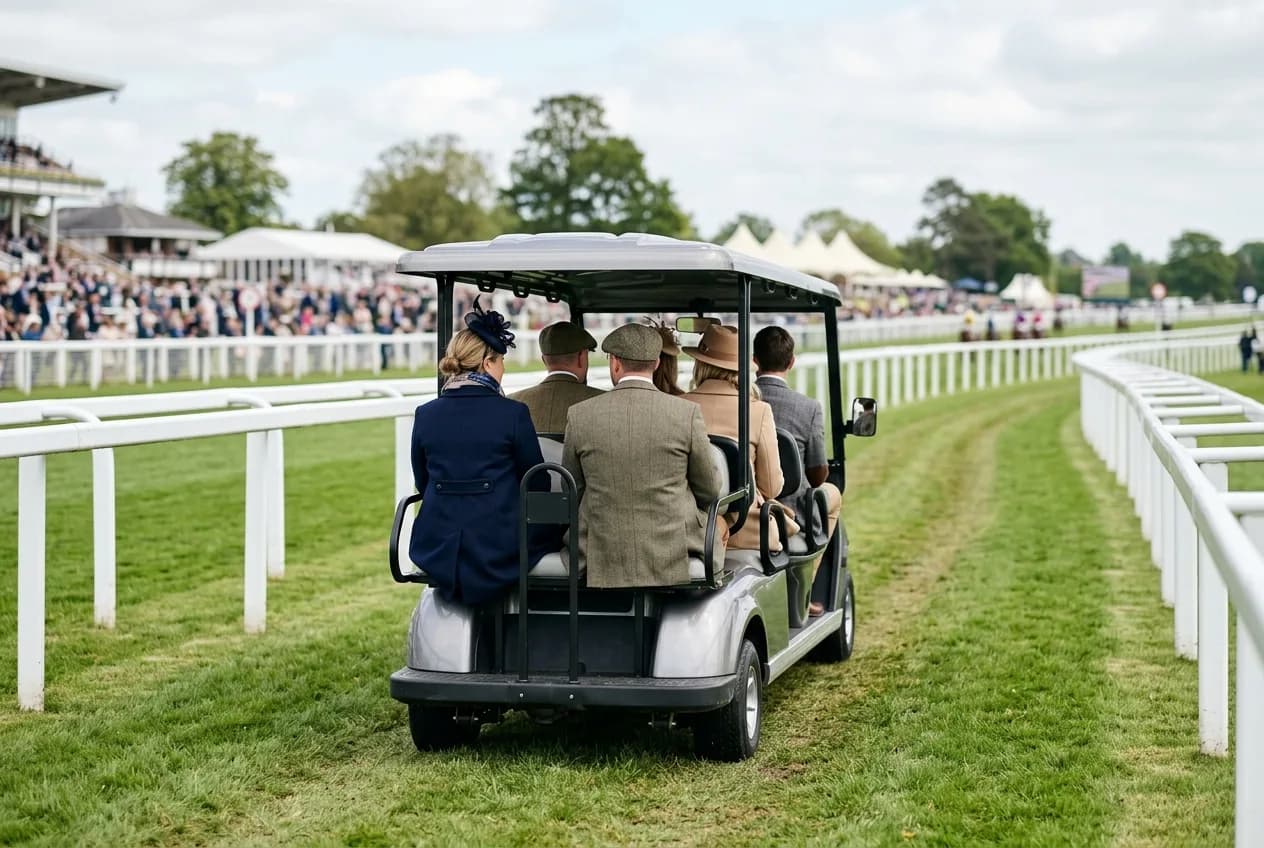
Start with the guests. Racecourse car parks sit a long way from the action, premier parking excepted, and a meaningful slice of any crowd struggles with a kilometre's walk: older racegoers, wheelchair users, anyone in hospitality heels on wet grass. Six and eight-seat shuttles running car park to entrance, and between enclosures on the bigger courses, transform that experience and quietly reduce the complaints inbox.
Then the operational traffic. Stewards and medics need to move along the running rail quickly without driving anything intimidating through a crowd. Vets shuttle between the stable yard, the sampling unit and the course itself, often at short notice mid-card. Hospitality teams run food, drink and linen from central kitchens out to boxes and lawns all afternoon. And once the crowd's gone home, groundstaff need load-lugging vehicles for divoting, rail moves and repairs between fixtures. One fleet, five different jobs.
Why does electric matter around horses?
Racehorses are flight animals wound tight on a raceday, and sudden engine noise is exactly the stimulus that sets one off. A diesel gator clattering past the pre-parade ring is a genuine risk to handlers, jockeys and the horse itself. Electric golf carts remove the noise almost entirely. They move at walking pace through sensitive areas with nothing but tire sound, which is why courses increasingly mandate electric-only within the stable yard perimeter.
Fumes matter too. Stabling areas are enclosed, horses have sensitive respiratory systems, and nobody wants exhaust drifting through a yard housing several million pounds' worth of bloodstock. Electric drive removes the tailpipe, and it also plays well with the environmental commitments most racecourse groups have now published.
What size fleet does a raceday actually need?
It scales with the fixture, not the course. A quiet midweek card might need two or three vehicles; a festival Saturday at the same course can justify ten or more. The circuit itself is 1 to 2 miles around, and shuttle routes from the furthest car park can easily run a kilometre each way, so range and seat count both matter. Modern lithium golf carts will do a full raceday on one charge; if you're comparing battery types, our lithium versus lead-acid guide explains why lithium wins for all-day shuttle work.
- Vehicle
- 6 or 8-seat electric people mover
- Why it fits
- Maximum seats per driver on a fixed route, canopy for British weather
- Vehicle
- 4-passenger with kit space
- Why it fits
- Fast to board, easy through crowds, room for response bags
- Vehicle
- Quiet 2 to 4-passenger
- Why it fits
- Near-silent operation in the most horse-sensitive areas
- Vehicle
- 2-seat utility with cargo bed
- Why it fits
- Trolley-height load bed, runs all day between kitchens and boxes
- Vehicle
- Utility with tow hitch
- Why it fits
- Tows rail trailers and equipment, doubles as raceday spare
| Vehicle | Why it fits | |
|---|---|---|
| Guest shuttles, car park to enclosures | 6 or 8-seat electric people mover | Maximum seats per driver on a fixed route, canopy for British weather |
| Stewards and medics | 4-passenger with kit space | Fast to board, easy through crowds, room for response bags |
| Vet runs, stables to course | Quiet 2 to 4-passenger | Near-silent operation in the most horse-sensitive areas |
| Hospitality deliveries | 2-seat utility with cargo bed | Trolley-height load bed, runs all day between kitchens and boxes |
| Grounds work between fixtures | Utility with tow hitch | Tows rail trailers and equipment, doubles as raceday spare |
Should a racecourse buy or hire?
Both, usually. The case for owning rests on the days nobody sees: grounds maintenance, estate work, midweek fixtures, hosting non-raceday events. If a vehicle earns its keep 200 days a year, ownership wins comfortably, and golf carts typically qualify as plant and machinery for capital allowances (check the detail with your accountant). The case for hiring rests on the peaks. Carrying twelve vehicles year-round to cover three big fixtures is dead capital, so most courses own a core of two to four and bring in racecourse cart hire for festival meetings. Our hire versus buying breakdown puts numbers on the crossover point.
One warning from the events world: hire fleets book out early for peak dates. If your big meeting shares a weekend with festival season, confirm vehicles months ahead, not weeks. Typical costs are covered in our guide to event cart hire prices.
Can golf carts carry sponsor branding?
Yes, and it's an underused asset. A shuttle cart passes thousands of racegoers an afternoon at photograph distance, which makes bonnet panels and canopy edges valuable partner inventory. Bespoke paint colors matched to course branding, sponsor decals for a fixture, or full seasonal wraps all work. Hawke builds fleet vehicles in bespoke colors and can apply livery at the configuration stage, so the fleet arrives raceday-ready rather than needing a wrap shop afterwards.
The same logic applies to the non-raceday calendar. Most courses now host weddings, conferences, caravan rallies and running events between fixtures, and the cart fleet serves all of them: guest transfers, site crew, accessibility cover. Every extra hire day the vehicles work outside racing shortens the payback on owning them, which is worth putting in front of the finance director alongside the raceday case.
Frequently asked questions
How do racecourses move guests between enclosures?+
Larger courses run electric shuttle golf carts, typically six or eight seats, on fixed routes between car parks, entrances and enclosures. They prioritise less-mobile racegoers and hospitality guests, with stewards directing demand on busy days.
What vehicles do racecourse groundstaff use?+
Traditionally diesel utility vehicles, but electric utility golf carts with cargo beds and tow hitches now cover most grounds work: divoting teams, rail moves, watering checks and repairs between fixtures, without fumes or noise around stabling.
Are quiet vehicles better around horses?+
Significantly. Racehorses are flight animals and sudden engine noise can set them off, endangering handlers and jockeys. Near-silent electric drive lets vehicles work near parade rings and stable yards, though careful, visible driving still matters.
Should a racecourse buy or hire golf carts for race meetings?+
Own the vehicles that work year-round on grounds and estate duties, and hire extras for big fixtures. Most courses land on a core owned fleet of two to four with seasonal top-up hire for festival meetings.
How many golf carts does a raceday need?+
As a rough guide: two or three for a quiet midweek card, six to twelve for a major fixture once you count guest shuttles, medics, vet cover, hospitality and standby vehicles. Scale to the fixture, not the course.
Put an electric utility vehicle and one six-seat shuttle on the owned fleet first. Those two cover grounds work, midweek fixtures and accessibility duties year-round, and they teach you exactly what to hire in for the big meetings.
Speccing a racecourse fleet?
Hawke supplies electric shuttles and utility vehicles to venues UK-wide, with bespoke livery, a 3-year warranty and 24-hour call-out. Tell us about your fixtures and we'll quote a fleet that fits.
Ready to find the right golf cart?
Tell us how and where it will work and we will specify a vehicle and a tailored quote built around you. Every build comes with a 3-year warranty and a 24-hour priority call-out.
Our guides are written and reviewed by the Hawke Electric Vehicles team, the people who specify, build, deliver and support the vehicles. We focus on honest, practical advice and flag where a figure depends on the build rather than guessing.
More guides by Hawke