Glamping sells a feeling. Space, quiet, the sense of being somewhere unspoilt. So the way you move people around that site has to protect the feeling, not puncture it. That's the case for an electric glamping cart in a sentence: it does the same work as a gas machine, near-silently, without fumes, and without the jarring note of an engine cutting through a still evening. This guide covers how glamping and luxury campsite operators actually use them, from guest and luggage runs to staff work, off-grid charging and branding.
Why a glamping cart has to be quiet
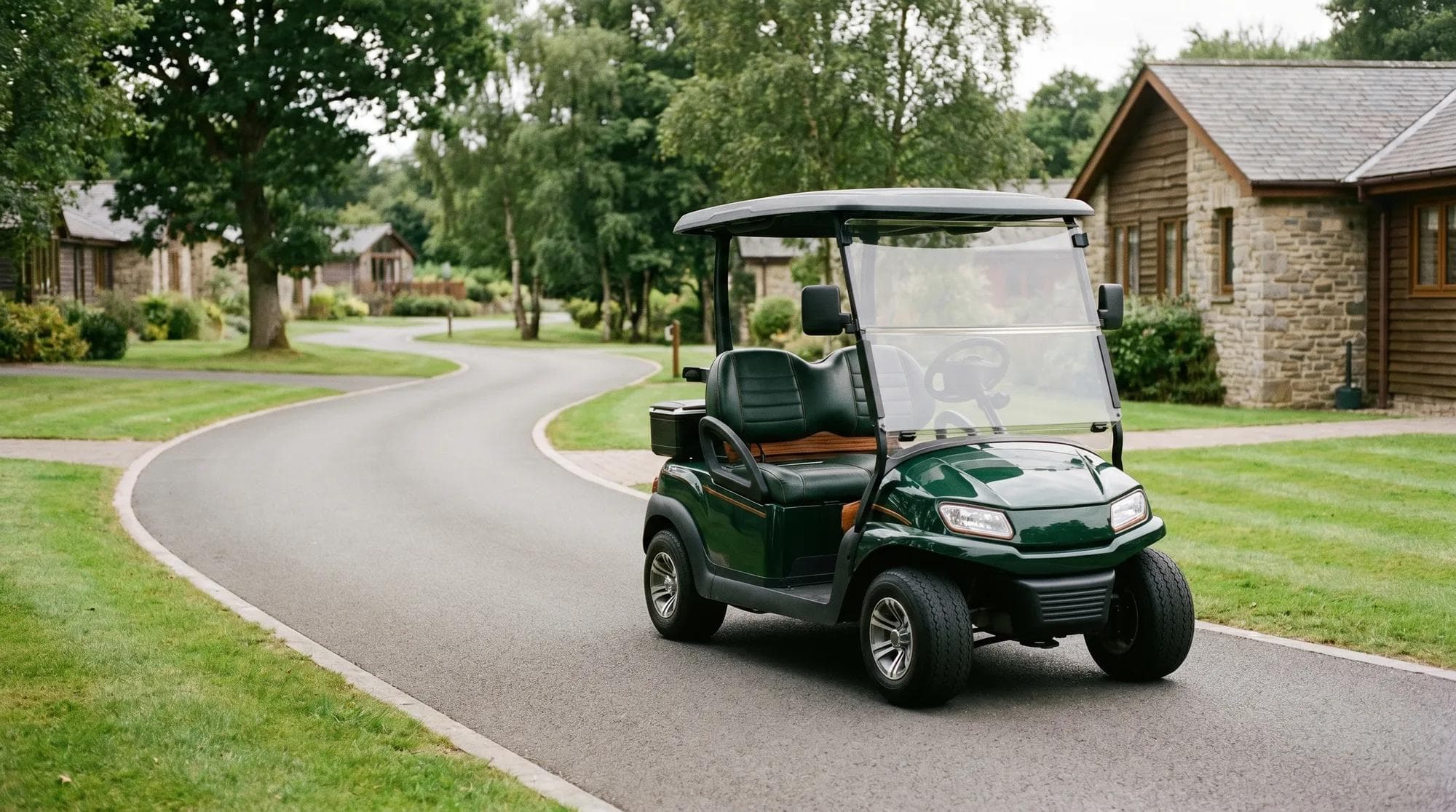
Think about why guests booked. They wanted to hear birds, a fire crackling, the wind in the trees. Not a quad bike. A luxury campsite is often spread across acres of field, woodland or coast, with tents and lodges set far apart on purpose, so there's real distance to cover and real reason to drive it. The trouble is that a gas vehicle carries its noise everywhere it goes. An electric cart doesn't. It hums quietly past a lodge at dusk and the guest inside barely registers it, which on a tranquil site is exactly the point.
On a site where calm is the product, a near-silent cart isn't a nice-to-have. It's part of the premium feel you're charging for.
Moving guests and luggage to the pitch
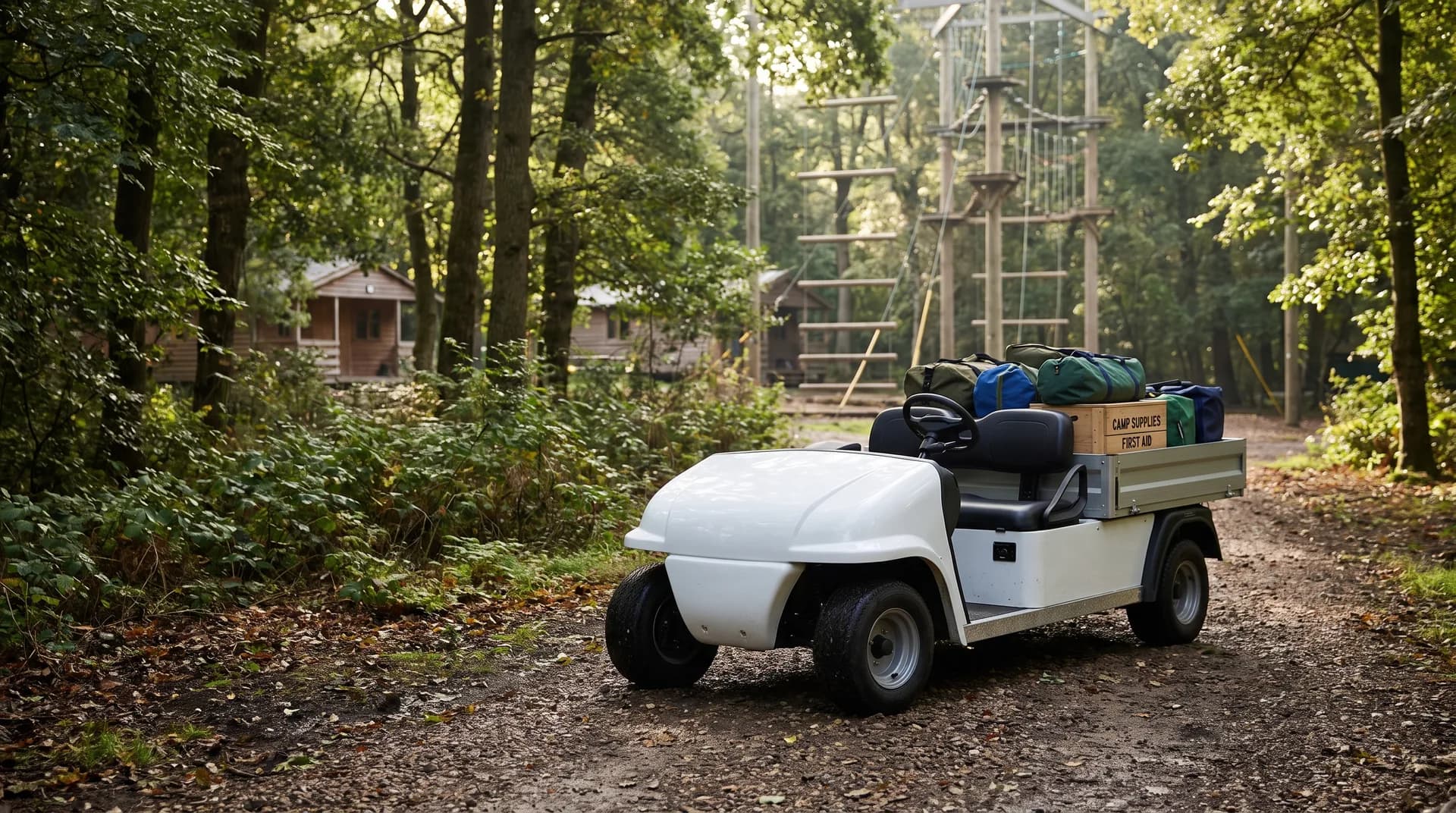
The first impression on a glamping site is usually the arrival run. Guests park at reception, then face a long walk to a tent on the far edge of a field, often with bags, a cool box, a travel cot and a dog. A cart turns that into a gentle two-minute ride that feels like a welcome rather than a hike. Pull up, load the luggage, run them to the lodge, help them in. It sets the tone for the whole stay, and it's the kind of small touch guests remember and mention in reviews.

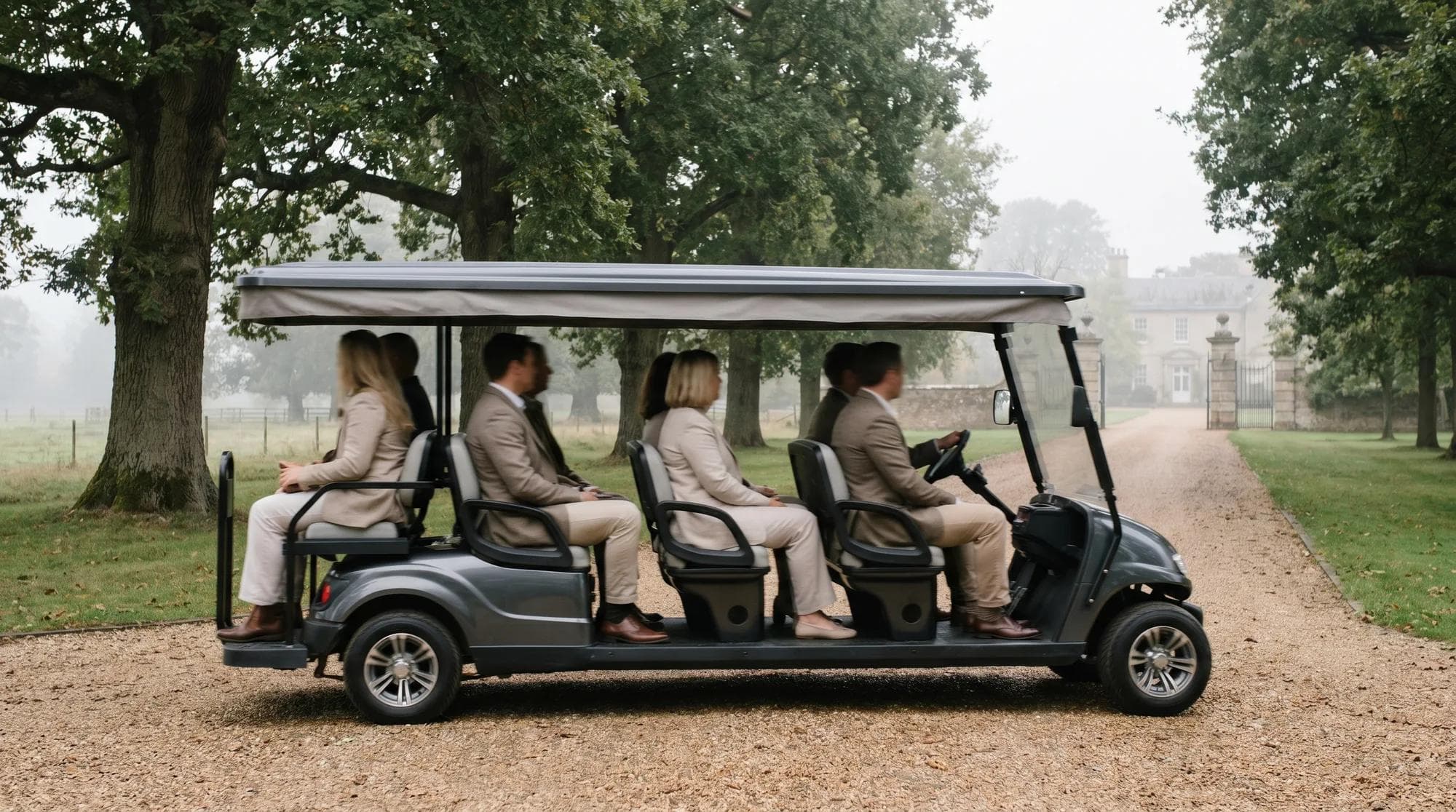
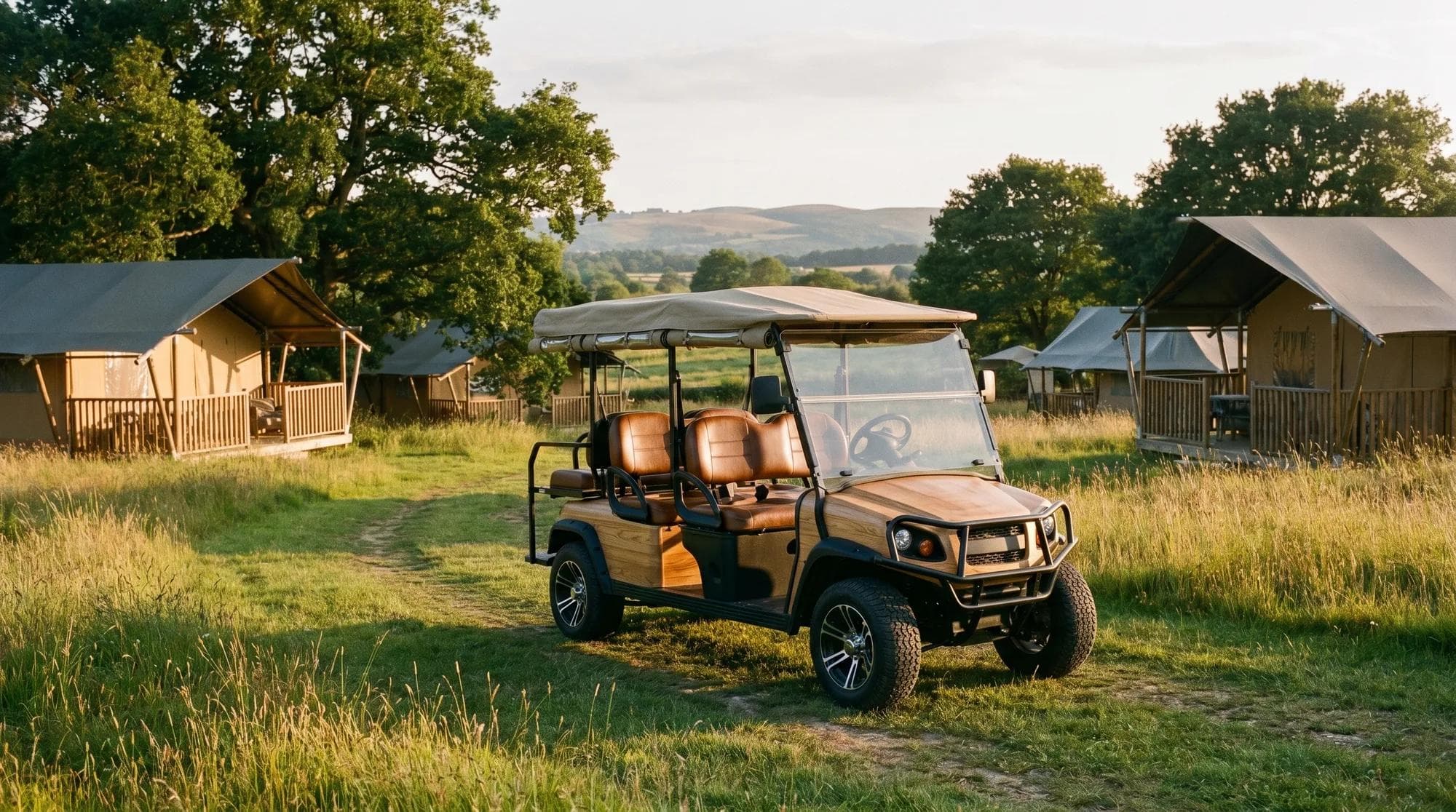
A four passenger (the Hawke S4) handles most guest and luggage work comfortably, with room for people and bags together. If your site is large, or you run a regular loop between the entrance, the lodges and the facilities, a six or eight passenger works more like a small shuttle. We cover that use in our electric people movers and shuttles guide, which is worth a read if guest transport is the main reason you're looking.
Staff, housekeeping and the back-of-house runs
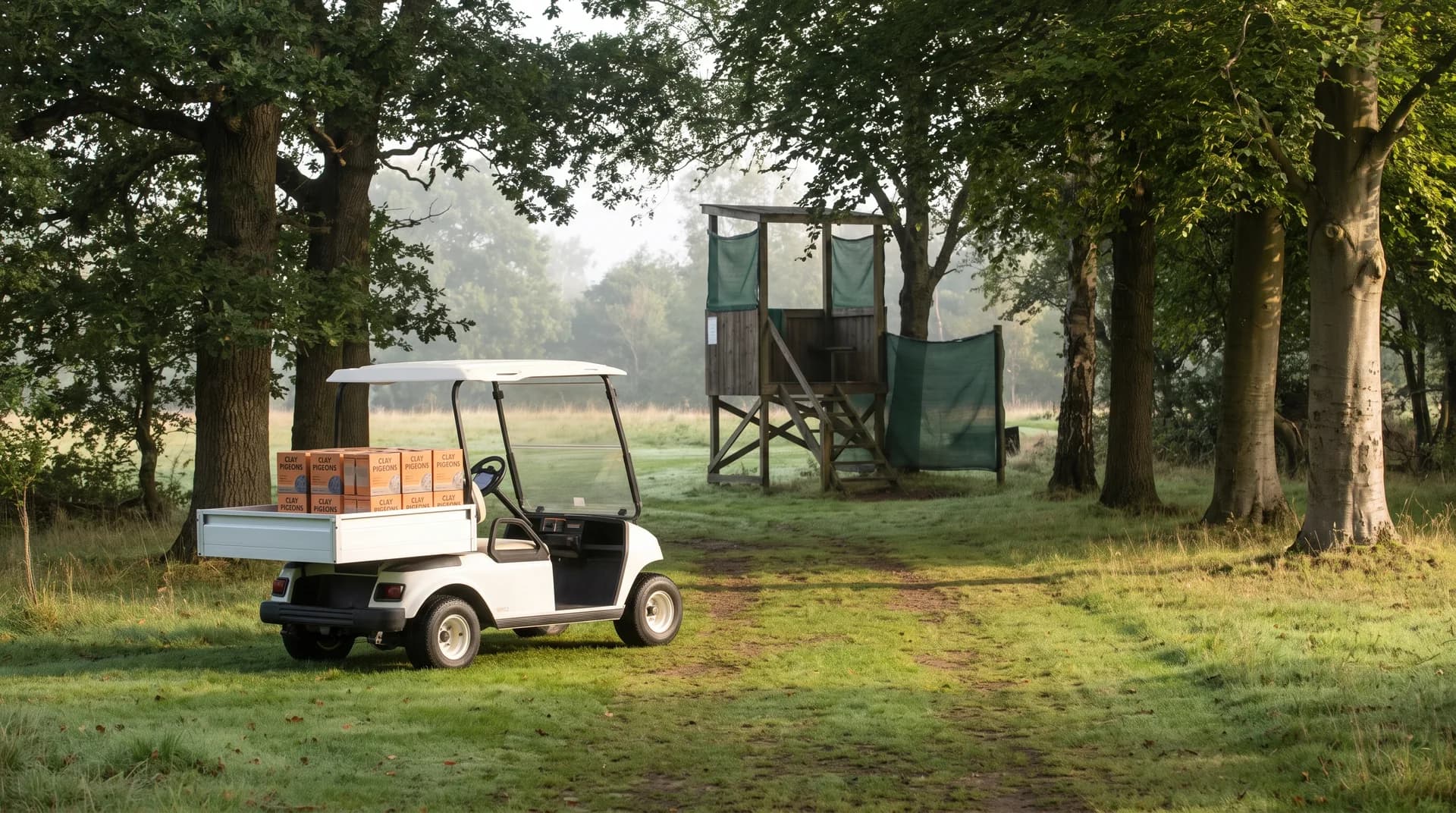
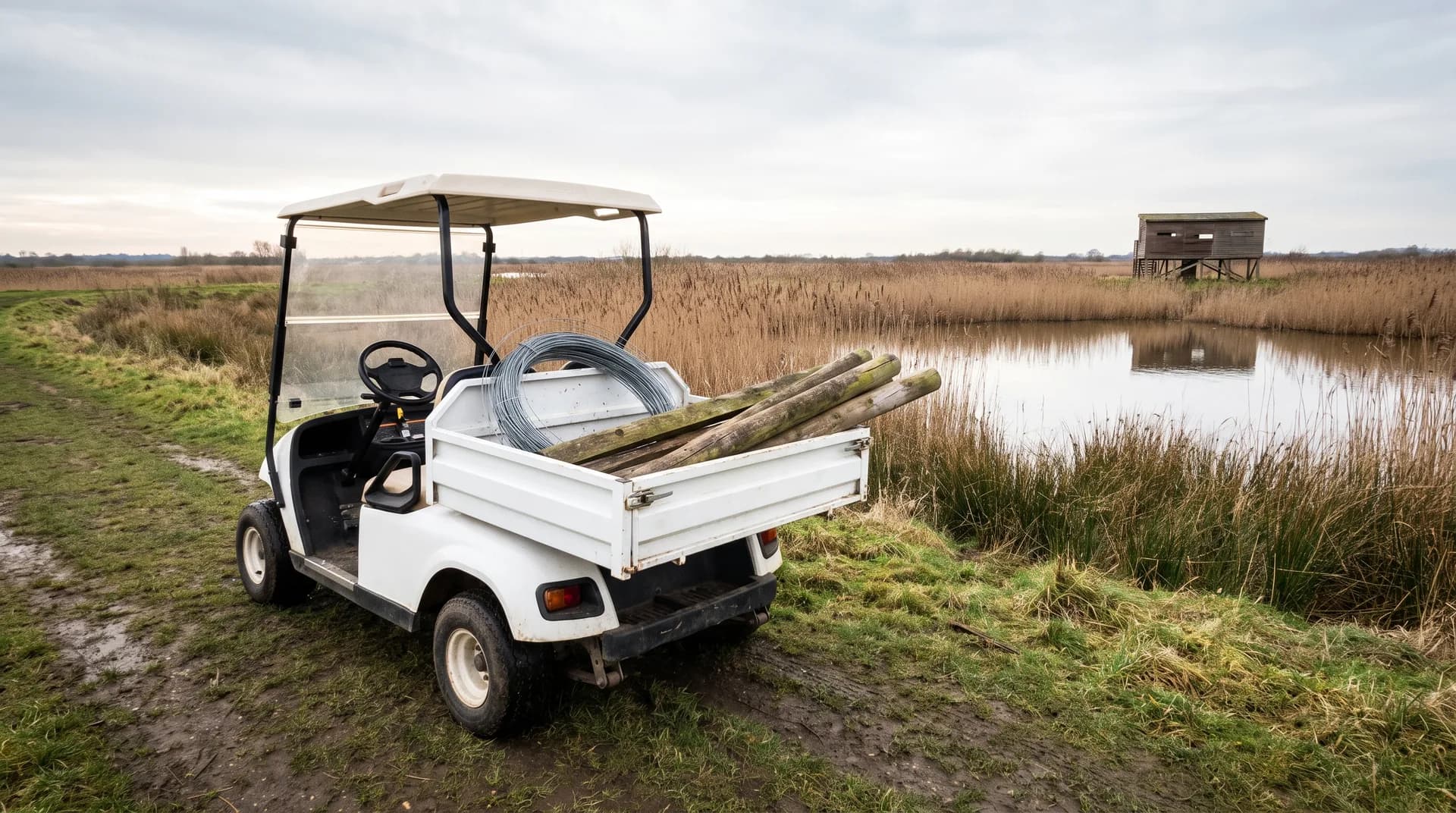
The fleet earns its keep out of sight as much as in front of guests. Housekeeping moving fresh linen and hampers between tents. Maintenance carrying tools to a far lodge. Firewood, hot tub chemicals, welcome packs and waste, all of it crossing the same big site, all day. A utility model (the Hawke S2 Pickup) is built for exactly this: a flat bed for kit, the payload to carry it, and the quiet to do housekeeping runs early without waking a single guest.
Charging off-grid and on rural sites
This is the question every glamping operator asks, because so many sites sit miles from the nearest town and some run partly off-grid. The good news is that charging is more flexible than you'd think. Where there's a mains supply, a cart plugs in and charges overnight, ready each morning, the same way it would refuel but without the fuel. The practical step is deciding where the fleet sleeps: a barn, a covered store or a back-of-house bay with enough sockets for every vehicle.
Where mains power is limited, lithium batteries make the picture easier. They take partial top-ups happily, so a cart can charge from whatever supply you have between jobs rather than needing a long unbroken session. Plenty of rural sites pair that with solar or a generator already on site. Tell us how your power is set up and we'll confirm the right battery and charging approach on the quote.
A branded fleet that fits the brand
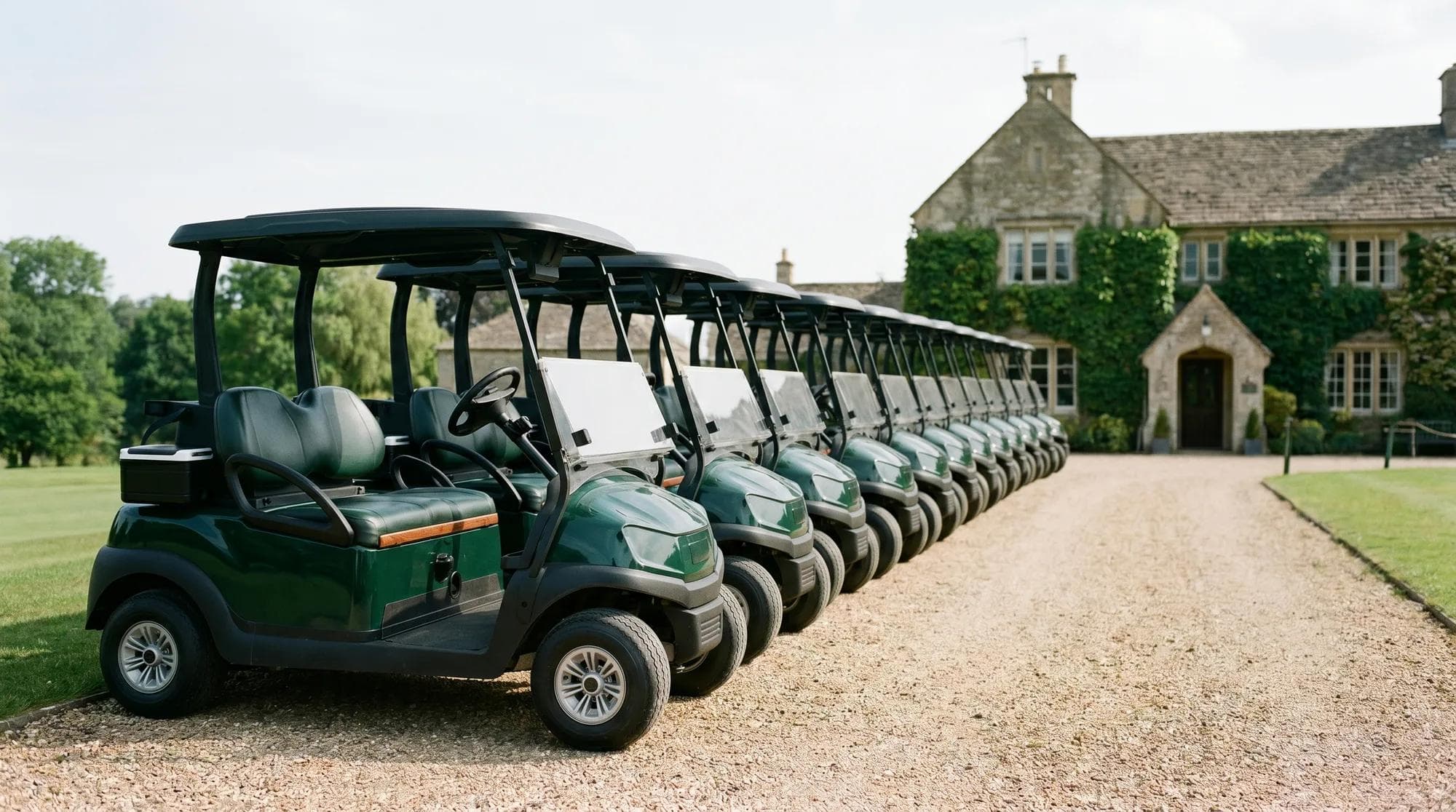
A cart is one of the most visible things on your site. It's at the welcome point, it's on the tracks all day, and guests photograph it for their own feeds without thinking. So it may as well work for the brand. Custom fleet branding puts your colors, logo and livery on every vehicle, which on a premium site is the difference between transport and an extension of the experience. A matched fleet in a tasteful, on-brand finish quietly tells guests they've chosen somewhere that cares about the details.
Because every vehicle is built to order, branding is specified from the start rather than stickered on later, so it's done properly and looks it. Our guide to custom fleet branding walks through what's possible, from a simple logo to a fully wrapped fleet in your own palette.
What a glamping fleet costs
Pricing depends on the size and number of vehicles, plus battery, weather protection and branding. As a starting point, here's how the range lines up for a luxury site.
- Best for on a luxury site
- A single staff member, quick runs
- Best for on a luxury site
- Guest and luggage runs to the pitch
- Best for on a luxury site
- Housekeeping, firewood, waste and kit
- Best for on a luxury site
- Group runs and busy arrival days
- Best for on a luxury site
- A site shuttle loop
- Best for on a luxury site
- Anything you can specify
| Best for on a luxury site | |
|---|---|
| Two passenger (the Hawke S2) | A single staff member, quick runs |
| Four passenger (the Hawke S4) | Guest and luggage runs to the pitch |
| Utility (the Hawke S2 Pickup) | Housekeeping, firewood, waste and kit |
| Six passenger (the Hawke S6) | Group runs and busy arrival days |
| Eight passenger (the Hawke S8) | A site shuttle loop |
| Bespoke | Anything you can specify |
You can compare every model on our range page. If you also run, or are thinking about, a resort park alongside the glamping side, our guide to electric golf carts for resort parks covers a closely related setup.
Servicing, warranty and a quiet season
An electric cart has very little to service. No oil, no filters, no spark plugs, no exhaust. For a site that can't spare downtime in peak season, that simplicity is a real advantage, and it's one more reason there's nothing fuel-shaped to maintain or store. When something does need attention, every build comes with a 3-year warranty and a 24-hour VIP call-out, so a vehicle needed for a Friday changeover isn't left waiting days for help.
How to set up a fleet for your site
Start with how the site actually runs in a busy week: how far guests have to travel from reception, what they arrive with, what housekeeping carries on a turnaround, the distances involved, and how your power is set up. Tell us that and we'll specify the right mix of vehicles, branded in your colors, with the batteries and weather protection to suit a full season outdoors. Every cart is built to order, delivered and commissioned, in the UK or worldwide. If you'd like to see how this fits alongside our other hospitality work, the resort parks sector page is the closest match.
Plan a cart fleet for your glamping site
Tell us how your site runs, how you move guests and luggage and what housekeeping carries, and we'll specify a branded fleet with a tailored quote built around your site.
Frequently asked questions
Why use an electric cart at a glamping site?+
It moves guests, luggage and staff across a large rural site without the engine noise, fumes or fuel storage that suit a tranquil setting badly. It runs near-silent past tents and lodges at any hour, costs little to keep, and protects the calm guests paid for. On a premium site, that quiet is part of the experience.
Can a glamping cart charge off-grid?+
Yes, with the right setup. Where there's a mains supply, a cart charges overnight and is ready each morning. Where power is limited, lithium batteries take partial top-ups from solar, a generator or whatever supply you have between jobs. Tell us how your site is powered and we'll confirm the right battery and charging approach.
Can I have the golf carts in my site's branding?+
Yes. Because every vehicle is built to order, custom fleet branding is specified from the start: your colors, logo and livery on a matched fleet. A cart is one of the most visible and most photographed things on a luxury site, so an on-brand finish reads as part of the experience rather than just transport.
How many golf carts does a glamping site need?+
It depends on the size of the site and how spread out it is. Many sites run a mix: one or two four seaters for guests and luggage, a utility for housekeeping and firewood, and a larger shuttle if the site is big enough for a loop. Tell us how your site runs and we'll specify the right fleet.
Are electric golf carts quiet enough for a luxury campsite?+
Yes, and quiet is the main reason operators choose them. An electric cart runs near-silently with no engine note and no exhaust, so it can do early housekeeping runs or a late guest pick-up without disturbing anyone. For a site where peace is the product, that's the deciding factor.
What happens if a cart breaks down on a remote site?+
Every build comes with a 3-year warranty and a 24-hour VIP call-out, so a vehicle needed for a changeover day isn't stuck waiting. Electric golf carts also have very little to service, with no oil, filters, plugs or exhaust, which keeps downtime low on a remote site where help is further away.
Ready to find the right golf cart?
Tell us how and where it will work and we will specify a vehicle and a tailored quote built around you. Every build comes with a 3-year warranty and a 24-hour priority call-out.
Our guides are written and reviewed by the Hawke Electric Vehicles team, the people who specify, build, deliver and support the vehicles. We focus on honest, practical advice and flag where a figure depends on the build rather than guessing.
More guides by Hawke