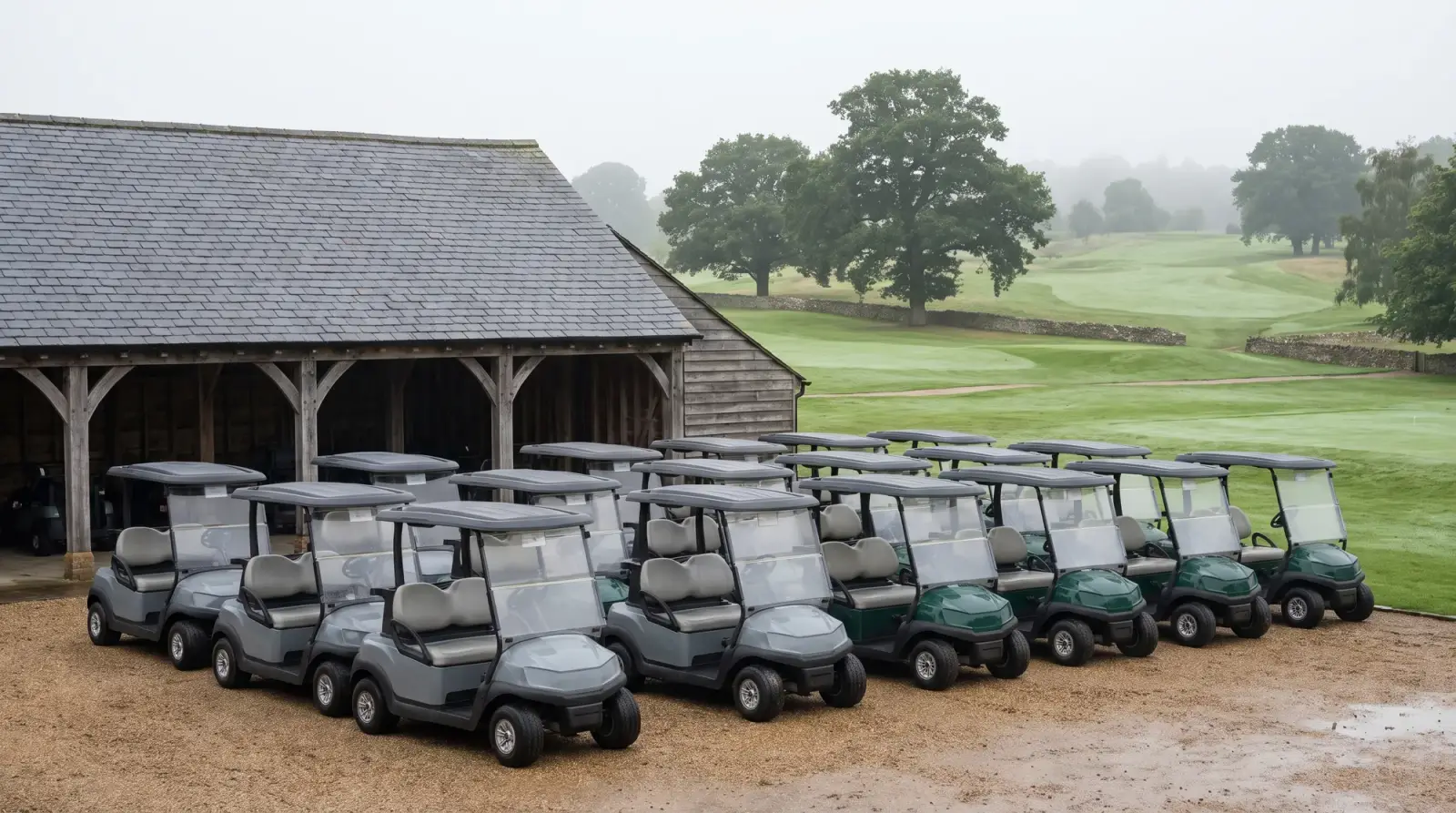
An ex-golf club cart is usually a four to six year old machine that has worked hard every day of its life, and it's priced accordingly, typically thousands less than new. That gap is real, but so is the reason for it. Fleet golf carts rack up daily charge cycles, carry a different pair of strangers every hour, and get hosed down rather than pampered.
None of that makes them a bad buy. Fleet machines are usually serviced on schedule with paperwork to prove it, which is more than can be said for plenty of private sales. The trick is knowing what fleet life actually does to a cart, what 'refurbished' does and doesn't mean, and where the hidden costs sit. One number matters above all the others: the battery. Get that wrong and your bargain evaporates.
- Clubs typically cycle fleets every 4 to 6 years, often at the end of a lease, so ex-fleet stock floods the market each autumn and winter.
- Fleet life means high daily cycles, mixed drivers and minimal cosseting, but usually documented servicing, which private golf carts often lack.
- Batteries are the big unknown. Original packs may be due, and replacement runs £600 to £1,500. Budget it into your offer.
- 'Refurbished' can mean anything from a full strip-down to a wash and new stickers. Make the seller list exactly what was done.
- Ex-fleet is typically thousands cheaper than new, but a new machine brings a warranty and a known battery. Price the whole picture.
Why do so many ex-club golf carts come up for sale?
Simple economics. Most clubs run their cart fleets on lease or planned replacement cycles of four to six years, because members expect tidy, reliable machines and downtime costs revenue. When the cycle ends, usually after the summer season, the whole fleet goes back to the leasing company or out through a dealer. That's why the used market swells every autumn and winter with near-identical golf carts from the same handful of fleet brands, often at prices that look too good to ignore.
You'll find this stock through fleet dealers and refurbishers, at auction, and occasionally direct from the club (a polite email to the club manager sometimes beats waiting for the ad). Buying direct can be the best route because you can ask about the machine's actual history rather than a dealer's summary of it.
What does fleet life actually do to a cart?
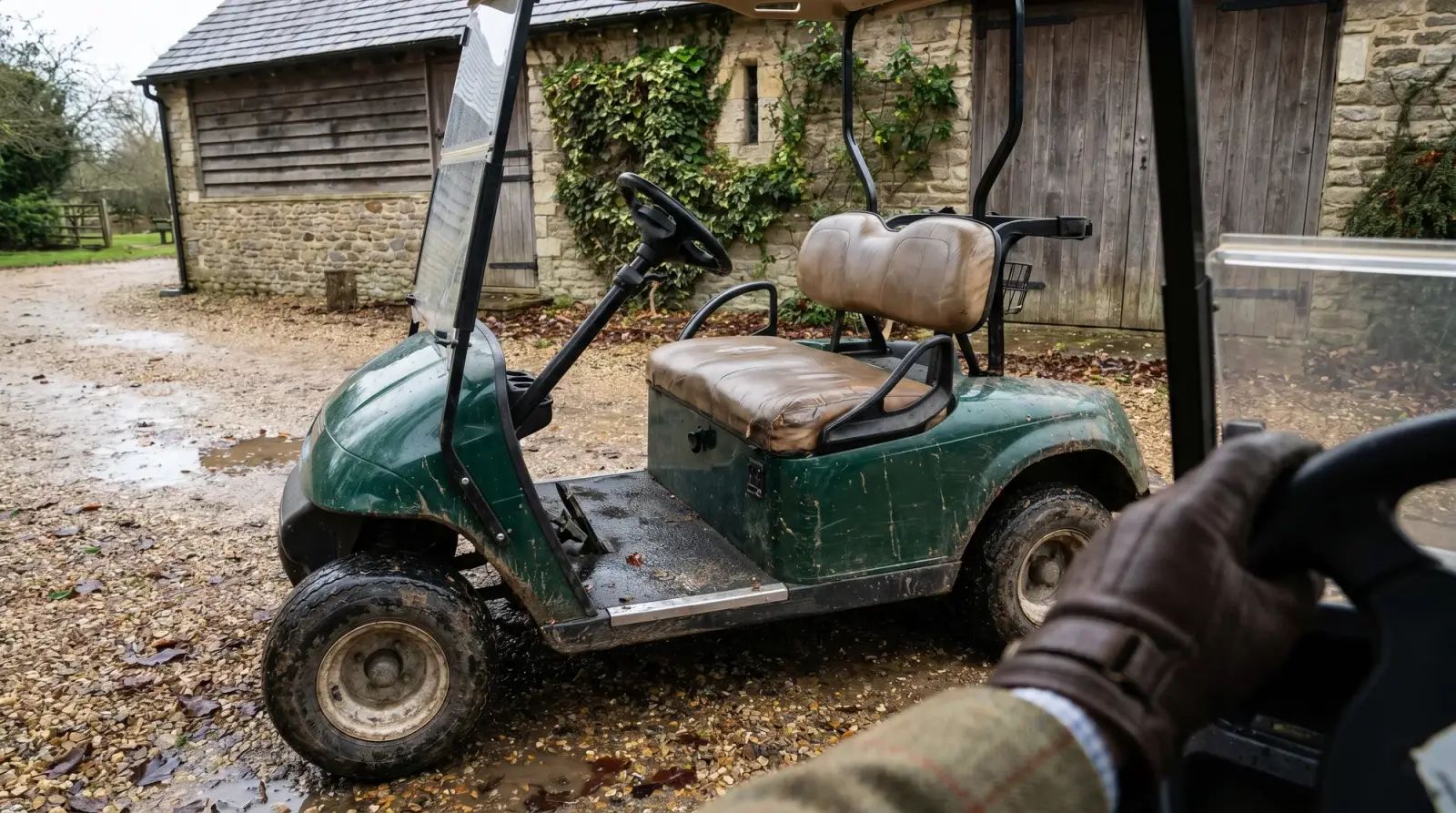
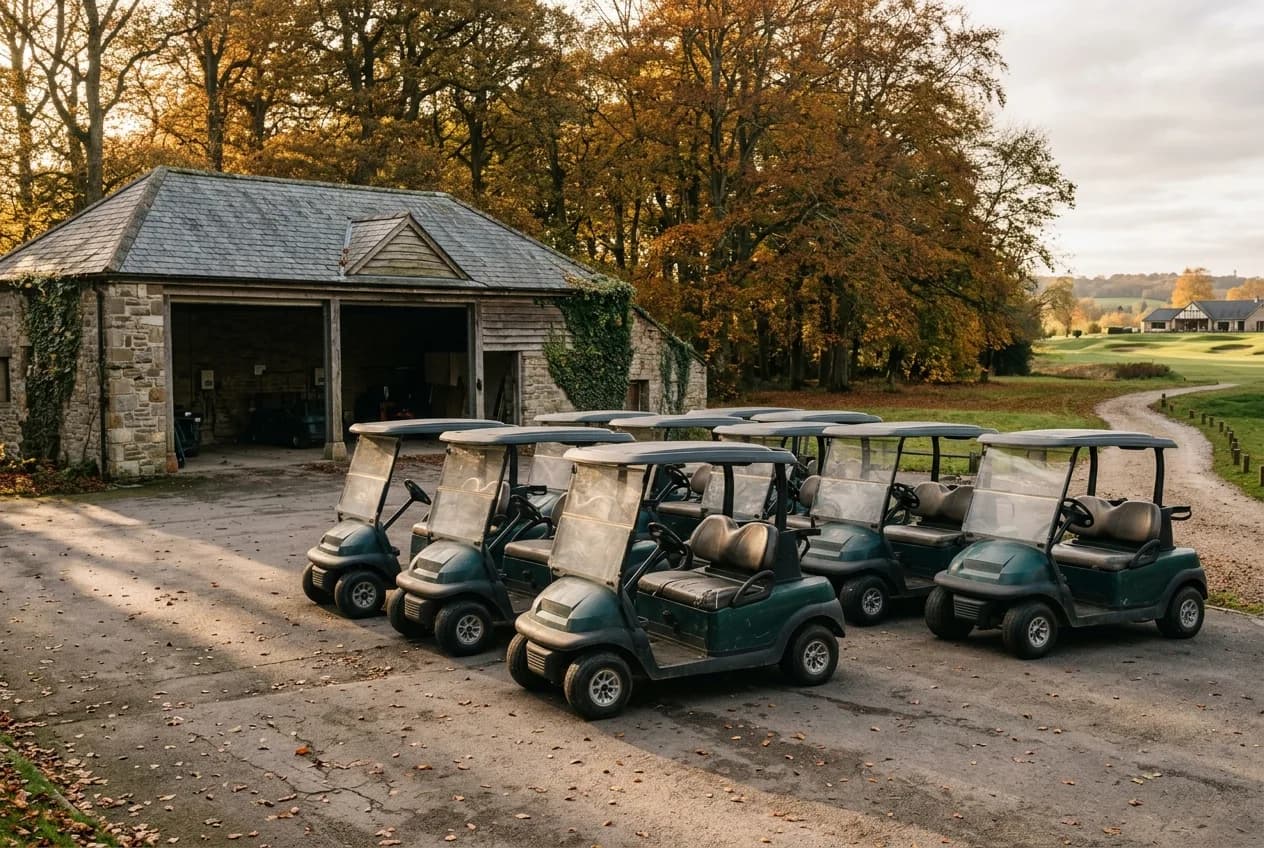
Picture the working week. In season, a fleet cart might do two full rounds a day, six or seven days a week. That's a charge cycle or more daily, hundreds per year, against the handful a private owner clocks up. Every hour brings a different driver, some gentle, some kerbing it into the cart path. The upside is process: decent clubs service on schedule, keep records, and fix faults quickly because a dead cart earns nothing. So the mechanical story is usually known, which counts for a lot. The wear story, though, is real: bushings, brakes, seat bases, body scuffs and above all batteries carry the evidence.
The battery is the whole ballgame
A lead-acid pack in daily fleet use is often near the end of its life by year four or five, exactly when the cart is sold. If the pack is original, assume it's due. Replacement costs £600 to £1,500 depending on the cart, which can be a third or more of the purchase price. Check the date codes stamped or stickered on the batteries, ask straight out whether the pack has been replaced and when, and ask for a load test. A seller who won't discuss the battery is telling you the answer.
What does 'refurbished' actually mean?
Whatever the seller wants it to mean, unfortunately. At the honest end, a refurbisher strips the cart down, load-tests or replaces the batteries, replaces brakes and bushings, services the motor and controller, and repaints or re-panels the body. At the other end, 'refurbished' means a pressure wash, a set of stickers and a valet. Both get described with the same word and priced with the same confidence. The fix is to ask for the refurbishment in writing, item by item: what was replaced, what was tested, what the battery status is, and what warranty backs it. Thirty days on a refurbished cart is common from decent dealers; none at all is a signal.
How much should an ex-fleet cart cost?
As a rough guide, a 4 to 5 year old ex-fleet cart from a known brand typically sells for a fraction of its new price, with the exact figure swinging on battery status and refurbishment level. The comparison that matters isn't ex-fleet versus new sticker price, it's the all-in cost once you've added what the cart needs. A £2,500 cart needing a £1,200 pack and £300 of brakes is a £4,000 cart with no warranty. Run that maths before you feel clever about the headline price. Our guides to buying a used golf cart and new versus used golf carts go deeper on the pricing side.
- Ex-fleet (4-5 years old)
- Typically thousands cheaper
- New
- Full price, quote-based on premium brands
- Ex-fleet (4-5 years old)
- Often original and due; budget £600-1,500
- New
- New pack, often lithium, full life ahead
- Ex-fleet (4-5 years old)
- Usually none to 30 days
- New
- Multi-year (Hawke offers 3 years)
- Ex-fleet (4-5 years old)
- Hard use, but usually documented servicing
- New
- None needed
- Ex-fleet (4-5 years old)
- Bushings, brakes, cosmetics, unknown refurb quality
- New
- Minimal
| Ex-fleet (4-5 years old) | New | |
|---|---|---|
| Headline price | Typically thousands cheaper | Full price, quote-based on premium brands |
| Battery | Often original and due; budget £600-1,500 | New pack, often lithium, full life ahead |
| Warranty | Usually none to 30 days | Multi-year (Hawke offers 3 years) |
| History | Hard use, but usually documented servicing | None needed |
| Condition risk | Bushings, brakes, cosmetics, unknown refurb quality | Minimal |
The ex-fleet inspection, step by step
- Battery date codes: find them on each battery and check against the cart's age. Original pack at 4-5 years means budget for replacement.
- Load test: ask for one, or drive the cart hard uphill after a full charge and watch for sag and cutouts.
- Charger included: confirm the correct charger comes with it and works. A replacement is a hidden £150-400.
- Hour meter: if fitted, note the reading and sanity-check it against the cart's age and story.
- Motor and controller: listen for bearing whine, test full-throttle response, and check for cutouts when warm.
- Brakes and handbrake: test on a slope, not the flat. Fleet brakes work hard.
- Steering and bushings: rock the front wheels top and bottom; clunks and play mean worn bushings and kingpins.
- Bodywork and canopy: scuffs are cosmetic, cracked chassis-adjacent plastics and bent frames are not.
- Paperwork: service records, refurbishment list in writing, and whatever warranty is offered, also in writing.
Frequently asked questions
Where do golf clubs sell their old golf carts?+
Mostly through fleet dealers, refurbishers and auctions when a lease ends, though some clubs sell direct. Asking the club manager directly in early autumn, just before fleets change over, sometimes gets you first pick.
Are ex-hire or ex-fleet golf carts worth buying?+
They can be, if the battery status is known and the price reflects the work needed. The servicing history is usually better documented than a private sale. Price the all-in cost including a likely battery replacement, not the headline figure.
How long do golf clubs keep their golf carts?+
Typically 4 to 6 years, often set by a lease term. That's why most ex-fleet stock is in that age band and why it arrives on the market in waves each autumn and winter.
What does refurbished mean on a used cart?+
Anything from a full strip-down with new batteries and brakes to a wash and fresh decals. There's no standard. Ask for the exact work list in writing, plus the battery test results and whatever warranty applies.
What should I check before buying an ex-fleet cart?+
Battery date codes and a load test first, then charger, brakes on a slope, motor and controller behaviour when warm, steering play, bodywork and the paperwork. If the seller resists any of that, walk.
A properly refurbished ex-fleet cart with a documented new battery is a sensible buy for a golfer or smallholder on a budget, and we'd happily point friends at one. An unrefurbished autumn auction cart on its original pack is a gamble that usually costs its buyer the saving. And if the sums keep creeping toward new-machine money once you've added the battery, brakes and a charger, take the hint. A new cart with a full warranty and a known history costs more on day one and less in surprises.
Skip the fleet-life lottery
Every new Hawke cart comes with a 3-year warranty, a fresh battery and 24-hour call-out, no guesswork about what the last five years did to it. See what new actually costs for your spec.
Related solutions
Ready to explore what we build?
See the vehicles and the setting this applies to, or get a tailored quote built around your site.
Ready to find the right golf cart?
Tell us how and where it will work and we will specify a vehicle and a tailored quote built around you. Every build comes with a 3-year warranty and a 24-hour priority call-out.
Our guides are written and reviewed by the Hawke Electric Vehicles team, the people who specify, build, deliver and support the vehicles. We focus on honest, practical advice and flag where a figure depends on the build rather than guessing.
More guides by Hawke