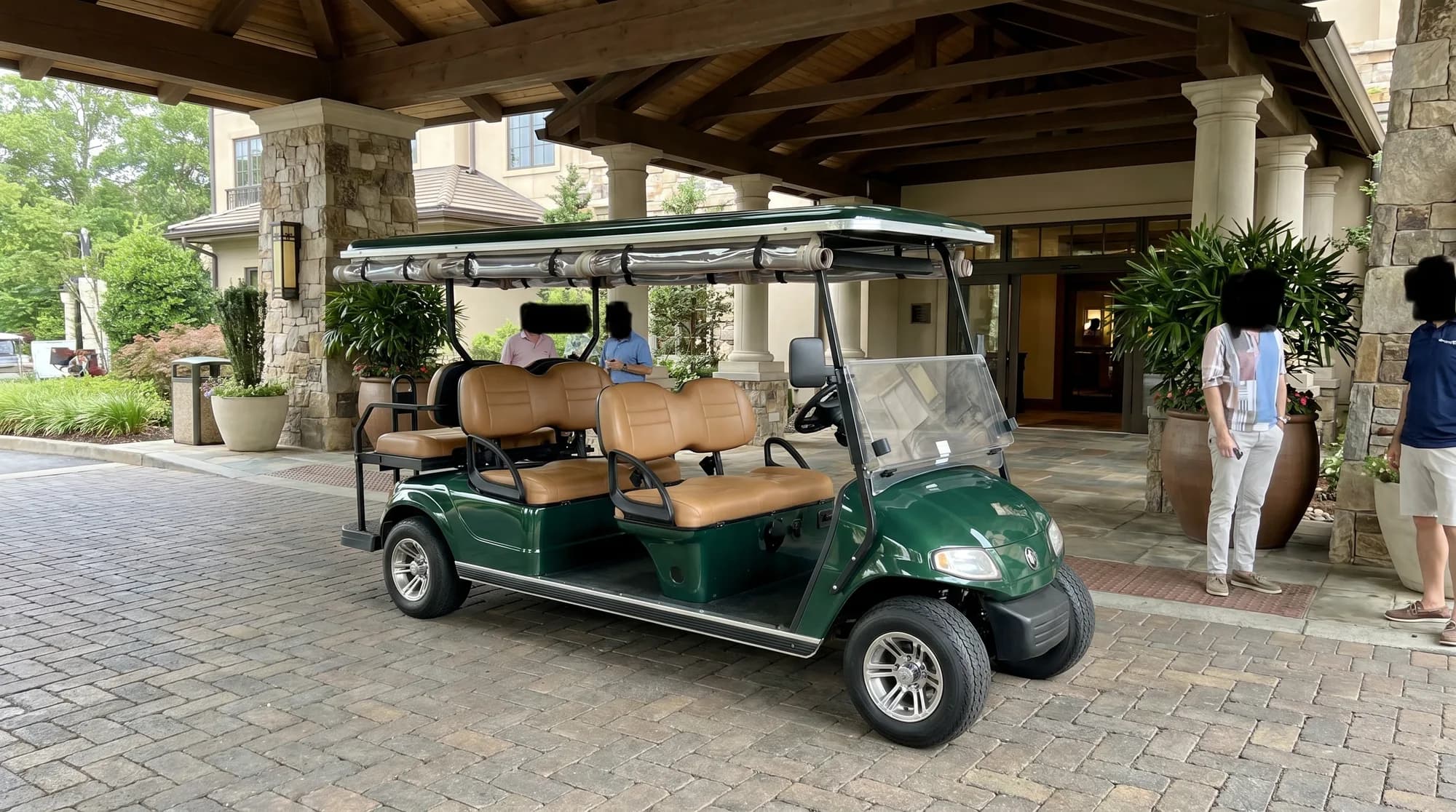
At a hotel or resort, the golf cart is rarely about golf. It is the first vehicle a guest touches, the porter's workhorse, the bellhop's luggage truck and the shuttle that turns a long walk from a far parking lot into a gracious arrival. Run well, a small fleet quietly lifts guest scores, speeds turnover and saves staff thousands of steps a day. Run badly, it becomes a fleet of half-charged carts with flat tires that nobody can find at check-out rush. This guide is written for the operator who has to make that fleet actually work: how many carts you need, how to spec them for the brand, where charging fits, and how to keep uptime high enough that the front desk stops apologizing.
What hospitality carts actually do all day
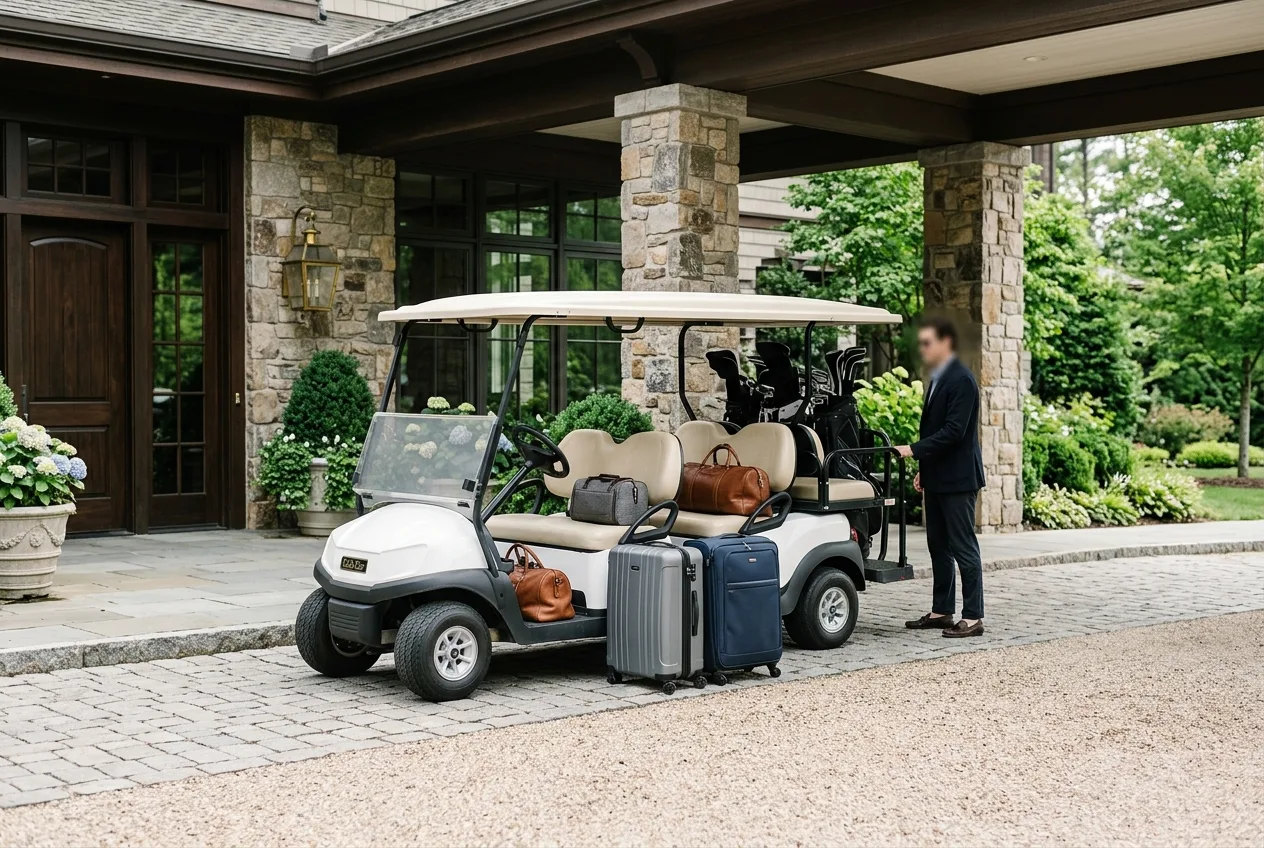
Before you size anything, list the real jobs. In most properties the cart fleet covers several distinct duties, and each one shapes the spec. Guest shuttling from parking, the lobby or a remote building wants comfortable seating and a smooth, quiet ride. Luggage and bell service wants a flat cargo bed or a dedicated utility cart. Grounds, housekeeping and engineering want a rugged carrier that can take tools and supplies across the property. Valet and event support spikes hard at certain hours and sits idle the rest of the day.
Mixing these duties onto one cart type is the most common sizing mistake. A four-seat passenger shuttle is wrong for hauling pool furniture, and a flatbed utility cart is a poor look at the porte-cochere. Decide the job mix first, then build a fleet that covers each role rather than buying six identical carts and hoping.
Sizing the fleet to peak demand
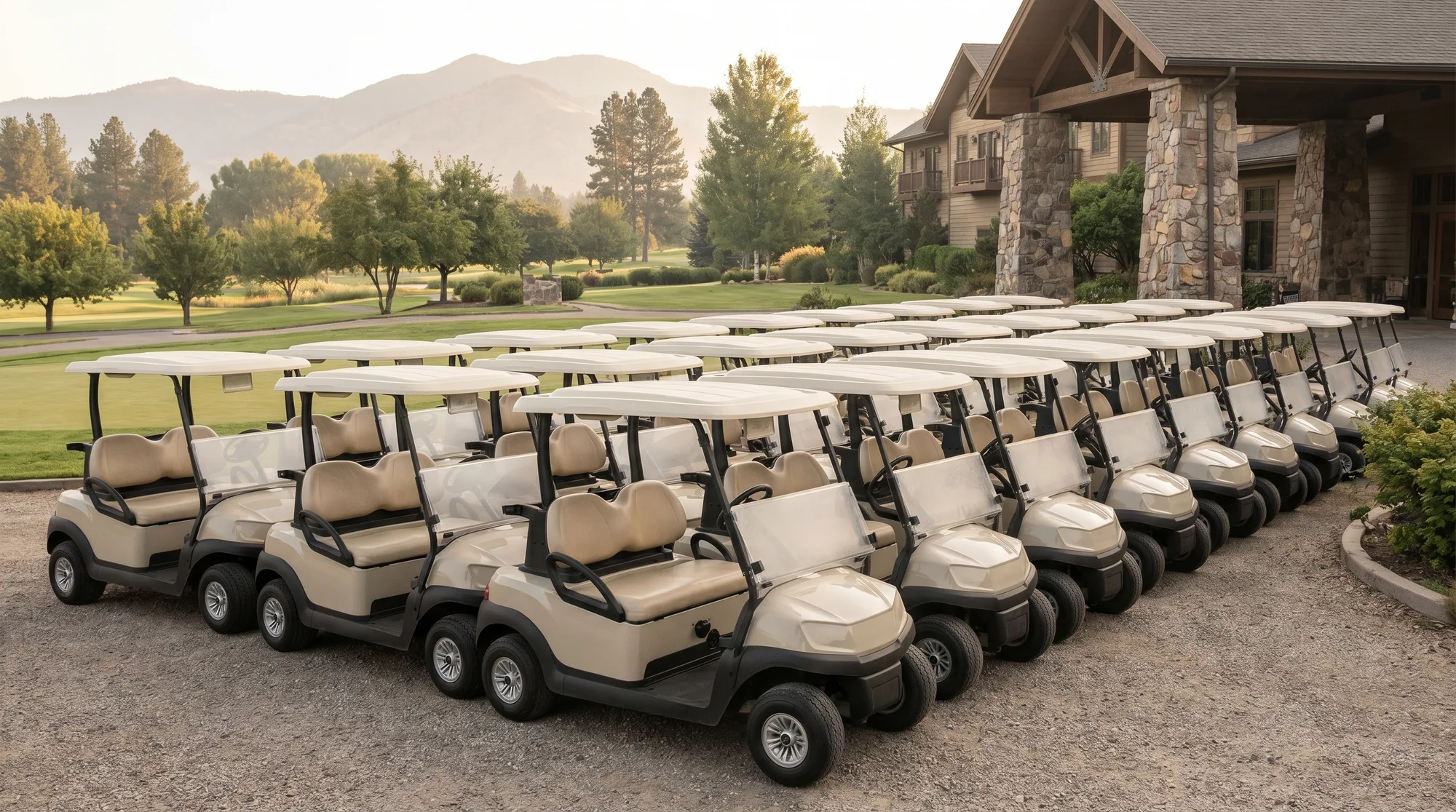
Hotels do not run at a steady pace. Demand for carts clusters around check-in and check-out, around event start and end times, and around airport-shuttle arrivals. If you size your fleet to the daily average you will be embarrassingly short exactly when guests are forming their first impression. Size to the peak wave instead.
- 01
Map your demand curve
For a typical week, note when guests actually need carts: arrival waves, departure rush, event load-in and load-out. The tallest spike sets your fleet size.
- 02
Count guests per peak wave
Estimate how many guests need a ride in the busiest 30 minutes, then divide by realistic round-trip cart capacity to get carts in service.
- 03
Add a charging and downtime buffer
At least one cart will be on charge or in service at any time. Add roughly one spare for every four to five active carts so the peak is always covered.
- 04
Separate utility from passenger
Add grounds, housekeeping and bell carts on top of the passenger count; do not let back-of-house duties eat your guest-facing fleet.
Spec for the brand, not just the spec sheet
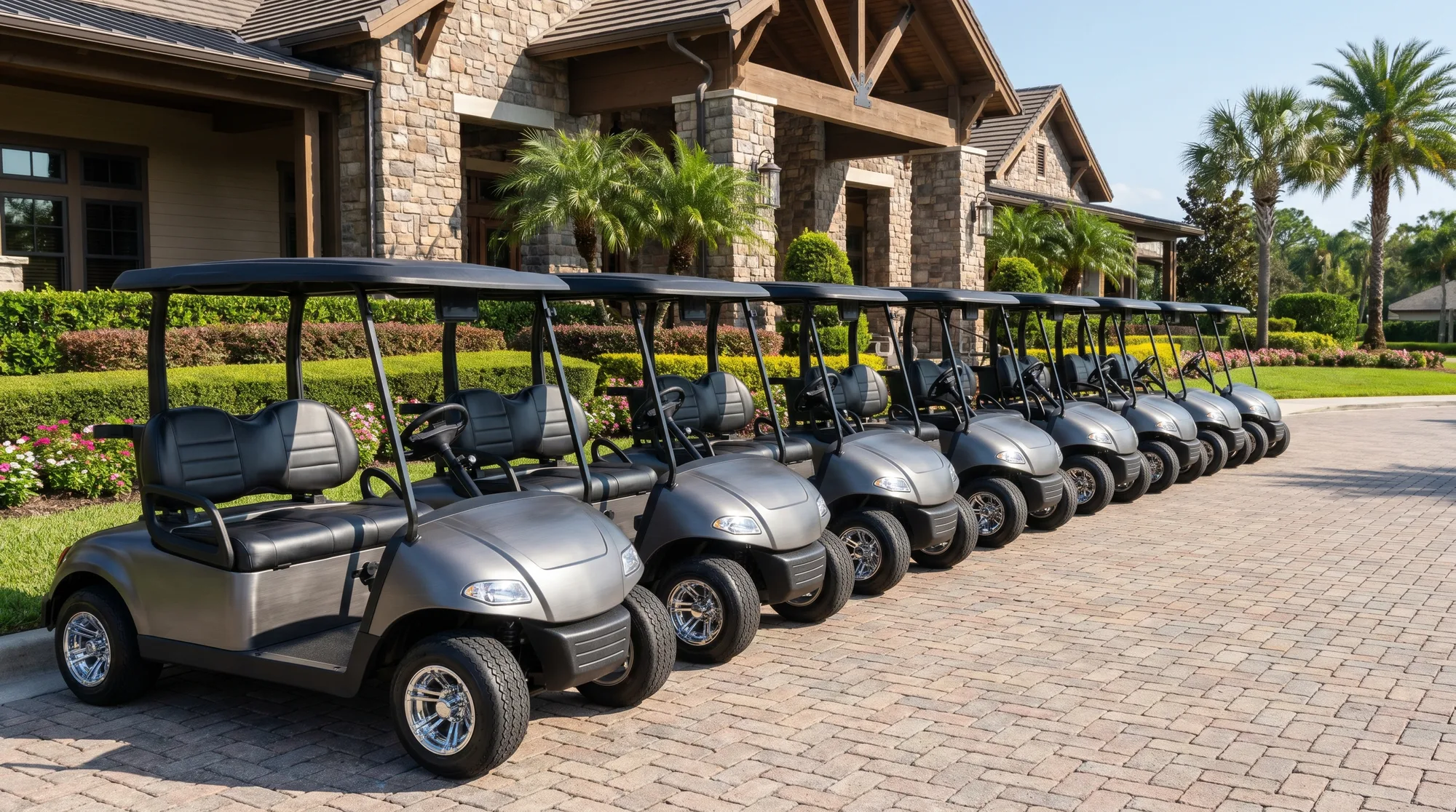
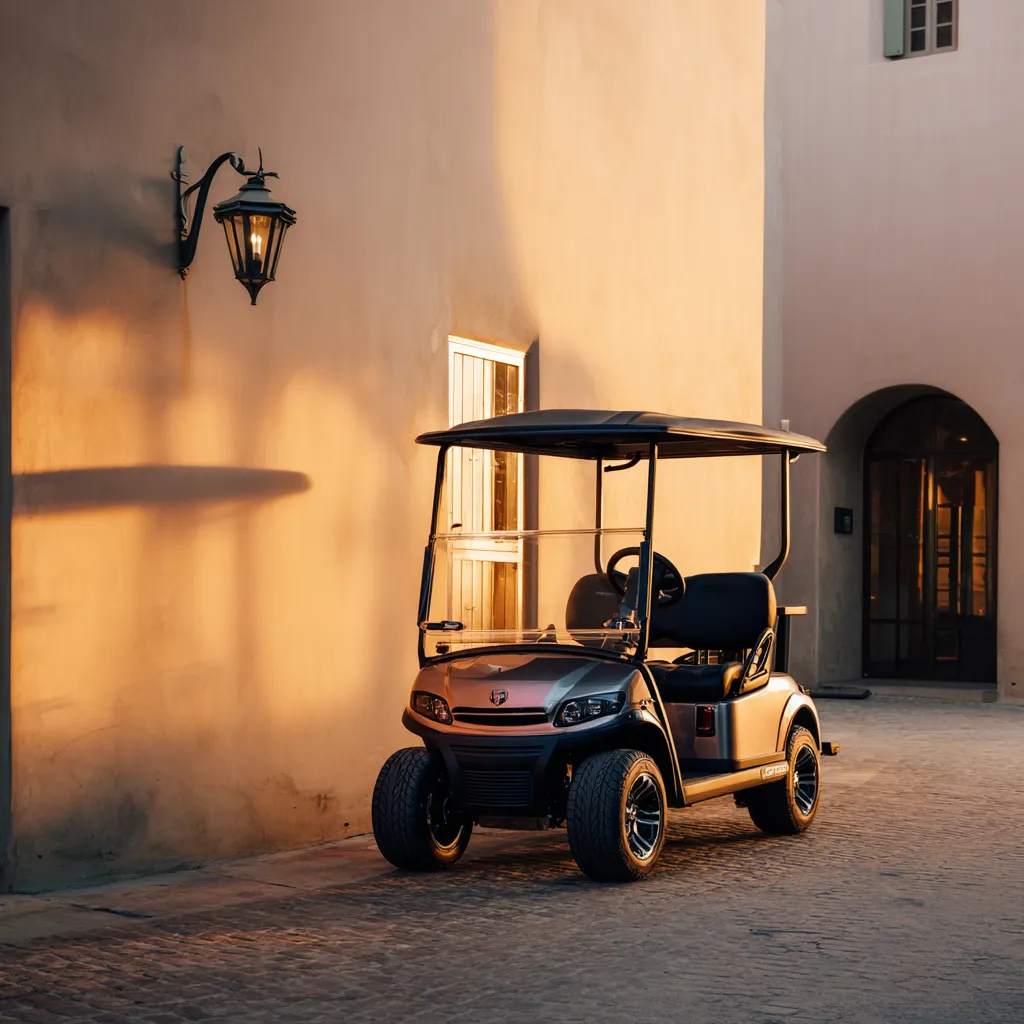
A hotel cart is part of the guest experience, which means how it looks, sounds and feels matters as much as range or capacity. A scuffed, rattly cart with a faded canopy tells a guest more about your standards than any brochure. Specify finish, upholstery, a clean canopy, smooth quiet running and tasteful branding that fits the property rather than shouting. Subtle livery, the property name in the right typeface and a coordinated color do more for the arrival than a wrap covered in logos. Our guide to what is possible with custom carts covers how far you can take finish and branding without compromising reliability.
Accessibility is not optional
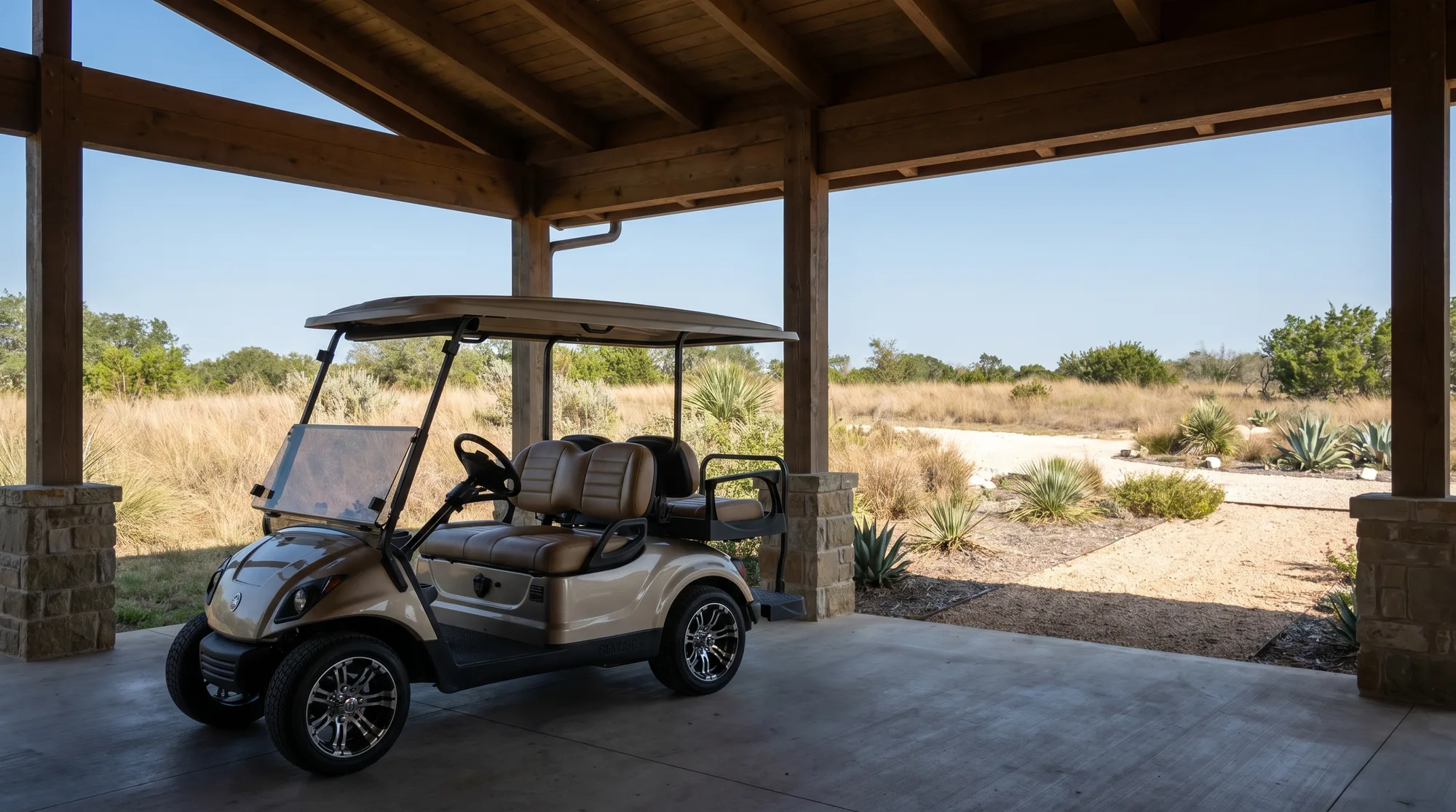
Resorts and large hotels regularly host guests who cannot manage stairs, distance or uneven ground. An accessible cart, with a low step, grab handles, room for a folding wheelchair or a forward-facing accessible seat, turns a stressful arrival into a welcome one. Beyond the goodwill, accessibility supports your obligations to accommodate guests with disabilities. At minimum, every property should have at least one cart that can comfortably and safely carry a guest with limited mobility, and staff who know to offer it without being asked.
Charging logistics and uptime
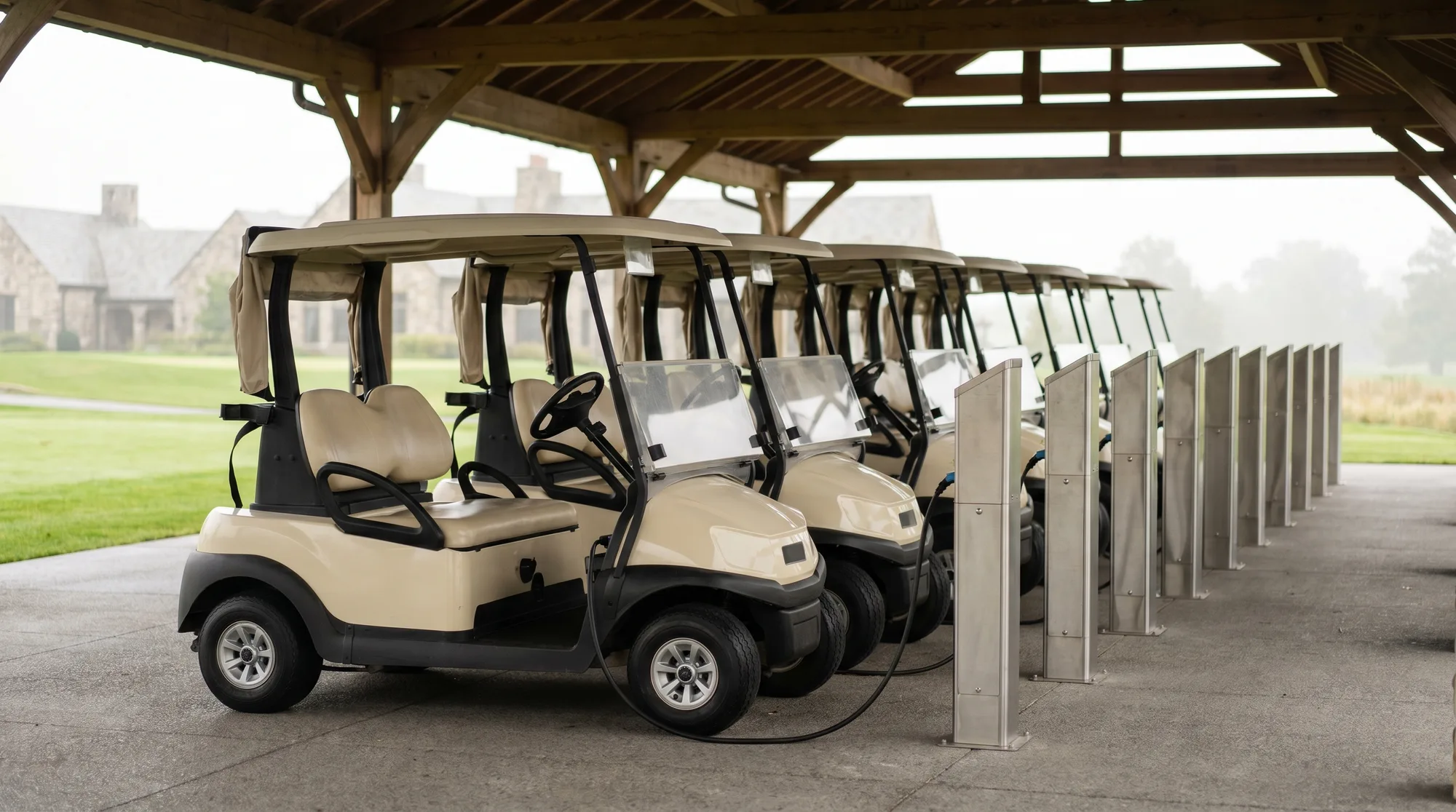
The quiet killer of a hospitality fleet is charging. A cart plugged in at the back of house is not at the front door when a family arrives. Electric carts need a planned rotation so the peak waves are always covered by charged vehicles. Set up a dedicated charging bay with enough outlets for the whole fleet, label each charger to its cart, and build charging into the overnight and off-peak hours rather than the afternoon rush. Lithium fleets help here, since they charge faster and tolerate partial top-ups between waves better than flooded lead-acid packs.
- Passenger shuttle
- Guest rides and arrivals
- Utility cart
- Luggage, grounds, housekeeping
- Passenger shuttle
- Finish, quiet, comfort
- Utility cart
- Cargo bed, durability
- Passenger shuttle
- Porte-cochere, front
- Utility cart
- Back of house
- Passenger shuttle
- High, guest-facing
- Utility cart
- Light, functional
- Passenger shuttle
- Check-in and check-out
- Utility cart
- Steady through the day
| Passenger shuttle | Utility cart | |
|---|---|---|
| Primary job | Guest rides and arrivals | Luggage, grounds, housekeeping |
| Spec priority | Finish, quiet, comfort | Cargo bed, durability |
| Where it lives | Porte-cochere, front | Back of house |
| Branding | High, guest-facing | Light, functional |
| Peak demand | Check-in and check-out | Steady through the day |
Lease or buy: the operator's math
Whether to own or lease depends on how seasonal you are and how you account for capital. A year-round resort that runs carts hard every day usually does best owning a fleet and maintaining it well, spreading the cost over many seasons. A property with a sharp summer or winter season, or one that does not want carts sitting idle and depreciating in the off months, often does better leasing and handing back the seasonal stress. As a rough guide, a quality commercial passenger cart runs in the low-to-mid four figures to buy depending on spec, while leasing converts that into a predictable monthly line. Our breakdowns of what a golf cart costs and commercial leasing walk the numbers, and our fleet management guide covers keeping a fleet you own actually running.
Guests do not remember the average. They remember the one time no cart came at check-in, and the one time a spotless shuttle was waiting at the door. Size and spec for those two moments.
So what should you do?
Map the real jobs, size to your peak arrival and departure waves with a charging buffer, separate guest-facing shuttles from back-of-house utility carts, spec the front-of-house fleet as a brand asset, keep at least one accessible cart, and plan charging around off-peak hours. Then decide lease versus buy on your seasonality. If you would like help speccing a hospitality fleet to your property and your peak demand, with honest numbers, we are glad to talk it through. Properties that run guest communities at scale may also find our resorts and communities guide useful.
Spec a hospitality fleet to your peak demand
Tell us your property, your arrival pattern and the jobs you need covered, and we will recommend a right-sized fleet with an honest price.
Frequently asked questions
How many golf carts does a hotel need?+
Size to your peak arrival and departure waves, not the daily average. Estimate how many guests need a ride in the busiest half hour, divide by realistic cart capacity, then add roughly one spare per four or five active carts for charging and downtime, plus separate utility carts for back-of-house work.
Should a hotel lease or buy its golf carts?+
Year-round resorts that use carts hard every day usually do best owning and maintaining a fleet. Seasonal properties, or those that do not want carts depreciating while idle, often do better leasing, which also converts the cost into a predictable monthly figure.
Do hotels need accessible golf carts?+
Yes. Every property should have at least one cart that can safely carry a guest with limited mobility, with a low step, grab handles and room for a folding wheelchair or an accessible seat. It supports your duty to accommodate guests with disabilities and improves their experience.
How much does a hospitality golf cart cost?+
Indicatively, a quality commercial passenger cart runs from the low to mid four figures in USD depending on seating, finish and battery, while leasing converts that into a monthly line. Branding, accessibility features and lithium packs add cost. For a figure matched to your fleet, request a quote.
How do hotels manage golf cart charging?+
Set up a dedicated charging bay with an outlet per cart, label chargers to carts, and charge during overnight and off-peak hours so charged vehicles always cover the arrival and departure peaks. Lithium fleets help, since they charge faster and handle partial top-ups between waves.
Related solutions
Ready to explore what we build?
See the vehicles and the setting this applies to, or get a tailored quote built around your site.
Ready to find the right buggy?
Tell us how and where it will work and we will specify a vehicle and a tailored quote built around you. Every build comes with a 3-year warranty and a 24-hour priority call-out.