A golf buggy in the UAE does not fail the way the brochures imagine. It is rarely worn out by mileage. It is cooked by summer, sandblasted by fine dust and left to sulphate while the owners travel for the hottest weeks. That changes what servicing means here: the job is less about clocking up kilometres and more about protecting a vehicle from a climate that attacks batteries, rubber, plastics and electronics all at once.
Whether you run one buggy at a villa or a fleet across a resort, the same logic applies. Service to the calendar and the climate, not just to the odometer, and keep the wear parts that the Gulf chews through closest to hand. Get that right and a well-built buggy stays reliable for years; get it wrong and the most expensive component on the vehicle, the battery, quietly dies first.
Why UAE servicing is a heat story, not a mileage story
On a golf course or in a community, a buggy might cover only a few kilometres a day. By the logic of a car, it would barely need attention. But sustained 45C-plus heat ages a lithium or lead-acid pack, perishes UV-exposed seats and trim, hardens tyre rubber, dries out grease and works the charger far harder than a temperate climate ever would. Fine sand finds its way into bearings, controllers and switchgear, and on the coast, salt-laden humidity corrodes terminals and fixings.
So the right mental model is preventive, time-based servicing. A buggy that sits idle through a hot summer can need more attention than one driven gently all year, because storage in heat is its own form of wear. That is the single biggest difference between maintaining a buggy here and maintaining one in Europe or the US.
A realistic UAE service schedule
Treat the following as a sensible baseline rather than a rule. Use intensity, coastal exposure and your manufacturer's guidance to tighten the intervals, and always do a thorough check before and after the family or the operation travels for the summer.
- 01
Monthly quick check
Tyre pressures and condition, brake feel, lights and indicators, a look for perished trim and a glance at battery terminals and the charger. Five minutes that prevents most surprises.
- 02
Quarterly service
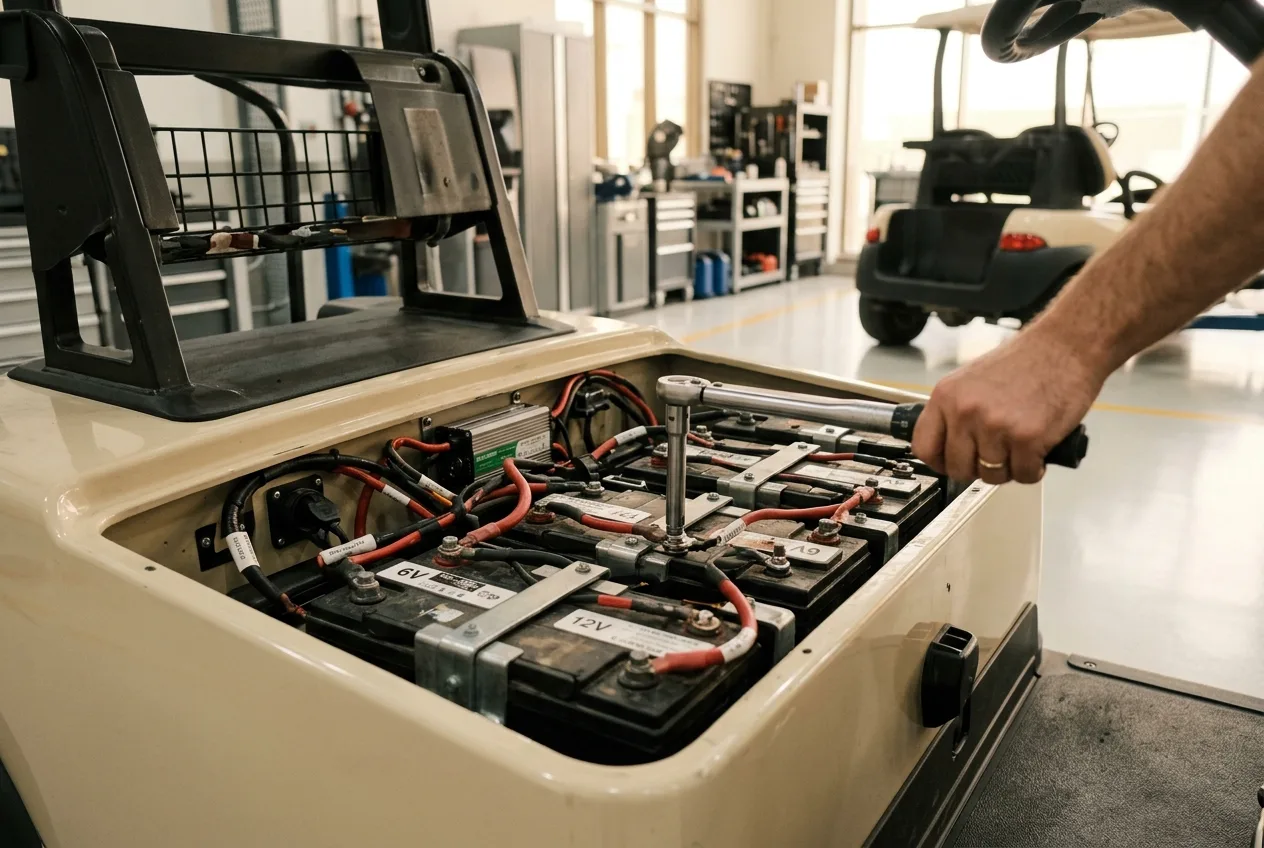
Brake adjustment and pad wear, suspension bushes, steering play, electrical connectors cleaned and protected, and a battery health check. The connector and terminal work matters most in coastal communities.
- 03
Annual major service
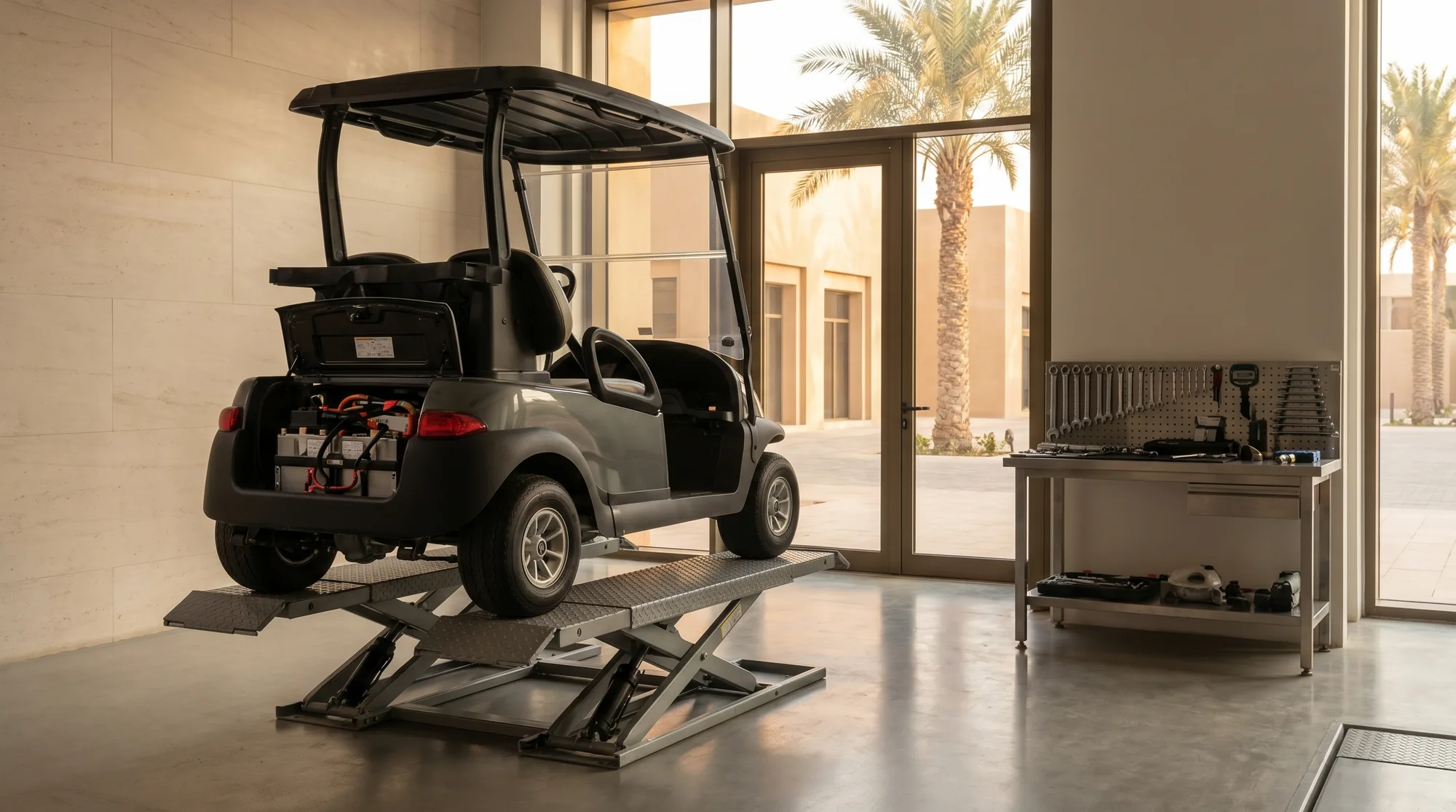
Full inspection of motor, controller and wiring, bearing and bushing condition, brake overhaul if needed, battery capacity test and a charger check under load. The point is to catch heat-driven degradation before it strands you.
- 04
Before a summer away
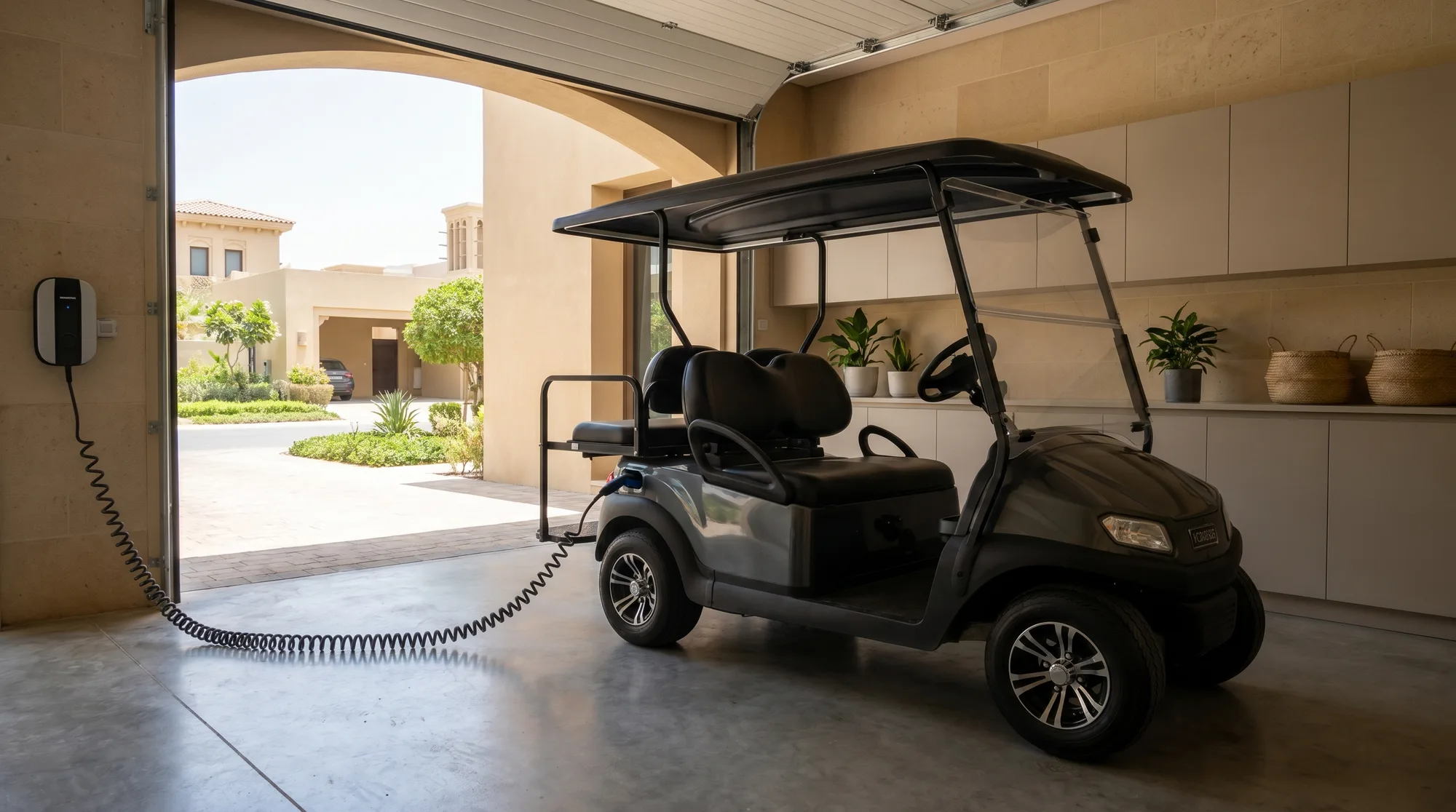
Charge a lithium pack to a sensible storage level, never leave lead-acid flat, park in shade, and disconnect or follow the maker's storage routine. This single habit saves more batteries than any other.
The parts that actually wear in the Gulf
Some parts wear everywhere; a few wear specifically because of where you are. Knowing the difference tells you what to keep on the shelf for a fleet and what to budget for at a villa.
- Tyres: heat hardens and ages the rubber, so they often need replacing on time rather than on tread depth.
- Brakes: pads, shoes and cables are everyday wear, and dust accelerates it.
- Bushes and bearings: fine sand is abrasive, so suspension and wheel bearings work harder than the kilometres suggest.
- Batteries: the headline part. Lithium (LiFePO4) lasts far longer in heat; lead-acid needs water checks and hates deep discharge.
- Chargers: a charger must be rated for high ambient temperatures or it will struggle and fail in a hot garage.
- Trim, seats and canopies: UV perishes them, so UV-stable replacements are worth the small premium.
- Connectors and terminals: corrosion is the quiet killer on the coast; clean and protect them at every service.
Genuine versus cheap parts
The pull toward the cheapest battery, charger or tyre is understandable, and in the Gulf it is usually a false economy. A charger that is not rated for high ambient heat will cook itself or charge poorly in a hot garage. A budget battery without a proper management system degrades fast in summer. Off-spec tyres harden and crack sooner. The cost of fitting correct-spec parts is small set against a stranded buggy or a prematurely dead pack.
This is also where sourcing matters. Working with a supplier who stocks the right parts and understands the climate is the difference between a same-week repair and a buggy waiting weeks for a part to arrive. If you are weighing the cost of keeping a buggy on the road, our overview of how much a golf cart costs in the UAE puts servicing in context, and our notes on where to buy a golf cart in Dubai cover after-sales support.
Servicing a fleet versus a single buggy
For a villa owner, servicing is a calendar reminder and a trusted workshop, and our guide for golf cart villa owners in the UAE sets the wider context. For a facilities operation, campus, hospital or mall running several buggies, it is an uptime problem. A buggy out of action is a guest left waiting or a patient not collected, so a planned maintenance contract that schedules visits, stocks common parts and rotates batteries usually beats reactive repairs on both cost and reliability.
- Single buggy
- Scheduled visits to a trusted workshop
- Fleet
- Planned maintenance contract with SLAs
- Single buggy
- Order as needed
- Fleet
- Keep wear parts and a spare battery on hand
- Single buggy
- An inconvenience
- Fleet
- Lost service to guests, patients or shoppers
- Single buggy
- Protect the one pack through summer
- Fleet
- Rotate and monitor packs to balance wear
| Single buggy | Fleet | |
|---|---|---|
| Best approach | Scheduled visits to a trusted workshop | Planned maintenance contract with SLAs |
| Spare parts | Order as needed | Keep wear parts and a spare battery on hand |
| Downtime cost | An inconvenience | Lost service to guests, patients or shoppers |
| Battery strategy | Protect the one pack through summer | Rotate and monitor packs to balance wear |
In the Emirates you do not service a buggy because it is worn out. You service it so the heat never gets the chance to wear it out first.
What it costs, set against the climate
Prices move and depend on the buggy, so treat figures as indicative and in AED only. A routine service is modest; the meaningful numbers are batteries and chargers, which is exactly why the schedule is built to protect them. The cheapest possible service skipped over a summer can cost you a battery worth many times the saving. The most reliable way to budget is to tell us your buggy or fleet and how it is used, and let us scope a sensible plan.
Keep your buggy or fleet running through summer
Tell us your buggy or fleet and how it is used, and we will scope a climate-ready service plan with the right genuine parts and current pricing.
Frequently asked questions
How often should I service a golf cart in the UAE?+
Service to the calendar, not the mileage. A monthly quick check, a quarterly service and an annual major service is a sensible baseline, with a thorough check before and after any long summer away. Coastal communities and heavy fleets should tighten the intervals.
What wears out fastest on a golf buggy in the Gulf?+
The battery is the costliest casualty of heat and summer storage, but tyres, brakes, bushes, UV-exposed trim and corroded connectors all wear faster here than the kilometres suggest.
Is lithium cheaper to service than lead-acid?+
Usually yes over the life of the buggy. Lithium (LiFePO4) needs no water top-ups, tolerates heat far better and lasts several times longer, which lowers the most expensive part of the service bill in this climate.
Can I get genuine parts for a golf cart in the UAE?+
Yes, through a supplier that stocks correct-spec parts and understands the climate. It matters most for batteries and chargers, which must be rated for high ambient temperatures, and for UV-stable trim. We can advise on sourcing.
Should a resort or campus use a maintenance contract?+
For any fleet, a planned maintenance contract usually beats reactive repairs. It schedules visits, keeps common parts and a spare battery on hand and protects uptime, which is what matters when a buggy carries guests or patients.
Related solutions
Ready to explore what we build?
See the vehicles and the setting this applies to, or get a tailored quote built around your site.

Ready to find the right buggy?
Tell us how and where it will work and we will specify a vehicle and a tailored quote built around you. Every build comes with a 3-year warranty and a 24-hour priority call-out.