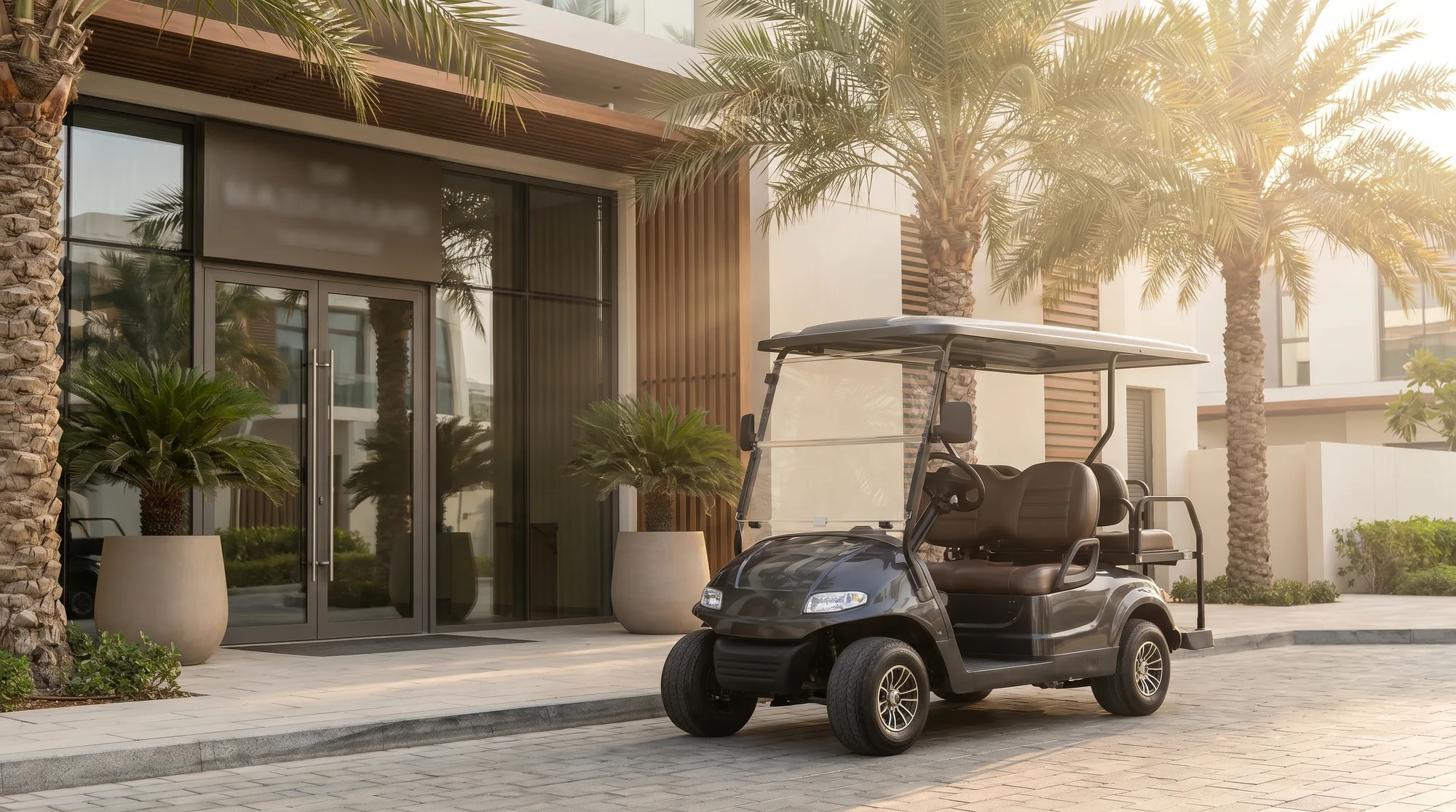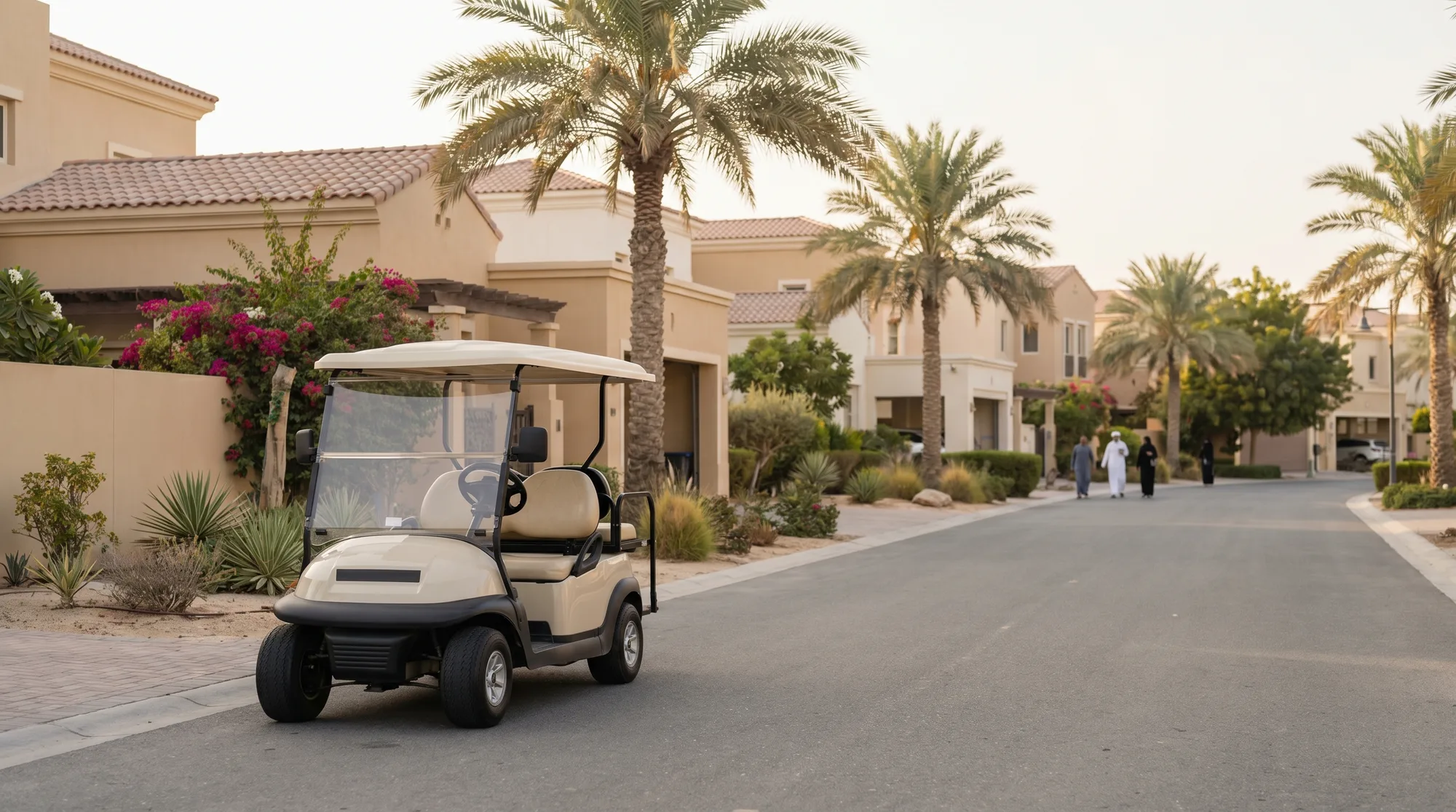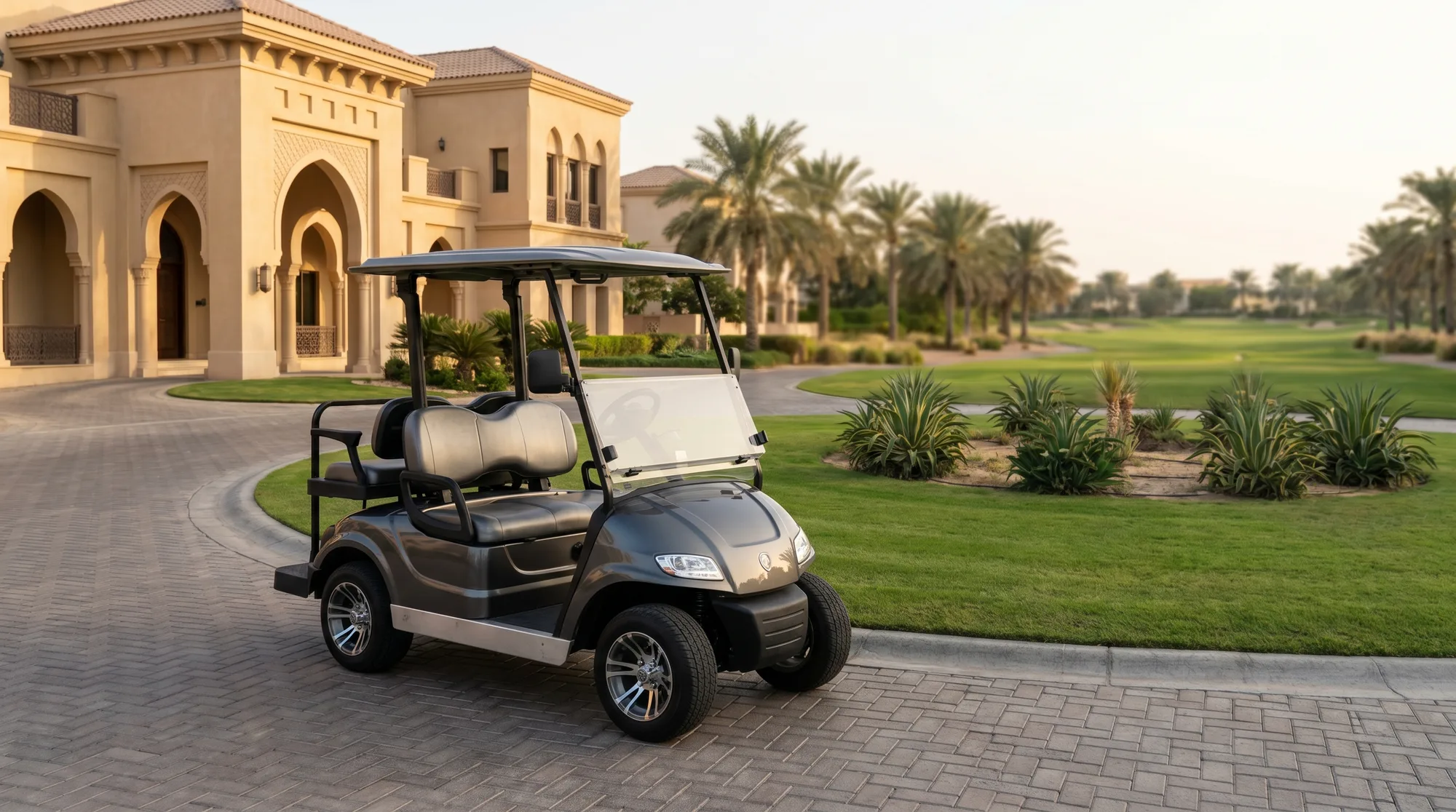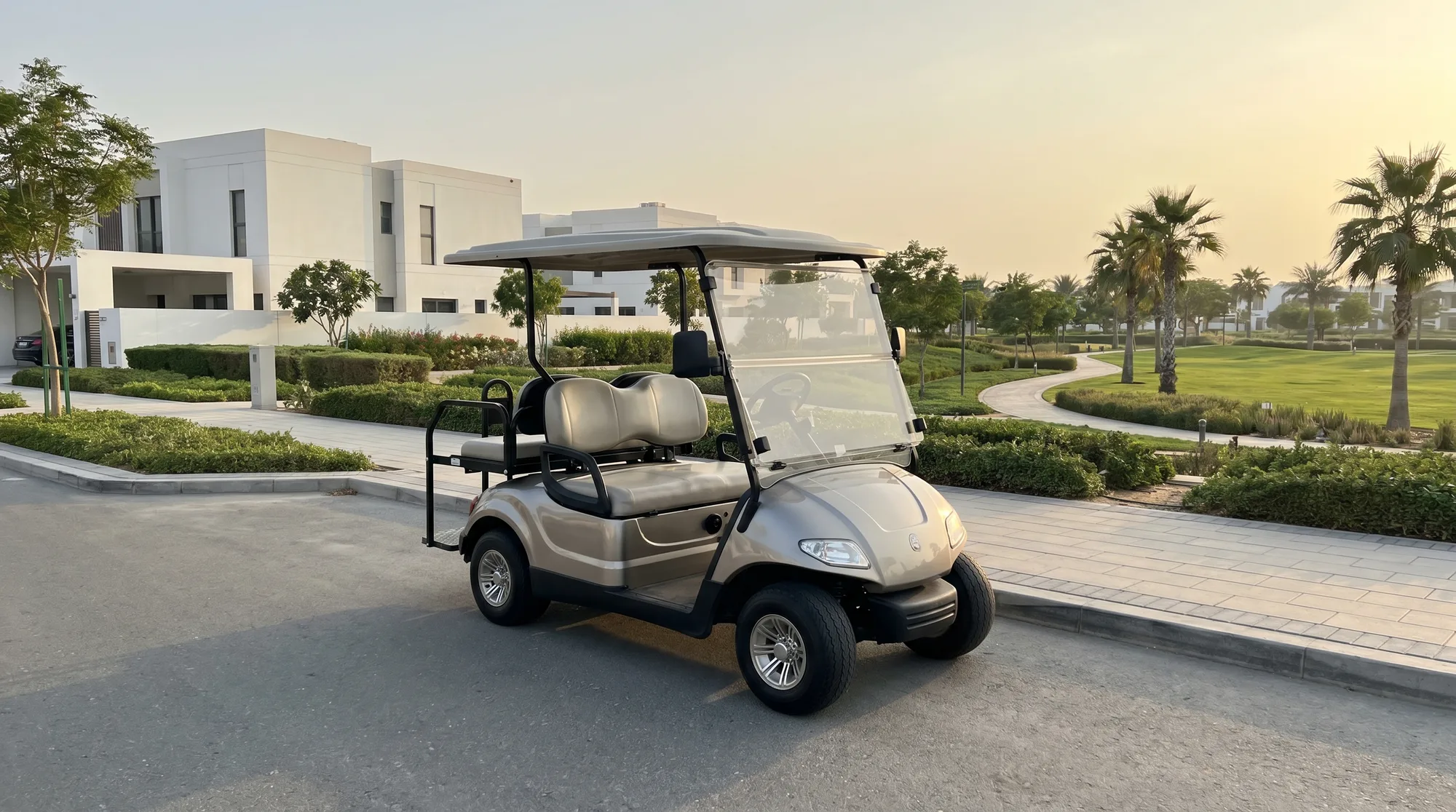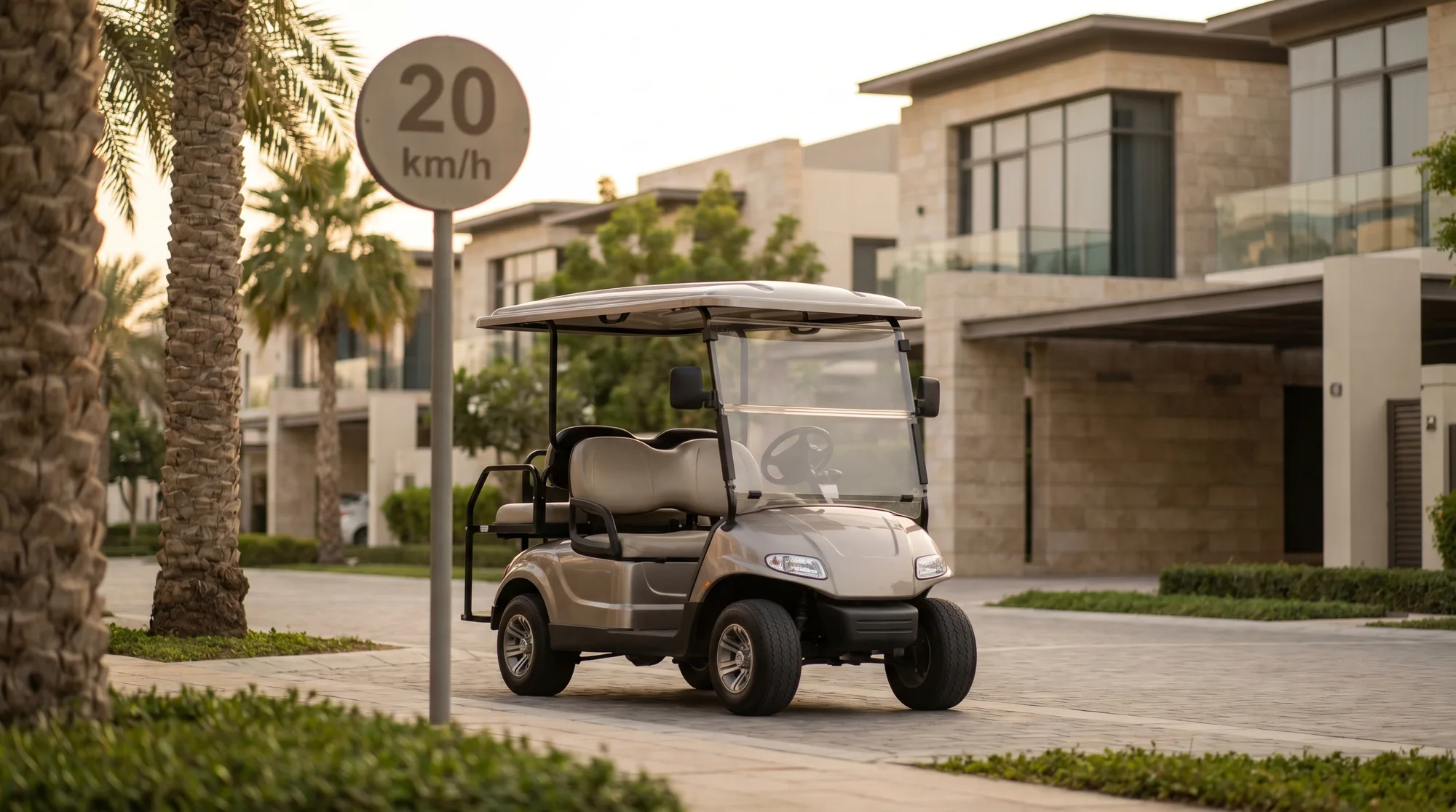
In Dubai's larger gated communities, a golf buggy is less a novelty and more a sensible second vehicle. Residents use them for the school run within the community, the trip to the clubhouse, the supermarket run and the evening loop around the lake. But because these are private roads, the rules are set by the developer and the community management, not by the RTA. That is good news, because it means the rules are practical, and bad news only if you assume every community is the same.
This guide explains the rules you are most likely to meet across communities run by Emaar, Nakheel and Damac, and how to get your buggy approved without a second visit from security. If you are still confirming the basics, our guide to whether golf carts are road legal in the UAE sets out the legal framework these community rules sit within.
Why every community is different
Dubai's master-planned communities are privately managed environments. The developer or the appointed owners' association decides what moves on the internal roads. So Arabian Ranches, Dubai Hills Estate, Emirates Hills, Jumeirah Islands and The Springs can each take a slightly different line on buggies. Some actively encourage them with dedicated parking and charging guidance. Others limit them to certain roads or hours. The only reliable approach is to ask your specific community for its current policy in writing.
The registration step
Most communities want to know which buggies are on their roads and who owns them. Expect to register the vehicle with the community management or security office, usually with a few documents and a sticker or pass that identifies it on the internal network.
- 01
Ask for the current policy
Contact your community management and request the written golf cart or buggy policy. This avoids buying something that will not pass.
- 02
Prepare your documents
Typically proof of residence in the community, owner ID and the buggy's purchase or specification details.
- 03
Book the safety check
Many communities inspect lights, indicators, brakes and seatbelts before approval. Make sure these are working.
- 04
Register and collect your pass
Once approved, the buggy is logged with security and you receive a community sticker or permit.
- 05
Drive to the community rules
Observe the posted speed limit, the permitted roads and any driver age requirement.
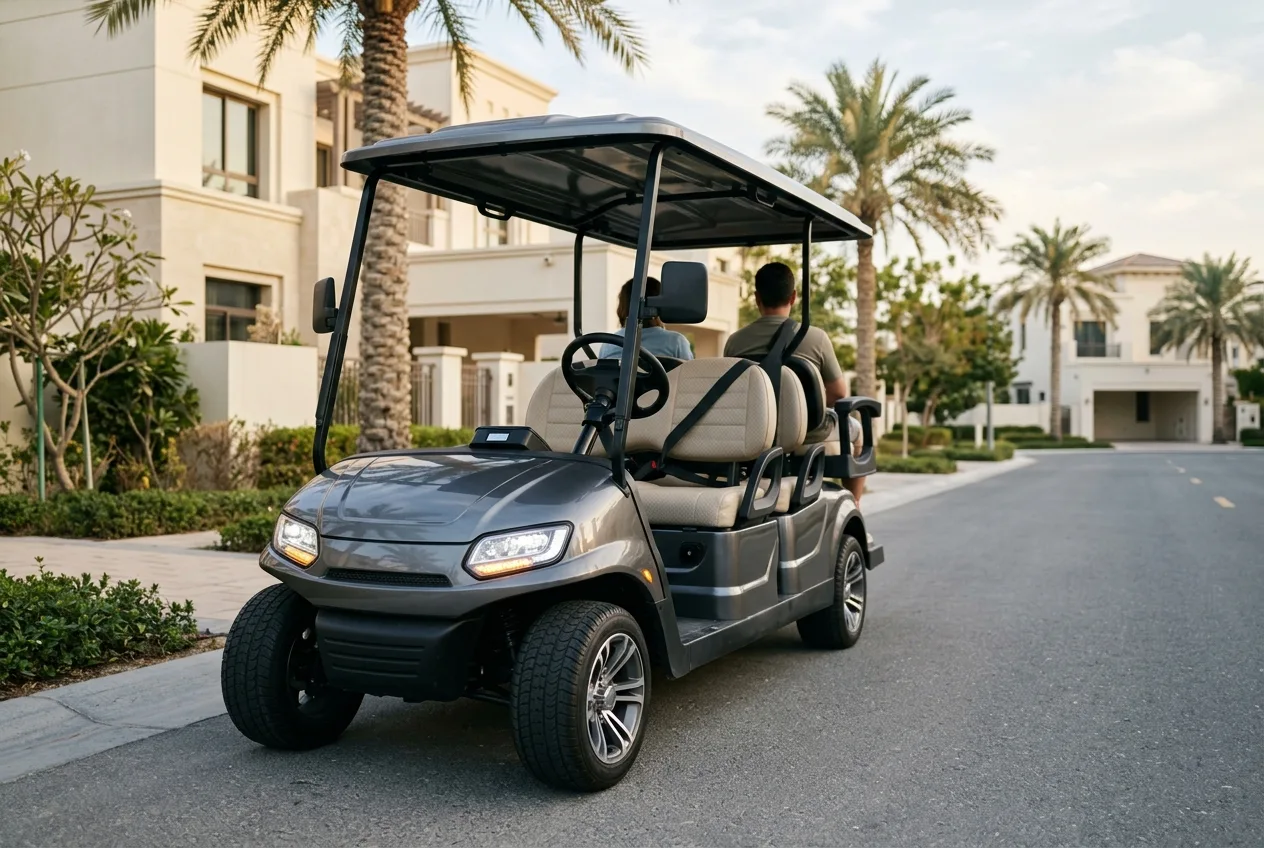
The safety check, item by item
The inspection is straightforward, and it exists to keep shared roads safe where children, cyclists and pedestrians mix with low-speed vehicles.
- Pass condition
- Bright, aligned and working on both sides
- Pass condition
- Front and rear, clearly visible in daylight
- Pass condition
- Illuminate the moment the brake is applied
- Pass condition
- Fitted and functional on used seating positions
- Pass condition
- Sound condition, even wear, confident stopping
- Pass condition
- No sharp damage, secure seats, stable steering
| Pass condition | |
|---|---|
| Headlights and tail lights | Bright, aligned and working on both sides |
| Indicators | Front and rear, clearly visible in daylight |
| Brake lights | Illuminate the moment the brake is applied |
| Seatbelts | Fitted and functional on used seating positions |
| Tyres and brakes | Sound condition, even wear, confident stopping |
| General condition | No sharp damage, secure seats, stable steering |
Speed, parking and where you can drive
Internal speed limits are low, frequently around 20 to 25 km/h, and they are taken seriously near schools, parks and clubhouses. Some communities restrict buggies to certain roads or away from main arteries during peak traffic. Parking is usually in your own driveway or designated bays rather than visitor car parks. For the wider question of which areas welcome buggies at all, see where you can legally drive in Dubai.
Children, guests and shared use
Many communities set a minimum driver age and expect adults to supervise younger passengers. Seatbelts matter most here. If your household will share the buggy, choose a four-seat layout with belts on every seat rather than squeezing extra passengers onto a two-seater.
Guests are the other variable. A buggy that visiting family or staff will drive should be simple, predictable and well marked, since they will not know the community's quirks. Some owners keep a short note of the local rules in the buggy: the speed limit, the roads to avoid and where to park. It sounds fussy, but it is exactly the sort of courtesy that keeps a community relaxed about buggies in the first place.
Charging and storage within the community
Most residents charge from a standard socket in the garage or carport overnight, which suits the modest battery of a typical buggy. The practical points to confirm are simple: that you have a safe, shaded place to park and charge, that the cable run is tidy and protected from the sun, and that your community has no restriction on charging in shared areas. A buggy that lives in the shade and charges overnight will reward you with years of quiet, reliable service. One left baking in direct sun all summer will not.
Etiquette that keeps buggies welcome
Rules are one thing; the unwritten etiquette is what really determines whether a community stays relaxed about buggies. Drive slowly near homes, parks and the school gate even when the limit would allow more. Yield to pedestrians and cyclists, who often have less protection than you. Park considerately in your own bay or driveway rather than blocking shared paths. Keep the buggy clean, quiet and well maintained so it reflects well on the community. These small courtesies are why some communities expand buggy access over time while others restrict it.
Do you also need RTA registration?
If the buggy stays entirely on private community roads, it usually does not need an RTA plate or standard motor insurance, because it never enters a public road. Community registration is the relevant requirement. We explain the distinction fully in registering a golf cart in the UAE.
When the rules tighten
Communities occasionally tighten their buggy policies, usually after a safety incident or a rise in poorly maintained vehicles on the roads. Common changes include making seatbelts mandatory, lowering speed limits, requiring annual re-inspection, or limiting buggies to certain hours or roads. The owners least affected by these changes are the ones already running a well-specified, well-maintained buggy. If you buy with a margin of safety built in, future tightening is rarely a problem for you.
The communities that love buggies most are the ones where every owner respects the speed limit. Compliance is what keeps them welcome.
Choosing a buggy that fits community life
The buggies that work best in Dubai communities are not necessarily the fastest or the cheapest. They are the ones matched to real daily use: enough seats for the household, belts for everyone, a battery sized for several short trips a day in the heat, and a roof or shade for the long summer. Two-seaters suit couples and quick clubhouse runs; four-seaters suit families and the school drop; a small cargo bed earns its keep for garden waste, groceries and beach gear. Deciding this before you shop keeps you from over- or under-buying.
It also pays to think about who else will drive it and how it will be stored. A buggy shared by a family, supervised for younger drivers and parked in shade to charge overnight will give years of quiet service. If you are weighing up models and budgets, how much a golf cart costs in the UAE and where to buy a golf cart in Dubai are the natural next steps.
Buy a buggy your community will approve
We specify residential buggies to pass community safety checks first time, with the lights, indicators and belts developers expect.
Frequently asked questions
Do I have to register my golf cart with my Dubai community?+
In most managed communities, yes. You register the buggy with community management or security and usually receive a sticker or permit after a safety check.
What is the speed limit for golf carts in Dubai communities?+
It varies by community but is typically low, often around 20 to 25 km/h, with tighter enforcement near schools and parks. Check your community signage.
Can my teenager drive the family buggy?+
Many communities set a minimum driver age and expect adult supervision. Confirm your community's rule before letting younger family members drive.
Will my buggy pass the safety check?+
It should, if it has working headlights, indicators, brake lights, seatbelts, sound tyres and reliable brakes. Specifying these from the start makes approval simple.
Are the rules the same across all Dubai communities?+
No. Each developer and owners' association sets its own policy, so always ask your specific community for its current written rules.
Related solutions
Ready to explore what we build?
See the vehicles and the setting this applies to, or get a tailored quote built around your site.

Ready to find the right buggy?
Tell us how and where it will work and we will specify a vehicle and a tailored quote built around you. Every build comes with a 3-year warranty and a 24-hour priority call-out.