When a UAE community decides it needs a fleet of electric buggies, whether for resident shuttles, security patrols, maintenance crews or all three, the owners' association or facilities operator making the purchase often does so for the first time. It is a sizeable, long-term commitment, and the easy mistakes, buying too few, choosing on price alone, ignoring charging and maintenance, are expensive to unwind. This guide gives a clear, UAE-specific path through the decision: how to size the fleet, how to procure it well, how to plan charging and maintenance, how to cost the whole life and how to govern it once it arrives.
The good news is that the decision is very learnable. A community that thinks it through, sizes honestly, specifies for the heat, builds in charging and maintenance and governs the fleet sensibly, ends up with a quiet, reliable asset that residents genuinely value. The communities that struggle are the ones that treated it as a simple shopping trip. Let us walk the path properly, with the climate and the realities of a shared community built in from the start.
Step one: size the fleet honestly
The most common and most costly error is buying the wrong number of buggies. The right number is set by peak simultaneous demand: the busiest moment when the most buggies are needed at once across all the jobs the fleet does, plus spares to cover the vehicles inevitably on charge or in maintenance. A community that buys to its average need, or to a comfortable-sounding round number, finds itself short at exactly the moments that matter and resentful of a purchase that does not deliver.
Work it out from the actual jobs. How many buggies do residents, security and maintenance each need at peak, do those peaks overlap, and how many vehicles will be unavailable at any time? Add it up, add a sensible spare margin, and that is your fleet. The fuller sizing method, common to all operators, is in golf cart fleet management for UAE operators.
- 01
List the jobs the fleet must do
Resident shuttles, security patrols, maintenance crews: count each separately.
- 02
Find the peak simultaneous demand
Work out the busiest moment when the most buggies are needed at once across all jobs.
- 03
Add spares for availability
Include enough margin to cover buggies on charge or in maintenance at any time.
- 04
Decide the seat mix
Match seat counts to the jobs: shuttles need more seats, patrol and utility need fewer.
Step two: specify for the climate
A community fleet works outdoors in UAE heat and dust every day for years, so the specification has to suit the climate, not a brochure. That means a heat-tolerant lithium battery that holds range and lasts in high temperatures, a durable build that resists dust and, near the coast, salt, and components chosen to survive rather than to hit a price. Specifying for the climate costs a little more upfront and saves a great deal in early failures and replacements. The battery reasoning is set out in lithium batteries for golf carts in UAE heat.
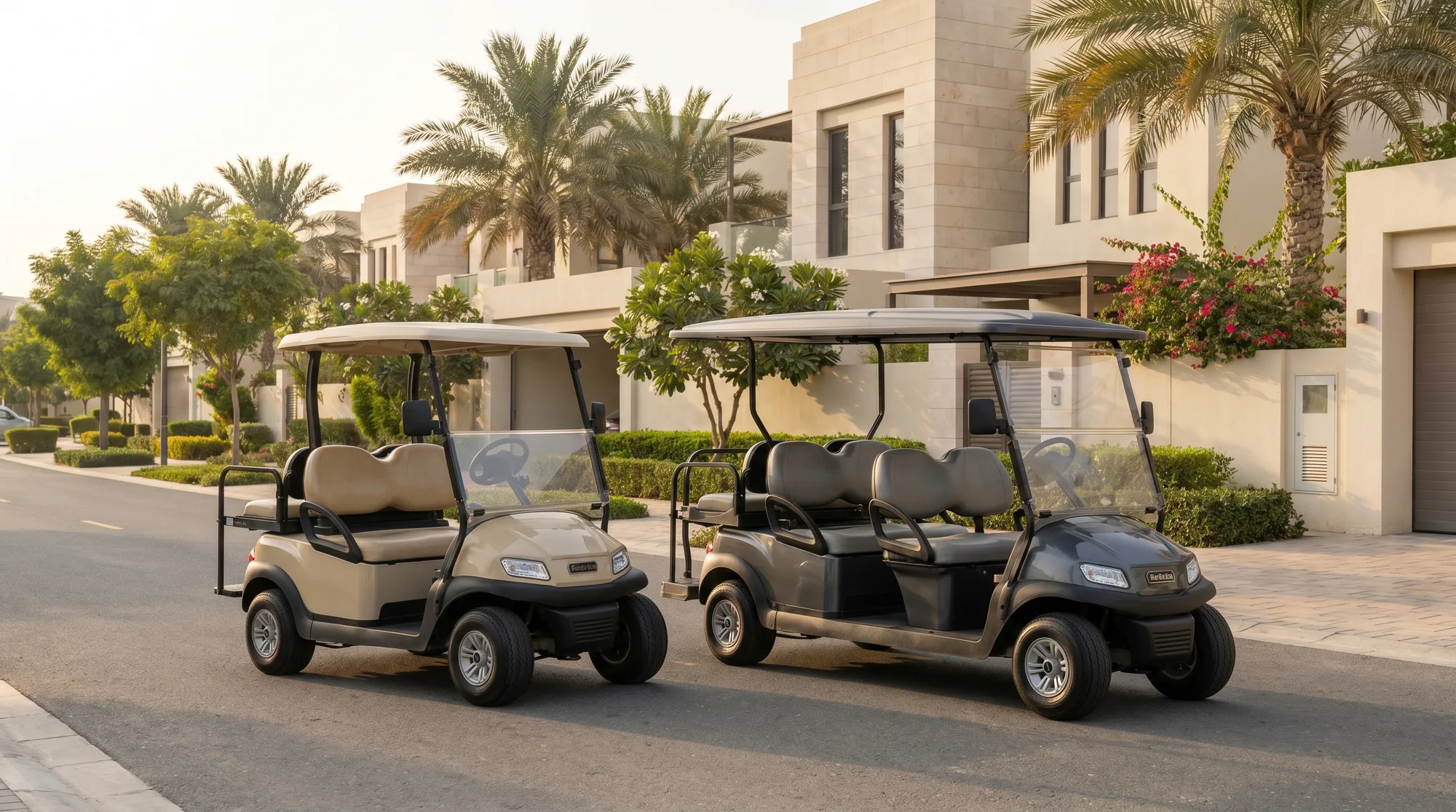
Match the seat mix to the jobs while you specify. Resident shuttles benefit from more seats to clear groups; security and maintenance often need fewer seats and, for the latter, a cargo bed. A thoughtful mix of sizes serves the community better than a uniform fleet, and the sizing logic is covered in what size golf cart for the UAE within this batch.
Step three: procure it well
Good procurement is about more than the lowest quote. The questions that protect a community are about support: who maintains the fleet, how quickly are parts and faults handled, what warranty covers the vehicles and batteries, and is the supplier a relationship the community can rely on for years? A slightly cheaper fleet from a supplier who disappears after the sale is the false economy that haunts a community when the first buggies fail in the heat. Buy the support as carefully as the vehicles.

Step four: plan charging and maintenance
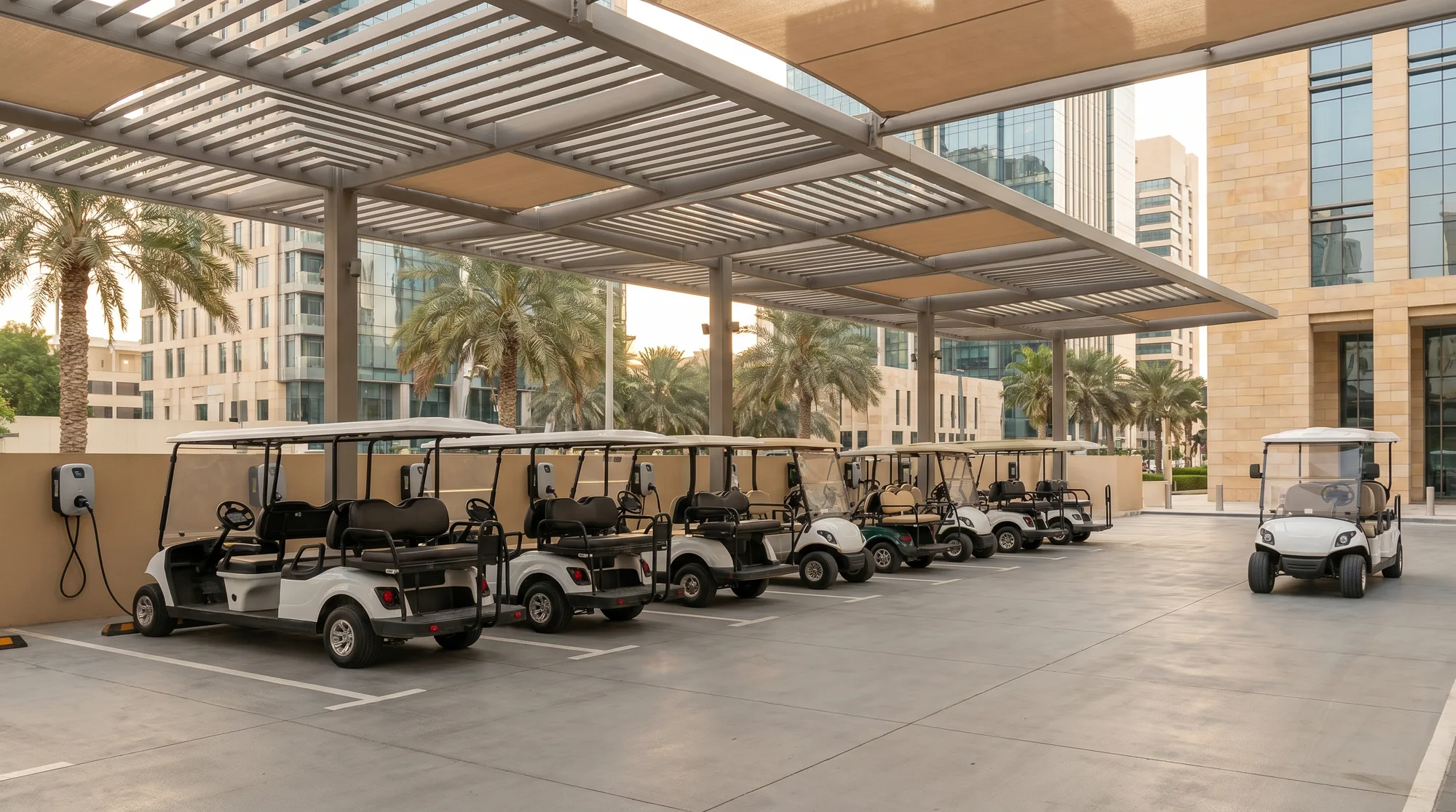
Two things keep a community fleet available: charging and maintenance, and both have to be planned as part of the purchase, not bolted on later. Charging means enough capacity and points, placed where buggies naturally pause, sized for the lithium chemistry, so the fleet returns to ready without queueing. Maintenance means a contract or a clear plan, with a schedule, parts and a fast response, so a fault is fixed rather than parking a buggy for weeks. Skip either and the fleet you bought is not the fleet you can actually run.
These are the same disciplines any operator needs, and a community buying for the first time benefits from treating them as non-negotiable from day one. The full charging and maintenance approach is in golf cart fleet management for UAE operators, and where the fleet is being inherited from a developer, golf cart fleets for master-developer handover covers what should already be in place.
Step five: cost the whole life
A community should decide on total lifecycle cost, not the lowest purchase price. The full cost includes maintenance, energy and, importantly, the battery replacement cycle, which in UAE heat is a real and predictable future expense an association must budget for. A cheaper fleet that needs early battery replacement and frequent repairs can cost far more over its life than a better-built one, so the honest comparison is across years, not at the checkout. For indicative budgeting see how much a golf cart costs in the UAE, and price a community configuration via /request-a-quote rather than a fixed figure.
- Looks like
- Cheapest at the checkout
- Ends up
- Early failures, costly replacements, downtime
- Looks like
- A little more upfront
- Ends up
- Reliable, predictable, cheaper over years
| Looks like | Ends up | |
|---|---|---|
| Lowest purchase price | Cheapest at the checkout | Early failures, costly replacements, downtime |
| Lowest lifecycle cost | A little more upfront | Reliable, predictable, cheaper over years |
Step six: govern it from day one
A community fleet without governance becomes a source of complaints: buggies misused, driven too fast, parked badly or left to deteriorate. Before the fleet arrives, the community should settle who owns and is responsible for it, set clear usage and safety rules, decide who may drive and from what age, and state the compliance position, that the buggies are not RTA road-legal and where they may run. Governance set up front protects the investment and keeps the fleet a welcome part of community life.
The safety dimension deserves particular attention in a community shared with children and pedestrians, and it is covered in golf cart safety in gated communities. Confirm the road-legal and site rules with the relevant authority, write the governance down, and share it with residents so the standard is clear from the first day the fleet runs.
A community buggy fleet bought thoughtfully, sized honestly, specified for the heat, supported and governed, is an asset residents value for years. Bought as a shopping trip, it is a regret that arrives with the first hot summer.
Buy a community fleet the right way
Tell us your community, the jobs the fleet must do and your peak demand, and we will help size, specify and price it with current indicative figures in AED.
Frequently asked questions
How many buggies should a community buy?+
Size to peak simultaneous demand across all the fleet's jobs, resident shuttles, security and maintenance, plus spares to cover buggies on charge or in maintenance. Buying to an average or a round number leaves the community short at the moments that matter.
Should a community buy the cheapest fleet available?+
No. Decide on total lifecycle cost, not the lowest purchase price. A cheaper fleet that fails early in the heat and needs frequent repairs costs far more over its life than a better-built, heat-tolerant one. Buy the support and warranty as carefully as the vehicles.
Does a community need to plan charging before buying?+
Yes. Charging infrastructure should be part of the purchase: enough capacity and points, placed where buggies pause, sized for lithium chemistry, so the fleet stays available. Bolting charging on later means queueing buggies and a fleet that cannot keep up.
Is a maintenance contract necessary for a community fleet?+
For most communities, strongly recommended. A contract or clear plan with a schedule, parts and fast response keeps buggies available and helps the fleet reach its full life. Reactive repairs cost more and cause downtime, which matters more in UAE heat.
Who governs a community buggy fleet?+
Whoever the community appoints, usually the owners' association or facilities operator. Set governance before the fleet arrives: a named responsible party, usage and safety rules, who may drive, and the compliance position. Buggies are not RTA road-legal, so confirm the rules with the authority.
Related solutions
Ready to explore what we build?
See the vehicles and the setting this applies to, or get a tailored quote built around your site.

Ready to find the right buggy?
Tell us how and where it will work and we will specify a vehicle and a tailored quote built around you. Every build comes with a 3-year warranty and a 24-hour priority call-out.