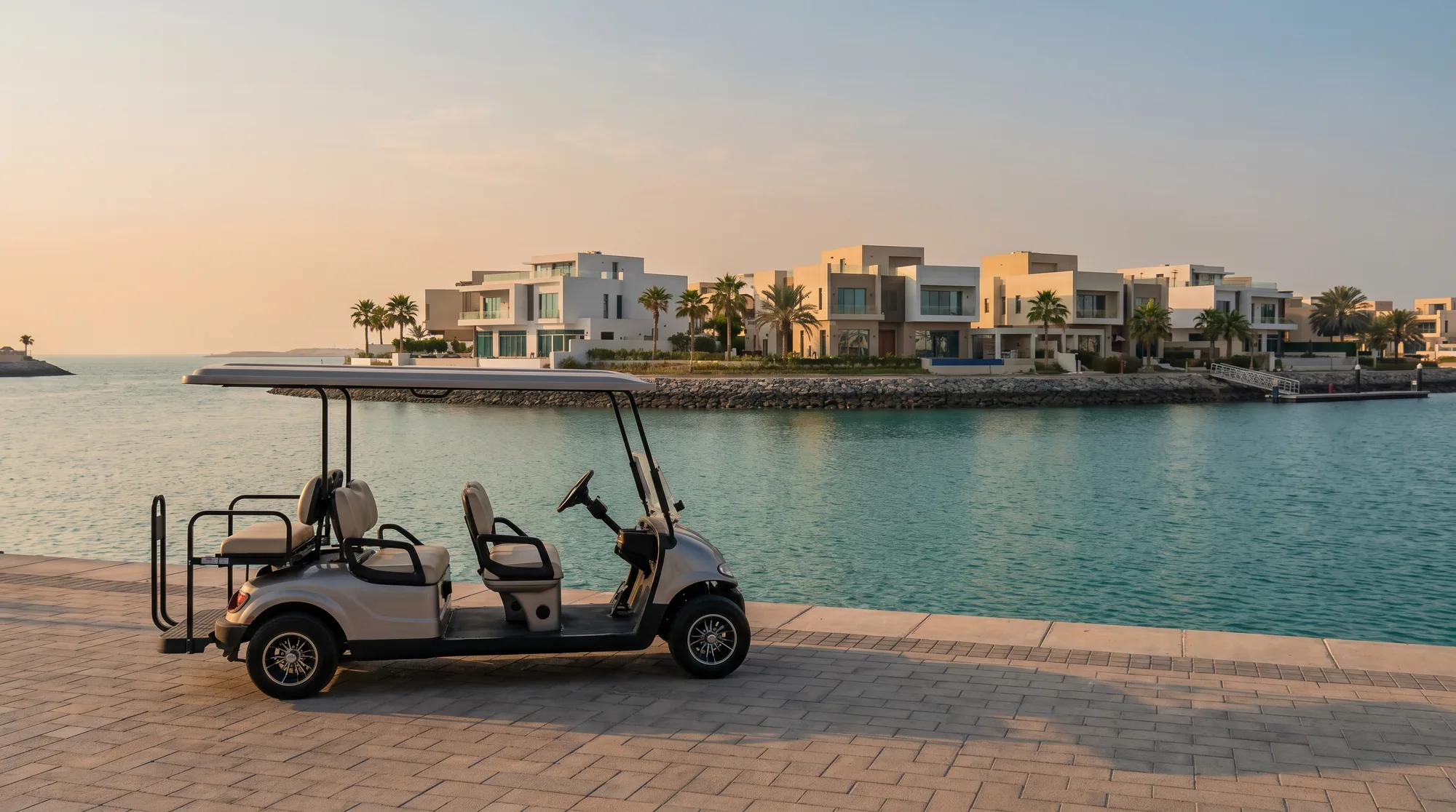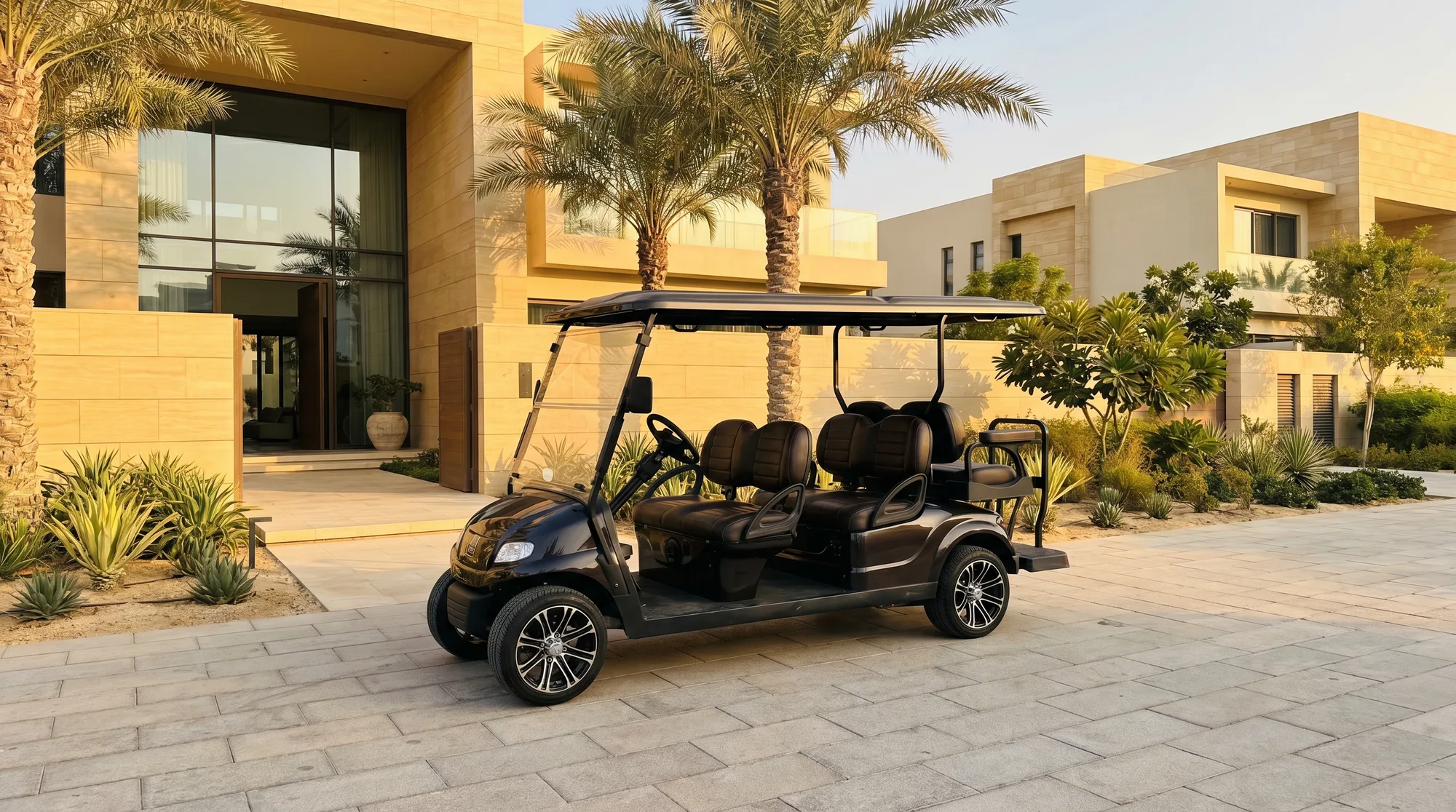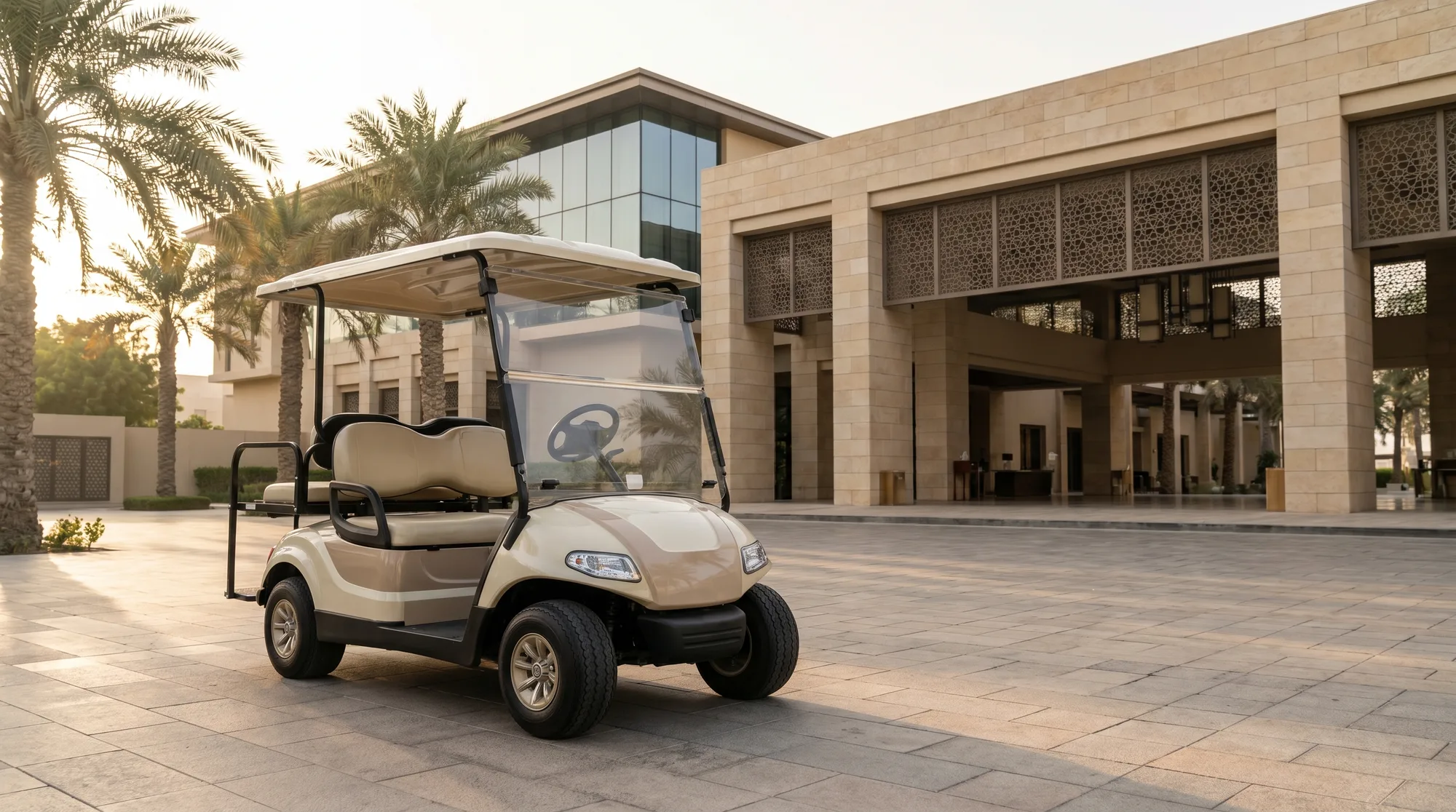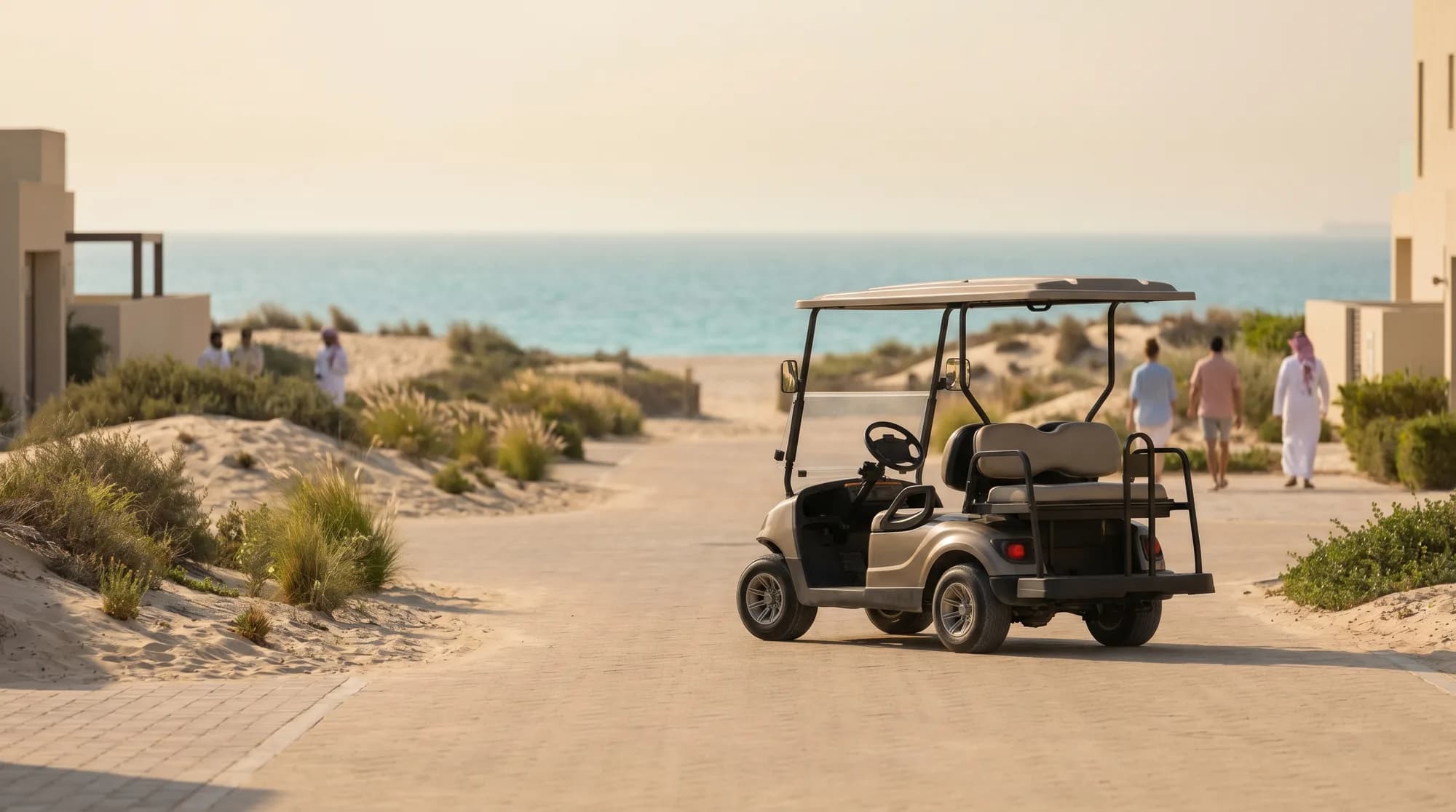
Abu Dhabi's island communities have a different character to Dubai's, and it suits golf buggies well. Saadiyat Island, Yas Island and the Al Raha developments are spacious, low-rise and coastal, with villas set among parks, beaches and, on Yas and Saadiyat, world-class golf. Many are Aldar developments, the capital's flagship master developer, and the relaxed, generously spaced layouts make a buggy a natural fit for moving around within them.
But the islands come with a defining challenge: they are surrounded by sea, and salt-air corrosion is a real and constant force. This guide covers how Abu Dhabi residents use buggies, the community rules to expect, and why corrosion protection matters even more here than inland. As always, treat the specifics as a starting point and confirm the current policy with your community and the authorities.
Why the islands suit buggies
The Abu Dhabi island communities are built around space and lifestyle: beaches, parks, golf, cultural districts on Saadiyat and leisure attractions on Yas, with villas spread comfortably among them. That spaciousness is lovely to live in and a little far to walk in summer, which is precisely where a buggy comes in. Residents use them for beach trips, school runs within the community, visits to neighbours across large plots, and the pleasure of moving in the sea air without the heat of walking.
The same private-use principle that governs the whole country applies here. A buggy is for the community's internal roads, not Abu Dhabi's public roads. The emirate-specific framework is set out in the rules in Abu Dhabi, which is the right starting point for any island resident.
The community rules to expect
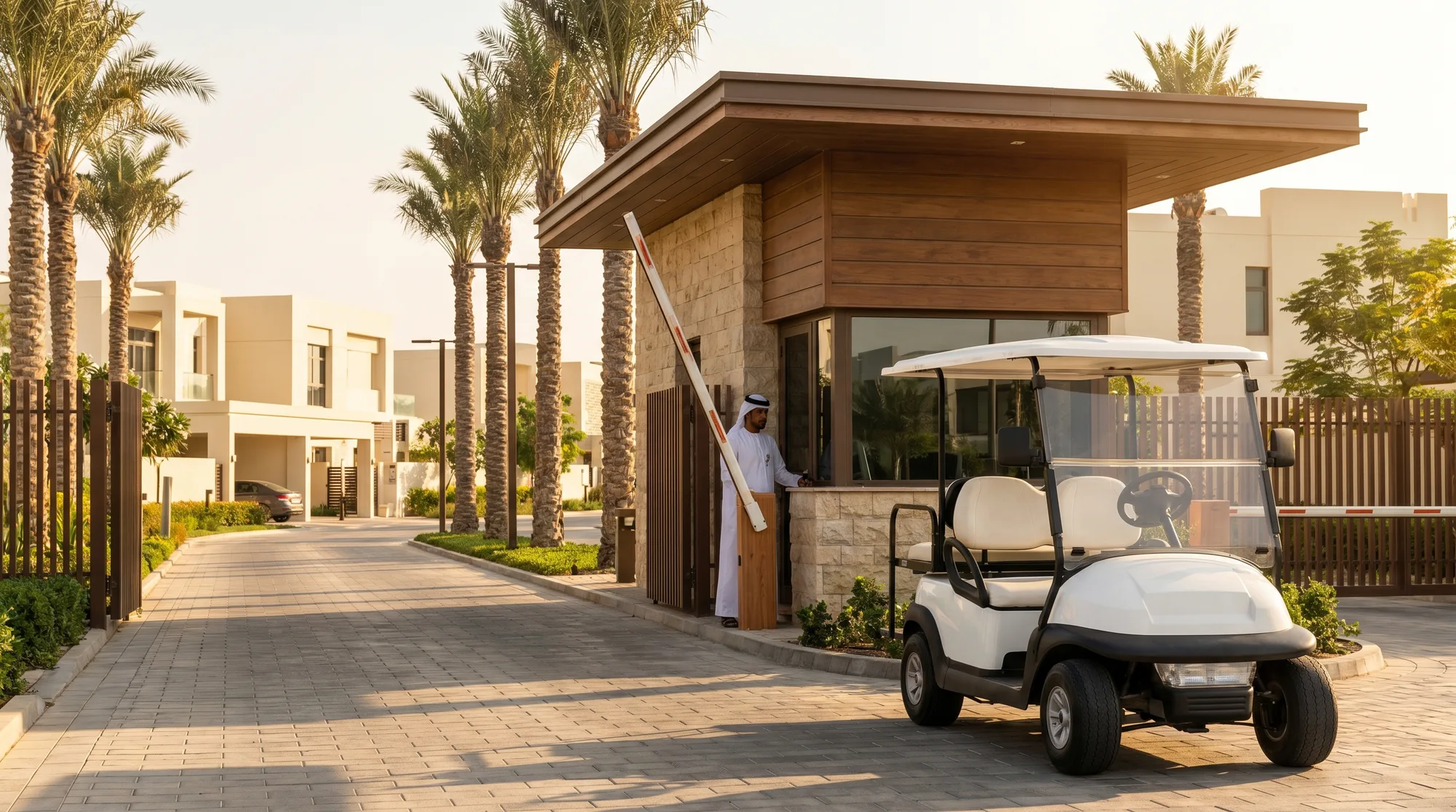
Many of these communities are Aldar developments, and like master developers elsewhere they set their own buggy policies through community management. Expect the familiar pattern: register the buggy with security, pass a safety check on lights, indicators, brake lights and seatbelts, and drive to the posted community rules. The general framework is described in whether golf carts are road legal in the UAE.
On Saadiyat and Yas, where there is championship golf, the golf clubs set separate rules for buggies on and around the courses. If you want your own buggy to serve both residential and course use, confirm both the community's policy and the club's. Abu Dhabi also sets its own emirate-level rules, so do not assume Dubai's specifics apply unchanged; confirm with the Abu Dhabi authorities for anything touching the wider regulatory picture.
- 01
Confirm the emirate and community rules
Check the Abu Dhabi authorities' position and ask your community management for the current written buggy policy.
- 02
Prepare documents
Typically proof of residence, owner identification and the buggy's specification or purchase details.
- 03
Pass the safety check
Ensure lights, indicators, brake lights and seatbelts are working before inspection.
- 04
Register with security
Once approved, the buggy is logged with the community and you receive a permit or sticker.
- 05
Check golf-club rules if relevant
On Saadiyat or Yas, confirm the club's separate rules before using the buggy on or around the course.
Specifying a buggy for island life
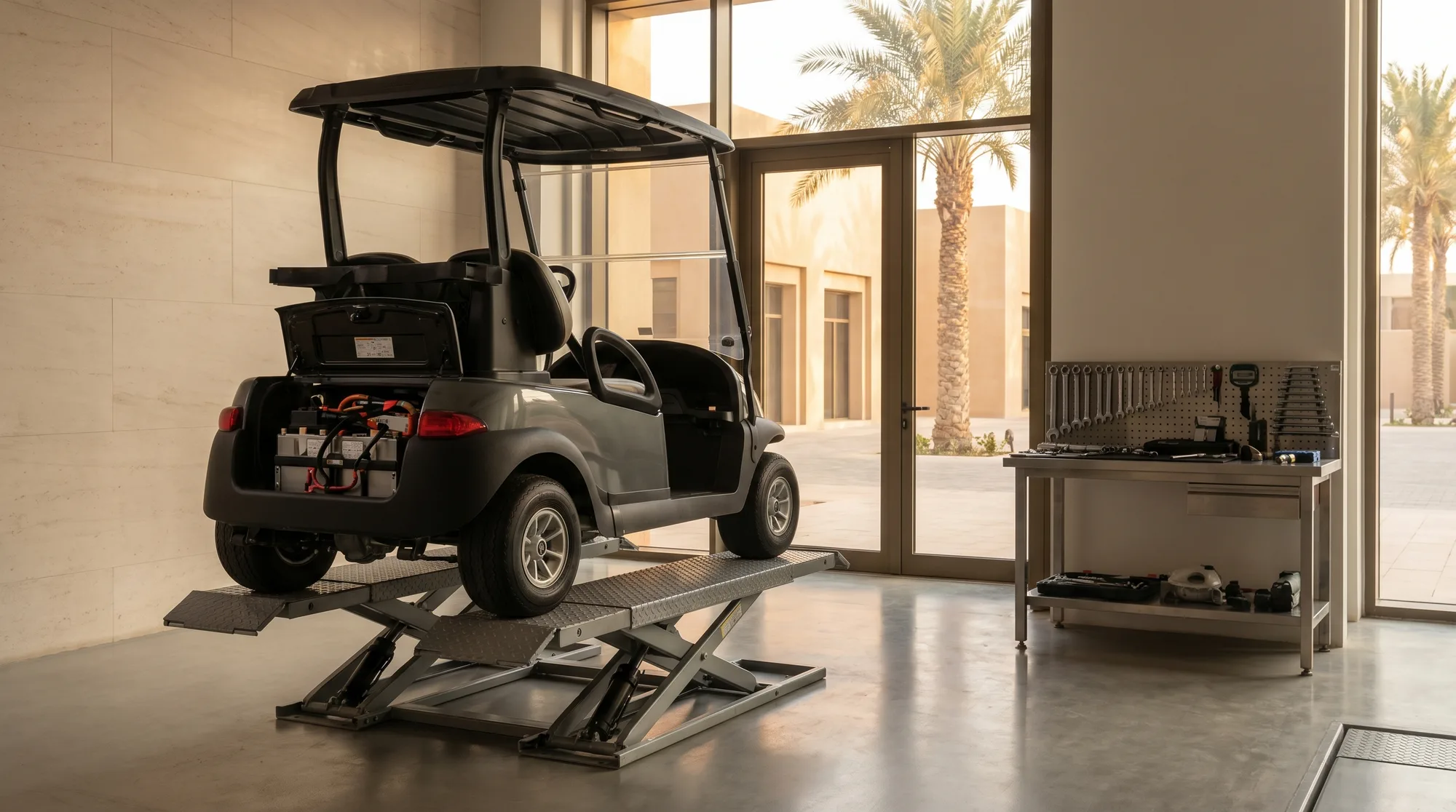
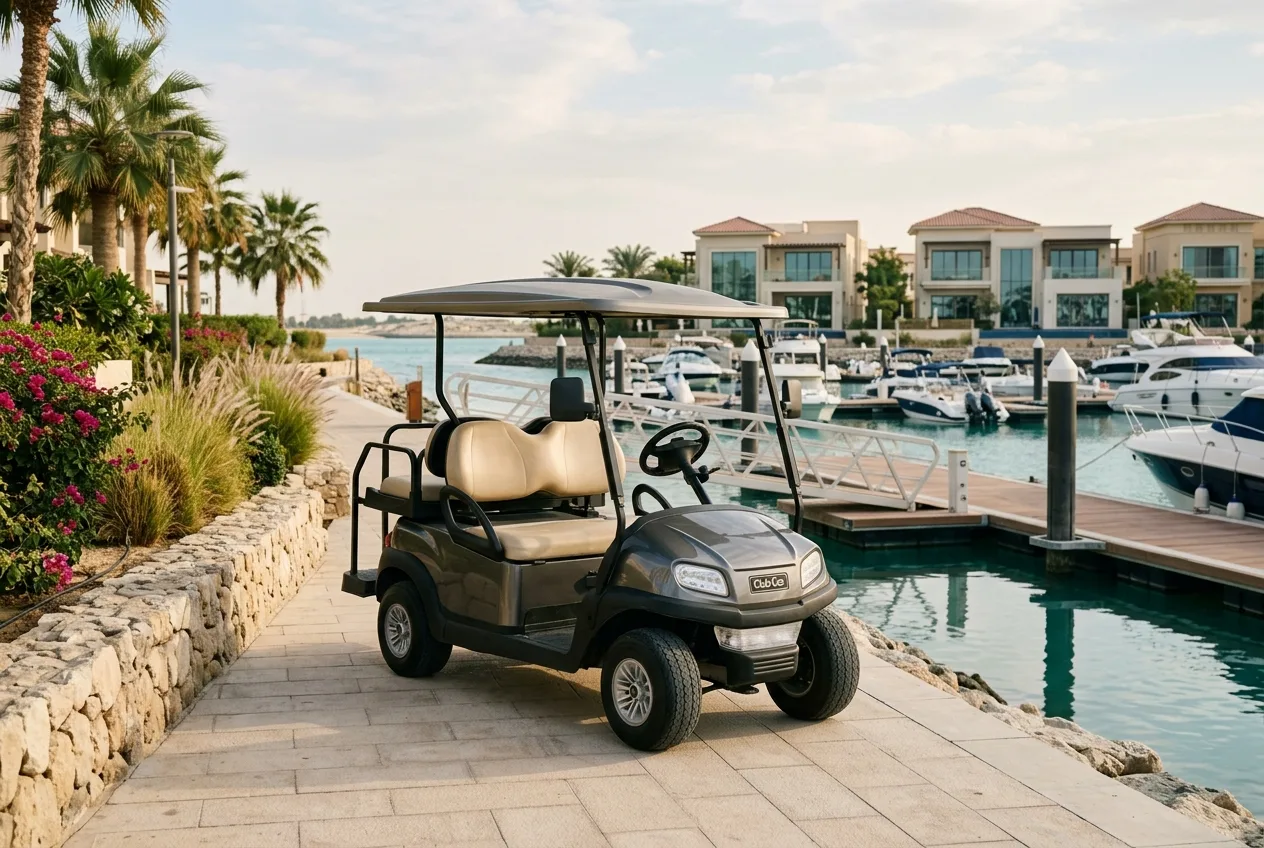
On the islands, the corrosion brief sits alongside the usual UAE heat brief, and together they define what to buy. The buggy that lasts here combines a sealed lithium battery and a heat-rated charger with corrosion-resistant, stainless or coated fixings, sealed electrical connectors, protected battery terminals and UV-stable trim. This is the same logic that applies on Palm Jumeirah, and it holds doubly on Abu Dhabi's islands because so much of the community sits close to open water.
- Inland
- Standard acceptable
- Saadiyat / Yas islands
- Corrosion-resistant essential
- Inland
- Helpful
- Saadiyat / Yas islands
- Critical against salt humidity
- Inland
- Lithium preferred
- Saadiyat / Yas islands
- Lithium strongly preferred
- Inland
- Occasional dust clearing
- Saadiyat / Yas islands
- Regular fresh-water rinse
- Inland
- Shade ideal
- Saadiyat / Yas islands
- Shade plus salt management
| Inland | Saadiyat / Yas islands | |
|---|---|---|
| Fixings | Standard acceptable | Corrosion-resistant essential |
| Electrical sealing | Helpful | Critical against salt humidity |
| Battery | Lithium preferred | Lithium strongly preferred |
| Maintenance | Occasional dust clearing | Regular fresh-water rinse |
| Storage | Shade ideal | Shade plus salt management |
Heat, storage and the lithium case
Abu Dhabi's summers match Dubai's, with surface temperatures past 45C, and the islands add humidity from the surrounding sea. A sealed lithium battery copes far better than older lead-acid systems: it handles the heat, holds charge through long summer absences when residents travel, and avoids the topping-up and sulphation that flooded batteries suffer in the Gulf. For a coastal community where conditions are harsh, that reliability is exactly what you want.
On an island, the sea gives you everything except an easy life for your buggy. Spec for the salt, and it will last.
Choosing the right size and budget
Most island households choose a four-seat buggy for family and beach trips, with six-seat models for larger families and two-seaters for couples. Indicatively, entry buggies start around AED 28,000 to AED 45,000, four-seaters around AED 40,000 to AED 70,000, and premium or larger models from AED 70,000 to AED 130,000-plus, with good used buggies around AED 15,000 to AED 35,000. These are indicative ranges only; for a tailored figure and a fuller breakdown, see how much a golf cart costs in the UAE. On the islands in particular, be wary of a cheap used buggy with a corroded, heat-tired battery; new versus used golf carts in the UAE explains why it can cost more in the long run.
Living with an island buggy
Owning a buggy on Saadiyat, Yas or Al Raha rewards a simple routine: rinse off salt with fresh water regularly, garage or shade it from the heat, charge on a heat-rated charger, and check fixings and connectors for early corrosion. Do that with a well-specified, corrosion-resistant, lithium-based buggy, and it will give years of cool, convenient service in some of the most beautiful, and most demanding, communities in the country.
How the islands differ from each other
Although they share the coastal challenge, the islands have distinct characters that shape how a buggy is used. Saadiyat blends cultural districts, beaches and golf with low-density villa living, so buggies tend to serve a mix of beach, school and neighbour trips. Yas leans towards leisure and waterfront living, with residential communities set among its attractions and marina, where a buggy is handy for getting around larger plots and to the water. Al Raha, on the mainland coast facing the islands, offers established waterfront communities where the same salt-air rules apply.
The practical upshot is the same across all three: spacious, coastal, buggy-friendly living, with corrosion the constant to design against. But it is worth thinking about your specific community's destinations, beach, marina, school, clubhouse, when choosing size and configuration, because the trips you make most often should drive the buggy you buy.
A salt-management routine that works
On the islands, a little discipline goes a long way. A weekly fresh-water rinse to clear salt from the bodywork and underside, an occasional check of connectors and battery terminals for the first signs of white corrosion, and keeping the buggy garaged or shaded between trips will dramatically extend its life. Salt damage is cumulative and quiet, so catching it early is far cheaper than dealing with seized fixings or corroded connectors later. With a corrosion-resistant build and this simple routine, an island buggy can stay healthy for years despite the demanding setting.
Buying for an Abu Dhabi island community?
Tell us your community, on Saadiyat, Yas or Al Raha, and how you will use the buggy, and we will recommend a corrosion-resistant, climate-ready specification.
Frequently asked questions
Can I drive a golf buggy in Saadiyat or Yas?+
Yes, on the community's private internal roads, subject to registering with community management and passing a safety check. You cannot drive on Abu Dhabi's public roads, and golf-course use on these islands follows the club's separate rules.
Are Abu Dhabi's golf cart rules the same as Dubai's?+
The core principle is the same, that buggies are private-use only, but Abu Dhabi sets its own emirate-level rules and each community sets its own policy. Confirm with the Abu Dhabi authorities and your community management.
Does island salt air really affect a golf buggy?+
Yes, strongly. The constant salt-laden air on Saadiyat, Yas and Al Raha accelerates corrosion. Corrosion-resistant fixings, sealed electronics and a regular fresh-water rinse are essential for a buggy to last on the islands.
Which buggy spec suits an Abu Dhabi island community?+
Combine the standard UAE heat spec, a sealed lithium battery and heat-rated charger, with strong corrosion protection: stainless or coated fixings, sealed connectors, protected terminals and UV-stable trim.
How much does a golf buggy cost for an island community?+
Indicatively, entry models start around AED 28,000 to AED 45,000, four-seaters around AED 40,000 to AED 70,000, and premium models from AED 70,000 upward, with good used buggies around AED 15,000 to AED 35,000. Ask for a quote for a tailored figure.
Related solutions
Ready to explore what we build?
See the vehicles and the setting this applies to, or get a tailored quote built around your site.

Ready to find the right buggy?
Tell us how and where it will work and we will specify a vehicle and a tailored quote built around you. Every build comes with a 3-year warranty and a 24-hour priority call-out.