Golf cart clunking over bumps: causes
Written by the Hawke Electric Vehicles Service Team
Quick answer
A golf cart that clunks or knocks over bumps most often has worn shock absorber bushings, a loose suspension or shackle bolt, a tired or shifted leaf spring, or play in the steering joints. Start with a bounce and a visual check for loose bolts, then raise the cart and rock the wheels and suspension to find where the play is. A single loose bolt is common and quick to cure, so check the obvious before condemning bushings.
Tools needed
- Floor jack and jack stands
- Wheel chocks
- Wrenches and socket set
- Torch
- A pry bar for the rock test
- Safety glasses
Parts needed
- Shock absorber bushes if worn
- Shackle or mount bolts if worn
- Leaf spring or bushes if tired
- Tie rod ends if worn
Confirm the symptom
This guide covers a single knock or clunk felt or heard when a wheel goes over a bump, a curb or a dip, coming from the suspension or steering rather than the drivetrain. Drive slowly over a known bump and note which corner the noise comes from and whether it is one knock or a rattle.
If instead you hear a continuous whine, grinding or humming that rises with speed, that is a drivetrain or bearing noise, so see the making a noise and vibration guides. If the cart also wanders or pulls, worn steering joints may be involved, so the steering wander guide overlaps. Come back here for a distinct clunk tied to bumps.
What causes it
| Cause | How common | How to confirm | Fix |
|---|---|---|---|
| Worn shock absorber bushings or mounts | very common | Check the shock top and bottom mounts for play and perished bushings | |
| Loose suspension, shackle or mount bolt | very common | Check all suspension and shackle bolts for tightness | |
| Tired or shifted leaf spring | common | Inspect the leaf spring, shackles and bushings for wear or movement | |
| Worn steering joints | common | Rock the wheel side to side and top to bottom for play | |
| Loose or worn wheel or hub | occasional | Check wheel nut torque and hub play |
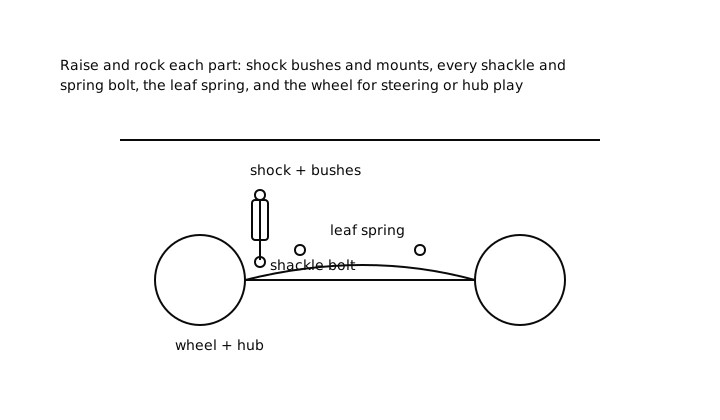
Worn shock absorber bushings or mounts
The shock absorbers are mounted at top and bottom through rubber bushings. When the bushings perish or the mounts wear, the shock can knock against its mounting as the suspension moves, which is a classic bump clunk. This is one of the first things to check.
1Check the shock mounts and bushings
With the cart safely raised, inspect the top and bottom shock mounts, look for perished or missing rubber bushings, and try to move the shock in its mounts by hand or with a pry bar.
ExpectedFirm mounts with sound bushings and no movement; perished bushings or a shock that knocks in its mount is the fault
Loose suspension or shackle bolt
A single loose bolt at a suspension or spring mount makes a surprisingly loud clunk and is very common, especially after rough use. It is also the quickest fault to cure, so check every accessible suspension and shackle bolt before taking anything apart.
2Check all suspension and shackle bolts
Work around the front and rear suspension checking each mount, shackle and spring bolt for tightness, and look for shiny witness marks or movement that show a bolt has been working loose.
ExpectedAll bolts tight with no witness marks; a loose bolt found and torqued to the manual's figure often cures the clunk on its own
Tired or shifted leaf spring
Many carts use leaf springs at the rear. Over time the spring, its bushings or its shackles wear, and the spring can knock or shift on its mounts as it flexes over bumps. Inspect the spring pack and its ends.
3Inspect the leaf spring and shackles
Look along the leaf spring for cracks or a shifted leaf, and check the shackle and eye bushings at each end for wear and movement as you pry the spring gently.
ExpectedA sound spring seated on its mounts with tight bushings; a cracked leaf, worn eye bushing or movement at a shackle is the fault
Worn steering joints or loose wheel
Play in the tie rod ends or kingpins can also knock over bumps, and this overlaps with the steering wander guide, so do the rock tests there if the cart also wanders. Finally, a loose wheel nut or worn hub knocks over bumps and is quick to rule out.
4Rock the wheel and check the hub
Rock each raised wheel side to side and top to bottom to feel for play at the steering joints and hub, and check the wheel nuts are tight to the manual's figure.
ExpectedNo play at the joints or hub and tight wheel nuts; play or a loose nut found here is the fault to address
When to get professional help
Call a technician if you find a cracked leaf spring, play in the kingpins, or a worn hub, or if the clunk persists after you have tightened the bolts and checked the bushings. Suspension and steering wear affects control and gets worse, so a persistent clunk is worth tracing properly rather than living with. A technician can locate the source on a lift and replace bushings, springs or joints as needed.
Common questions
Why does my golf cart clunk over bumps?
The usual causes are worn shock absorber bushings, a loose suspension or shackle bolt, a tired leaf spring, or play in the steering joints. A single loose bolt is common and makes a loud knock, so check the obvious bolts first, then raise the cart and rock the suspension and wheels to find where the play is.
How do I find where a suspension clunk comes from?
Raise the cart safely on jack stands and rock each part in turn: move the shocks in their mounts, pry the leaf springs at the shackles, and rock the wheels side to side and top to bottom for steering play. The part that shows movement or a knock when you rock it is the source.
Is it safe to drive with a suspension clunk?
A minor clunk from a bushing is more a nuisance than a danger, but a loose suspension bolt, a cracked spring or play in the steering affects control and worsens quickly. If the clunk is loud, new, or comes with wandering steering, have it checked before driving further rather than risking a mount or joint letting go.
Can a loose wheel cause a clunk over bumps?
Yes. A loose wheel nut or a worn hub knocks over bumps and under braking, and it is quick and important to rule out. Check the wheel nuts are tight to the manual's figure and feel for hub play when you rock the raised wheel. Never keep driving on a wheel you suspect is loose.
Guided check
Diagnose it step by step
Answer a few questions and we will point you at the most likely cause.
Question 1 of 4
Does it drift or pull to one side on a flat path?
Did this fix it?
Every guide is written from manufacturer service documentation and workshop practice, then reviewed before publication. Read how we write and review our repair guides.