Golf cart steering wanders or pulls: causes
Written by the Hawke Electric Vehicles Service Team
Quick answer
A golf cart that wanders or pulls to one side is most often caused by uneven tire pressures, the front alignment being out, or wear in the tie rod ends or kingpins that lets the wheels move on their own. Start with the simplest check, the tire pressures, then look for play in the steering joints before you touch alignment, since worn joints have to be fixed first.
Tools needed
- Tire pressure gauge
- Floor jack and jack stands
- Wheel chocks
- Basic wrenches
- Safety glasses
Parts needed
- Tie rod ends if worn
- Kingpin or bush kit if worn
Confirm the symptom
This guide covers a cart that will not hold a straight line: it wanders and needs constant correction, or it pulls steadily to one side on level ground. Drive gently on a flat, open surface and note whether it drifts one way consistently, which points to a pull, or drifts either way, which points to play.
If instead the steering feels stiff or heavy to turn, that is a different fault around the steering box and kingpins binding. If you feel a vibration through the wheel at speed, see the guide on vibration, which is usually a wheel or tire balance issue. Come back here for a cart that will not track straight.
What causes it
| Cause | How common | How to confirm | Fix |
|---|---|---|---|
| Uneven or low tire pressures | very common | Check and equalize the front tire pressures | |
| Front alignment (toe) out of adjustment | very common | Check toe with the string method after joints are sound | How to set golf cart toe alignment (DIY) |
| Worn tie rod ends | common | Rock the wheel and feel for play at the tie rod joints | |
| Worn kingpins or bushings | common | Rock the top and bottom of the wheel for play | |
| Worn or dragging wheel bearing | occasional | Spin the raised wheel and feel for roughness or drag | |
| Bent steering component or accident damage | occasional | Inspect the linkage and front axle for bends after an impact |
Uneven or low tire pressures
The simplest cause of a pull is different pressures side to side, because a softer tire has more rolling resistance and drags the cart toward it. It is quick to rule out and worth doing first, before anything is taken apart.
1Check and equalize the front pressures
Measure both front tires with a gauge and set them to the pressure on the sidewall or in the owner manual, then retest the drive.
ExpectedBoth front tires at the same correct pressure; if a pull disappears once they match, uneven pressure was the cause
Front alignment out of adjustment
If the wheels are not pointing the same way, the cart wanders or wears its tires unevenly. Alignment, specifically toe, drifts over time and after curb knocks. Important: only set alignment once the steering joints are sound, because play in a worn joint makes any alignment reading meaningless.
The DIY toe alignment guide covers checking and setting toe with the string method. Do the play checks below first, and only move on to alignment once the tie rods and kingpins are tight.
Worn tie rod ends
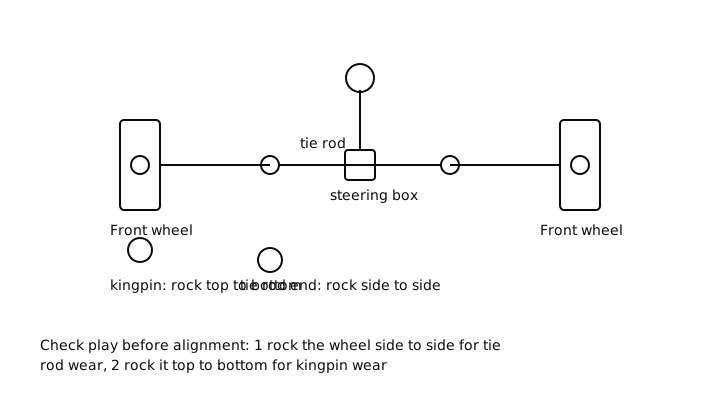
The tie rods connect the steering to the wheels through ball joints at each end. As these wear, the wheels can move slightly on their own, which shows up as wander and loose, vague steering. This is a common wear item and easy to check with the front raised.
2Feel for play at the tie rod ends
With the front safely raised, hold each tie rod near its end and have a helper rock the steering or the wheel side to side while you feel the joint.
ExpectedA tight joint moves as one; any knock or free play at the joint means the tie rod end is worn and should be replaced
Worn tie rod ends are replaced in pairs where practical, and the alignment must be checked afterward because renewing them changes the geometry.
Worn kingpins or bushings
The kingpins and their bushings are the pivots the front wheels steer on. When they wear, the wheel can rock and the steering wanders, especially over bumps. This check uses a different direction of movement from the tie rod check.
3Rock the wheel top to bottom
With the wheel raised, hold it at the top and bottom and rock it in and out while watching the kingpin area.
ExpectedA sound kingpin shows no play; a knock or visible movement at the pivot points to worn kingpins or bushings, which is a heavier repair
Worn wheel bearing or bent component
A rough or dragging wheel bearing can also pull a cart, and it often comes with noise; the wheel bearing guide covers checking and replacing it. Finally, after any impact, a bent tie rod, steering arm or front axle can leave the cart pulling no matter what you adjust, and a bent part needs replacing, not straightening.
4Spin the raised wheel and inspect for damage
Spin each raised front wheel by hand and listen and feel for roughness, then inspect the linkage and axle for bends.
ExpectedA smooth, quiet, free-spinning wheel and straight, undamaged linkage; roughness or a visible bend identifies the fault
When to get professional help
Call a technician if you find play in the kingpins, if a wheel bearing is rough, if you suspect a bent component after an impact, or if the cart still wanders once pressures are equal and the joints are sound and it needs alignment set properly. Steering wear affects control and worsens over time, so it is worth putting right rather than living with a cart that will not track straight.
Common questions
Why does my golf cart pull to one side?
A steady pull to one side on level ground is most often uneven tire pressures, so check those first, or the front alignment being out. If it also feels loose and vague, look for play in the tie rod ends or kingpins. After an impact, a bent steering part can cause a pull that no adjustment cures.
Can I fix wandering steering by adjusting the alignment?
Only if the steering joints are sound first. Play in a worn tie rod end or kingpin makes any alignment reading meaningless and the wander will come back, so check for and fix wear before you set toe. Once the joints are tight, correct alignment will hold the cart straight.
How do I check for play in the steering?
Raise the front safely on jack stands, then rock each front wheel side to side to test the tie rod ends, and top to bottom to test the kingpins, feeling for any knock or free movement at the joints. A tight joint moves as one piece with no play.
Is it safe to drive with wandering steering?
Mild wander from tire pressures or slight alignment is a nuisance rather than a danger, but wander from worn joints affects control and worsens over time, and a bent component after an impact should be checked before further use. If the steering feels loose or knocks, get it inspected rather than driving on it.
Guided check
Diagnose it step by step
Answer a few questions and we will point you at the most likely cause.
Question 1 of 4
Does it drift or pull to one side on a flat path?
Did this fix it?
Every guide is written from manufacturer service documentation and workshop practice, then reviewed before publication. Read how we write and review our repair guides.