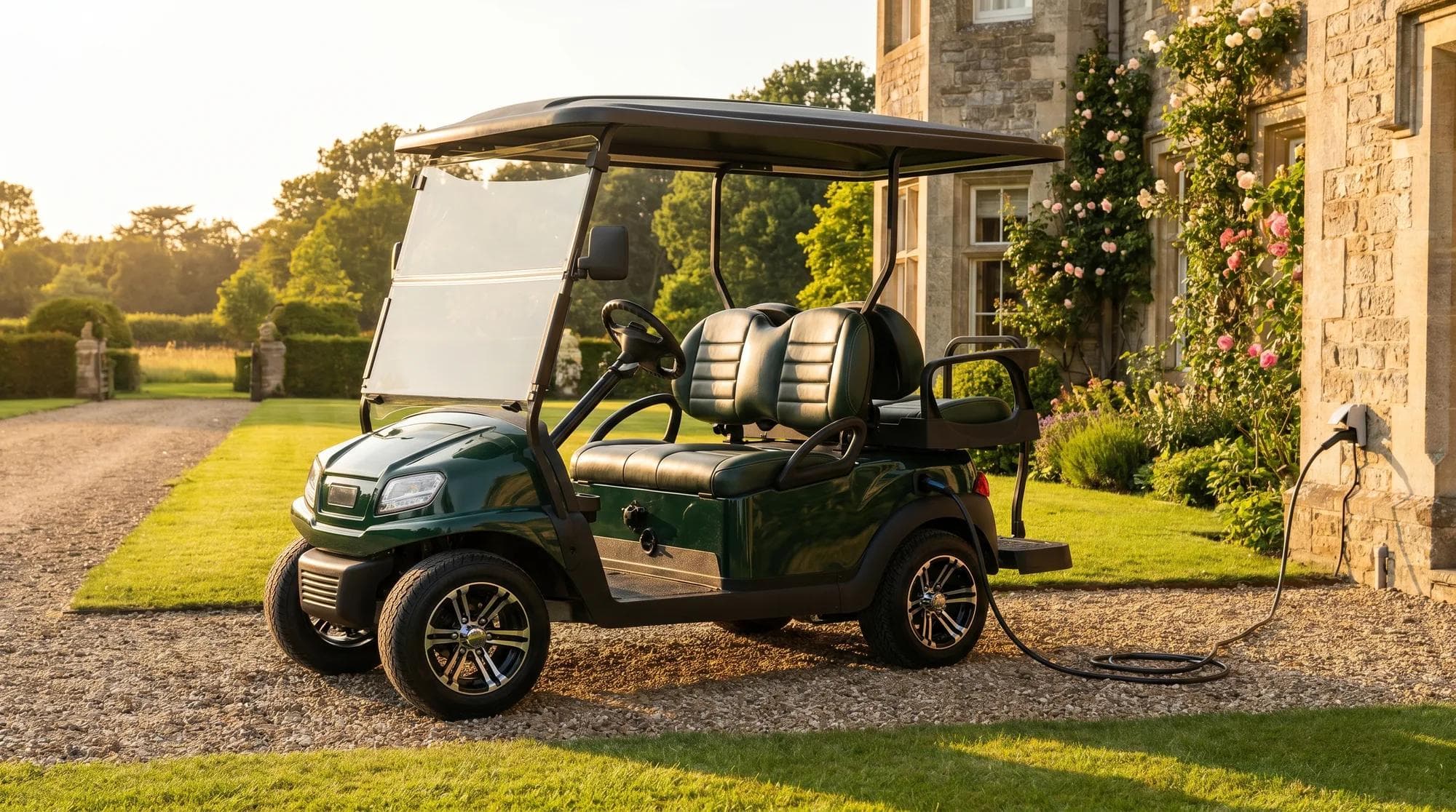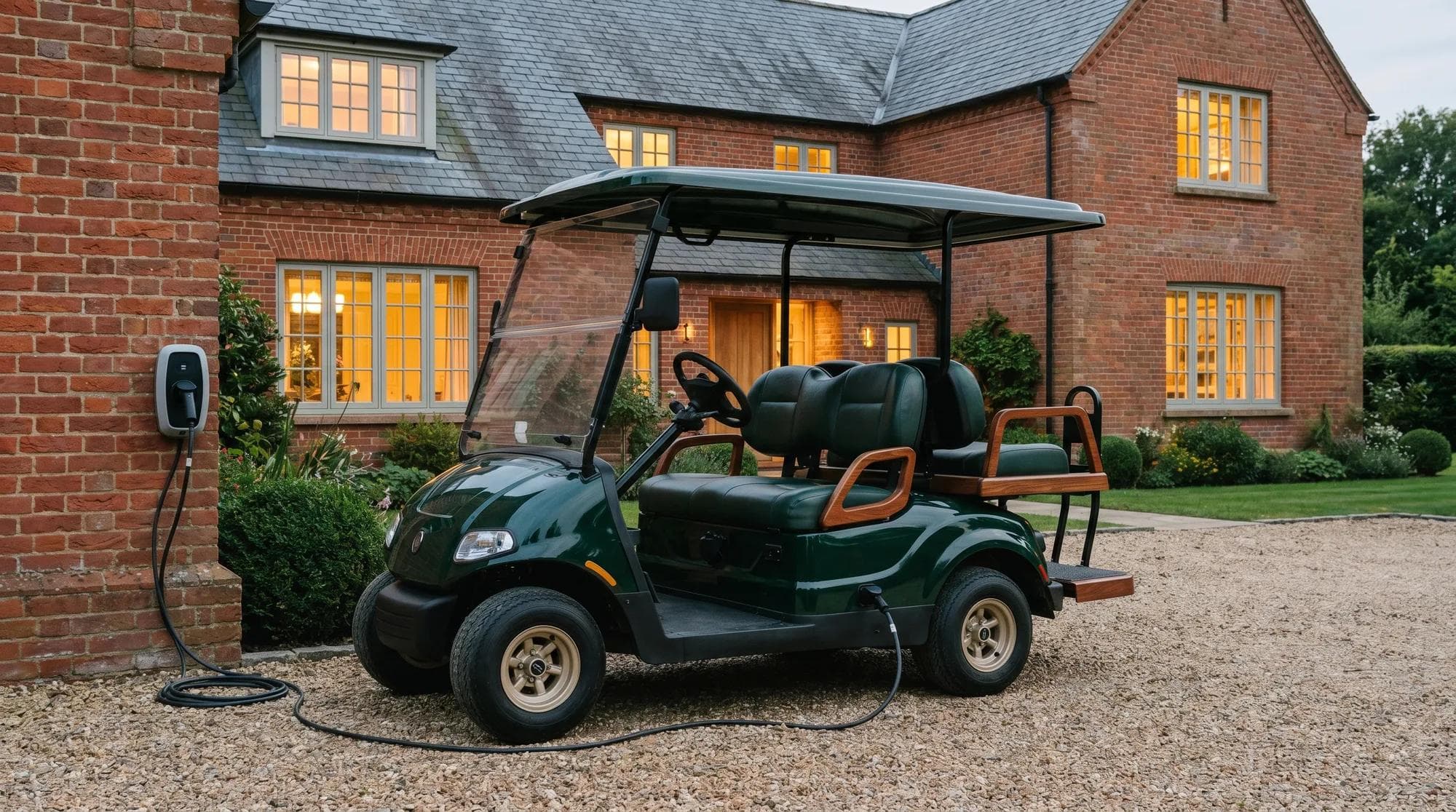
Golf cart battery fires are rare, but when a lithium pack fails it fails badly: the cells enter thermal runaway, the fire generates its own oxygen and a standard extinguisher won't put it out. That combination of low frequency and high severity is exactly why insurers have started asking golf clubs, hotels and resort parks pointed questions about where and how their golf carts charge overnight.
Aviva, one of the UK's largest commercial insurers, publishes loss-prevention guidance aimed specifically at battery-powered golf carts and carts. It covers dedicated charging areas, separation from combustible materials and the condition of chargers and leads. If your renewal paperwork now includes a battery charging questionnaire, that guidance is the reason. This article walks through what good practice looks like, what the law already requires of you, and how lithium and lead-acid risks differ.
- Lithium cart fires are rare but severe: thermal runaway can't be extinguished conventionally, so prevention is everything.
- The Regulatory Reform (Fire Safety) Order 2005 makes your charging arrangements part of the fire risk assessment, which is a legal duty, not a nice-to-have.
- Charge in a ventilated area away from escape routes, on manufacturer chargers that are inspected and PAT-tested.
- Avoid unattended overnight charging inside occupied buildings unless the area has fire detection.
- Damaged or swollen packs should be quarantined outside, well away from buildings, until professionally assessed.
Why is your insurer suddenly asking about cart charging?
Because the losses, when they happen, are enormous. A cart shed fire doesn't just cost you the fleet. It can take the maintenance building, the machinery inside it and, at some sites, spread to the clubhouse or accommodation. Insurers have watched lithium-ion incidents rise across e-bikes, scooters and commercial vehicles, and battery-powered golf carts sit in the same risk category.
Aviva's published risk-management guidance for golf carts and similar carts recommends a designated charging area, clear separation between charging batteries and anything combustible, and regular checks on chargers, cables and connectors. Some insurers now make cover conditional on arrangements like these. Ignore the questionnaire, or answer it optimistically, and you risk a dispute at exactly the moment you need the policy to respond. Our guide to golf cart insurance in the UK covers the wider cover question.
What actually happens in a lithium battery fire?
Thermal runaway is the phrase to know. If a lithium cell is damaged, overcharged, badly manufactured or overheated, a chemical reaction inside it can become self-sustaining. Heat from one cell triggers the next, temperatures climb past 400°C in seconds, and the pack vents flammable, toxic gas that often ignites with a jet of flame.
The awkward part is what happens next. A lithium fire produces its own oxygen as it burns, so smothering it with a CO2 or powder extinguisher rarely works. Packs can also reignite hours after they appear to be out. Fire and rescue services typically cool the pack with huge volumes of water and then wait. For an operator, the practical lesson is blunt: you will not fight this fire and win, so your effort belongs in prevention, early detection and keeping the charging point away from anything you can't afford to lose.
Keep the risk in proportion, though. Quality packs with a proper battery management system, charged on the charger they were designed for, fail very rarely. Most incidents across all battery sectors trace back to physical damage, cheap replacement chargers or counterfeit cells. Fleet golf carts from a reputable supplier, charged and maintained properly, are a well-controlled risk. That's the story your insurer wants to see evidence of.
Does the Fire Safety Order cover cart charging?
Yes. The Regulatory Reform (Fire Safety) Order 2005 applies to virtually all non-domestic premises in England and Wales, and it requires the responsible person (usually the employer, owner or operator) to carry out and maintain a fire risk assessment. Anything on site that could start or feed a fire belongs in that assessment, and a bank of golf carts charging in a timber-framed shed absolutely qualifies.
That means your fire risk assessor should record where golf carts charge, what detection covers that area, how far the charging point sits from escape routes and sleeping accommodation, and what the procedure is for a damaged battery. If your current assessment doesn't mention the cart fleet at all, it's out of date. Scotland and Northern Ireland have parallel fire safety legislation with the same broad effect. This is general guidance, not legal advice; confirm your specific duties with your fire risk assessor or a fire safety solicitor.
Where should golf carts be charged and stored?
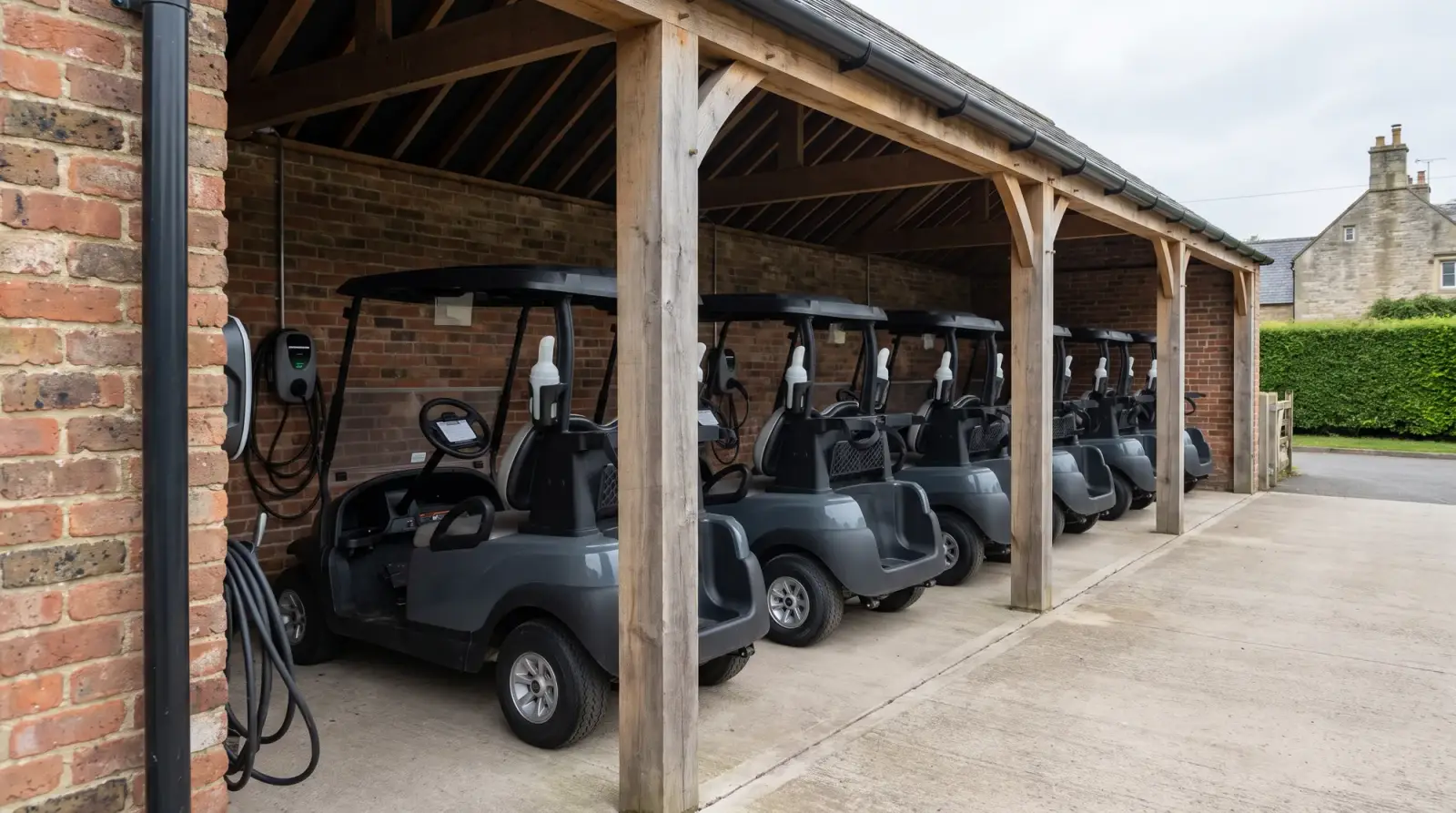
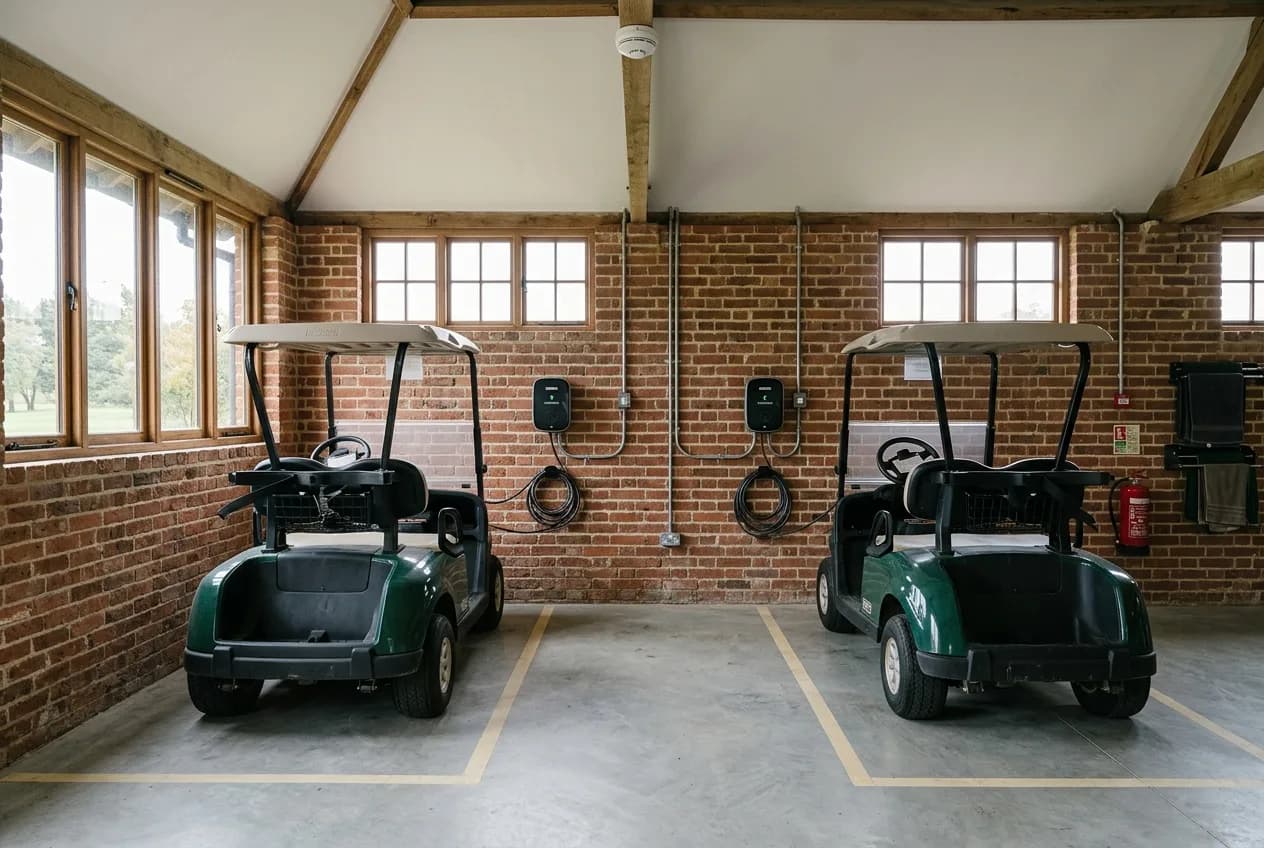
The ideal is a dedicated, ventilated charging area in a non-combustible building, separated from workshops, fuel stores and accommodation, with smoke or heat detection linked to an alarm someone will actually hear. Few sites start with that. Most can get close with a weekend's work and a clear policy.
- Charge on the manufacturer's own charger, matched to the battery chemistry. No generic or aftermarket substitutes.
- PAT-test chargers and leads on a regular cycle, and take damaged cables out of service the day you spot them.
- Keep a metre or more of clear space around charging golf carts. No cardboard, grass clippings, fuel cans or seat cushions stacked nearby.
- Ventilate the space. This matters for lithium heat build-up and it's essential for lead-acid hydrogen off-gassing.
- Fit detection in the charging area, and avoid unattended overnight charging in occupied buildings unless detection covers it.
- Keep charging points away from escape routes, stairwells and final exits.
- Write it down. A one-page charging procedure, signed by staff, is worth a lot in an insurance conversation.
Timing matters too. The common habit of plugging every cart in at 6pm and locking up until morning is exactly what insurers dislike, because a fault at 2am has hours to develop unseen. Chargers with automatic cut-off reduce the risk, and staggering charging so it finishes before staff leave is better still. Our guide on how to charge an electric golf cart covers day-to-day routine, and winter battery care deals with the off-season.
Lithium vs lead-acid: two different fire conversations
It's tempting to treat lead-acid as the safe old technology, but it has its own hazard: charging lead-acid batteries release hydrogen gas, which is explosive in surprisingly low concentrations in an unventilated room. Lead-acid also brings acid spills and heavy manual handling. Lithium removes the hydrogen and the maintenance burden but concentrates the risk into the rarer, nastier failure mode. The chemistry comparison in our lithium vs lead-acid guide covers range and lifespan; here's the safety side by side.
- Lithium (LiFePO4 / Li-ion)
- Thermal runaway after damage, overcharge or cell fault
- Lead-acid
- Hydrogen gas build-up during charging; electrical faults
- Lithium (LiFePO4 / Li-ion)
- Severe, self-oxidising, prone to reignition
- Lead-acid
- Conventional fire behaviour, plus explosion risk if hydrogen ignites
- Lithium (LiFePO4 / Li-ion)
- Standard extinguishers largely ineffective; cool with water, isolate, call 999
- Lead-acid
- Standard measures work; isolate supply first
- Lithium (LiFePO4 / Li-ion)
- Recommended for heat dissipation
- Lead-acid
- Essential to disperse hydrogen
- Lithium (LiFePO4 / Li-ion)
- Quarantine outside immediately; can ignite hours later
- Lead-acid
- Contain acid leaks; ventilate; dispose promptly
- Lithium (LiFePO4 / Li-ion)
- Swelling, hissing, heat, sweet chemical smell
- Lead-acid
- Rotten-egg smell, bubbling, corroded terminals
| Lithium (LiFePO4 / Li-ion) | Lead-acid | |
|---|---|---|
| Main fire risk | Thermal runaway after damage, overcharge or cell fault | Hydrogen gas build-up during charging; electrical faults |
| How bad is a fire? | Severe, self-oxidising, prone to reignition | Conventional fire behaviour, plus explosion risk if hydrogen ignites |
| Extinguishing | Standard extinguishers largely ineffective; cool with water, isolate, call 999 | Standard measures work; isolate supply first |
| Ventilation need | Recommended for heat dissipation | Essential to disperse hydrogen |
| Damaged battery handling | Quarantine outside immediately; can ignite hours later | Contain acid leaks; ventilate; dispose promptly |
| Warning signs | Swelling, hissing, heat, sweet chemical smell | Rotten-egg smell, bubbling, corroded terminals |
Frequently asked questions
Can you leave a golf cart charging overnight?+
It's common, but the careful answer is: only with modern automatic-cut-off chargers, in a detected and preferably unoccupied area, away from escape routes. Unattended overnight charging inside an occupied building with no detection is the scenario insurers and fire services most want to end.
Where should golf carts be charged and stored?+
In a ventilated, ideally non-combustible dedicated area, separated from fuel, workshops and sleeping accommodation, with clear space around each cart, detection overhead and manufacturer chargers that are PAT-tested and visually checked.
Do lithium cart batteries catch fire often?+
No. Failures are genuinely rare, especially in quality packs with a battery management system. But when thermal runaway does occur the fire is severe and hard to stop, which is why prevention and sensible siting matter so much.
Does the Fire Safety Order cover cart charging?+
Yes. Under the Regulatory Reform (Fire Safety) Order 2005 the responsible person's fire risk assessment must cover significant ignition risks on the premises, and a cart charging area is one. If your assessment doesn't mention the fleet, have it updated.
Do cart chargers need PAT testing?+
Chargers are portable electrical appliances in a commercial setting, so routine inspection and testing is the accepted way to meet your duties under the Electricity at Work Regulations 1989. Most operators put chargers on an annual PAT cycle with visual checks in between.
If you run a fleet, spend one morning on this before your renewal, not after an incident. Walk the charging area with fresh eyes, move the combustibles, check every lead, write the one-page procedure and send it to your insurer unprompted. Operators who do that tend to get smoother renewals and, more importantly, they don't get the 2am phone call. None of this replaces professional advice: have your fire risk assessor confirm your setup against your own site.
Keep your fleet safe, serviced and insurable
A Hawke service plan includes battery health checks, charger inspection and the maintenance records insurers ask for, with 24-hour call-out if something does go wrong. We'll happily advise on charging-area setup for your fleet.
Related solutions
Ready to explore what we build?
See the vehicles and the setting this applies to, or get a tailored quote built around your site.
Ready to find the right golf cart?
Tell us how and where it will work and we will specify a vehicle and a tailored quote built around you. Every build comes with a 3-year warranty and a 24-hour priority call-out.
Our guides are written and reviewed by the Hawke Electric Vehicles team, the people who specify, build, deliver and support the vehicles. We focus on honest, practical advice and flag where a figure depends on the build rather than guessing.
More guides by Hawke