Working safely on your golf buggy: a safety guide
Written by the Hawke Electric Vehicles Service Team
Quick answer
Before any work on an electric golf buggy, set the drive system to Tow, switch off the key and isolate the battery pack by disconnecting the main negative cable first. Work in a ventilated space because charging lead-acid batteries release hydrogen, keep rings, watches and loose tools clear of the terminals, and use insulated tools and eye protection. If a job means opening the charger case, working under an unsupported vehicle, or touching high-current controller wiring you are unsure about, that is the point to stop and call an engineer.
Tools needed
- Insulated spanners or sockets
- Safety glasses
- Insulated gloves
- Work light
- Battery terminal covers
Before you touch anything
Almost every repair guide on this site starts by sending you here, because the same handful of precautions keep you safe whether you are swapping a battery, testing a solenoid or checking a wheel. The risks on an electric buggy are not dramatic, they are quiet: a short across the pack that welds a spanner to a terminal, a spark near a battery that has been gassing on charge, or a vehicle that rolls or lurches because the drive system was still live. Every one of them is avoided by working in the right order rather than by working carefully at the wrong moment.
Set aside a ventilated, well-lit space with a flat floor. Have insulated tools, eye protection and a work light to hand before you start, not halfway through with your hands already on the pack. If you find yourself improvising a way to reach a terminal or hold the vehicle up, stop and set the job up properly instead.
Set the drive system to Tow before you work
Electric buggies have a Tow/Run or Tow/Maintenance switch that disconnects the controller from the drive circuit. In Run the vehicle can move under power; in Tow it is meant to be free-wheeled and worked on. Set it to Tow, turn the key off and remove it, and take the vehicle out of any forward or reverse selection before you go near the motor, the wheels or the controller. On models without a physical Tow switch, follow the maker's stated procedure for disabling drive.
1Confirm the drive system is dead
With the key off and Tow selected, chock a wheel, then press the accelerator by hand. Nothing should happen: no hum, no click from the solenoid, no creep.
ExpectedComplete silence and no movement confirms the drive circuit is isolated. Any click, hum or creep means drive is still live and you must not work on the running gear
Isolate the battery pack, negative cable first
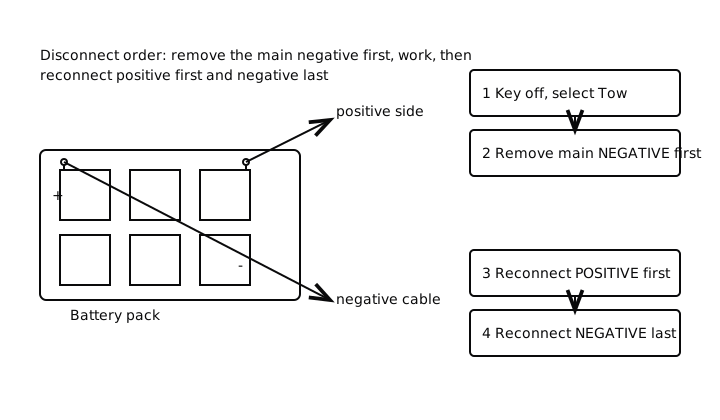
The single most important habit is the order in which you disconnect the pack. Always take off the main negative cable first and reconnect it last. The reason is simple: the vehicle chassis is bonded to the negative side, so with the negative removed a spanner that slips onto the frame while you are on the positive terminal has no circuit to complete and cannot arc. Do it the other way round and the same slip shorts the whole pack through your tool.
2Disconnect in the safe sequence
Loosen and remove the main negative (black) cable at the pack first and tuck it well clear of the post. Only then work on the positive side or the individual batteries. When you rebuild, connect the positive side first and the main negative last of all.
ExpectedNegative off first, positive on last. Cover any exposed positive terminal you are not working on with an insulated boot or terminal cover
This negative-first rule is the backbone of the whole guide, which is why the isolation sequence is drawn out below. Keep the removed cable end from touching the post again by accident, a cable tie or a rag between post and lug is enough.
Why charging lead-acid batteries release hydrogen
Flooded lead-acid batteries, the type in most electric buggies, break down a little water into hydrogen and oxygen as they charge, particularly near the end of a charge and if they are overcharged. Hydrogen is lighter than air, it collects at the top of an enclosed space, and it burns readily. This is not a reason to be frightened of your buggy; it is a reason to charge and work in a ventilated space and to keep ignition sources away from the pack.
In practice that means charging with the battery covers or seat lifted where the design allows, never charging in a sealed cupboard, and keeping naked flames, cigarettes, grinders and anything that sparks well away from a battery that has recently been on charge. If you have just finished a charge and need to disconnect the pack, give it a few minutes and a little air first, because the moment a connection is broken under load can produce a small spark.
Keep rings, watches and loose tools off the terminals
A battery pack has no fuse between its own terminals, so anything metal that bridges a positive terminal to a negative one, or to the chassis, becomes the fuse. A ring, a metal watch strap, a bracelet or a spanner laid across two posts can carry hundreds of amps in an instant, heat to red hot and cause a serious burn long before it melts through. Take off rings, watches and jewellery before you start, and roll your sleeves clear of the posts.
3Clear the terminals of stray metal
Before reaching into the pack, remove hand and wrist jewellery, and account for every tool. Never rest a spanner, socket or torch on top of the batteries where it can slide across two terminals.
ExpectedBare hands and wrists near the pack, and a habit of putting each tool down away from the terminals, is what keeps a slip from becoming a short
Insulated spanners and sockets, or ordinary tools with all but the working end wrapped in insulating tape, give a second layer of protection. If a tool does bridge two terminals, do not grab it with a bare hand; knock it clear with something non-conductive.
Use insulated tools and eye protection
Two pieces of protective kit earn their place on every battery job. Insulated tools stop a dropped or slipped tool from shorting the pack, and eye protection guards against battery electrolyte, which is dilute sulphuric acid. Electrolyte can spit from a cell that is gassing hard, and topping up or moving batteries can splash it, so wear safety glasses whenever the pack is open. Keep clean water nearby to rinse any splash on skin, and rinse the eyes and seek medical advice at once if electrolyte gets into them.
Working under a raised vehicle
Any job that needs a wheel off the ground brings its own rules, and they are worth stating on their own page. In short: raise the vehicle on firm, flat ground, support it on axle stands rated for the load, never rely on a jack or on stacked wood alone, and chock the wheels that stay down. Setting a buggy safely on stands is covered step by step in the guide on jacking and supporting your vehicle.
When the do-it-yourself work should stop
Knowing where home repair ends is part of doing it safely. Stop and call an engineer if a job means opening the charger case, because charger capacitors hold a dangerous charge long after the plug is pulled. Stop if you are being asked to probe high-current controller or motor wiring you do not understand, if a fault keeps blowing fuses, if a battery is cracked, swollen or leaking, or if a brake, steering or structural part is involved and you are not confident the repair will hold. None of this is a failure; it is the same judgement a professional uses about which jobs need the right equipment and training.
Common questions
Which battery cable do I disconnect first?
Always the main negative cable first, and reconnect it last. The chassis is bonded to the negative side, so with the negative off a slipped tool on the positive terminal cannot complete a circuit and short the pack. Reverse the order on reassembly: positive on first, negative on last.
Is it safe to charge a buggy in a closed garage?
Charge in a ventilated space, not a sealed cupboard or an airtight room. Lead-acid batteries release hydrogen as they charge, and hydrogen collects at the top of an enclosed space. An open garage with some airflow is usually fine; keep flames, sparks and cigarettes away from the pack.
Do I really need to take my ring off?
Yes. A ring or metal watch strap that bridges two battery terminals, or a terminal and the chassis, can carry a huge current, heat to red hot in seconds and cause a serious burn. Remove rings, watches and bracelets before you go near the pack.
What does the Tow position on the switch do?
It disconnects the controller from the drive circuit so the vehicle can be free-wheeled and worked on without driving away under power. Select Tow, turn the key off and remove it before working on the motor, wheels or controller, then confirm the accelerator produces no hum or movement.
Why should I not open the charger?
Chargers contain capacitors that store enough energy to give a serious shock well after the mains lead is unplugged. There is nothing safe to adjust inside for a home user, so charger internals are always an engineer job.
What protective equipment do I actually need?
For most battery work, safety glasses, insulated tools and no wrist jewellery cover the real risks. Add insulated gloves for handling cables, keep clean water nearby to rinse any electrolyte splash, and use axle stands whenever a wheel is off the ground.
Did this fix it?
Every guide is written from manufacturer service documentation and workshop practice, then reviewed before publication. Read how we write and review our repair guides.