Golf buggy making noise: identify it and fix it
Written by the Hawke Electric Vehicles Service Team
Quick answer
The quickest way to identify a golf buggy noise is to characterise it by its sound and by when it happens: a pitch that rises and falls with road speed is a rotating part such as a wheel bearing, the differential or a tyre; a click at low speed and a squeal on moving off each point elsewhere; and a hum with the key on but the buggy still is usually electrical. Match your noise to the section below, then follow the link to the focused guide.
Tools needed
- Work light
- Wheel chocks
- Axle stands
- Safety glasses
How to use this guide
Noises are easiest to identify by two things together: what the sound is like, and when it happens. A rotating part rises and falls in pitch with road speed; a rubbing part squeals; a loose part rattles over bumps; an electrical part hums or buzzes even when the buggy is standing still. Fix those two facts first and you can usually place the noise before you touch a tool, then jump to the focused guide named in each section below.
1Characterise the sound and its timing
Note whether the noise is a whine, click, squeal, grind, hum or rattle, then note exactly when it happens: at rest with the key on, only when moving, only under acceleration, only on braking, or only over bumps.
ExpectedA pitch that tracks road speed means a rotating part; a sound tied to the pedal means the drive or brakes; a noise only over bumps means something loose; a sound at a standstill with the key on means an electrical component
2Locate roughly where it comes from
With a helper driving slowly in a safe space, or with a wheel raised on stands and turning, listen from the front, the rear and the centre to place the noise front-to-back and side-to-side.
ExpectedFront corners point at wheel bearings or brakes; the rear centre points at the differential or motor; a single corner points at that wheel; the centre with the key on points at the solenoid or relays
What the noise usually is
| Cause | How common | How to confirm | Fix |
|---|---|---|---|
| Whine or hum that rises and falls with road speed | very common | Pitch tracks speed, not the pedal; present when coasting; changes with a raised wheel turning | |
| Click or tick at low speed, often once per wheel turn | common | A regular click that speeds up with the wheel and fades as you go faster | |
| Squeal on moving off | common | A squeal at take-off or on braking that eases once rolling | |
| Grinding under acceleration | occasional | A harsh grind that comes in only when power is applied | |
| Hum or buzz at a standstill with the key on | occasional | Present with the buggy still and the key on, before any movement | |
| Rattle from the rear over bumps | common | A rattle tied to bumps rather than speed or the pedal |
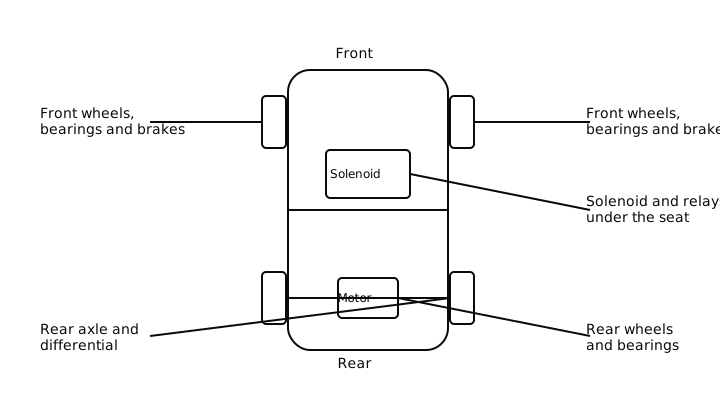
A whine or hum that rises with road speed
A noise whose pitch climbs as you speed up and drops as you slow down is coming from something that turns with the road wheels: a wheel bearing, the differential, or a tyre. The test that separates them is whether the noise is present when coasting with no power, which rules the drive in or out, and whether raising one wheel and turning it by hand reproduces a rough or noisy bearing. A tyre noise usually changes with the road surface, while a bearing or differential noise does not.
A steady whine that rises smoothly with speed and is worst under drive most often traces to the differential or rear axle, covered in Differential and rear axle noise. A rumble or growl that changes as you load a corner in a gentle turn, or a rough feel when you spin that wheel by hand, points at a wheel bearing, covered in Wheel bearing check and replacement. If the noise is really a vibration that comes in at a particular speed, Vibration at speed is the closer guide, and Whine rising with speed goes into the motor and gear side in detail.
A click or tick at low speed
A regular click or tick that keeps time with wheel rotation, speeds up as you pull away and often fades at higher speed, is usually a small object caught in the tread or a fault in a rotating joint rather than the motor. Because it repeats once per wheel turn, you can often find it by turning the wheel slowly by hand and listening for the click to come round.
Check the tread first for a stone or a screw, which is the most common and the easiest to cure. If the tread is clear, a click that comes and goes with direction changes points at a worn drive joint or axle component, and Clicking at low speed walks through isolating it. A knock that appears specifically when you shift between forward and reverse is a different signature, covered in Clunk when changing direction.
A squeal on moving off
A squeal as you pull away, or as you brake, is almost always a rubbing contact rather than anything rotating freely. On the electric drivetrain the usual source is the brakes: glazed or worn shoes, or a light drag, sing out at low speed and ease once the buggy is rolling. A squeal that appears only under braking, and a squeal that is present the whole time the wheel turns, are both brake signatures worth separating.
Brake squeal and light grinding are covered in Squealing or grinding brakes, and if the squeal comes with the buggy feeling held back, Brakes dragging cart feels held back is the pair to read. On petrol models a take-off squeal can instead be the drive belt slipping on its clutches, which is a separate system covered in Belt squeal at take-off; that cause does not apply to electric buggies. Squeal moving off gathers the take-off squeal cases together.
A grinding noise under acceleration
A harsh grinding that comes in only when you apply power, and is absent when you coast, points at the drive taking load: worn gears in the differential, a failing motor bearing under load, or in some cases worn motor brushes. Because it is load-dependent, it is one to take seriously, as continued running can turn a small fault into a large one.
Grinding on acceleration covers isolating the drive-side causes, and if the grind is accompanied by a rise-with-speed whine, the Differential and rear axle noise and Motor bearing noise guides are where to go next. Stop driving a buggy that grinds under power until you have identified the source, because drivetrain damage compounds quickly.
A hum or buzz at a standstill with the key on
A hum, buzz or steady click that is present with the buggy standing still and the key on, before any movement, is electrical rather than mechanical. The usual sources are the solenoid or a relay holding in, a contactor buzzing on low coil voltage, or, if it happens on charge, the charger. A mechanical part cannot make a noise while nothing is turning, so this signature moves the search to the electrics.
Humming when stationary with key on covers placing the sound among the solenoid, relays and reducer. A buzz that comes only during charging belongs with the charger guides rather than the drivetrain. If the hum comes with a warning buzzer pattern, Beeping while driving and the brand warning-light references help decode what the buggy is signalling.
A rattle from the rear over bumps
A rattle that is tied to bumps rather than to speed or the pedal is something loose rather than something rotating or rubbing. On the rear of a buggy the usual culprits are loose battery hold-downs, a loose seat or body panel, a bracket, or an accessory that has worked free. A rattle that changes when you push or wobble a panel by hand has just told you where it is.
Rattle from the rear works through the common loose items in order, and Body squeaks and panel rattles covers the bodywork side. Loose battery hold-downs are worth checking early, both because they rattle and because a battery that can move puts strain on its cables and terminals.
When to book an engineer
Book an engineer if a noise rises with speed and comes with roughness you can feel through a raised wheel, if a grind appears under power, or if a drivetrain noise is getting louder, because bearing, differential and motor faults are safer and cheaper caught early. A hum you have traced to the solenoid or a relay, and a rattle you cannot locate, are also quick jobs for someone with the right stethoscope and a lift.
Common questions
How do I tell a bearing noise from a tyre noise?
A bearing noise stays much the same on different road surfaces and often changes when you load that corner in a gentle turn, while a tyre noise changes clearly with the surface. Raising the wheel on stands and turning it by hand also reveals a rough or noisy bearing that a good tyre will not make.
What does a click once per wheel turn mean?
A click that keeps time with the wheel, speeds up as you accelerate and fades at speed is usually a stone or screw in the tread, or a fault in a rotating joint. Check the tread first, then turn the wheel slowly by hand to find where the click comes round.
Is it safe to drive a buggy that grinds under power?
No. A grind that appears only when you apply power points at the drive taking load, such as worn gears, a motor bearing or brushes, and continued driving can turn a small fault into an expensive one. Stop and identify the source before driving further.
Why does my buggy hum when it is switched on but not moving?
A hum or buzz with the buggy still and the key on is electrical, not mechanical, because nothing is turning to make a mechanical noise. It is usually the solenoid or a relay holding in, or a contactor buzzing on low coil voltage. The humming-when-stationary guide narrows it down.
Where should I start if the noise only happens over bumps?
A noise tied to bumps rather than speed or the pedal is something loose. Start at the rear with the battery hold-downs, then the seat, body panels and any accessories, pushing and wobbling each by hand to find the one that makes the noise.
Did this fix it?
Every guide is written from manufacturer service documentation and workshop practice, then reviewed before publication. Read how we write and review our repair guides.