Golf buggy brakes not working: weak or spongy
Written by the Hawke Electric Vehicles Service Team
Quick answer
Weak or spongy golf buggy brakes are most often drum brakes that have drifted out of adjustment, worn brake shoes, or stretched and seized cables, and all three let the pedal travel too far before the buggy slows. Because brakes are a safety system, the first job is to decide whether the buggy is safe to move at all: if the pedal goes near the floor, pulls hard to one side, or will not hold on a slope, do not drive it. On mechanical drum systems the common fix is re-adjustment, but worn shoes and stretched cables need replacement, not just adjustment.
Tools needed
- Trolley jack and axle stands
- Wheel chocks
- Socket set
- Brake spring pliers
- Work light
- Safety glasses
Parts needed
- Brake shoes if worn below the wear limit
- Brake cable if stretched or seized
Confirm the symptom
This guide covers brakes that still work but work poorly: a pedal that feels soft or spongy, brakes that need a long push before they bite, or braking that has faded gradually so the buggy takes longer to stop than it used to. Most electric buggies use mechanical drum brakes operated by a pedal and cables, and this guide is written around that common arrangement.
First separate this from a total failure. If the pedal goes straight to the floor with almost no resistance, or the buggy barely slows at all, treat it as brakes that have failed and do not drive it, whatever this guide says about adjustment. If instead the park brake will not hold on a slope but the foot brake is fine, the fault is in the park brake latch or its cable rather than the service brakes. And if the brakes grab, squeal or drag rather than feeling weak, that is a different symptom with its own guide.
1Test the pedal on level ground before anything else
On flat ground, at walking pace, press the brake and note how far the pedal travels and whether it feels firm or spongy. Then, stationary, press hard and hold and see whether the pedal creeps towards the floor.
ExpectedA sound brake gives a firm pedal with reserve travel left under your foot and holds without creeping. A pedal that travels most of its way down, feels spongy, or slowly sinks means the brakes are not safe to rely on
What causes it
On a mechanical drum system, weak or spongy braking comes down to a short list of causes, and they are ordered below by how often they are the culprit. Adjustment drift is first because it is both the most common cause and the easiest to put right.
| Cause | How common | How to confirm | Fix |
|---|---|---|---|
| Drum brakes drifted out of adjustment | very common | Excess pedal travel with shoes and cables still in good order; brakes improve when re-adjusted | How to adjust golf buggy drum brakes |
| Worn brake shoes | very common | Remove the drum and measure lining thickness against the wear limit; adjustment no longer takes up the travel | How to replace golf buggy brake shoes |
| Stretched, corroded or seized brake cable | common | Inspect the cable for fraying and rust; a seized cable leaves one side barely braking after adjustment | |
| Weak or broken shoe return springs | occasional | With the drum off, check the springs pull the shoes back cleanly; a broken spring lets a shoe drag or lag | |
| Contaminated linings from grease or a leaking hub | occasional | Inspect the linings for oil or grease; contaminated shoes glaze and lose bite and must be replaced | |
| Scored or oval drums | occasional | Inspect the drum friction surface for deep scoring or a ridge; poor contact weakens braking |
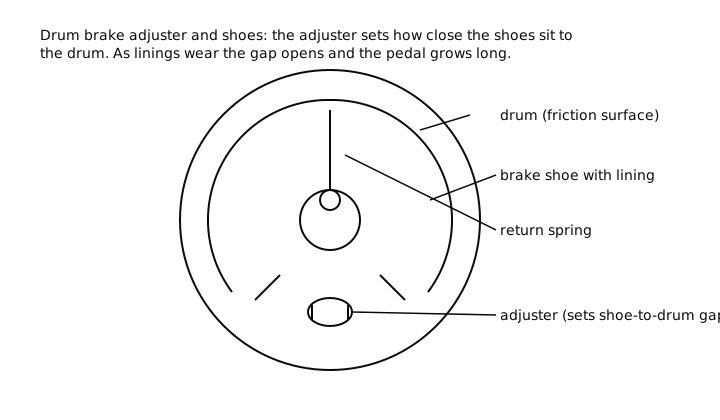
Drum brakes drifted out of adjustment
The most common reason a buggy's brakes go weak and the pedal grows long is simply that the drums have gone out of adjustment. Mechanical drum brakes rely on the shoes sitting close to the drum, and as the linings wear the gap opens up, so more and more pedal travel is used just closing that gap before any braking happens. The pedal feels soft and low, but the shoes and cables may be perfectly serviceable and only need re-setting.
2Check for excess free travel at each wheel
With the buggy safely raised and supported, spin each braked wheel and operate the brake by hand, feeling how much movement passes before the shoes contact the drum.
ExpectedA correctly adjusted brake grips after a small, even amount of movement and the wheel becomes hard to turn. A large amount of slack, or one wheel far slacker than the other, points to adjustment drift
The fix is to reset the adjusters so the shoes sit just clear of the drum, taking up the slack evenly side to side, which is covered step by step in the guide on adjusting golf buggy drum brakes. Adjustment only works while there is enough lining left to adjust to; if the shoes are worn out, no amount of adjusting will restore a firm pedal, which is the next cause.
Worn brake shoes
Brake shoes wear away with use, and once the friction lining gets thin the brake loses bite and adjustment can no longer take up the travel. If you have already adjusted the brakes and the pedal is still long, or the brakes were fine after adjustment but went weak again quickly, worn shoes are the likely reason. Worn linings also tend to grab or squeal as they thin, and a shoe worn down to its metal backing will score the drum.
3Measure the lining against the wear limit
Remove the drum and inspect the shoes, measuring the remaining friction lining and comparing it with the minimum thickness in your model's manual.
ExpectedHealthy shoes have a clear, even band of friction material. Linings worn near or below the limit, worn unevenly, or worn down to the rivets or backing plate mean the shoes need replacing
Shoes are replaced as a set per axle so both sides brake evenly, and the job is covered in the guide on replacing golf buggy brake shoes. Never fit new shoes to a scored or oval drum, because the poor contact will weaken the new brakes from the start.
Stretched, corroded or seized cables
Most buggy brakes are pulled on by cables, and cables stretch, fray and rust over time, especially on buggies used outdoors. A stretched cable adds slack that shows up as extra pedal travel, and a cable seized in its outer sheath means the brake at that wheel barely comes on, which typically shows as the buggy pulling to one side under braking.
4Inspect and free-test each cable
Follow each brake cable from the pedal to the wheel, looking for fraying, heavy corrosion or a sheath split. Disconnect the cable at the wheel and check it slides freely in its outer.
ExpectedA good cable is intact and moves smoothly with light effort. Fraying strands, a cable that will not slide, or one that has clearly stretched beyond further adjustment all mean the cable needs replacing
A frayed or seized cable is a replacement, not an adjustment: winding out the adjuster to compensate for a stretched cable only masks the problem and leaves no reserve. Replace the cable and then re-adjust the brakes so both sides come on together.
Springs, contamination and drums
Three less common causes are worth checking once the drum is off. Weak or broken shoe return springs let a shoe drag or fail to reset, which feels like uneven or spongy braking. Grease from an overfilled or leaking hub can contaminate the linings, which then glaze and lose grip and must be replaced rather than cleaned. And a drum that is deeply scored or has worn oval gives the shoes poor contact, so the brake stays weak even with good shoes correctly adjusted. Drum machining or replacement is a workshop job rather than a roadside adjustment.
When to book an engineer
Book an engineer, and do not drive the buggy in the meantime, if the pedal reaches the floor, if braking pulls hard to one side, if the buggy will not hold on a slope, or if adjustment and shoe checks do not restore a firm pedal. Also call for help if a drum is scored or oval, if a hub is leaking oil onto the linings, or if you are not confident the brakes will stop the buggy reliably after your work. Brakes are the wrong place to accept a result that is only nearly right.
Common questions
Is it safe to drive a buggy with spongy brakes?
No, not if the pedal sinks close to the floor, the buggy pulls to one side, the pedal will not firm up, or it will not hold on a slope. Any of those means the brakes cannot be relied on to stop the buggy, and it should be recovered rather than driven until the fault is fixed.
Why does my brake pedal go almost to the floor?
Excess pedal travel on a drum system is most often the drums drifting out of adjustment as the linings wear, which lets the shoes sit too far from the drum. Worn shoes and a stretched cable add travel too. Adjustment cures the first; the other two need parts replaced.
Can I just adjust the brakes to fix a long pedal?
Adjustment fixes a long pedal only when the shoes and cables are still serviceable and simply need re-setting. If the shoes are worn near their limit or a cable has stretched, adjustment will not hold, and the shoes or cable must be replaced first, then the brakes re-adjusted.
Why does the buggy pull to one side when I brake?
Uneven braking usually means one wheel is braking much less than the other, commonly a seized or stretched cable, a broken return spring, or contaminated linings on that side. It needs the weak side found and put right, because pulling under braking is a safety fault, not just a nuisance.
How thin can brake shoes get before I replace them?
Replace shoes when the friction lining reaches or nears the minimum thickness in your model's manual, or if they are worn unevenly, down to the rivets, or contaminated with oil or grease. Fit shoes as an axle set so both sides brake evenly.
The park brake will not hold on a hill but the foot brake is fine. Why?
That points to the park brake latch or its own cable rather than the service brakes, since the foot brake still works. The park brake mechanism needs adjusting or repairing so it holds the buggy on a slope, and until it does the buggy should not be left parked on a gradient.
Did this fix it?
Every guide is written from manufacturer service documentation and workshop practice, then reviewed before publication. Read how we write and review our repair guides.