How to convert a golf cart to lithium
Written by the Hawke Electric Vehicles Service Team
Quick answer
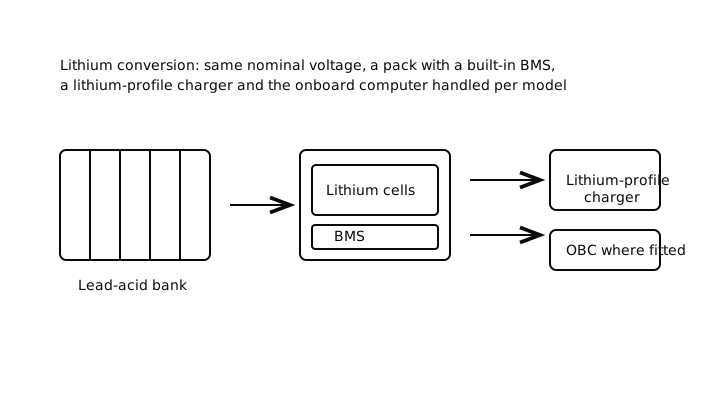
Converting a golf cart to lithium means replacing the bank of lead-acid batteries with a lithium pack of the same nominal voltage, built around a battery management system, then getting the charger, the wiring and any onboard computer to work with it. It rates as a moderate to advanced job because the pack voltage has to match, the charger needs a lithium profile, and on Club Car models with an onboard computer the charging circuit has to be handled. Follow the kit instructions and your cart manual, and leave the electrical integration to a pro if you are unsure.
Tools needed
- Digital multimeter
- Insulated wrenches
- Safety glasses
- Insulated gloves
- Battery lifting strap
- Cable crimping tool
- Torque wrench
Parts needed
- Lithium pack matched to the nominal pack voltage
- Battery management system, usually built into the pack
- Lithium-profile charger or a compatible existing charger
- Mounting tray, brackets or spacers
- Correct-gauge cables and lugs
What this fixes
This overview walks through what a lithium conversion actually involves, so you can judge whether to take it on and what to line up first. Owners go lithium for lighter weight, more usable range from a charge, quicker charging, and an end to watering and to the slow capacity fade of an aging lead-acid bank. This is an upgrade, not a fix for a particular fault. If your cart has merely lost range on worn lead-acid batteries, test the pack first using the battery voltage guide, because replacing one weak battery costs far less than a full conversion.
Tools and parts
Parts
- Lithium pack matched to the nominal pack voltage, usually 36V or 48V
- Battery management system, typically built into the pack
- A charger with a lithium profile, or proof the existing charger is compatible
- Mounting tray, brackets or spacers to locate a smaller, lighter pack
- Right-gauge cables and lugs wherever the layout changes
Gather a digital multimeter, insulated wrenches, a crimping tool, a torque wrench, eye protection and insulated gloves. This is an advanced job, not because a single step is difficult, but because the pack voltage, the charger and the onboard computer all have to line up. Plan on a few hours, and more if the charger or the Club Car onboard computer needs work. A model-specific kit removes most of the guesswork and beats assembling loose parts.
How to do it
1Confirm the pack voltage and layout
Read the nominal voltage of the current pack from the batteries and the wiring: six 6V batteries in series give a 36V pack, and six 8V or four 12V give a 48V pack. Your lithium pack has to match that nominal voltage.
ExpectedA clear number, usually 36V or 48V, that the lithium pack is rated to match
2Isolate and pull the lead-acid bank
With the key off and the Tow/Run switch on Tow, disconnect the main negative first, then the positive, then the jumper links, and lift the batteries out with a strap. Record how every cable runs before you disturb it.
ExpectedThe old bank out, the tray empty, and a photo or note of the original wiring
3Mount the lithium pack securely
Set the pack in the tray with the kit brackets or spacers so it cannot shift, since a lithium pack is lighter and will slide around in a tray sized for lead-acid. Keep it away from heat and clear of the wheels and suspension travel.
ExpectedA pack held firm with no movement, terminals reachable and vents or connectors clear
4Wire the pack and the management system
Land the main cables on the correct polarity and route any battery management system leads exactly as the kit calls out. Do not skip or bypass the management system, because it guards the cells against over-discharge, overcharge and imbalance.
ExpectedPolarity confirmed with a multimeter and every management-system connection made as shown
5Handle the charger and any onboard computer
Install or confirm a charger with a lithium profile. On Club Car models with an onboard computer, the charge path runs through that computer, so follow the kit guidance for the model instead of assuming the old charger will just work.
ExpectedA charger delivering a lithium profile and a charge circuit suited to the model, checked against the instructions
Check it worked
6Power up, drive and charge while watching
Reconnect, move the Tow/Run switch to Run, and confirm the cart powers up and drives normally. Then charge it while you watch, and check the pack accepts charge and stops correctly.
ExpectedNormal drive, a full charge that finishes and stops, and no fault from the management system or the charger
When to get professional help
Bring in a professional for the electrical integration if you are not fully confident: matching the charger, handling the Club Car onboard computer, sizing cables, and confirming the management system is wired right are where conversions fail. Getting any of it wrong can ruin the pack or leave the cart unreliable, and a lithium pack is a big spend to gamble with. A technician can also tell you whether your model is an easy candidate before you buy the kit.
Common questions
Will a lithium pack drop straight into my cart?
The nominal voltage has to match, so a 36V cart needs a 36V lithium pack and a 48V cart a 48V pack. A lithium pack is lighter and smaller, so it usually needs brackets or spacers to sit securely in a tray built for lead-acid. A kit made for your model handles the fit.
Do I need a new charger for lithium?
You need a charger that delivers a lithium charge profile, since a lead-acid profile can over or undercharge lithium cells. Some kits include a charger, some confirm your existing charger works, and on Club Car models with an onboard computer the charge path needs handling for that model. Do not assume the old charger just works.
What does the battery management system do?
The battery management system protects the lithium cells from over-discharge, overcharge and cell imbalance, and it is usually built into the pack. It is essential to safe operation, so wire it exactly as shown and never bypass or modify it. If it reports a fault, stop and look into it rather than overriding it.
Is a lithium conversion worth it?
It depends on how you use the cart. Lithium brings lighter weight, more usable range per charge, faster charging and no watering, but it costs a lot up front. If your only issue is a worn lead-acid bank, testing and replacing a weak battery is far cheaper. For long-term range and low maintenance, a conversion can pay off.
Can I do the conversion myself?
The mechanical swap is within reach of a confident owner, but the electrical integration, the charger and the Club Car onboard computer are where conversions go sideways. If that part is past your comfort level, do the removal and mounting yourself and have a technician finish and verify the electrical side.
Did this fix it?
Every guide is written from manufacturer service documentation and workshop practice, then reviewed before publication. Read how we write and review our repair guides.