Golf cart pre-season checklist: get it ready
Written by the Hawke Electric Vehicles Service Team
Quick answer
A pre-season check goes through the batteries, tires, brakes, steering and lights so the cart starts the season safe and reliable. It takes an hour or so, needs only basic tools, and catches the small faults, a low cell, soft tires, a dragging brake, before they leave you stranded or become a bigger repair. Do the safety items, brakes and steering, carefully.
Tools needed
- Multimeter
- Tire pressure gauge
- Torque wrench
- Distilled water and filler
- Cleaning kit
Parts needed
- Distilled water for battery top-up
- Terminal protector or grease
What this covers
This check gets a cart ready after a quiet spell or the winter, so it is safe and reliable for the season ahead. It is not a full shop service, but it catches the common faults that leave owners stranded or turn into bigger bills: a weak battery cell, soft or worn tires, brakes out of adjustment, play in the steering and dead lights. It applies to electric and gas carts, with a note on fuel and oil for gas.
Tools and parts
Parts
- Distilled water to top off lead-acid cells
- Terminal protector or grease
- Correct fuse spares in case any are blown
You will also want a multimeter, a tire pressure gauge, a torque wrench and basic cleaning supplies. This is a low-difficulty job of an hour or two, but take the brake and steering checks seriously because they are the safety items.
How to do it
1Clean and inspect the cart
Wash off the winter grime, then look over the cart for damage, loose fittings, leaks and anything obviously out of place.
ExpectedA clean cart with no obvious damage or loose parts; anything you find here is easier to fix now than mid-season
2Check and top off the batteries
On lead-acid packs, check the electrolyte covers the plates in every cell and top off with distilled water where needed, then clean and protect the terminals.
ExpectedEvery cell covered and topped to the correct level, terminals clean, tight and protected
3Charge the pack and check its health
Fully charge the pack, then measure it rested and, ideally, each battery, following the battery testing guide.
ExpectedA full rested pack near 38.2 V on a 36 V system or 50.9 V on a 48 V system, with no single battery a volt or more below its siblings
4Check the tires
Set every tire to the pressure on the sidewall or in the owner manual, and inspect for uneven wear, cracking, bulges and damage.
ExpectedAll tires at the correct even pressure with plenty of tread and no damage; replace any tire that is worn out or cracked
5Check the wheel nuts
Check each wheel nut and torque them evenly in a criss-cross pattern to the figure in your owner manual.
ExpectedAll wheel nuts tight and even at the correct torque, with no loose or damaged nuts or studs
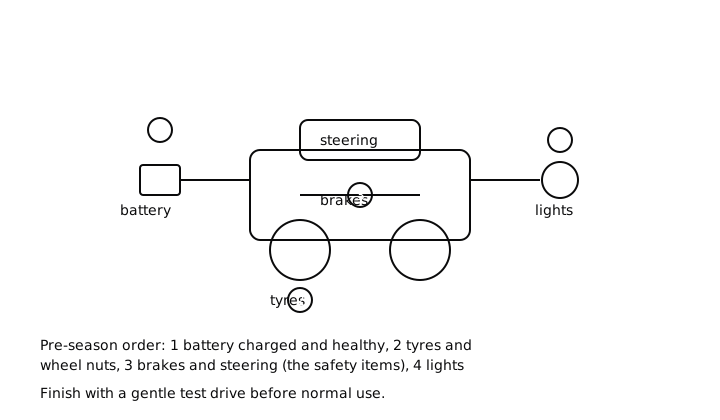
6Test and adjust the brakes
Test the brakes at low speed in a clear space, then, if they feel weak or uneven, adjust them following the drum brake procedure and confirm the parking brake holds on a slope.
ExpectedBrakes that stop the cart straight and evenly, and a parking brake that holds on a gentle slope; adjust or investigate anything less
7Check the steering
With the cart safely raised, check for play in the tie rod ends and kingpins and that the cart tracks straight, following the steering wander guide.
ExpectedTight steering joints and a cart that holds a straight line; play or wander needs attention before the season
8Test the lights and accessories
Switch on the headlights, tail lights, turn signals, horn and any other accessories and confirm each works, and check the fuses if any are dead.
ExpectedEvery light and accessory working; a dead item points to a bulb, fuse, ground or, if all 12 volt items are dead, the voltage reducer
9Gas carts: check fuel and oil
On a gas cart, confirm the fuel is fresh, check the engine oil level and condition, and check the air filter, following the owner manual intervals.
ExpectedFresh fuel, oil at the correct level and in good condition, and a clean air filter; stale fuel or dirty oil should be renewed
Check it is ready
10Take a gentle test drive
Once everything checks out, take a careful drive in a clear space, listening and feeling for anything unusual in the drive, brakes, steering and ride.
ExpectedSmooth, quiet running, straight tracking, even braking and no warning beeps or lights; investigate anything that stands out before normal use
When to get professional help
Call a technician if the pack will not hold charge or a battery is failing, if the brakes or parking brake will not adjust to hold properly, if you find play in the steering, or if a gas cart will not run cleanly on fresh fuel. The brakes and steering are safety items, so if a check raises a doubt you cannot resolve, it is worth a professional look before you rely on the cart for the season.
Common questions
How often should I run a full check on my cart?
A thorough check at the start of the season, plus a quick monthly look at the batteries, tires and brakes, keeps most carts reliable. If you use the cart hard or all year, check it more often. The goal is to catch small faults, a low cell or a dragging brake, before they leave you stranded or grow into a bigger repair.
What is the most important pre-season check?
The brakes and steering, because they are the safety items, and the batteries, because a weak pack is the most common reason a cart lets you down. Make sure the brakes stop the cart straight, the parking brake holds, the steering has no play, and the pack charges and holds a healthy voltage.
Can I do a pre-season check myself?
Yes, most of it is within reach of a careful owner with basic tools: cleaning, battery top-off and charging, tire pressures, wheel nuts and testing the lights. Take the brake and steering checks seriously and, if adjusting them is beyond your comfort, have those safety items done by a technician.
How do I know if a battery is failing before the season?
Fully charge the pack, let it rest, then measure each battery. A healthy 6 V battery reads 6.3 to 6.4 V rested, an 8 V reads 8.4 to 8.5 V and a 12 V reads 12.6 to 12.7 V. A single battery a volt or more below the others, or a pack that will not hold its charge, is a sign a battery is failing and should be tested properly.
Did this fix it?
Every guide is written from manufacturer service documentation and workshop practice, then reviewed before publication. Read how we write and review our repair guides.