Gas golf cart won't start: causes and fixes
Written by the Hawke Electric Vehicles Service Team
Quick answer
When a gas golf cart will not start, it is almost always missing one of three things: fuel getting to the engine, spark at the plug, or a charged starter battery to spin it over. The first clue is whether the engine cranks. Silence usually means the battery, its cables or a safety switch, and strong cranking that never catches means fuel or spark.
Tools needed
- Digital multimeter
- Spark plug wrench
- Spare spark plug
- Safety glasses
- Work gloves
Parts needed
- Fresh fuel
- Spark plug of the correct type
- Inline fuel filter
Confirm the symptom
This guide is for a gas cart that will not start from the key or ignition switch. Before anything else, turn the key and listen, because whether the engine cranks tells you which half of the problem you have.
Strong, steady cranking that never catches means the starting system is fine and you are hunting fuel or spark, so stay here. A click or dead silence when you turn the key means the engine is not cranking, which points to the starter battery, its cables or a safety switch. A cart that fires up and dies within a couple of seconds is a different problem around fuel starvation and the idle circuit, not a true no-start.
What causes it
| Cause | How common | How to confirm | Fix |
|---|---|---|---|
| Empty tank or stale fuel | very common | Check the fuel level and smell the fuel for a varnish odor | |
| Dead or poorly connected starter battery | very common | Measure the 12 V battery and check the terminals for corrosion and tightness | |
| No spark at the plug | common | Pull the plug, ground it against the block and crank to watch for a spark | |
| Blocked fuel delivery, filter or carburetor | common | Check the inline filter and whether fuel reaches the carburetor | |
| Safety interlock: seat, brake, ignition or Tow/Run switch | common | Confirm the switch is in Run and the interlocks are made | |
| Choke not working on a cold engine | occasional | Check the choke closes when cold and opens as the engine warms | |
| Loss of compression or engine mechanical fault | occasional | Rule out fuel and spark first, then have compression checked |
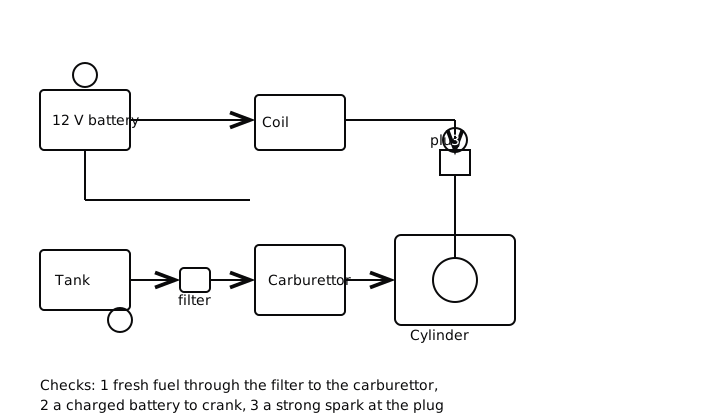
An empty tank or stale fuel
The most common reason a gas cart will not start is also the simplest, so clear it before you touch anything else. Look at the actual fuel level rather than trusting the gauge, which on these vehicles is frequently wrong.
Fuel that has sat for months goes stale as the light fractions evaporate, leaving a varnish that clogs the carburetor jets. That is why a cart that ran fine in the fall can refuse to start in the spring. Stale fuel has a sour, off smell. When in doubt, drain the old fuel into an approved container for disposal, refill with fresh, and try again.
1Confirm there is fresh fuel in the tank
Look into the tank or check through the filler for liquid fuel, and smell it for the varnish odor that marks stale gas.
ExpectedA tank with fresh, clean-smelling fuel; a dry tank or a sour smell is your answer
A dead or poorly connected starter battery
A gas cart still uses a 12 volt battery to run the starter and ignition, and a dead or badly connected battery is the usual reason the engine will not crank. One click at the key, or dash lights that dim hard, both lead here.
2Measure the 12 V starter battery
Set a multimeter to DC volts and read across the battery posts with everything off.
ExpectedA healthy 12 V battery reads about 12.6 to 12.7 V rested; under about 12.2 V it is discharged and may not spin the engine
3Check the terminals and ground
Look over both battery terminals and the ground strap to the engine for corrosion or looseness, and try to move them by hand.
ExpectedClean, tight terminals; green or white powder, or a terminal that shifts, adds resistance and can keep the starter from turning
Clean any corroded terminals, tighten them and retry. If the battery is discharged, charge it and test again; a battery that will not hold a charge needs replacing.
No spark at the plug
When the engine cranks hard but never catches, check spark first because it is fast and gives a clear answer. A fouled, worn or oil-wet plug is a common culprit, and so is a plug wire that has shaken loose.
4Test for spark
With the engine cool, remove the spark plug, reconnect it to its wire, hold the plug body firmly against clean bare metal on the engine with insulated pliers, and crank while watching the electrode.
ExpectedA crisp blue spark jumping the gap on every turn; a weak yellow spark or none points to the plug, wire, coil or ignition switch
A plug with a black sooty or oily tip can be cleaned and refitted as a test, but a worn plug is cheap to replace with the correct type. If a new, properly gapped plug still gives no spark, the fault sits further back in the ignition and is a job for a technician.
Blocked fuel delivery, filter or carburetor
Fuel travels from the tank through a filter, and on many carts a pump, before it reaches the carburetor. A clogged inline filter or a carburetor gummed up with stale fuel starves the engine even with a full tank.
5Check the inline fuel filter
Locate the small inline filter in the fuel line and look at the fuel inside it and its color.
ExpectedFuel clearly present and the filter not dark or clogged; a dry or badly discolored filter needs replacing with the correct type
A carburetor plugged with varnish usually needs cleaning or a rebuild, a common but fussy job. If fuel is reaching the carburetor and spark is good but the engine still will not run, have a technician clean or rebuild the carburetor rather than repeatedly spraying starting fluid, which can hide the real fault.
A safety interlock or switch in the wrong position
Gas carts use interlocks so the engine only starts under safe conditions. Depending on the model these can include a seat switch, a brake or neutral requirement, the ignition or key switch and, on many models, a Tow/Run switch. Any one in the wrong state gives a dead no-start with no other symptom.
6Confirm the switches and interlocks
Put the Tow/Run switch in Run, make sure the key or ignition switch is fully on, sit in the seat or press the seat switch, and meet any brake or neutral requirement in the owner manual.
ExpectedWith every interlock satisfied the engine cranks; if it cranks now, a switch was the cause
The choke on a cold engine
A cold engine needs a richer mixture, and the choke supplies it. A choke that does not close when cold makes a cold engine very hard to start even with good fuel and spark, and a choke stuck closed floods a warm engine so it will not start either.
Check that the choke control moves freely, that the choke closes for a cold start and opens as the engine warms. A seized or misadjusted choke is a carburetor job.
Loss of compression or a mechanical fault
If fuel, spark and the starting system all check out and the engine still will not start, the fault may be lost compression from worn valves, a blown head gasket or a broken valve-train part. This is uncommon and needs a compression test and a technician to confirm, which is why it sits last on the list.
When to get professional help
Call a technician if there is good fuel and good spark but the engine still will not run, if the carburetor needs cleaning or a rebuild, if the choke is seized, or if the checks point to compression or the ignition behind the plug. Throwing parts at a gas no-start is expensive, and a technician with a compression tester finds the true cause fast.
Common questions
Why does my gas cart click but not turn over?
One click with no cranking almost always means the 12 V starter battery is dead or a connection is loose or corroded. Measure the battery, which should read about 12.6 V rested, and clean and tighten the terminals and the ground strap to the engine before you blame the starter.
Can old gas keep a cart from starting?
Yes. Fuel left for months goes stale and leaves a varnish that gums up the carburetor jets, so a cart that ran last season can refuse to start after storage. Stale fuel smells sour. Drain it into an approved container and refill with fresh gas.
How do I tell if it is fuel or spark?
Listen to the cranking. An engine that spins strongly but never fires is missing fuel or spark, not battery power. Check for spark first because it is quick, then confirm fresh fuel is reaching the carburetor through the filter.
Is starting fluid safe to use?
Use it sparingly if at all. A quick catch on starting fluid confirms the ignition works and points you at fuel delivery, but repeated use hides the real fault and, sprayed near a hot engine, it is a fire risk. Fix the fuel supply instead of leaning on it.
Did this fix it?
Every guide is written from manufacturer service documentation and workshop practice, then reviewed before publication. Read how we write and review our repair guides.