Golf cart motor overheating: causes and fixes
Written by the Hawke Electric Vehicles Service Team
Quick answer
A golf cart motor that overheats, smells hot or triggers power cutback is almost always working harder than it should, and the usual reasons are an overload from hills or heavy loads, dragging brakes, or low tire pressures adding rolling resistance. Worn brushes or a tired motor also run hot. Start by finding the extra load, because a motor left to overheat can be damaged for good.
Tools needed
- Tire pressure gauge
- Floor jack and jack stands
- Wheel chocks
- Work gloves
- Safety glasses
Parts needed
- Motor brushes if worn (brushed motors)
Confirm the symptom
This guide covers a motor that runs too hot: a burning or hot-electrical smell, a motor too hot to touch after a normal drive, or the cart losing power and recovering once it cools. The recovery-when-cool pattern is the key sign that heat, not another fault, is the problem.
If the cart is simply slower than it used to be with no heat or smell, read the guide on a slow cart, which is usually a battery story. If you hear a distinct grinding or bearing noise, see the guide on unusual noises. If the cart drops into reduced power on hills and recovers, that is often controller thermal cutback rather than the motor itself, covered in the limp mode guide. Come back here for a motor that genuinely runs hot.
What causes it
| Cause | How common | How to confirm | Fix |
|---|---|---|---|
| Overload from hills, towing or heavy loads | very common | Note whether heat follows hard use, and reduce the load to compare | |
| Dragging brakes adding constant load | very common | Raise each wheel and check it spins freely without brake drag | |
| Low tire pressures increasing rolling resistance | common | Check and correct all tire pressures | |
| Worn brushes or a dirty commutator (brushed motors) | common | Inspect the brushes and commutator | How to inspect and replace golf cart motor brushes |
| Dragging wheel bearing or binding drivetrain | occasional | Spin each raised wheel and feel for drag or roughness | |
| Motor internal fault or worn windings | occasional | Rule out load and drag first, then have the motor tested |
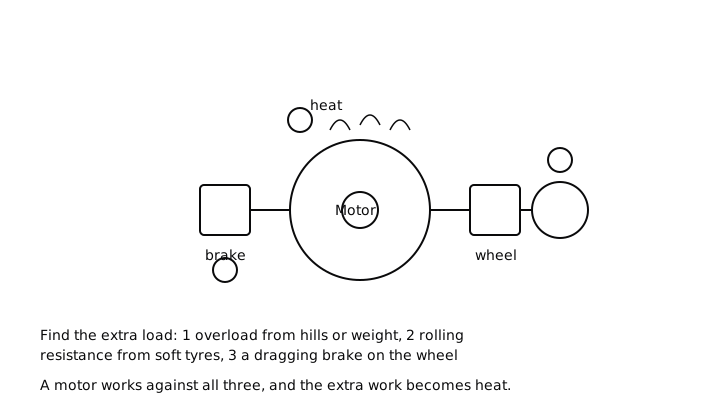
Overload from hills, towing or heavy loads
The most common reason a motor runs hot is that it is being asked to do more than it comfortably can. Long or steep hills, towing, carrying more people or cargo than the cart is rated for, or running soft off-road all keep the motor pulling hard, and hard work makes heat. This is the first thing to weigh because it needs no tools.
1Match the heat to the workload
Think about when the cart overheats: after long climbs, when heavily loaded, or in soft ground, then repeat a normal drive with a lighter load.
ExpectedIf the motor stays cooler with less load or gentler terrain, overload is the cause and the fix is to work the cart within its limits
If the cart overheats even under normal, sensible use, the extra load is coming from somewhere it should not, which is what the next checks find.
Dragging brakes
A brake that does not fully release drags constantly, and the motor has to overcome that drag every foot, which heats it up. Dragging brakes are one of the most common hidden loads, and they often warm the affected wheel too.
2Check each wheel spins freely
With the cart safely raised and in Tow, spin each wheel by hand and compare how freely they turn.
ExpectedEach wheel spins freely and coasts; a wheel that is hard to turn or stops quickly is dragging on its brake and needs adjusting or freeing off
A dragging brake can come from over-tight adjustment, a sticking cable or a seized mechanism. The brake guides cover adjustment, and a seized brake is worth having freed off before it overheats the motor further.
Low tire pressures
Soft tires add rolling resistance across every wheel, and the motor pays for it in extra current and heat. This is a quick, cheap thing to rule out.
3Check and correct the tire pressures
Measure all the tires and set them to the pressure on the sidewall or in the owner manual.
ExpectedAll tires at the correct pressure; soft tires that were dragging the motor down should ease the load once corrected
Worn brushes or a dirty commutator
On brushed motors, worn brushes or a dirty commutator increase resistance and arcing inside the motor, which makes heat and often a distinct smell. Inspecting and replacing the brushes is a defined job covered in the motor brushes procedure, and it is worth doing on an older brushed motor that runs hot with no external cause.
Dragging bearing or internal motor fault
A dragging wheel bearing or a binding point in the drivetrain adds load the same way a dragging brake does, so spin each raised wheel and feel for roughness. If load, drag, tires and brushes all check out and the motor still overheats, the fault may be inside the motor itself, such as worn windings, which needs testing and is a job for a technician.
4Spin each wheel for drag and roughness
With the wheels raised, spin each one and feel for a rough bearing or a binding drivetrain as well as brake drag.
ExpectedSmooth, free rotation; roughness or drag identifies a bearing or drivetrain load; none of these, yet the motor still overheats, points to the motor internally
When to get professional help
Call a technician if the motor overheats under normal use once you have ruled out load, brake drag and soft tires, if a brushed motor needs its brushes and commutator serviced beyond your comfort, or if the motor is suspected of an internal fault. A motor left to run hot can be damaged for good, so it is worth diagnosing early rather than after the windings have cooked.
Common questions
Why does my golf cart motor smell hot?
A hot-electrical or burning smell from the motor means it is running too hot, usually because it is overloaded, dragging on a brake, or working against soft tires. On brushed motors, worn brushes and a dirty commutator also cause a distinct smell. Find the extra load, because a motor left to overheat can be damaged.
Can I keep driving if the motor gets hot?
No, not until you find the cause. Driving a motor that is already overheating risks lasting damage to the windings. Stop, let it cool, and work through the load, brake drag and tire checks before using it again, because the heat is a symptom of something making the motor work too hard.
How can dragging brakes overheat the motor?
A brake that does not fully release drags on the wheel constantly, so the motor has to overcome that resistance the whole time it is driving. That extra, continuous load turns into heat in the motor. Raising each wheel and checking it spins freely quickly shows whether a brake is dragging.
Is motor overheating the same as the controller cutting out?
Not always. The motor itself can run hot from load and drag, while the controller has its own thermal cutback that reduces power when it overheats, often on hills, and recovers when it cools. If the cart loses power and recovers rather than the motor smelling hot, read the limp mode guide as well.
Guided check
Diagnose it step by step
Answer a few questions and we will point you at the most likely cause.
Question 1 of 7
Where does the sound seem to come from?
Did this fix it?
Every guide is written from manufacturer service documentation and workshop practice, then reviewed before publication. Read how we write and review our repair guides.