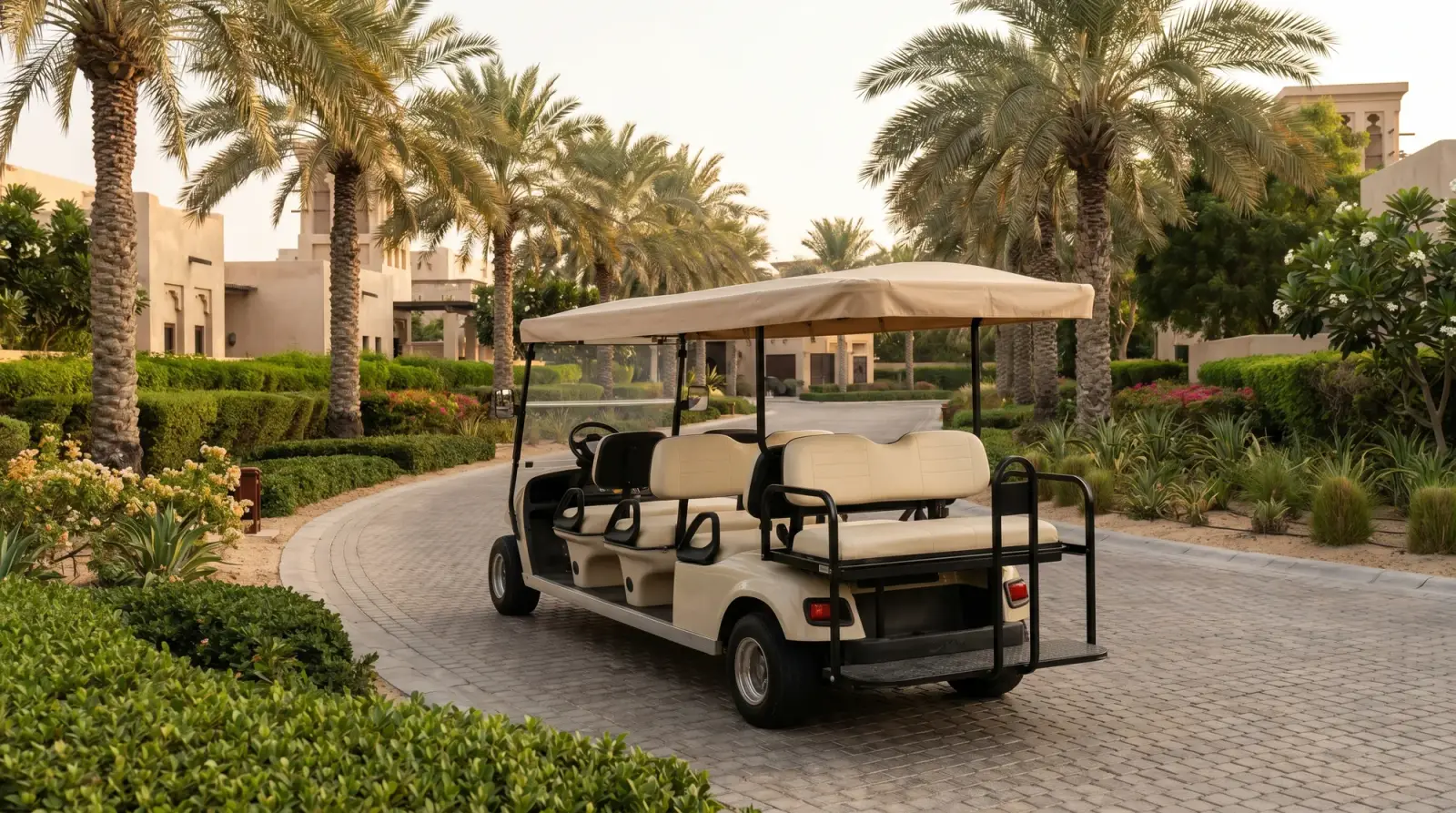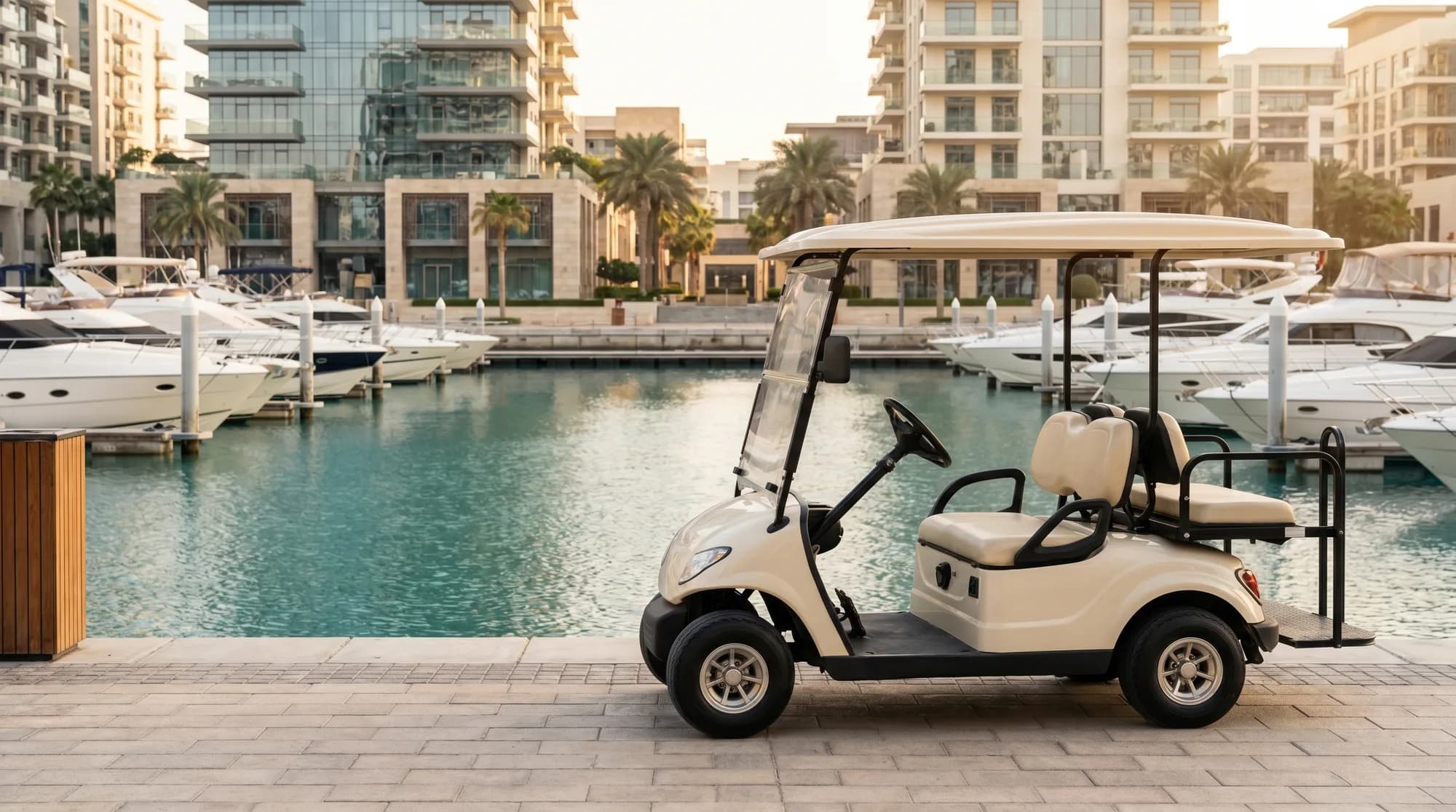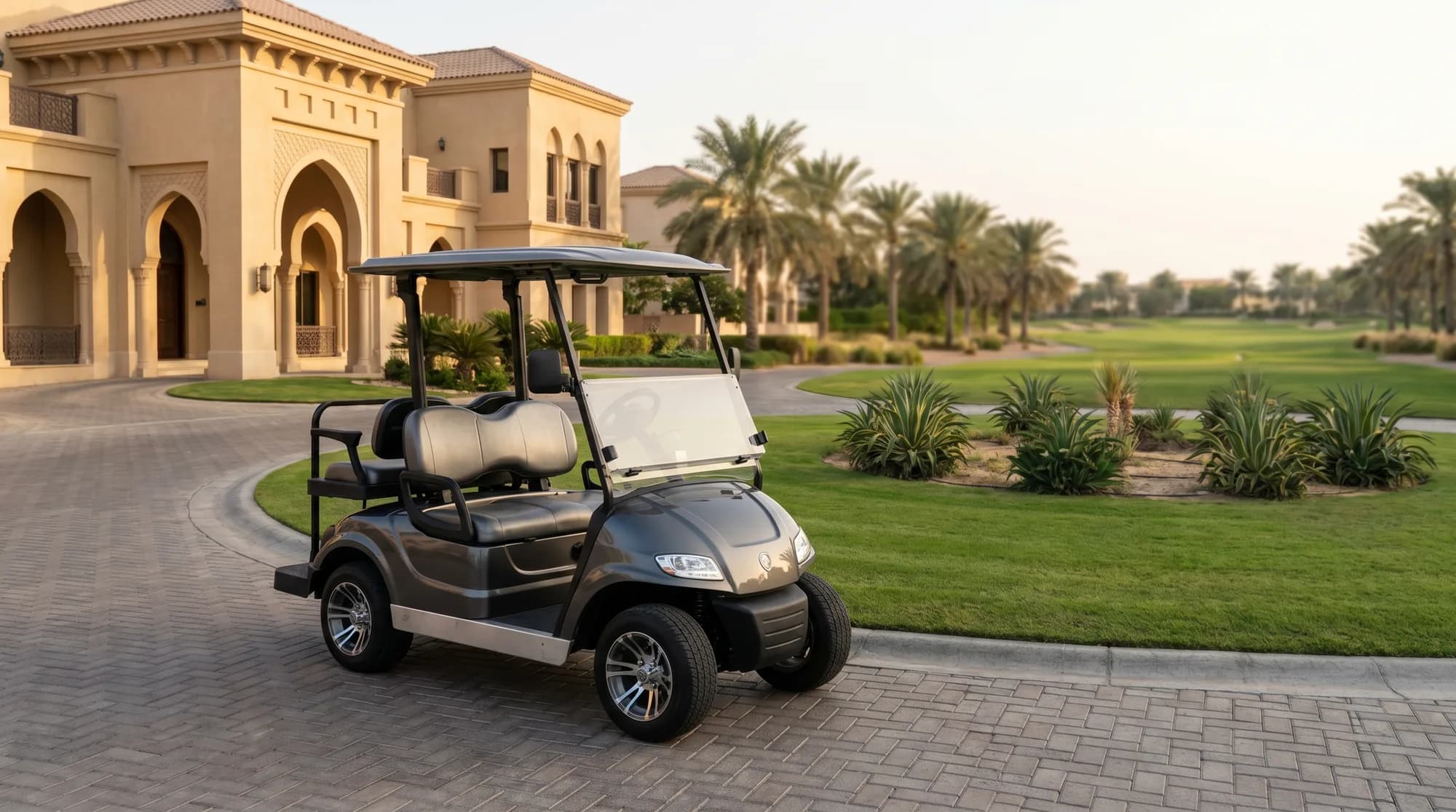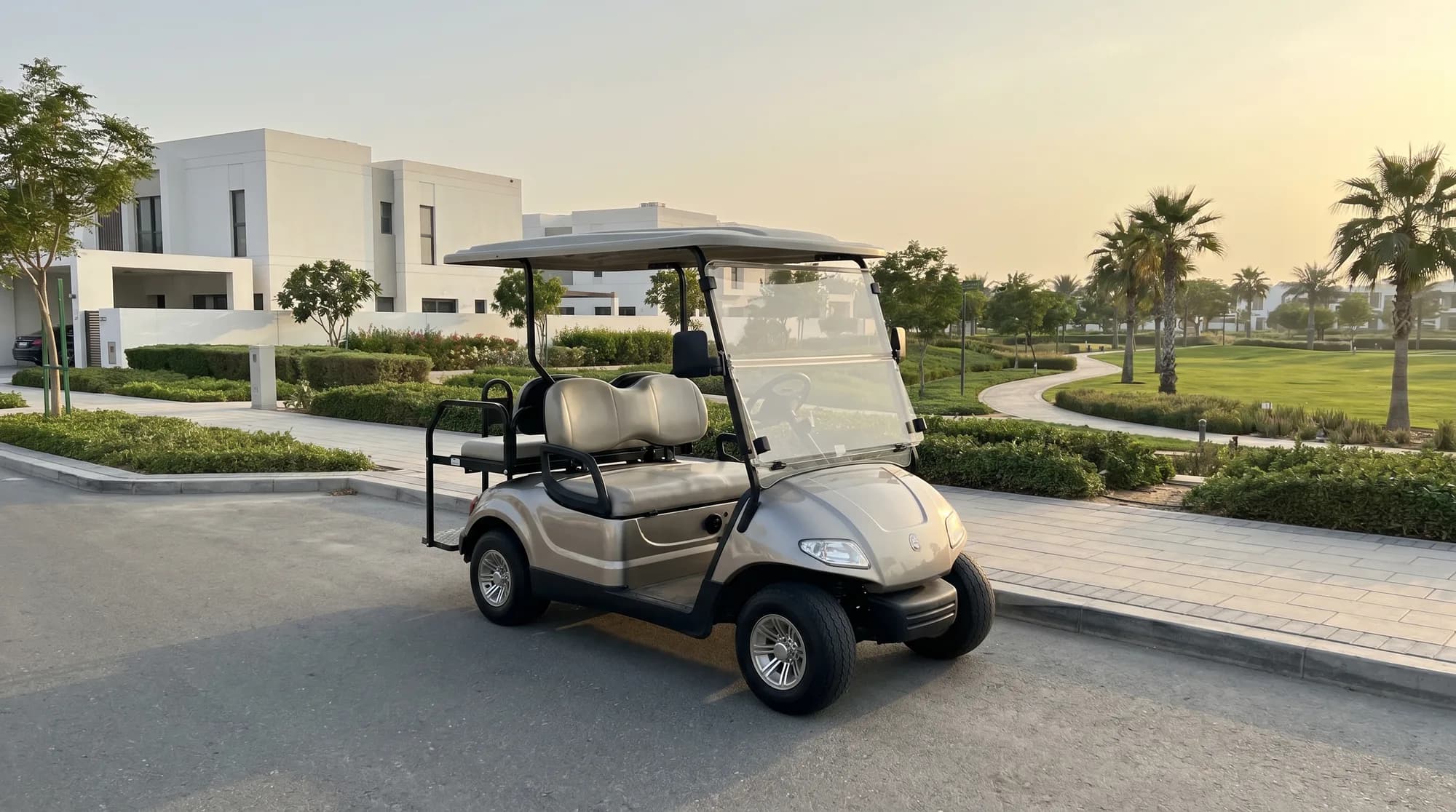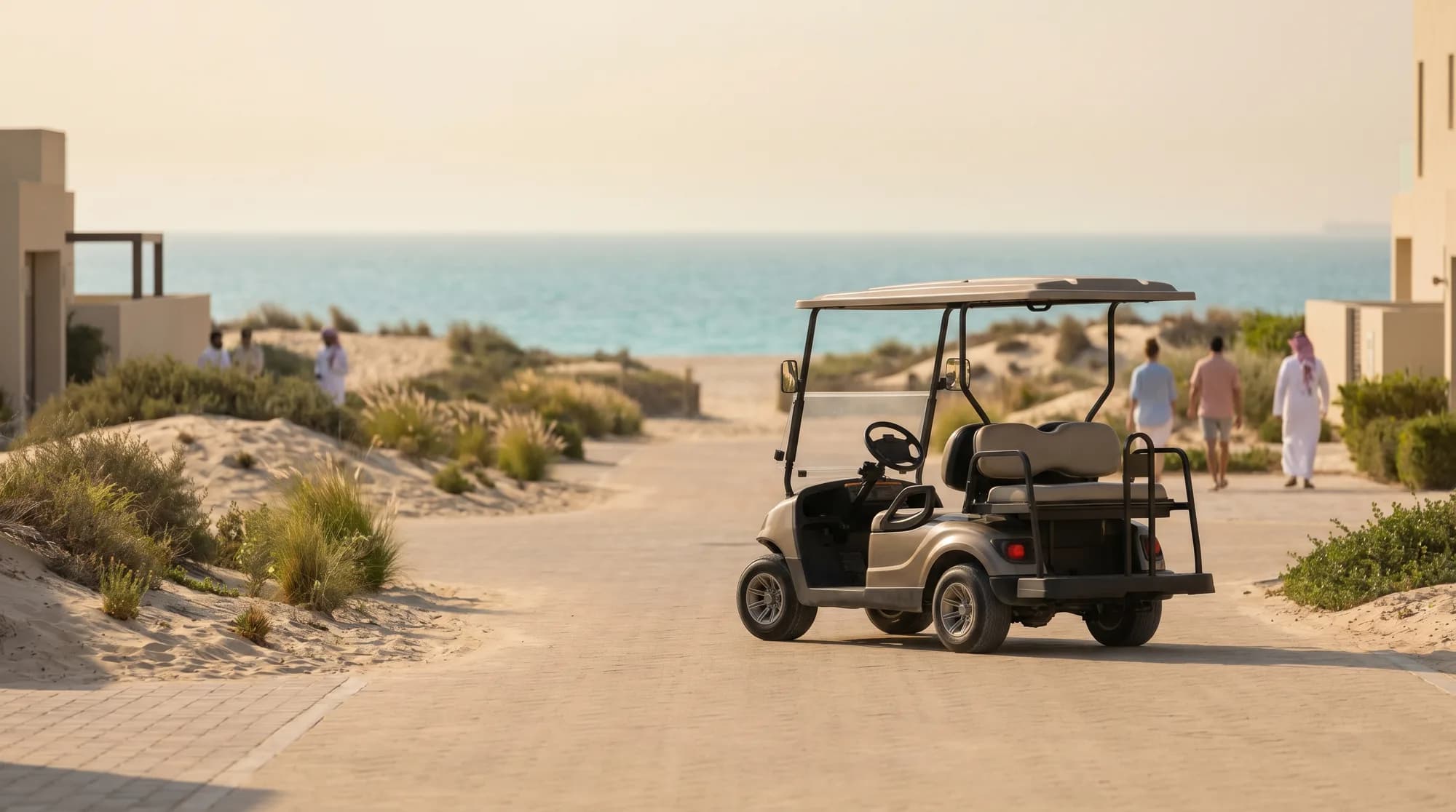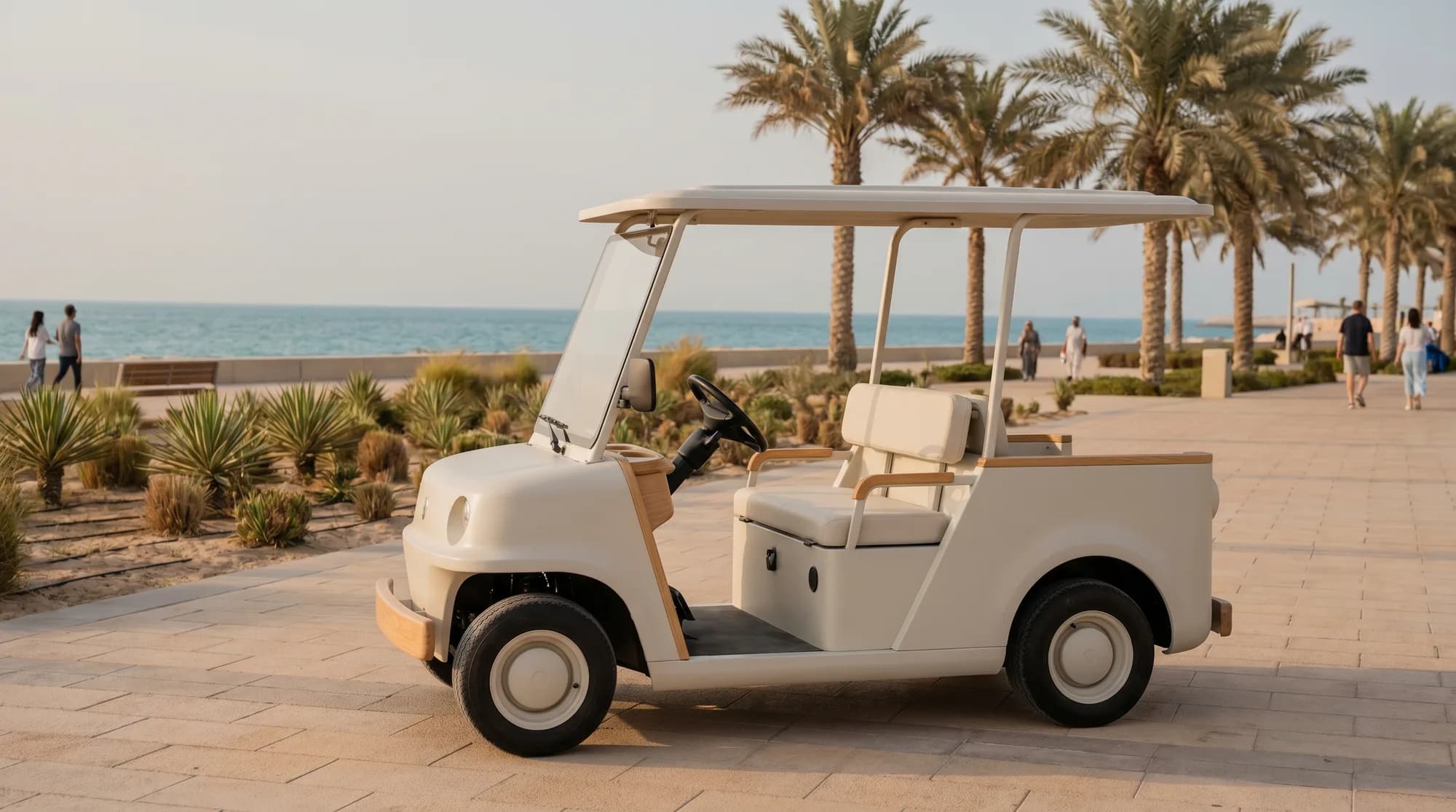
The UAE has invested heavily in its public realm: landscaped parks, long corniches, beach promenades and waterfront developments designed to be enjoyed on foot. Keeping those spaces running, and keeping visitors comfortable across them, takes quiet, clean transport that does not intrude on the experience. Electric golf carts fit exactly: they move visitors who cannot walk the distance, carry maintenance crews and their tools, and give patrol and first-aid teams a fast, calm way to reach an incident.
A public-realm cart faces a brutal trio of conditions, though. Fine windblown sand gets into everything, salt air near the beach corrodes anything cheap, and the sun bakes seats and finishes year-round. A cart specified for a cool climate falls apart here. The art is choosing one built to shrug all three off while staying quiet and welcoming in a public space. Many of the same considerations apply to tourism and sightseeing fleets and the event and wedding golf carts that often work the same coastal venues.
- Public-realm golf carts do three jobs: visitor transport, maintenance support and patrol or first-aid response.
- Salt and sand durability is non-negotiable near the coast: corrosion-resistant fixings, sealed components and protected electrics.
- Quiet, emission-free operation is the whole point in a space designed for people to enjoy on foot.
- Accessibility matters in public realm: low boarding and stable handling help elderly and less mobile visitors.
- Plan charging around opening hours so the fleet covers a full public day and any evening use.
- Confirm where golf carts may operate on promenades and beaches with the operating authority before running them.
Three jobs in the public realm
The most visible role is visitor transport: shuttling people along a long corniche, across a sprawling park or down to a distant stretch of beach, especially in the heat when the full walk is too much for many. The least visible but most constant role is maintenance: a utility cart carrying gardeners, cleaners and their equipment to where the work is, far more efficiently than a van that cannot reach the soft or narrow areas.
The third role is response. Patrol, lifeguard support and first-aid teams need to reach an incident on a busy beach or in a large park quickly and calmly, without a loud engine cutting through the public space. A cart gives them speed and access where a car cannot go and a quad would feel aggressive. Across a large waterfront these duties overlap with marina and waterfront operations and the broader facilities management fleet.
Surviving sand, salt and sun
Coastal public realm is the harshest environment a cart routinely faces in the UAE. Salt-laden air drives corrosion into any unprotected metal, fine sand works into bearings, controllers and connectors, and constant sun degrades trim. A cart that lasts here is built deliberately against all three, and the difference shows within a single season.
- What it attacks
- Metalwork, fixings, connectors
- The defence
- Corrosion-resistant fittings and sealed terminals
- What it attacks
- Bearings, controllers, moving parts
- The defence
- Sealed components and protected electronics
- What it attacks
- Seats, trim, battery life
- The defence
- UV-stable materials and a heat-tolerant lithium pack
| What it attacks | The defence | |
|---|---|---|
| Salt air | Metalwork, fixings, connectors | Corrosion-resistant fittings and sealed terminals |
| Fine sand | Bearings, controllers, moving parts | Sealed components and protected electronics |
| Sun and heat | Seats, trim, battery life | UV-stable materials and a heat-tolerant lithium pack |
Quiet and clean by design
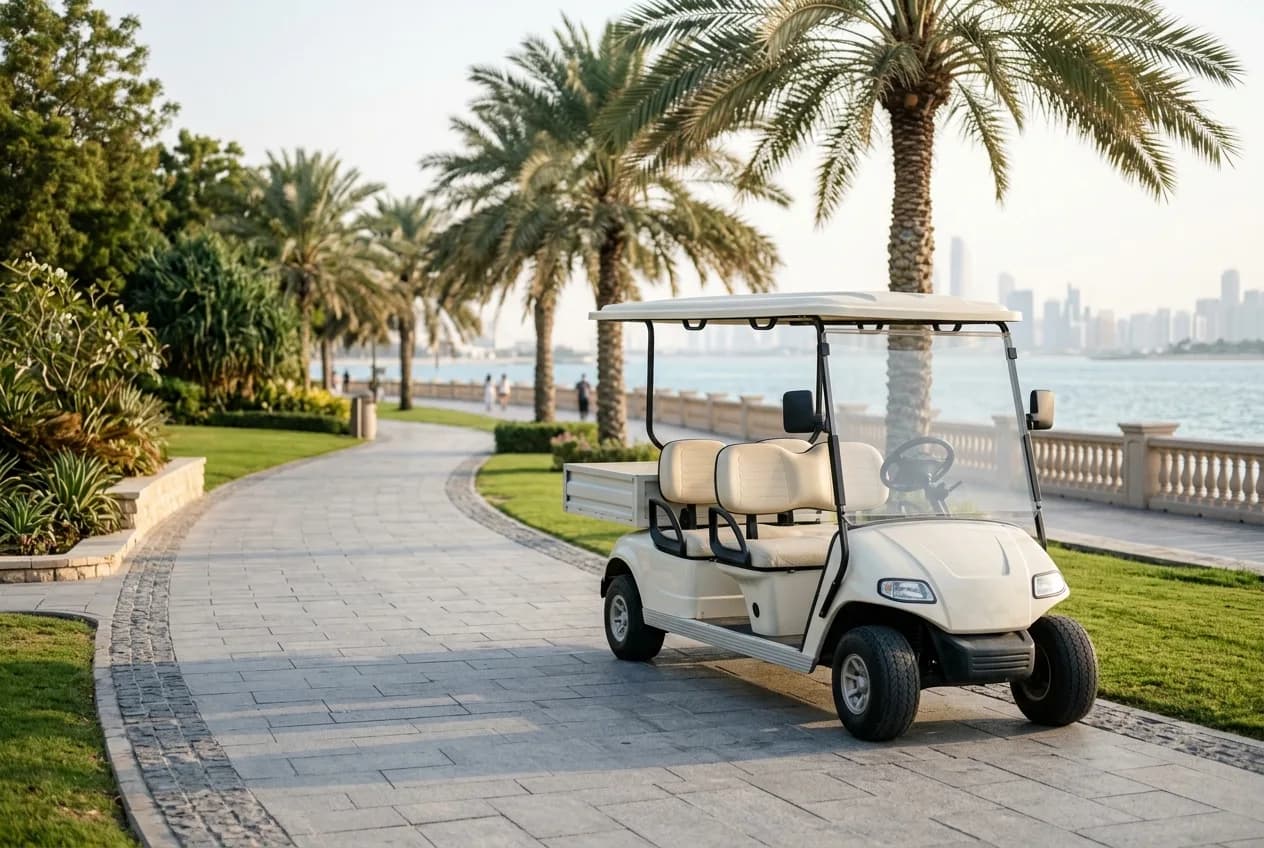
A park or beach is a place people go to relax, so the transport that serves it must not intrude. An electric cart is near-silent and produces no exhaust, which means it can move through a crowd of families, pass a picnic or reach a quiet stretch of sand without spoiling the moment. That quietness is not a nice-to-have in public realm; it is the reason electric is the only sensible choice.
Accessibility for every visitor
Public spaces are for everyone, and golf carts are a powerful accessibility tool. An elderly visitor, a family with young children or a person with limited mobility can reach a distant viewpoint or beach that would otherwise be off-limits. Specify low boarding, grab handles, stable handling and, where the service warrants it, the ability to carry a wheelchair user, so the public realm genuinely opens up to all.
- Low step-in and grab handles for elderly and less mobile visitors.
- Stable handling on ramps, boardwalks and compacted paths.
- Capacity to carry a wheelchair passenger where the service requires.
- Calm, quiet operation that suits families and shared spaces.
Charging around opening hours
A public-realm fleet usually works a defined day, with peaks at weekends and in the cooler evening hours. Charge overnight to full so each cart covers the full opening period, and add opportunity top-ups at a depot point for golf carts that run into the evening. Lithium packs help by recovering quickly between sessions and tolerating the heat that builds up in any outdoor coastal site.
Specifying for a mixed public route
Public-realm routes are rarely smooth tarmac end to end. A single run might cross paving, a timber boardwalk, a ramp, a soft margin near the sand and a busy shared path full of pedestrians, joggers and cyclists. The cart has to handle all of that comfortably and safely, which points to forgiving suspension, tires suited to mixed surfaces, gentle braking and excellent low-speed control. Visibility matters as much as performance here, because the cart is constantly among people who are not watching for it.
Capacity is the other planning decision. A maintenance cart needs a bed sized for the tools and bagged waste a crew carries across a shift, while a visitor shuttle needs enough seats to clear a queue at a popular spot without leaving people waiting in the sun. Many authorities settle on a small mixed fleet: a couple of passenger golf carts for visitors, one or two utility golf carts for the grounds team, and a response cart kept light and quick for patrol and first aid.
In a space designed for people to enjoy on foot, the best transport is the one nobody hears arrive. Quiet, clean and rust-proof is the whole specification.
Specify a public-realm cart
Tell us your site, the roles you need covered and your coastal exposure, and we will configure a sand and salt-ready fleet with current indicative pricing in AED.
Frequently asked questions
Do golf carts survive salt air at UAE beaches?+
Only if specified for it. Coastal public realm demands corrosion-resistant fixings, sealed components and protected electrics, plus a routine of regular freshwater rinsing. A cart built for a mild climate corrodes within a season here.
What jobs do golf carts do in parks and on beaches?+
Three main ones: transporting visitors across large or hot sites, carrying maintenance crews and equipment, and giving patrol, lifeguard and first-aid teams fast, calm access to incidents.
Are golf carts allowed to run on promenades and beaches?+
It depends on the operating authority. Permitted routes and times vary by site, so confirm where golf carts may run with the authority that manages the space before deployment.
How do golf carts help less mobile visitors?+
By opening up distant viewpoints and beaches that would otherwise be hard to reach. Specify low boarding, grab handles, stable handling and, where needed, capacity to carry a wheelchair user.
Why electric rather than gas in public spaces?+
Because parks and beaches are for relaxing. An electric cart is near-silent and emission-free, so it moves through families and quiet areas without intruding, which a gas engine cannot.
Related solutions
Ready to explore what we build?
See the vehicles and the setting this applies to, or get a tailored quote built around your site.
Ready to find the right golf cart?
Tell us how and where it will work and we will specify a vehicle and a tailored quote built around you. Every build comes with a 3-year warranty and a 24-hour priority call-out.
Our guides are written and reviewed by the Hawke Electric Vehicles team, the people who specify, build, deliver and support the vehicles. We focus on honest, practical advice and flag where a figure depends on the build rather than guessing.
More guides by Hawke