On a farm or estate, an electric cart earns its keep precisely because it can go anywhere on the ground without paperwork: no registration, no vehicle tax, no licence, provided it stays on private land. The complications start at the edges, where a private track meets a public lane, where a right of way crosses the yard, or where two blocks of land sit either side of a road. This guide sets out where the legal line actually falls, in plain terms rather than legal advice, and how most estates arrange themselves around it.
- On private land you own or control, a cart needs no registration, tax or licence.
- The moment a route touches a public highway, even to cross it, full road-legal rules apply.
- A byway open to all traffic (BOAT) counts: vehicles using one must be road legal and the driver licensed and insured.
- Restricted byways, bridleways and footpaths do not carry motor vehicle rights at all.
- Most estate golf carts stay unregistered by design, and the estate routes around the public bits.
Private land: where the cart belongs
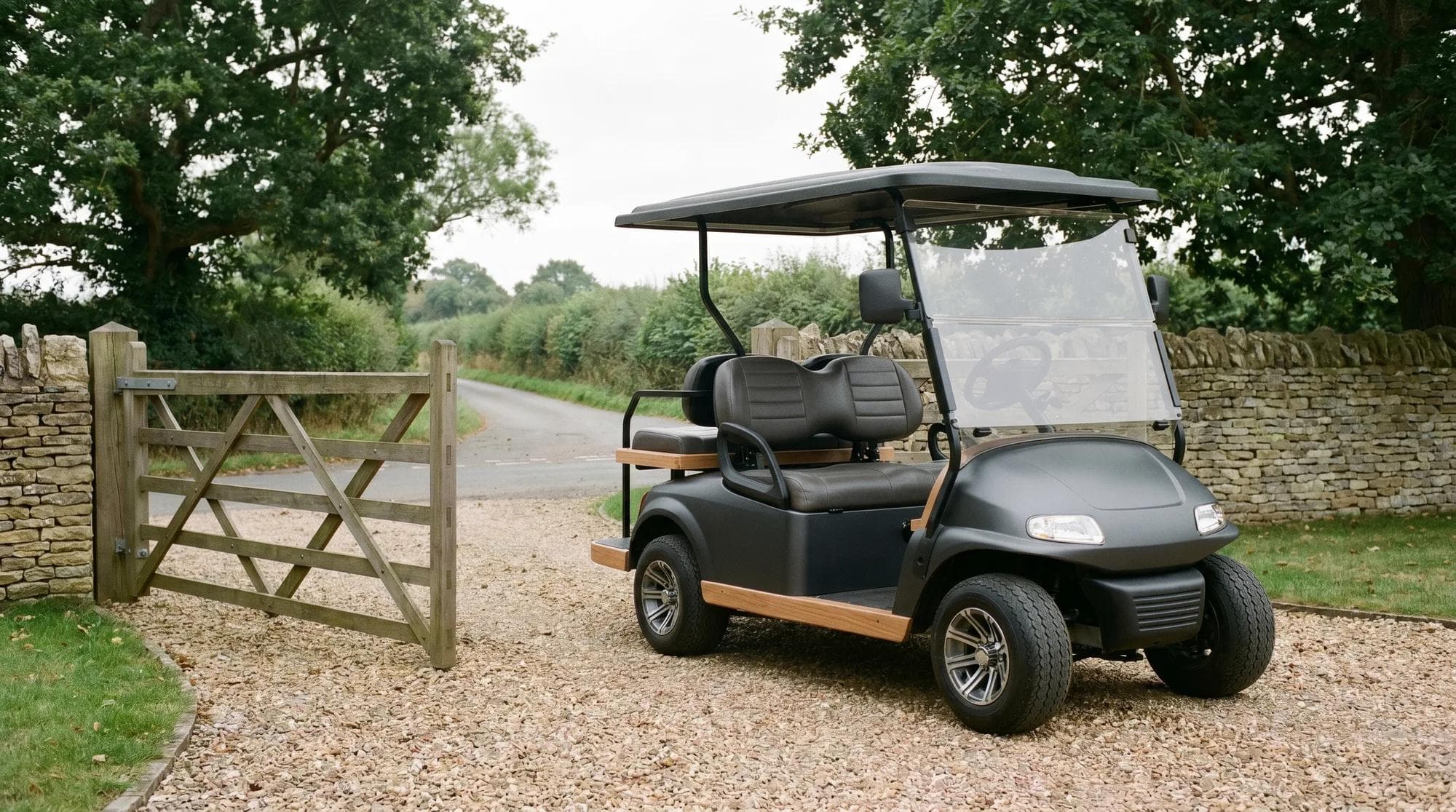
A private farm road, however long and however well surfaced, is not a public highway, and a cart can use it freely at the landowner's say-so. The registration and road-tax regime attaches to public road use, not to the vehicle itself, which is why the vast majority of estate and farm golf carts never see a number plate. What matters is who has the right to be there: on land you own or control, with the public excluded, you are in the simple case. Two cautions, though. First, land the public can freely access can count as a public place for compulsory insurance purposes, so liability cover is wise even where the law is not chasing you; our registration and insurance guide covers that nuance. Second, a track does not become private just because it is quiet: what counts is its legal status, not its traffic.
Crossing a public road
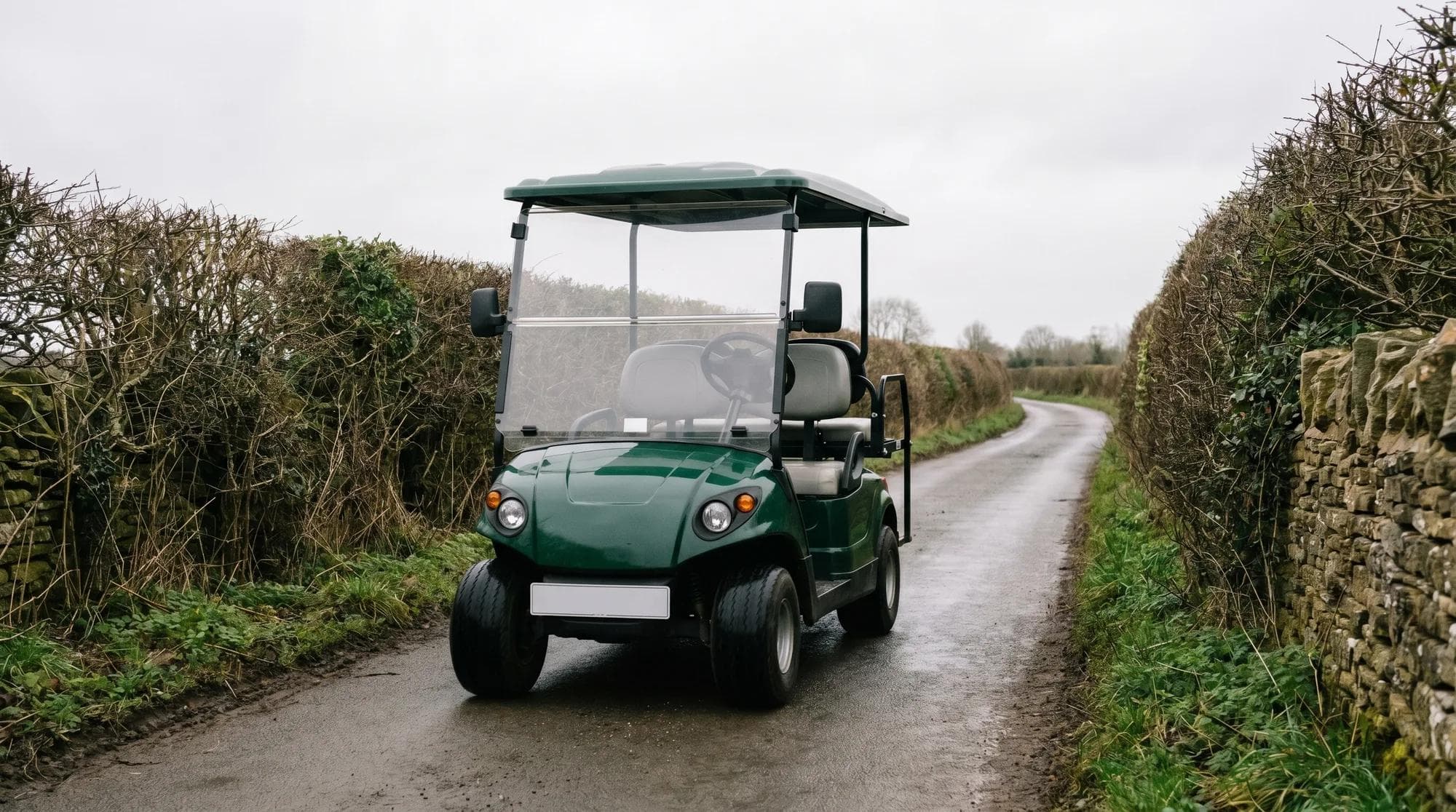
The classic farm problem is land on both sides of a lane. Driving across the lane, even a few metres, is use of a public road, and the full set of requirements applies: an approved and registered vehicle, tax, insurance and a licensed driver. Hoping the crossing does not count is not a strategy; it counts. The options are the same ones golf clubs face, and our pillar guide on whether golf carts are road legal walks through them: a registered road-legal vehicle for the crossing, a different vehicle for that leg, or reworking the route so the crossing disappears.
Byways, green lanes and rights of way
Rights of way across farmland have their own hierarchy, and it decides what may drive on them. A byway open to all traffic, a BOAT, carries vehicular rights: the public may drive it, but in a vehicle that is road legal, registered, taxed and insured, with a licensed driver, exactly as on a surfaced road. So an unregistered cart has no more right on a BOAT than on the A-road it joins. A restricted byway allows horses, cycles and horse-drawn vehicles but not mechanically propelled ones; bridleways and footpaths allow less still. None of this stops the landowner using, or permitting, vehicles on their own land where the route is also their private track, but the public right and the private permission are different things, and highway authorities can also lay traffic regulation orders over particular routes. If your ground includes green lanes, check their status on the definitive map held by the local highway authority rather than judging by the surface.
Agricultural vehicles are their own world
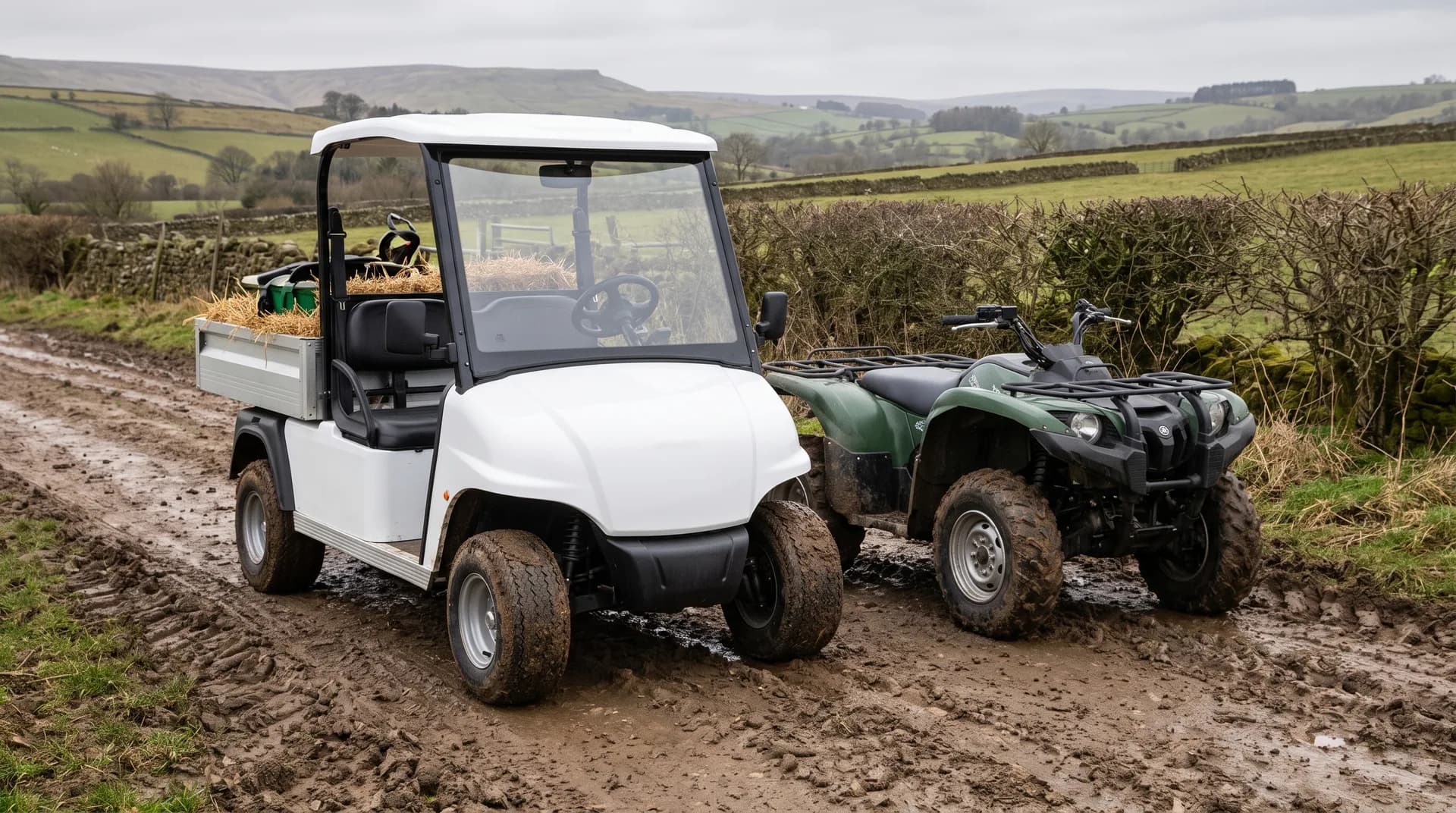
Farmers sometimes ask whether a cart can ride on the agricultural rules, the limited-use and agricultural-machine categories that let tractors work between fields with relaxed requirements. Those categories are tightly defined in law, they come with their own registration and tax classes, and a golf cart does not become an agricultural motor vehicle by living on a farm. Some genuinely agricultural side-by-side machines are sold and registered down that route from the factory; a cart is not one of them. If that distinction matters to your operation, take professional advice before relying on it, and treat gov.uk as the reference for what each category requires.
Why most estate golf carts stay unregistered
Faced with all this, the standard answer across farms and estates is refreshingly boring: keep the cart unregistered, keep it on private ground, and design the routes so it never needs the highway. Gates between blocks, a culvert or farm bridge where a watercourse or lane splits the land, or simply accepting that one leg of the journey belongs to the pickup rather than the cart. Registration is worth the trouble in a narrow set of cases: a route that genuinely must use a stretch of public lane daily, a BOAT that is the only practical link, or a commercial operation where the crossing cannot be engineered away. In those cases the process is real but well trodden, and our guide to the road registration process and costs sets out what it involves, including the specializt insurance you should price first.
Frequently asked questions
Can I drive a golf cart on my own farm roads?+
Yes. A private farm road on land you own or control is not a public highway, so no registration, tax or licence is needed. Liability insurance is still sensible, and land the public can freely access can count as a public place where motor insurance is required.
Can a golf cart use a byway open to all traffic?+
Only if it is road legal. A BOAT carries public vehicular rights, but the vehicle must be registered, taxed and insured and the driver licensed, the same as on any road. An unregistered cart cannot lawfully use one, though a landowner may still use their own private track rights where they exist.
Does crossing a lane between two fields count as road use?+
Yes. Crossing a public road, however briefly, is use of a public road and the full road-legal requirements apply. Most farms solve this with routing, gates or a bridge, or by using a road-legal vehicle for that leg.
Is a golf cart an agricultural vehicle?+
No. The agricultural categories that give tractors relaxed road requirements are tightly defined, and a cart does not qualify by being used on a farm. If your operation depends on that distinction, take professional advice first.
When is registering an estate cart worth it?+
Rarely: usually only where a public lane or BOAT is genuinely unavoidable in the daily route and cannot be engineered away. Then the MSVA and DVLA process applies, and specializt insurance should be priced before any conversion work.
Specify the right vehicle for your ground
Tell us about your land, your routes and any awkward crossings, and we will be straight about what a cart can and cannot do, then build a quote around the honest answer.
Related solutions
Ready to explore what we build?
See the vehicles and the setting this applies to, or get a tailored quote built around your site.
Ready to find the right golf cart?
Tell us how and where it will work and we will specify a vehicle and a tailored quote built around you. Every build comes with a 3-year warranty and a 24-hour priority call-out.
Our guides are written and reviewed by the Hawke Electric Vehicles team, the people who specify, build, deliver and support the vehicles. We focus on honest, practical advice and flag where a figure depends on the build rather than guessing.
More guides by Hawke