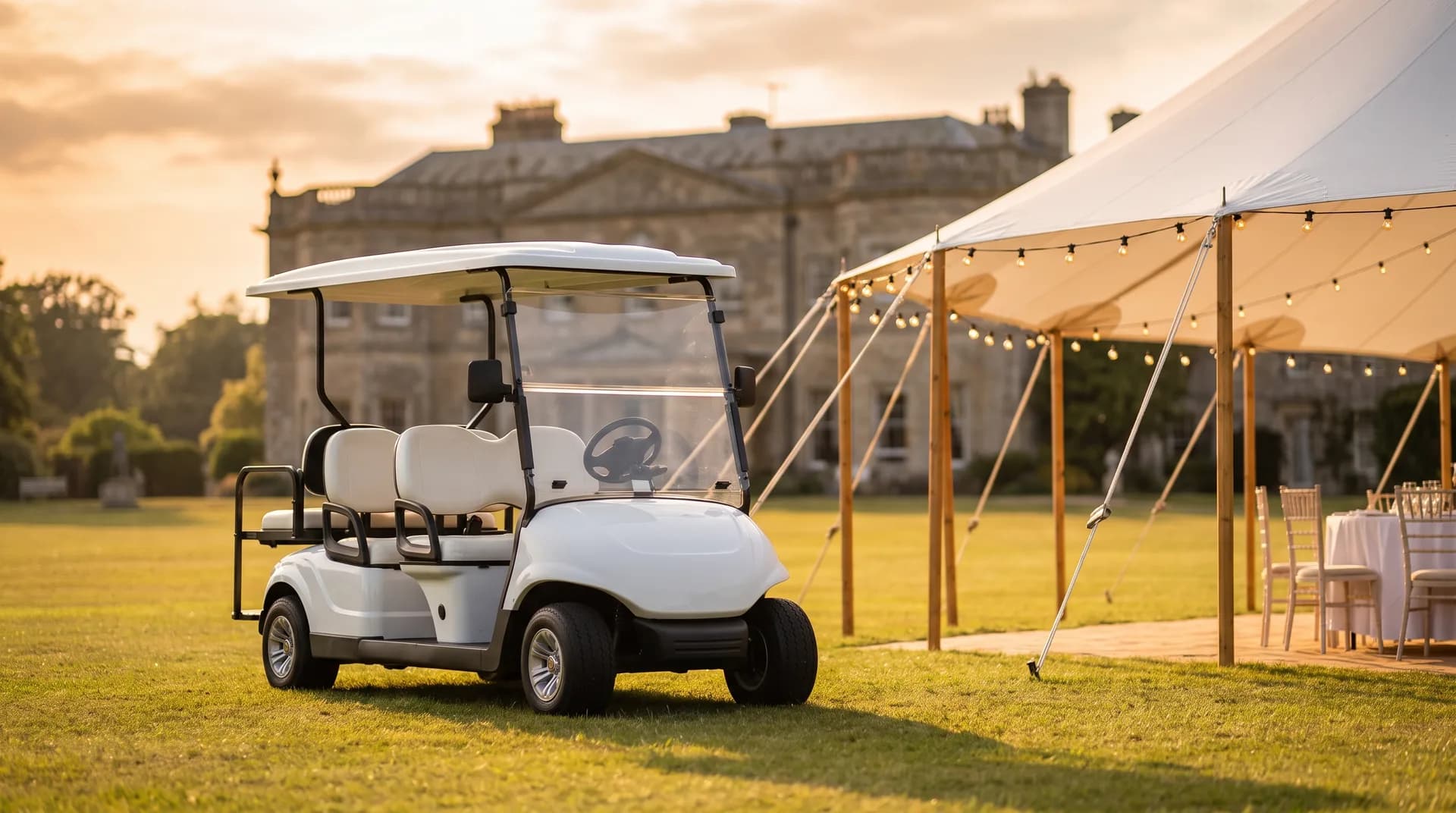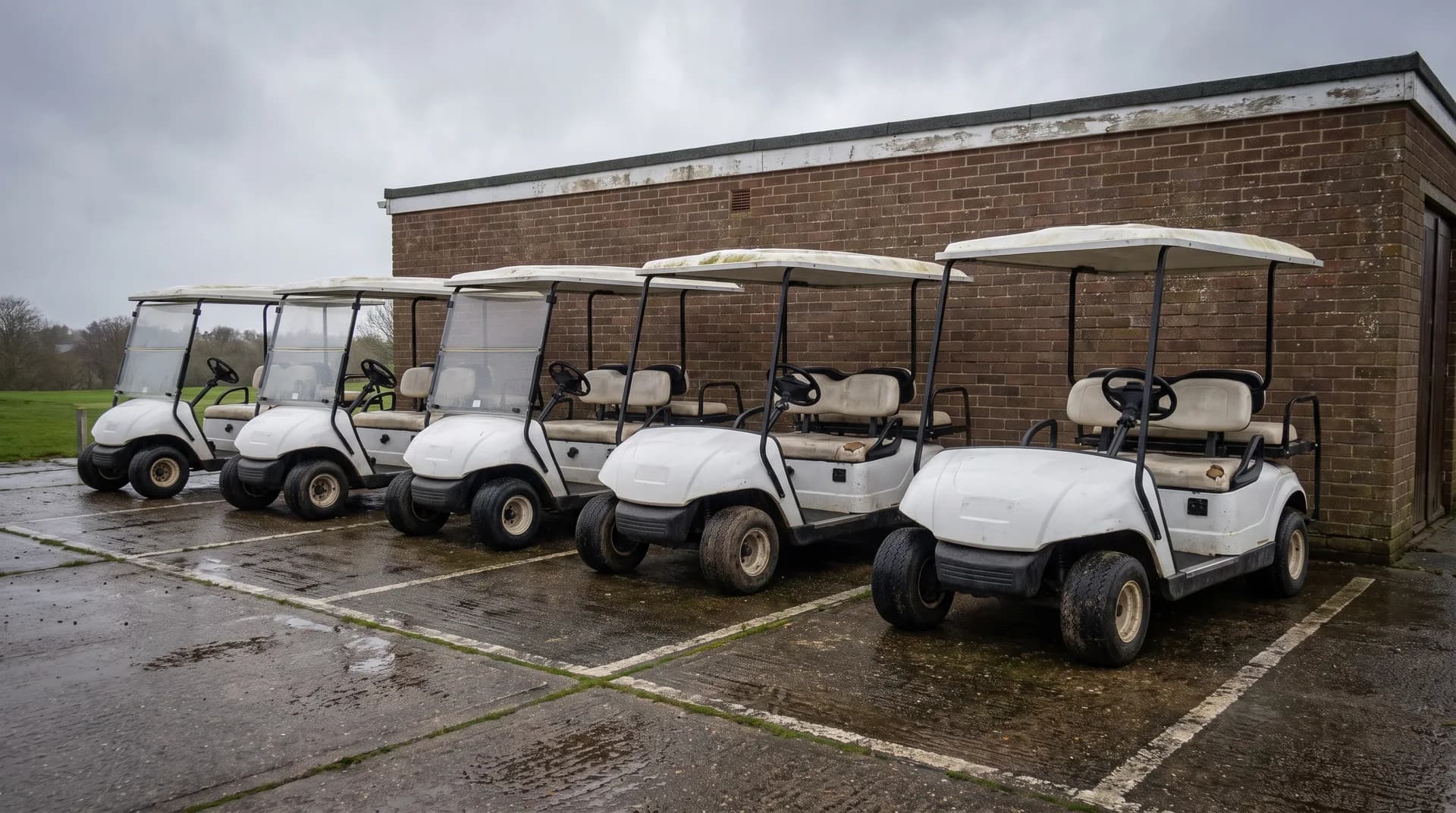
Ex-fleet golf carts are the vehicles that come off club, resort and hire fleets when those operations cycle their stock. They are consistently among the cheapest sound used golf carts in the UK, and they are frequently misunderstood in both directions: dismissed as worn out by buyers who assume high hours mean a tired vehicle, and over-bought by buyers who expect a nearly new machine for a used price. The truth is more useful than either.
- Fleet vehicles are usually replaced on a cycle rather than because they have failed.
- They typically carry high hours but consistent, scheduled servicing.
- The battery pack is often at or near the end of its life, and that is priced in.
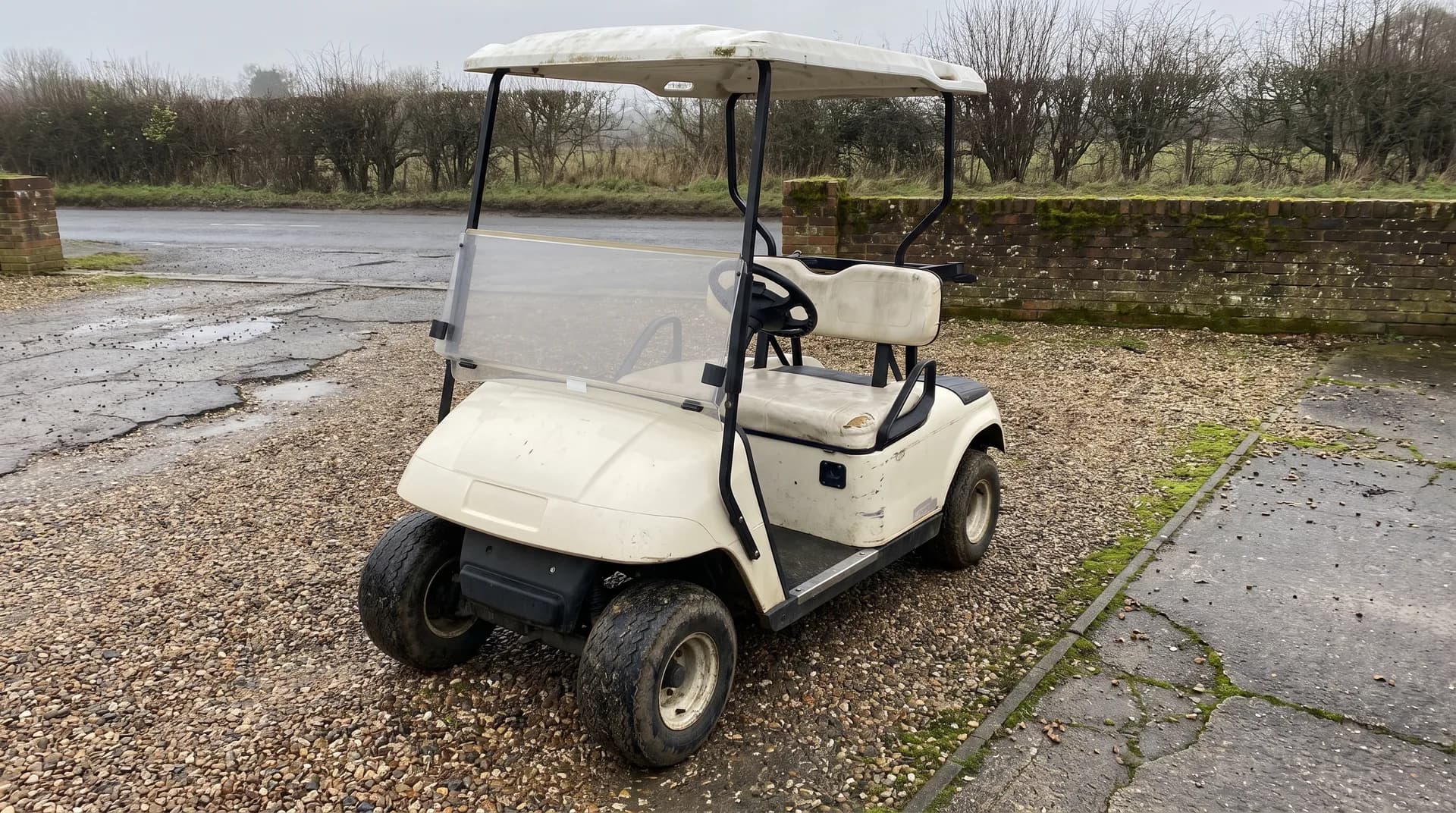
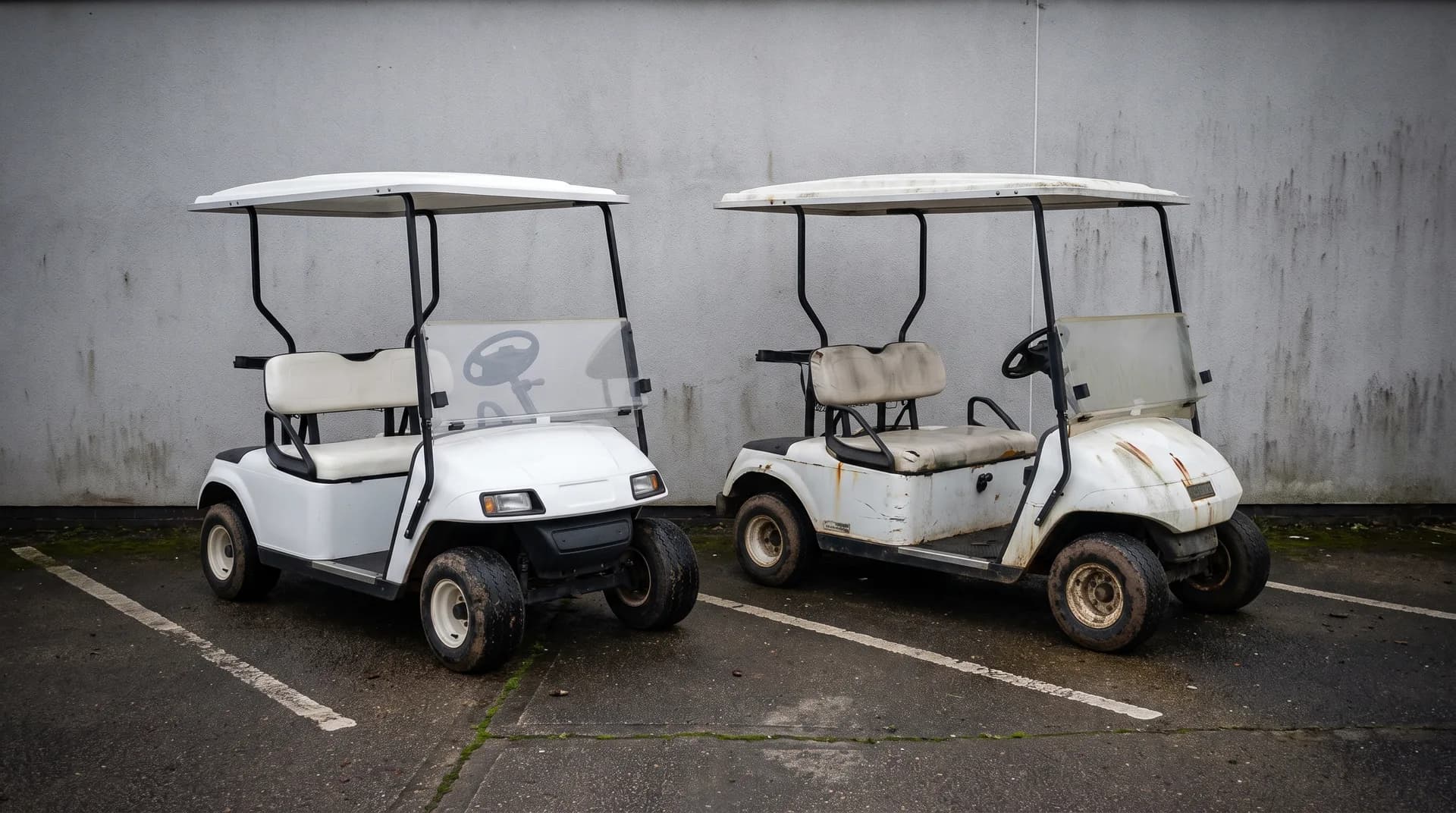
- Cosmetic condition is usually tired and structurally the vehicles are often excellent.
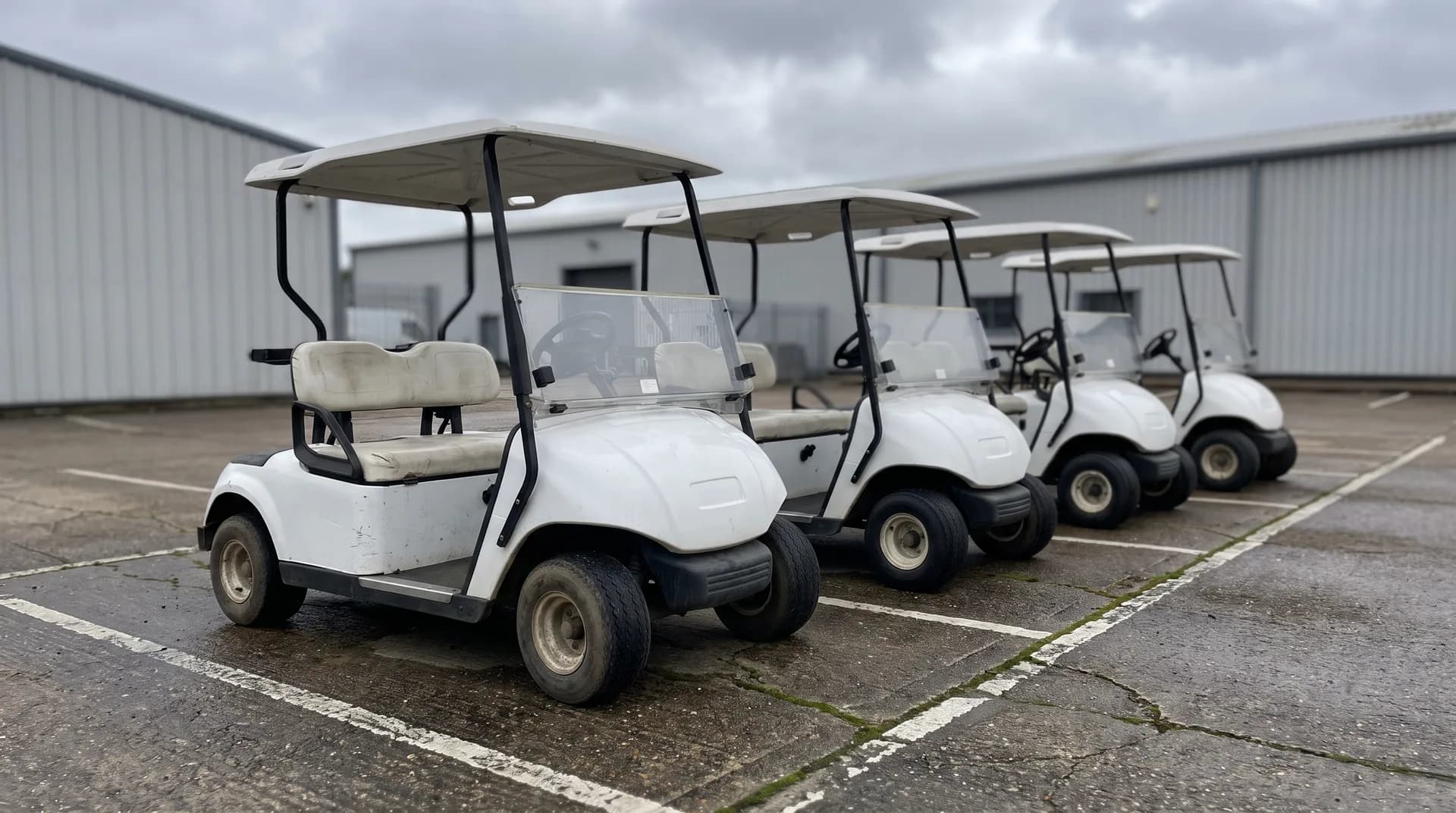
- For matched multi-vehicle purchases, ex-fleet is often the only practical route.
How fleet replacement works
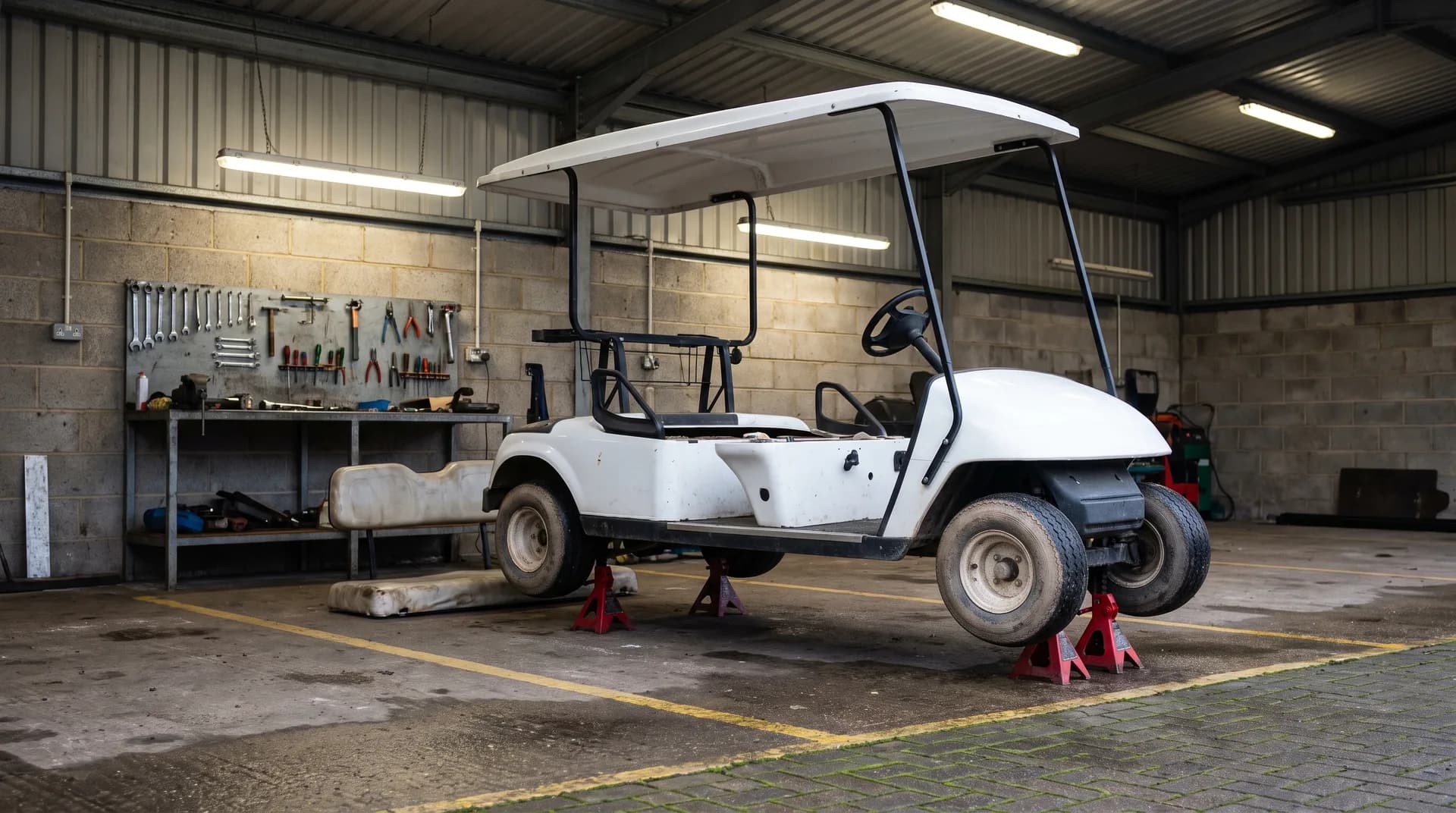
A golf club running a cart fleet is running a revenue-generating asset with a tee sheet attached, and reliability is not optional. That produces a specific maintenance culture: vehicles are serviced to a schedule rather than when something breaks, faults are fixed promptly because a vehicle off the road costs money every day, and the whole fleet is replaced or refreshed on a planned cycle rather than run into the ground. When those vehicles reach the end of that cycle they are still working, which is precisely why they are worth buying. The club is not disposing of a broken vehicle, it is disposing of a vehicle whose remaining life no longer suits a commercial fleet operation.
What condition actually means here
- Typical state
- Generally sound, regularly serviced
- What it costs you
- Little, if inspection confirms it
- Typical state
- Often at or near end of working life
- What it costs you
- The main budget item, plan for it
- Typical state
- Visibly worn, sun-faded
- What it costs you
- Modest and entirely optional
- Typical state
- Scuffs, faded paint, possible club livery
- What it costs you
- Cosmetic, cheap to improve
- Typical state
- Often part-worn
- What it costs you
- Predictable near-term spend
- Typical state
- Usually exists and is usually consistent
- What it costs you
- A genuine benefit over private stock
| Typical state | What it costs you | |
|---|---|---|
| Frame and running gear | Generally sound, regularly serviced | Little, if inspection confirms it |
| Battery pack | Often at or near end of working life | The main budget item, plan for it |
| Seats and trim | Visibly worn, sun-faded | Modest and entirely optional |
| Bodywork | Scuffs, faded paint, possible club livery | Cosmetic, cheap to improve |
| Tires and brakes | Often part-worn | Predictable near-term spend |
| Service history | Usually exists and is usually consistent | A genuine benefit over private stock |
The battery question, again
It is worth stating plainly because it explains the price. Clubs do not generally re-pack golf carts before selling them, because a new pack in a vehicle they are disposing of is money spent on someone else's asset. That means ex-fleet golf carts frequently arrive with original packs that have done a great many cycles, and the price reflects that. This is not a defect being concealed, it is a component being sold at the end of its life, and it is only a problem if you have not budgeted for it. Buy an ex-fleet vehicle at an ex-fleet price with a new pack costed in and the arithmetic usually works very well. Buy one expecting the pack to have years left and it usually does not.
Ex-demonstrator and ex-hire
Two adjacent categories are often lumped in with ex-fleet and behave differently. Ex-demonstrator vehicles have covered very little ground, generally carry a current specification and are cosmetically good, so they sit much closer to new on price and are usually the best condition available below new. Ex-hire vehicles have moderate hours but a very large number of different drivers, which shows up in the places drivers touch: pedals, steering, seat edges, and occasionally in impact damage that has been tidied rather than repaired. Ex-hire fleets are also usually specified robustly, which is a genuine advantage for a working site.
When ex-fleet is the right answer
Ex-fleet suits three situations particularly well. First, buyers who need a working vehicle rather than a presentable one: a grounds team, a farm, a working estate, a site where the cart earns its keep and nobody minds a scuff. Second, buyers who want the most vehicle for the money and are comfortable treating the battery as a separate purchase. Third, and most usefully, anyone buying several matched vehicles at once, because assembling six similar golf carts from private sales is slow and expensive whereas a single fleet disposal can supply them in one go with consistent specification and history.
When it is not
It is the wrong choice where presentation is part of the job. A hotel shuttling guests from the car park, a wedding venue, a resort front-of-house operation or any vehicle that carries your branding in front of customers is judged on appearance, and a tired ex-fleet cart undermines that daily. In those cases the sensible options are a refurbished vehicle prepared to a proper cosmetic standard, or new. Our guide to refurbished versus used golf carts sets out what refurbishment actually includes and what it is worth.
Frequently asked questions
Are ex-fleet golf carts worth buying?+
Often yes, particularly for working use. They are usually structurally sound and consistently serviced, and the low price reflects high hours and a battery pack near the end of its life rather than a hidden fault. Budget for the pack and the arithmetic usually works well.
How many hours does an ex-fleet cart have?+
It varies with the fleet and the replacement cycle, and hour meters are not always fitted or reliable. Judge by the wear points that cannot be tidied cheaply, such as the seat base, pedal rubbers and steering wheel, rather than by a recorded figure.
Do ex-fleet golf carts come with a warranty?+
Direct from a club or fleet operator, usually not, since they are typically sold as seen. Bought through a dealer who has inspected and prepared the vehicle, usually yes, and the terms vary so check whether the battery pack is included.
What is the difference between ex-fleet and ex-demo?+
Ex-fleet vehicles have worked hard in a commercial fleet and carry high hours. Ex-demonstrators have covered very little ground, usually carry a current specification and are cosmetically good, so they cost considerably more and sit close to new.
Can I buy several matching ex-fleet golf carts?+
Yes, and it is one of the strongest reasons to go this route. Fleet disposals come in batches with consistent specification and history, which is far easier and cheaper than assembling matched vehicles from separate private sales.
Need several vehicles at once?
We source ex-fleet and ex-demonstrator batches as well as single vehicles, inspect and prepare them, and report measured battery health on each one. Tell us how many you need and what they are for.
Related solutions
Ready to explore what we build?
See the vehicles and the setting this applies to, or get a tailored quote built around your site.
Ready to find the right golf cart?
Tell us how and where it will work and we will specify a vehicle and a tailored quote built around you. Every build comes with a 3-year warranty and a 24-hour priority call-out.
Our guides are written and reviewed by the Hawke Electric Vehicles team, the people who specify, build, deliver and support the vehicles. We focus on honest, practical advice and flag where a figure depends on the build rather than guessing.
More guides by Hawke