A marina is a long, thin site where almost everything has to be carried a considerable distance. Provisions, tools, spares, sails, luggage, staff and guests all move between a car park and a berth that may be a quarter of a mile away along a pontoon, and there is no shortcut. Add a boat show, which turns the same site into a temporary town with stands, hospitality, thousands of visitors and a compressed build period, and internal transport becomes the difference between a well-run site and a chaotic one. This guide covers cart hire at UK marinas and boat shows: the jobs the vehicles do, the specification points that are specific to waterside sites, and how salt air changes the aftercare conversation.
- Marina geography is linear, so distances are long and routes are narrow and shared with pedestrians.
- Load-carrying matters more than seat count for berth-holder and crew work.
- Pontoon access, width limits and weight limits are set by the marina and must be confirmed first.
- Salt air is corrosive: rinsing and aftercare are part of the arrangement, and the agreement should say so.
- Boat shows behave like exhibitions: a large build fleet stepping down to a small show-day fleet.
What golf carts do at a marina
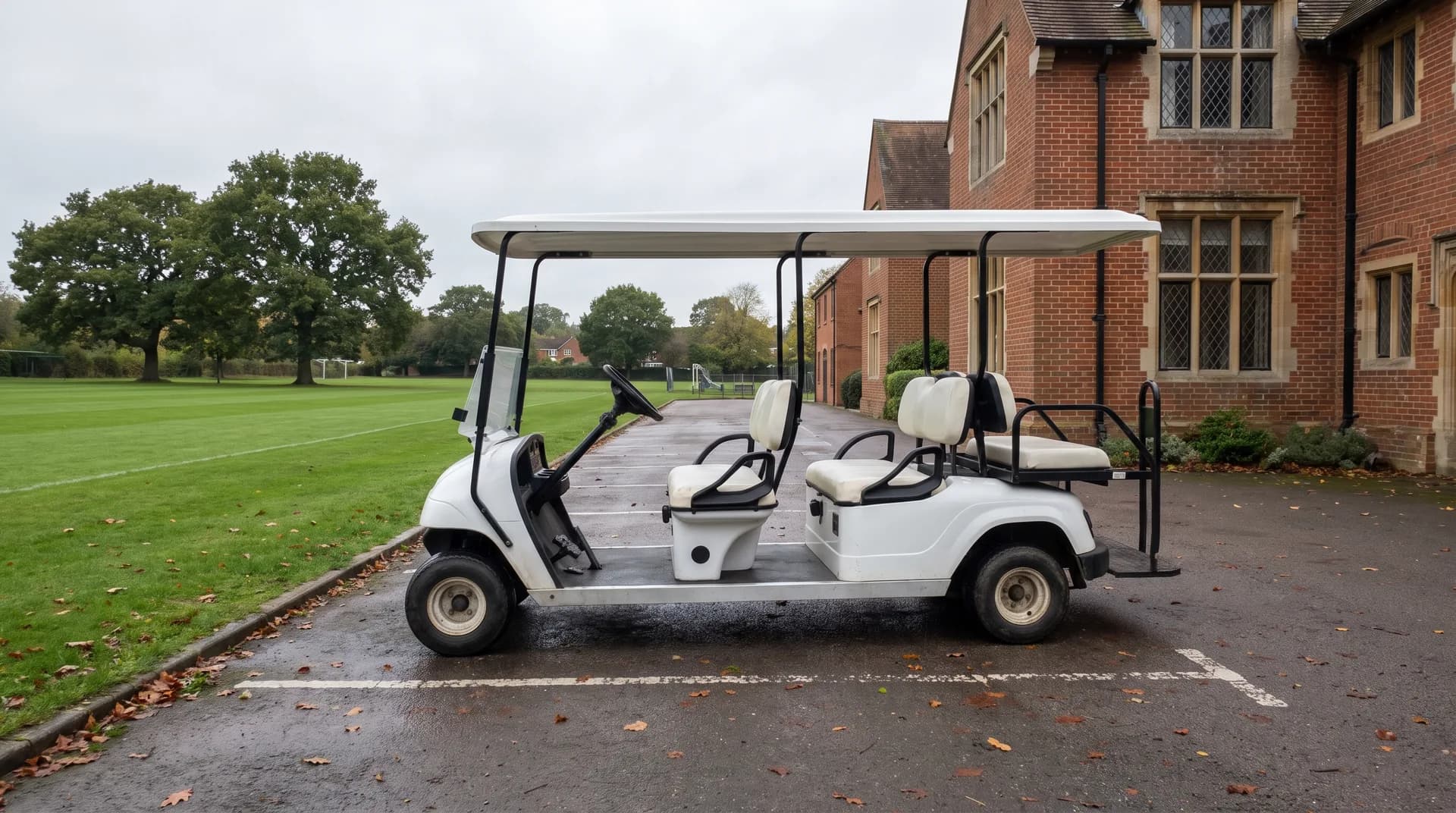
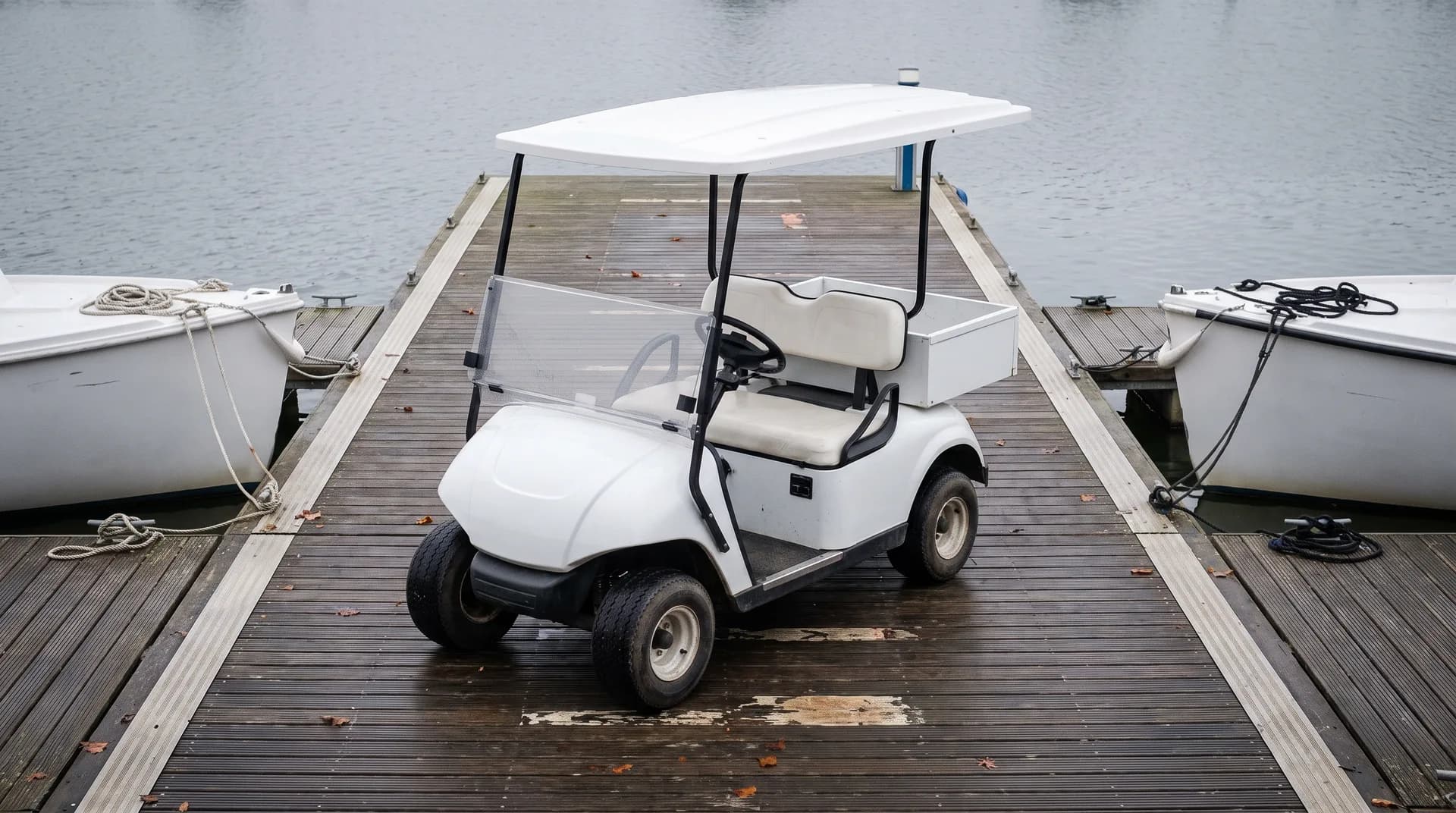
Three distinct jobs. Berth-holder and crew logistics is the everyday one: carrying provisions, water, fuel cans, luggage, tools, sails and spares between the car park and the berth, which is heavy work over a long distance and the reason many marinas already run some form of transport. Marina operations is the second: staff moving around the site, fuel berth and boatyard work, maintenance and moving equipment between pontoons and workshops. Guest and visitor movement is the third, which peaks at events, regattas and open weekends, and includes accessibility movement for people who cannot walk the full length of a pontoon system. Each wants something different: a load platform for the first, a robust utility vehicle for the second, and comfortable passenger seating for the third, which is why marinas that hire in for an event usually take a mixed fleet.
Access: confirm the marina's rules first
Marinas set their own rules about vehicles on pontoons, and they are usually specific. Expect limits on which pontoons may be used at all, since not all are constructed for vehicle loads; a stated weight limit that includes the load rather than just the vehicle; width limits, because pontoons and finger berths are narrow and there is water on both sides; speed rules, generally walking pace; and often a requirement that a vehicle stops for pedestrians rather than the other way round. Some marinas restrict vehicle movement entirely during busy periods. Get this in writing from the marina before you book the hire, because it determines the size and type of vehicle you can use and there is no negotiating it on the day. A vehicle that is 10 centimetres too wide for the main pontoon is useless however well specified it is otherwise.
- What it moves
- Provisions, luggage, tools, spares
- What to specify
- Load platform, compact width, easy loading height
- What it moves
- Staff, maintenance kit, fuel berth work
- What to specify
- Robust utility platform, all-day duty cycle
- What it moves
- Visitors, guests, accessibility runs
- What to specify
- Passenger seating, low step-in, weather protection
- What it moves
- Stand components, graphics, hospitality kit
- What to specify
- Mixed fleet, stepping down for show days
| What it moves | What to specify | |
|---|---|---|
| Berth-holder logistics | Provisions, luggage, tools, spares | Load platform, compact width, easy loading height |
| Marina operations | Staff, maintenance kit, fuel berth work | Robust utility platform, all-day duty cycle |
| Guest and visitor movement | Visitors, guests, accessibility runs | Passenger seating, low step-in, weather protection |
| Boat show build | Stand components, graphics, hospitality kit | Mixed fleet, stepping down for show days |
Salt air, and why aftercare is part of the deal
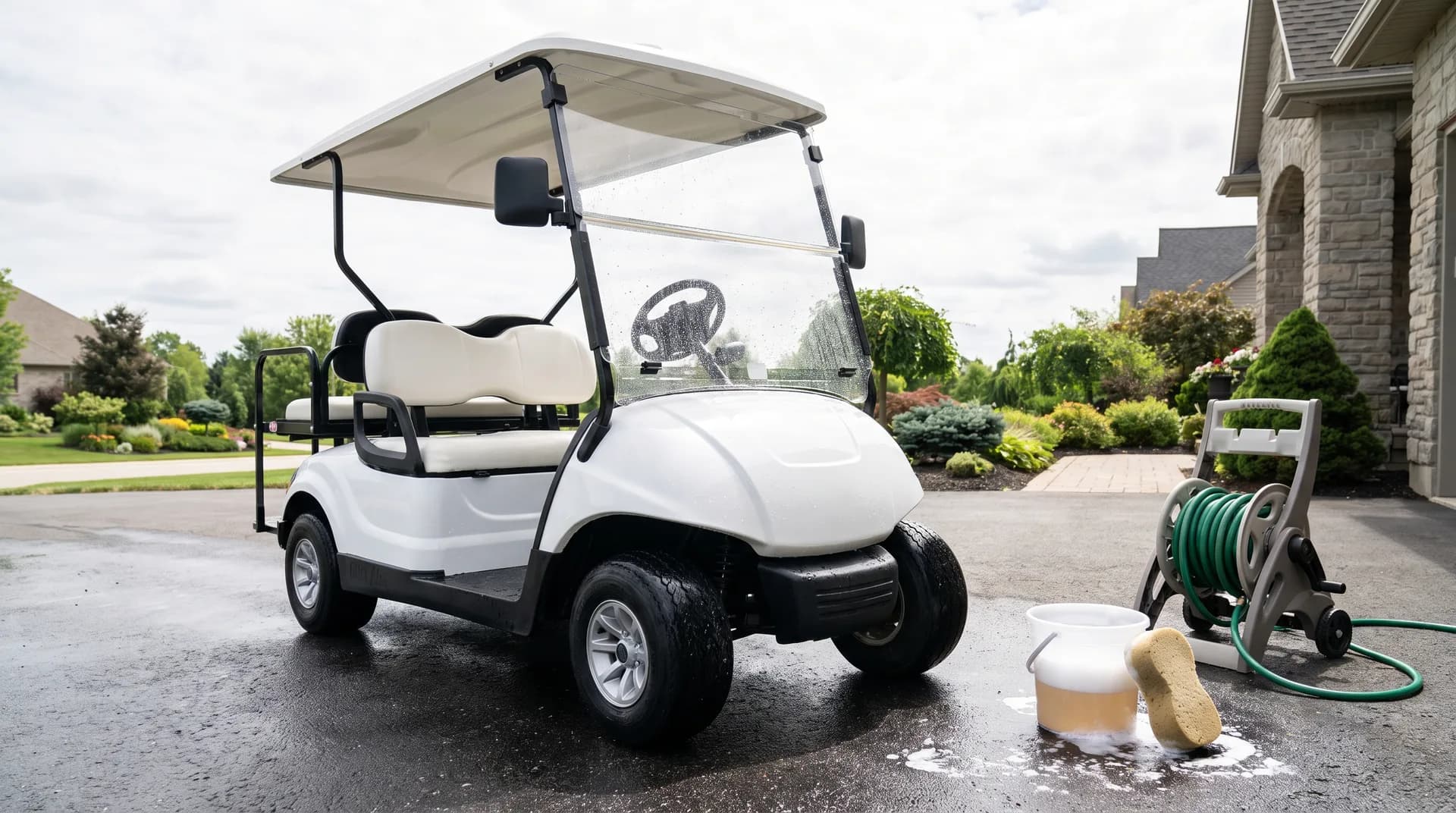
Salt is the one genuinely different variable at a waterside site. Salt-laden air and spray reach every part of a vehicle, and they attack fasteners, brake components, electrical connections and exposed metal far more aggressively than ordinary rain does. This is manageable, and marinas run vehicles successfully year-round, but it needs to be planned rather than discovered. On a hire, agree three things: what rinsing regime the supplier expects during the hire, typically a fresh-water rinse of the underside and lower bodywork on a defined cadence; whether that is your responsibility or theirs; and how salt-related condition is treated at collection, so a normal week beside the sea is not mistaken for neglect. On longer marina hires it is worth asking whether vehicles can be specified with additional protection from the start. Our cleaning guide sets out the routine.
Boat shows behave like exhibitions
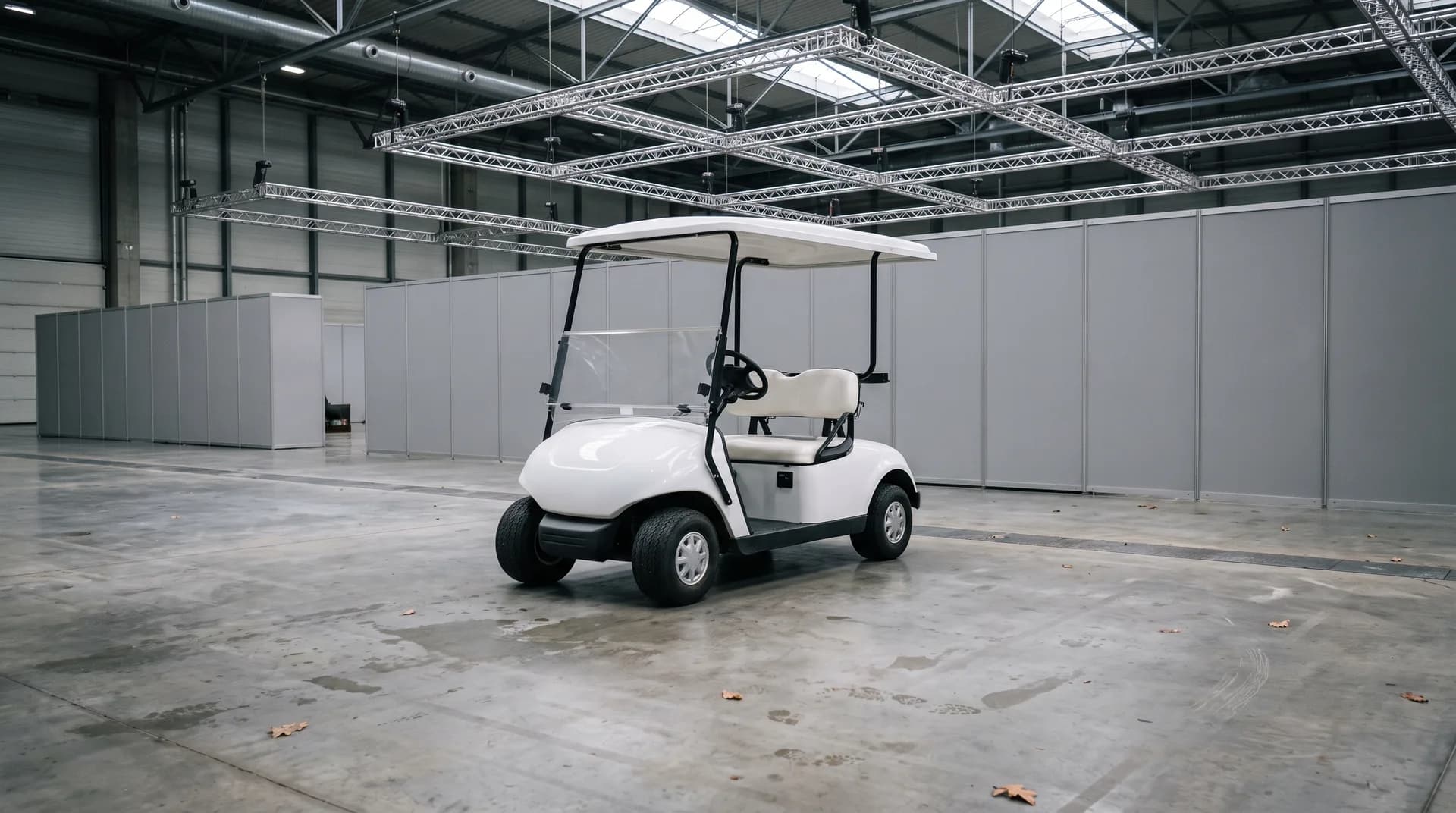
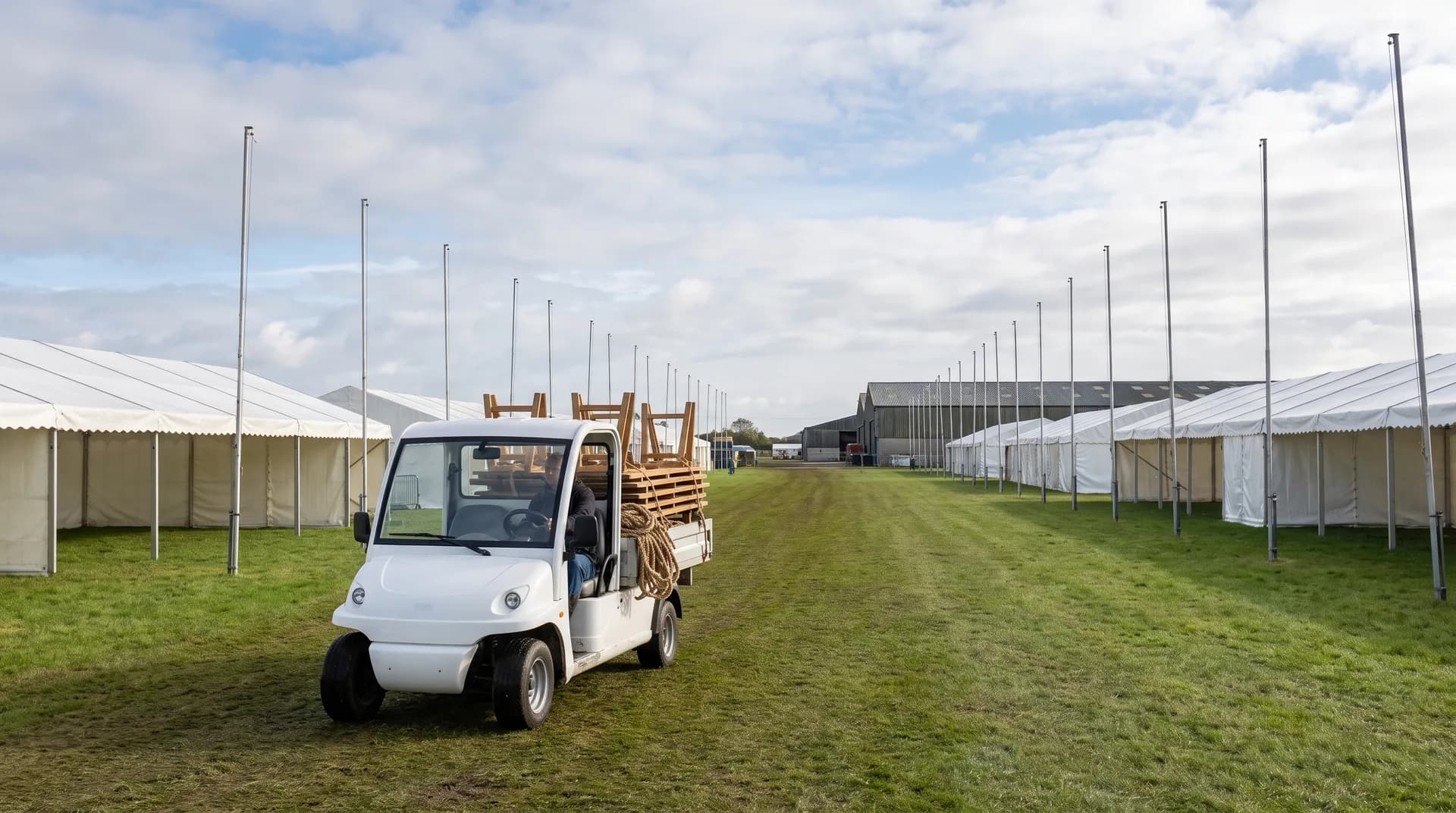
A boat show is closer to a trade show than to a marina's normal operation, and it should be planned like one. There is an intense build period when stands, hospitality units, marquees and displays go in against a hard deadline, a show period when visitor numbers are high and vehicle movement is restricted, and a fast breakdown. That points to a stepped hire: a larger fleet for build and derig, reducing to a small show-day fleet for organizer mobility, accessibility and VIP movement, with the surplus collected mid-hire. The same venue-rules discipline applies as at any exhibition venue: get the show's and the marina's vehicle regulations in writing early and pass them to your supplier, as our trade show guide sets out in detail.
Specifying a marina cart hire
Five pieces of information get you an accurate quote. The marina's vehicle rules, in writing, including width and weight limits. The longest route the vehicle will actually run, because marina distances are long and linear. The split between load-carrying and passenger work. The season, since a winter hire beside the sea is a different proposition from a July one. And whether it is everyday marina operation or an event, because the fleet shape differs completely. Send us those and we will specify vehicles that fit the pontoons, carry what you need and cope with the air, and set out the aftercare expectations plainly in your hire quote. Waterside venues that host the public year-round usually specify closer to our visitor attraction hire and resort park hire.
Frequently asked questions
Can you use golf carts on marina pontoons?+
On pontoons rated for vehicle loads, yes, and many marinas already do. The marina sets the rules, typically covering which pontoons may be used, a weight limit including the load, a width limit and a walking-pace speed rule. Confirm those in writing before booking, since they determine the vehicle.
What do marinas use golf carts for?+
Three jobs mainly: berth-holder and crew logistics carrying provisions, luggage and tools over long distances; marina operations including maintenance, boatyard and fuel berth work; and guest movement at events, including accessibility runs along pontoon systems that are too long for some visitors to walk.
Does salt air damage hire golf carts?+
Salt attacks fasteners, brake parts and electrical connections much faster than fresh water does. It is manageable with a regular fresh-water rinse of the underside and lower bodywork, but agree during the hire who is responsible for that and how salt-related condition will be treated at collection.
How should a boat show cart hire be structured?+
Like an exhibition hire: a larger fleet for the intense build period, stepping down to a small show-day fleet for organizer mobility, accessibility and VIP movement, with the surplus collected mid-hire. Get both the show's and the marina's vehicle rules early.
What size cart fits a marina pontoon?+
It depends entirely on the marina's stated width and weight limits, which vary between sites and between pontoons on the same site. Get the figures in writing before specifying, because a vehicle even slightly too wide for the main pontoon is unusable however well suited it is otherwise.
Waterside site or boat show?
Send us the marina's vehicle rules and the distances involved, and we will specify a fleet that fits the pontoons and copes with the air.
Related solutions
Ready to explore what we build?
See the vehicles and the setting this applies to, or get a tailored quote built around your site.

Ready to find the right golf cart?
Tell us how and where it will work and we will specify a vehicle and a tailored quote built around you. Every build comes with a 3-year warranty and a 24-hour priority call-out.
Our guides are written and reviewed by the Hawke Electric Vehicles team, the people who specify, build, deliver and support the vehicles. We focus on honest, practical advice and flag where a figure depends on the build rather than guessing.
More guides by Hawke