Golf cart turns on but won't move
Written by the Hawke Electric Vehicles Service Team
Quick answer
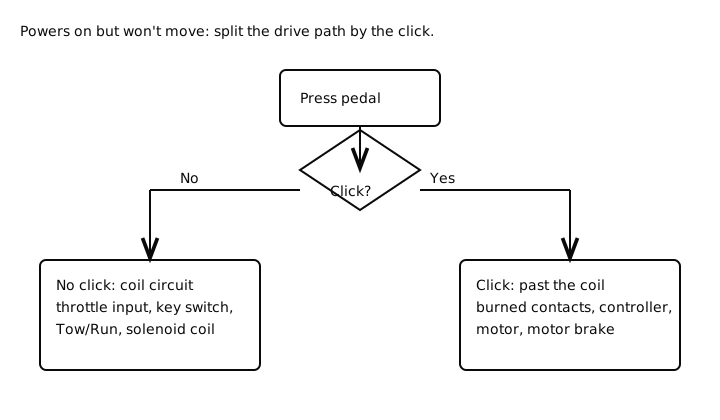
When the lights and meter come on but the cart will not drive, power is reaching the controls and the trouble is in the drive path. The fastest next step is to find out whether the solenoid clicks when you press the pedal: a click points toward burned contacts, the controller or the motor, and no click points toward the throttle input, key switch or solenoid coil. On some models a motor brake or the forward and reverse switch can also stop drive.
Tools needed
- Digital multimeter
- Safety glasses
- Insulated gloves
- Work light
Confirm the symptom
This guide is for a golf cart that powers up normally, with working dash lights and a battery meter reading, but will not move when you press the pedal. Since power clearly reaches the controls, the fault is in the drive path between the pedal and the wheels, and one simple observation cuts that path in half.
Press the pedal and listen for a click from the solenoid under the seat. A click means the coil is energized and the fault is past it, in the contacts, controller or motor: use Solenoid clicks but no movement. No click means the coil circuit is not completing, so the fault is in the throttle input, key switch, Tow/Run switch or the coil itself: use No click when pressing the pedal. This page gives you the whole map, including the causes that are not about the solenoid such as a motor brake or the forward and reverse switch, and it sends you to Testing and replacing a solenoid for the meter procedure.
1Confirm the cart really has power
Switch on and check the dash lights, battery meter and any warning indicators, then try both forward and reverse.
ExpectedLights and meter on with no drive either way confirms you are on the right guide. If it drives one direction only, use the forward and reverse fault guide instead.
2Listen for the solenoid click
With the Tow/Run switch in Run and the wheels chocked, press the accelerator and listen closely under the seat.
ExpectedOne firm click means the coil works, so focus on the contacts and controller. Silence means the coil is not energized, so focus on the throttle input and key switch circuit.
What causes it
| Cause | How common | How to confirm | Fix |
|---|---|---|---|
| Solenoid contacts burned (clicks, no drive) | very common | Voltage-test across the large terminals with the pedal held | How to test a golf cart solenoid |
| Throttle input worn or unplugged (no click) | common | Check the sensor output changes as the pedal moves | |
| Solenoid coil open or not energized (no click) | common | Measure coil resistance across the small terminals | How to test a golf cart solenoid |
| Forward and reverse switch or its micro-switches | occasional | Try both directions; check the switch contacts | |
| Motor brake engaged on models with one | occasional | Listen for a release click at key-on; check for a brake fault | How to reset a golf cart: step-by-step reset guide |
| Controller output stage or the motor | occasional | Clear the above, then read controller status where fitted | How to reset a golf cart: step-by-step reset guide |
Burned solenoid contacts
Burned solenoid contacts are the most common reason a powered-up cart will not move, and the giveaway is a healthy click with no drive. The coil pulls the contacts together, but years of arcing pit and coat them, so the large terminals stop passing current even with the solenoid closed. This is the click-but-no-drive case, and a quick meter check confirms it before you spend money.
3Measure voltage across the large terminals under load
With the wheels chocked and a helper holding the pedal so the solenoid stays closed, put the meter on DC volts across the two large terminals.
ExpectedGood contacts drop close to 0 V because current flows freely. Full pack voltage across the closed contacts means they are burned and blocking current, so the solenoid needs replacing.
The full procedure, including the coil test and safe replacement with the pack isolated, is in Testing and replacing a solenoid. A solenoid that burned once usually did so from arcing under a heavy or intermittent load, so make sure the main connections are tight when you install the new one.
A worn or unplugged throttle input
The throttle input is the sensor that turns pedal position into a signal the controller can use, and if it fails or unplugs the controller never asks for drive, so the solenoid never clicks. On Club Car models this is usually an MCOR sensor and on E-Z-GO models an inductive throttle sensor, but the rule holds across brands: no clean signal, no drive.
4Check the throttle signal changes with the pedal
With the meter on the sensor's signal wire, or the controller's diagnostic display where fitted, watch the reading as you press and release the pedal.
ExpectedA healthy sensor sweeps smoothly from rest to full pedal. A dead spot, a jump straight to full, or no change at all points at a worn sensor or a broken connection.
Reseat the connector first, since a throttle plug shaken loose is a common no-cost fix. If the signal is truly faulty, the sensor needs testing and replacing; the MCOR and inductive sensor guides cover the exact method for each.
A solenoid coil that is not energized
If the solenoid never clicks, the coil circuit is not completing. The coil can fail open, but more often the trouble is upstream in the small-terminal circuit that feeds it: the key switch, the throttle micro-switch, the Tow/Run switch or a broken wire. This is the no-click case, and measuring the coil directly is worth doing before chasing wiring.
5Measure the coil across the small terminals
With the pack isolated, disconnect the two small coil wires and read resistance across the small terminals.
ExpectedA good coil reads in the tens of ohms, with the exact number set by its voltage rating. An open reading, or a dead short, means the coil has failed and the solenoid needs replacing.
If the coil is fine but never sees voltage when the pedal is pressed, the fault is up the coil circuit, and the No click when pressing the pedal guide tests it from the pedal back. Testing and replacing a solenoid covers the coil measurement and the swap in full.
The forward and reverse switch
The forward and reverse switch picks direction, and its contacts or the small direction micro-switches behind it can wear or corrode. The classic sign is drive one way only, but a switch that has failed in the middle can leave the cart dead both ways while everything else looks fine.
6Try both directions and check the switch
Select forward and try the pedal, then select reverse and try again, noting whether either direction drives.
ExpectedDrive one way only points straight at the direction switch or its micro-switches. No drive either way keeps the switch on the list but does not confirm it, so keep working down the chain.
Worn direction switches are covered in the forward and reverse fault guide. Clean and reseat the connections first, since corrosion on the small direction contacts is a frequent and simple cause.
A motor brake on models fitted with one
Some carts use an electric motor brake that locks the motor until the controller releases it at key-on. On E-Z-GO RXV models with a motor brake, a fault in that circuit can hold the brake on, so the cart has power and the controls respond but the drive is physically held. It usually arrives with beeping or a fault indication rather than silence.
7Listen for the brake release and check for a fault
At key-on, listen for a click or clunk as the motor brake releases, and note any beeping or fault code.
ExpectedNo release click, a dragging feel and a beep point at the motor brake circuit. A clean release with no fault takes the brake off the list.
Motor brake faults on these models are an advanced job because the brake, its wiring and the controller all interact, so if the release is missing this is the point to call an engineer rather than force the vehicle.
The controller output or the motor
The controller and motor come last because they are the least likely and the most involved to test. A controller with a failed output stage, or a motor with worn brushes or an internal fault, can leave a powered cart unable to move even when the solenoid closes and the throttle signal is clean. A no-drive that survives every check above is where they finally earn attention.
8Read controller status and check the motor circuit
Note any controller fault code where fitted, and with the pack isolated, check the motor cables and terminals for looseness or burning.
ExpectedA fault code names where to look; a healthy solenoid and clean throttle signal with no drive and no code points at the controller output or the motor. Many controllers also respond to a reset first.
Try a controller reset before condemning it, using the reset procedures guide, because a latched fault can look like a dead controller. Past that, controller and motor diagnosis needs care with stored voltage and heavy current, and is a job for a technician.
When to get professional help
Get professional help if the solenoid contacts test burned and you would rather not replace the unit, if a motor brake will not release, if the fault points at the controller output or the motor, or if the cart has tried to lurch during testing. These are all good reasons to hand it over, and diagnosing the drive path in order costs far less than replacing a solenoid, a controller and a motor one after another hoping to hit the fault.
Common questions
The lights work but my cart won't move. Where do I start?
Start by pressing the pedal and listening for a click under the seat. A click means the solenoid coil works and the fault is past it, in the contacts, controller or motor. No click means the coil circuit is not completing, so the throttle input, key switch and coil come first.
What does it mean if the solenoid clicks but the cart still won't move?
It means the coil is pulling the contacts together but current is not crossing them, so the contacts are almost certainly burned. Measuring voltage across the two large terminals with the pedal held confirms it: good contacts read near 0 V, burned ones show full pack voltage. The solenoid testing guide covers the check and the replacement.
Can the throttle sensor stop the cart moving completely?
Yes. If the throttle input fails or unplugs, the controller never receives a request for drive, so it never energizes the solenoid and the cart stays put. Reseat the connector first, then confirm the signal changes smoothly as the pedal moves.
Why does my cart only drive in one direction?
Drive one direction only points at the forward and reverse switch or the small direction micro-switches behind it, where worn or corroded contacts break one side of the circuit. Cleaning and reseating the connections fixes many of these before any part is replaced.
What is the motor brake and why would it stop drive?
Some models use an electric motor brake that locks the motor until the controller releases it at key-on. If that circuit faults, the brake stays on and holds the drive even though the controls respond, usually with beeping. It is an advanced repair for a technician.
Is it safe to keep pressing the pedal to test it?
Only with the wheels chocked and everyone clear of the path of travel, because the cart can lurch the instant the fault clears. Set the Tow/Run switch to Tow for any hands-on work past meter probing, and keep tools away from the pack terminals.
Did this fix it?
Every guide is written from manufacturer service documentation and workshop practice, then reviewed before publication. Read how we write and review our repair guides.