How to check and replace a golf cart wheel bearing
Written by the Hawke Electric Vehicles Service Team
Quick answer
Checking a golf cart wheel bearing means jacking the wheel and feeling for play while listening for noise; replacing one means pulling the hub, driving out the old bearing races, installing new bearings packed with grease, then setting the preload with the castle nut per your manual. It is an advanced job of one to two hours per wheel with a jack, hand tools and a new bearing set.
Tools needed
- Floor jack
- Jack stands
- Wheel chocks
- Socket and wrench set
- Pliers for the cotter pin
- Soft drift and hammer
- Bearing grease and a tray
- Torque wrench
- Clean rags and brake cleaner
Parts needed
- Matching wheel bearing set, inner and outer
- New bearing races or cups where fitted
- New grease seal
- New cotter pin
- Wheel bearing grease
What this fixes
A worn wheel bearing tips its hand with a rumble or growl that climbs with speed, a wheel that feels loose and rocks at the top and bottom, a hum or grinding from one corner, or heat and play after a drive. Ignored, a failing bearing can seize or let the wheel wander, so checking and replacing it restores a wheel that turns quietly and runs true with no play. This procedure covers the wheel bearings, races and grease seal on a non-driven hub; a bearing inside a sealed transaxle on the driven axle is a different, heavier job.
Tools and parts
Parts
- Wheel bearing set, inner and outer, matched to your hub
- see your parts list for the bearing numbers
- New bearing races or cups, where they are a separate press fit
- New grease seal
- New cotter pin and fresh wheel bearing grease
You will want a floor jack, jack stands, wheel chocks, a socket and wrench set, pliers for the cotter pin, a soft drift and hammer, bearing grease and a tray to pack it, a torque wrench and clean rags with brake cleaner. This lands in the advanced range because it involves setting the bearing preload correctly, and it runs one to two hours per wheel. Torque and preload figures vary by model, so set the castle nut and any hub fasteners to your manual, not to a number borrowed from another vehicle.
How to do it
1Check for play and noise first
With the wheel jacked and on stands, grab it at the top and bottom and rock it, then at the sides, then spin it and listen. This confirms the bearing is the problem before you tear anything down.
ExpectedA good bearing spins quietly with no rock at the top and bottom; noticeable play, rumble or grinding confirms a worn bearing
2Pull the wheel and the dust cap
Take the wheel off, then pry off the dust cap or grease cap at the center of the hub to expose the castle nut and cotter pin.
ExpectedThe castle nut, its cotter pin and the end of the spindle are exposed
3Remove the cotter pin, nut and hub
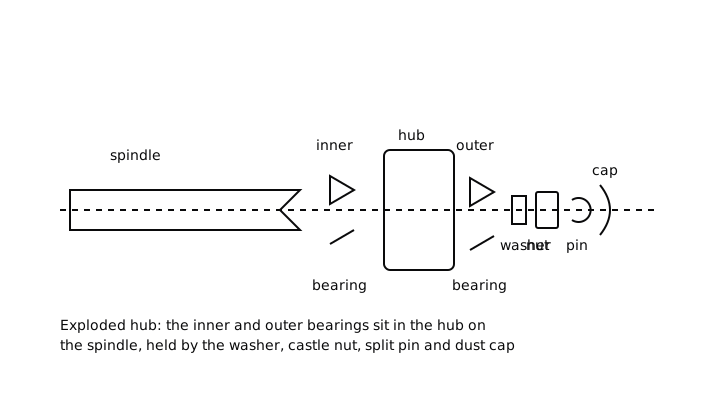
Straighten and pull the cotter pin, back off the castle nut and washer, then draw the hub off the spindle. The outer bearing usually falls into your hand as the hub comes forward, so catch it.
ExpectedThe hub is off the spindle and the outer bearing is out; the inner bearing stays in the hub behind the grease seal
4Remove and inspect the bearings and races
Pry out the grease seal, take out the inner bearing, and inspect both bearings and their races for pitting, scoring, blue heat marks or a rough feel. If the races are a separate press fit and worn, drive them out of the hub with the drift, working evenly around them.
ExpectedAny bearing or race that is pitted, scored, blued or rough gets replaced; a bearing and race are always renewed together as a matched pair
5Pack the new bearings and reassemble
Drive in the new races if fitted, work fresh grease all the way into the rollers of each new bearing until it fills the cage, set the inner bearing and install a new grease seal, then refit the hub, the outer bearing, the washer and the castle nut.
ExpectedBoth bearings are fully packed with grease and seated, a new seal is in, and the hub is back on the spindle
6Set the preload with the castle nut
Go by your manual: usually you tighten the castle nut while turning the hub to seat the bearings, then back it off and retighten to the specified preload, and line up a slot with the hole for a new cotter pin.
ExpectedThe hub turns freely with no rock and no roughness, the nut is at the manual preload, and a new cotter pin is installed and spread
Check it worked
7Recheck play, then road test
Refit the dust cap and wheel, torque the lug nuts to your manual, lower the cart and recheck for play by rocking the wheel, then take a short test drive and feel and listen at the hub.
ExpectedNo play at the wheel, the hub runs cool, and the rumble or grinding is gone on the test drive; any leftover noise or heat means the preload or a bearing needs another look
When to get professional help
Get a professional if the spindle or axle is worn, scored or bent, if the bearing race will not come out cleanly, if the bearing is part of a sealed transaxle, or if you are not confident setting the preload, because a bearing set too tight overheats and one set too loose lets the wheel wander. Both extremes are unsafe. A wrongly installed wheel bearing can fail on the road, so if any part of the teardown goes sideways, hand it over rather than guess at the preload.
Common questions
How do I know a wheel bearing is worn?
Jack the wheel, hold it at the top and bottom and rock it: any play points to a worn bearing. Then spin the wheel and listen for a rumble, growl or grinding. On the road a failing bearing gives a hum or rumble that climbs with speed, often from one corner.
Can I just add grease instead of replacing the bearing?
Repacking with grease is part of the job and can stretch the life of a bearing that is still smooth, but it will not fix one that is already pitted, scored or noisy. Once a bearing is damaged, grease only hides it for a while, and the bearing and its race need replacing together.
Do I replace the bearing and the race together?
Yes. A bearing and its race wear as a matched pair, so fitting a new bearing onto a worn race, or the reverse, wears the new part fast. Where the race is a separate press fit, drive the old one out and install the new race with the new bearing.
How tight should the castle nut be?
No single number fits every cart, so use your manual. The common method is to tighten the nut while turning the hub to seat the bearings, back it off, then set the specified preload and install a new cotter pin. Too tight overheats the bearing; too loose lets the wheel rock.
What does it cost to have a shop do a wheel bearing?
That varies with the cart and your area, so it is not a number to pin down here. What is worth noting is that a seized or collapsed bearing can chew up the spindle and hub, which turns a bearing job into a bigger repair, so it is cheaper caught early.
Which grease should I use?
Use a proper wheel bearing grease, worked right into the rollers until it fills the cage, not a general purpose grease. Pack the bearing fully rather than smearing the outside, because the grease that counts is the grease held between the rollers and the race.
Did this fix it?
Every guide is written from manufacturer service documentation and workshop practice, then reviewed before publication. Read how we write and review our repair guides.