How to fix a golf cart flat or slow puncture
Written by the Hawke Electric Vehicles Service Team
Quick answer
Fixing a golf cart flat or slow leak begins with finding where the air gets out: the bead where the tire meets the rim, the valve, or a puncture in the tread. Soapy water shows the leak as bubbles, and the repair follows the source, whether that means reseating the bead, replacing the valve, or plugging or sealing a tread puncture. It is a moderate job of 30 to 60 minutes with a jack, a pump and a plug or sealant kit.
Tools needed
- Floor jack
- Jack stands
- Wheel chocks
- Foot or powered pump with a gauge
- Pressure gauge
- Spray bottle of soapy water
- Valve core tool
- Tread plug kit
Parts needed
- Replacement valve core
- Replacement valve stem
- Tread plugs
- Tubeless sealant
- Replacement inner tube where one is fitted
What this fixes
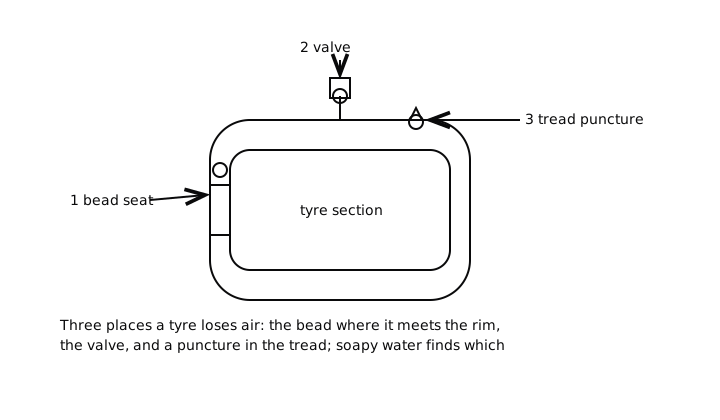
This procedure covers a cart tire that is flat, going soft overnight, or bleeding down slowly over a few days. Those symptoms trace to one of three places: the bead, where the tire meets the rim and where dirt, corrosion or an impact breaks the seal; the valve, which leaks through a loose or dirty core or a cracked stem; or the tread and sidewall, where a screw, thorn or piece of gravel has punched a hole. Finding and fixing the source gives you back a tire that holds air and rolls true. A repair suits a small tread puncture; a split sidewall, a torn bead or a large hole calls for a new tire.
Tools and parts
Parts
- Replacement valve core and, if the stem is cracked, a new valve stem
- Tread plugs for a tubeless tire
- Tubeless sealant for small punctures
- Replacement inner tube, where the tire runs a tube
Gather a floor jack, jack stands, wheel chocks, a pump with a gauge, a separate pressure gauge, a spray bottle of soapy water, a valve core tool and a tread plug kit. This is a moderate job that runs 30 to 60 minutes. Set your target pressure from the sidewall of the tire: cart tires usually run somewhere around 15 to 25 psi, but the number molded into the sidewall is the one to follow, not any general range.
How to do it
1Lift the wheel and air it up
Chock the wheels staying down, jack the cart and lower it onto jack stands, then inflate the soft tire to its sidewall pressure so there is enough air to show the leak.
ExpectedThe wheel is safely off the ground and holding enough air to reveal where it escapes
2Find the leak with soapy water
Spray soapy water around the valve, all the way around the bead on both sides of the wheel, and across the tread and sidewall while you turn the wheel slowly. Bubbles grow wherever air gets out.
ExpectedA clear stream of bubbles pinpoints the source as the valve, the bead or a tread puncture, which sets the repair
3If it is the valve, deal with the valve
For a leak at the valve, first snug the core with the valve core tool and retest. If it still leaks, back the core out and replace it; if the rubber stem is cracked or dry-rotted, the stem itself needs replacing, which means breaking the bead.
ExpectedNo more bubbles at the valve once the core is tightened or replaced, or a stem confirmed as the culprit
4If it is the bead, reseat and clean it
For a bead leak, deflate the tire, break the bead, and clean the rim seat and the tire bead of dirt and corrosion, then refit and reinflate so the bead pops back onto its seat. A smear of soap on the bead helps it seat.
ExpectedThe bead seats evenly all the way around with an audible pop, and soapy water shows no bubbles along the rim
5If it is a tread puncture, plug or seal it
For a small hole in the tread, pull the object, ream the hole and push in a plug from the kit, or for a very small hole add tubeless sealant through the valve and drive to spread it. Do not plug a hole in the sidewall or one larger than the kit allows.
ExpectedThe plug sits tight with the tails trimmed, or the sealant stops the leak; soapy water over the repair shows no bubbles
6Set the pressure and drop it down
Reinflate to the sidewall pressure, checked on a separate gauge, then lower the cart off the stands.
ExpectedThe tire reads its correct sidewall pressure and the cart is back on the ground
Check it worked
7Recheck the pressure after a day
Note the pressure now, then check it again after a day or two of sitting.
ExpectedThe pressure holds within a psi or two, which confirms the leak is fixed; a further drop means a second leak or a repair that did not hold, so run the soapy water test again
When to get professional help
Get professional help if the leak is in the sidewall, if the bead will not seat or hold, if the tire is split, bent or badly dry-rotted, or if you do not have the gear to break a bead safely. Sidewall damage cannot be repaired reliably, and a bead that keeps leaking often means a corroded or damaged rim that needs cleaning up or replacing. If the same tire keeps going flat after a good repair, there may be a second puncture or a slow rim leak that a proper tire machine will find.
Common questions
What pressure should a golf cart tire be?
Follow the pressure molded into the sidewall of your tire, which is the number that matters for your cart and tire. As a rough guide cart tires often sit around 15 to 25 psi, but read the sidewall instead of leaning on that range, and check all the tires cold.
How do I find a slow leak?
Air up the tire, then spray soapy water around the valve, along the bead on both sides and over the tread and sidewall while you turn the wheel. Air escaping anywhere blows bubbles, which tells you right away whether the leak is the valve, the bead or a tread puncture.
Can I plug a golf cart tire myself?
A small puncture in the tread can usually be plugged with a plug kit or sealed with tubeless sealant. What you should not plug is a hole in the sidewall or one too big for the kit, because those repairs do not hold and the tire needs replacing.
Why does my tire leak at the rim?
A leak at the bead, where the tire meets the rim, is usually dirt or corrosion on the rim seat breaking the seal, or a bead that never seated cleanly. Deflating, breaking the bead, cleaning the seat and reseating the tire fixes most bead leaks; a damaged rim needs replacing.
Is sealant or a plug better for a puncture?
They fit different holes. Sealant works well for very small punctures and weeping leaks and goes in through the valve. A plug is better for a defined hole from a screw or nail. Neither replaces a new tire once the damage reaches the sidewall or the hole is large.
How long can I drive on a plugged tire?
A properly installed plug in the tread can last a long time on a low-speed cart, but treat it as a repair to watch rather than forget. Recheck the pressure often, and if the plug weeps or the tire keeps losing air, have the tire inspected or replaced.
Did this fix it?
Every guide is written from manufacturer service documentation and workshop practice, then reviewed before publication. Read how we write and review our repair guides.