How to set golf cart toe alignment (DIY)
Written by the Hawke Electric Vehicles Service Team
Quick answer
Setting golf cart toe alignment at home means measuring the gap across the front of the two front tires and across the rear of them, then adjusting the tie rods until the front edges sit a little closer than the rear edges, which is a slight toe-in. It is a moderate job of 45 to 90 minutes with a straightedge or a length of string, a tape measure and basic wrenches, and it cures uneven tire wear and wandering steering.
Tools needed
- Tape measure
- Straightedge or a length of string
- Chalk or a marker
- Wrenches for the tie rod locknuts
- Penetrating oil
- Pressure gauge and pump
- Jack stands where lifting is needed
Parts needed
- Tie rod ends, only if a joint is worn
- Replacement locknuts where seized
What this fixes
Toe alignment is how much the front wheels point inward or outward seen from above. When it is off, it shows up as tires wearing faster on one edge, feathered tread, steering that wanders or pulls to one side, or a steering wheel that sits off center when the cart runs straight. Setting a small, even toe-in brings back steady, straight steering and spreads tire wear evenly. This procedure sets toe on a cart with adjustable tie rods; it does not fix worn steering joints, bent parts or a fault in the rack, which all have to be handled before an alignment will hold.
Tools and parts
Parts
- Tie rod ends, only if a joint turns up worn during the checks
- Replacement tie rod locknuts, where the originals are seized
You will need a tape measure, a straightedge or a length of string, chalk or a marker, wrenches for the tie rod locknuts, penetrating oil, and a pressure gauge and pump to set the tires first. This is a moderate job of 45 to 90 minutes, and its accuracy comes from careful, repeatable measuring rather than special tools. Your manual gives the target toe figure for your model; where it does not, aim for a small toe-in rather than dead straight or any toe-out.
How to do it
1Prep the cart and set the tires
Park on firm level ground, set all four tires to their correct sidewall pressure, and check the tie rod ends for play by rocking each front wheel side to side. Roll the cart forward a few feet and let it settle so the suspension and steering find their natural position.
ExpectedCorrect, even tire pressures, no play in the steering joints, and the cart settled on level ground
2Center the steering and mark the tires
Set the steering straight ahead with the steering wheel centered. With chalk, mark a point at spindle height on the front face of each front tire, then measure and mark the matching point on the rear face at the same height, so the front and rear readings come off the same spots on the tire.
ExpectedA matched pair of marks front and rear on each tire, all at the same height, so the two measurements compare like with like
3Measure across the front and the rear of the tires
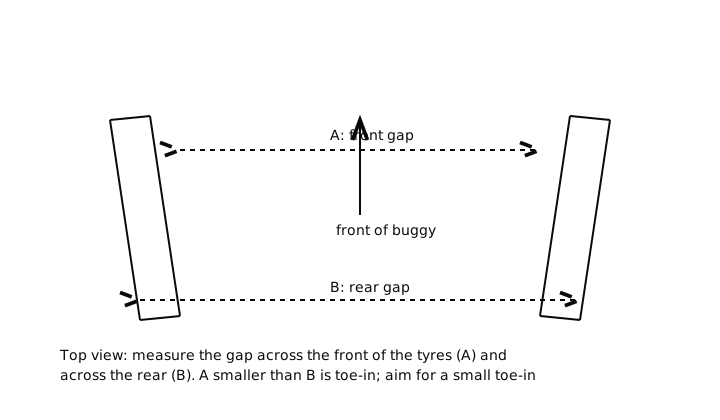
With the string or straightedge and tape, measure the distance between the marks across the front of the two front tires, then across the rear of them. Take each measurement at the same height off the ground.
ExpectedTwo numbers: the gap across the front edges and the gap across the rear edges of the tires
4Read the toe from the two numbers
Compare the figures. If the front gap is smaller than the rear gap, the wheels toe in; if it is larger, they toe out; if they match, toe is zero. You want a small toe-in, so the front figure should come out a little smaller than the rear.
ExpectedA clear reading of toe-in, toe-out or zero, and how far it sits from the small toe-in you want or the figure in your manual
5Adjust the tie rods
Loosen the tie rod locknuts, then turn the tie rod adjusters to change their length and bring the front figure to a little under the rear. Adjust both sides evenly so the steering wheel stays centered, turning in small amounts and remeasuring between adjustments.
ExpectedThe front measurement drops to a small toe-in relative to the rear, with equal adjustment on each side
6Lock it off and settle
Hold each adjuster still and tighten its locknut, then roll the cart forward and back and let it settle again to shed any bias you introduced while measuring.
ExpectedThe locknuts are tight, the adjusters have not moved, and the cart has resettled on its suspension
Check it worked
7Remeasure and road test
Take the front and rear measurements again after settling, confirm the small toe-in has held, then drive a short straight stretch with a light grip on the wheel.
ExpectedThe toe reading is still a small toe-in, the cart tracks straight without wandering or pulling, and the steering wheel sits centered; if it pulls or the wheel is off center, recheck the measurements and the side-to-side balance
When to get professional help
Get professional help if you find play in a tie rod end or steering joint, if a locknut or adjuster is seized, if the cart still wanders or wears tires unevenly after a correct toe setting, or if a part looks bent. Toe is only one piece of alignment, and steering that pulls after a good toe setting can point to a bent axle, a suspension fault or a side-to-side difference that needs proper alignment equipment. Setting toe around a worn joint never holds, so worn parts come first.
Common questions
What is toe on a golf cart?
Toe is how much the front wheels point inward or outward seen from above. Wheels closer together at the front than the rear are toed in; closer at the rear are toed out; equal is zero toe. A small toe-in is the usual target because it keeps steering steady and tire wear even.
How much toe-in should I set?
Use the figure in your manual where there is one. Where there is not, aim for a small toe-in, so the front of the tires sits just closer together than the rear, rather than setting the wheels dead straight or with any toe-out. Small and even is the goal, measured the same way each time.
Can I really align a cart with string?
For toe, yes. Toe is a comparison of two measurements, the gap across the front of the tires and the gap across the rear, so a straightedge or string and a tape measure are enough if you measure carefully at the same height and points. Camber and caster take more, but toe is the setting that drives most tire wear.
Why do my front tires wear on one edge?
Uneven edge wear on the front tires is a classic sign of incorrect toe. Too much toe-in or toe-out scrubs the tire sideways as it rolls, wearing one edge faster. Setting a small, even toe-in usually cures it, as long as the steering joints are not worn.
Should I check tire pressures first?
Yes, always set the tires to their correct sidewall pressure before measuring toe. A soft tire changes shape and height and throws the reading off, and uneven pressures pull the cart to one side, which can look like an alignment fault when it is not.
Why is my steering wheel off center after I set the toe?
An off-center steering wheel after a toe adjustment usually means one tie rod got turned more than the other. Adjust both sides evenly to keep the wheel centered while holding the same total toe, turning a little on each side and remeasuring until the toe is right and the wheel sits straight.
Did this fix it?
Every guide is written from manufacturer service documentation and workshop practice, then reviewed before publication. Read how we write and review our repair guides.