How to jack up a golf cart safely
Written by the Hawke Electric Vehicles Service Team
Quick answer
Raise a golf cart on firm, flat ground with the drive system in Tow, the key out and the down-side wheels chocked. Lift under a solid frame rail or axle near the corner you need up, then transfer the weight onto jack stands rated for the load before any part of you goes underneath. A floor jack lifts the cart but must never hold it, and stacked wheels or wood are not a substitute for stands.
Tools needed
- Trolley or bottle jack
- Two jack stands rated for the load
- Wheel chocks
- Timber pad for soft ground
- Work gloves
Confirm you need to raise it
Plenty of cart jobs do not need a wheel off the ground at all. Checking tire pressures, testing brake pedal feel, topping off battery water and most electrical diagnosis are all done with the cart on the floor. Raising it adds risk, so lift only when the job truly needs the wheel free: pulling a wheel, working on a hub, brake or bearing, or reaching a drive component from below.
If the task is a wheel or brake job, the guides on those repairs will tell you which corner to raise and how far. This page is the shared reference they point back to for the lifting itself. Before you start, set the drive system to Tow, remove the key and confirm the cart cannot move under power; the guide on working safely on your cart covers that isolation in full.
Which corner to raise for the job
Match the lift to the task instead of hoisting the whole cart into the air. Raising a single corner is faster, steadier and needs fewer stands than lifting a whole axle, and most jobs only need one wheel free. The table below maps the common jobs to what actually has to leave the ground.
| Cause | How common | How to confirm | Fix |
|---|---|---|---|
| Remove or refit one wheel | very common | Raise that single corner until the wheel clears; one stand under the frame at that corner | |
| Brake, hub or wheel bearing on one side | very common | Raise that corner; support on one stand and leave the opposite wheels chocked | |
| Both wheels on one axle, for example a rear brake pair | common | Raise the axle centrally, then place a stand under each side of that axle | |
| Underbody inspection or drive component access | occasional | Raise the relevant end and support both corners on stands before going underneath | |
| Rotating the wheels freely, for example to check runout | occasional | Raise and support the end you are checking so both wheels spin clear |
Set up on firm, flat ground
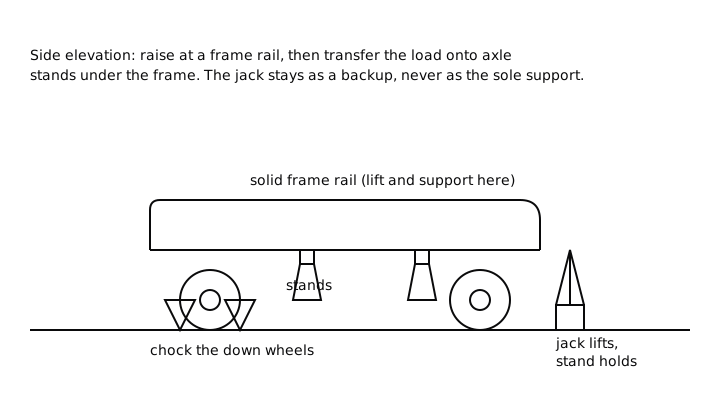
Where you lift matters as much as how. Choose a hard, level surface: concrete or asphalt, not grass, gravel or a slope. Soft ground lets a jack or stand sink and tip, and a slope lets the cart roll off the lift. If you have no choice but a slightly soft surface, spread the load with a broad wood pad under the jack and each stand, and walk away from the job rather than improvise on ground you do not trust.
1Chock the wheels that stay down
Before lifting, set chocks tight against the front and back of at least one wheel that will stay on the ground, on the opposite corner or axle to the one you are raising.
ExpectedThe cart does not roll or rock when you push it. On any hint of movement, stop and re-chock before lifting
Where to place the jack: the frame, not the floor pan
Jack points on golf carts are not always marked, and they vary between models, so the safe rule is to lift only under something solid: a main frame rail, a cross member, or the axle tube itself. Never lift under a plastic or thin-metal floor pan, a body panel, the battery tray or a suspension arm designed to move, because those will bend or crack under the load. If your cart has an owner's manual, check it for the manufacturer's stated jacking and support points and use those first.
2Find a solid lift point near the corner
Feel along the underside near the wheel you want to raise for a substantial frame rail or the axle tube. Set the jack pad squarely under it, with a wood pad between the jack and the frame to spread the contact.
ExpectedA firm, flat metal surface that does not flex when you press it is a lift point. Anything that bends, or that is bolted on rather than part of the structure, is not
Lift slowly and watch that the cart rises straight rather than sliding off the jack. Stop the moment the target wheel clears the ground with a little room to spare; there is no need to lift higher than the job requires.
Transfer the load onto jack stands, always
This is the step that keeps you safe, and it is not optional. A jack, whether a floor jack or a bottle jack, can fail or drift down under load, so once the cart is up you transfer its weight onto jack stands and let the jack hold nothing. Set a stand rated for the load under a solid frame point as close as practical to the jack, raise it to take the weight, then lower the jack until the stand carries the cart. Leave the jack in place, just clear of the load, as a backup.
3Prove the stand is holding before you go under
With the weight on the stand, push and rock the cart firmly at the raised corner and watch the stand base for lift or movement.
ExpectedThe stand sits flat and solid and the cart does not shift. Any rocking, sinking or lean means the setup is unsafe; lower it and start again
Stacked wheels, bricks, cinder blocks or loose wood are not jack stands and must never hold a cart you will work under. If you are supporting a whole axle, use a stand on each side so the cart cannot pivot. Only once the stands are proven should any part of you go beneath the cart.
Lowering it back down
Reverse the sequence with the same care. Raise the cart slightly on the jack to unload the stands, pull the stands, then lower the jack slowly and evenly while watching that nothing fouls. Take the chocks away last, and only once every wheel is back on the ground. Give the wheel nuts a final check to the manufacturer's torque before the cart carries anyone.
When to get professional help
Call a professional if you have no firm, flat ground to work on, if you cannot find a solid lift point you trust, if the job needs the whole cart raised, or if you are simply not confident the cart is safely supported. Working under an inadequately held cart is one of the few genuinely dangerous mistakes in home cart repair, and it is never worth the risk to save a visit.
Common questions
Where are the jack points on a golf cart?
There is no single universal point, and they vary by model, so lift only under a solid main frame rail, a cross member or the axle tube near the corner you are raising. Never lift under a floor pan, body panel or battery tray. Check your owner's manual for the manufacturer's stated jacking points and use those first.
Can I just use the jack to hold it up while I work?
No. A jack is for lifting only; it can fail or creep down under load. Once the cart is raised, transfer the weight onto jack stands rated for the load and let the jack hold nothing, leaving it in place only as a backup.
Do I need one jack stand or two?
One stand is enough to raise a single corner for a wheel or one-sided brake job, with the opposite wheels chocked. Use two stands, one each side, whenever you raise a whole axle or go underneath, so the cart cannot pivot off a single support.
Can I jack a cart on grass or gravel?
No. Soft or loose ground lets the jack and stands sink and tip. Work only on firm, level concrete or asphalt. If the surface is marginal, spread the load with broad wood pads, and if you do not trust the ground, do not lift there at all.
How high should I lift it?
Only as high as the job needs, usually just enough for the wheel to clear the ground with a little room to spare. Lifting higher than necessary makes the setup less stable, so stop as soon as you have the clearance to work.
Is it safe to work under a cart on stands?
Yes, once you have proven the stands are holding on firm, flat ground and the cart does not rock when pushed. Stacked wheels, bricks or loose wood are not safe supports and must never hold a cart you will work under.
Did this fix it?
Every guide is written from manufacturer service documentation and workshop practice, then reviewed before publication. Read how we write and review our repair guides.