How to water golf cart batteries
Written by the Hawke Electric Vehicles Service Team
Quick answer
You water flooded golf cart batteries by charging them fully first, then topping each cell off with distilled water to just above the plates or the fill ring, never to the brim. It keeps the plates covered so the pack holds its capacity and does not sulfate. The job needs distilled water, gloves and eye protection and takes about 20 to 30 minutes. Sealed batteries are never watered.
Tools needed
- Distilled or deionised water
- Battery filler bottle or a funnel with a spout
- Insulated gloves
- Safety glasses
- Torch
- Clean cloth and baking soda solution for spills
Parts needed
- Distilled or deionised water only, never tap water
What this fixes
Watering keeps the lead plates inside flooded batteries covered with electrolyte, which is what lets them hold their full capacity. Normal charging boils a little water off each cell over time, and if the level drops far enough to expose the tops of the plates, that exposed area sulfates and quits working, so the battery loses range and the whole pack weakens. Regular topping off prevents that quiet loss of capacity and is the most effective piece of maintenance a flooded pack needs.
It also heads off the damage that follows dry cells: plates run uncovered overheat and shed material, which shortens the battery life and, in a series pack, drags down the good batteries around it. Watering will not revive a battery whose plates have already been ruined by running dry, but done regularly it stops that ruin from happening in the first place. If one cell is repeatedly low while its neighbors are fine, that battery may be failing, and the multimeter test guide will confirm it.
Tools and parts
Parts
- Distilled or deionized water only, never tap water, which carries minerals that poison the plates
You need distilled or deionized water, a battery filler bottle or a funnel with a narrow spout to reach the cells, insulated gloves, safety glasses and a flashlight to see the level inside each cell. Keep a cloth and a baking soda solution nearby for spills. This is a straightforward job for any owner and runs about 20 to 30 minutes for a full pack. The one rule that cannot bend is the water: distilled or deionized only, because the minerals in tap water contaminate the plates and shorten battery life.
How to do it
1Confirm the batteries are the flooded type
Look for removable filler caps or vent caps on top of each battery. Only flooded batteries are watered; sealed, AGM and gel batteries have no caps and are never opened.
ExpectedRemovable caps are present, confirming flooded batteries that can be watered; no caps means a sealed type that stays closed and needs no watering
2Charge the pack fully first
Water after a full charge, not before. Charging raises the electrolyte level as it warms and gasses, so filling a discharged battery and then charging it can push acid out over the top.
ExpectedThe pack is fully charged and has settled a short while; topping off now gives the correct final level without overflowing during the next charge
3Clean the tops and remove the caps
Wipe the battery tops so no dirt drops into the cells, then remove the filler caps and set them somewhere clean. Keep the flashlight handy to see inside.
ExpectedThe tops are clean and the cells are open; a heavy build-up of white or blue deposit around the terminals is worth cleaning separately, since it points to spillage or a loose connection
4Check the level in every cell
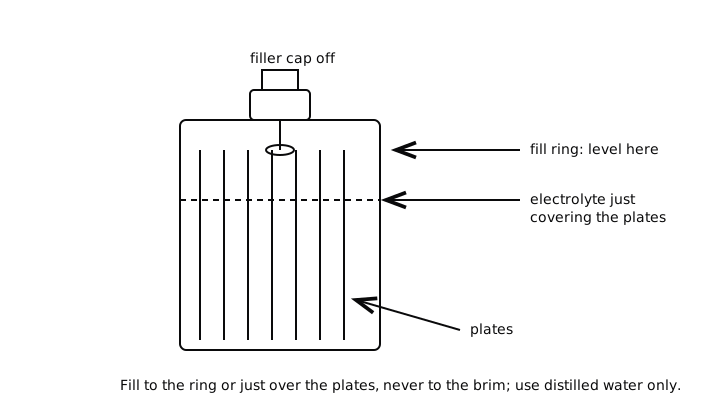
Look into each cell and find the level of the electrolyte against the plates and the fill ring or split ring inside the filler neck.
ExpectedThe correct level just covers the plates, or reaches the bottom of the fill ring where the battery has one; plates showing above the liquid mean that cell is low and needs topping off, while liquid already at the ring needs none
5Top off low cells with distilled water
Add distilled water only to the cells that are low, bringing each up to just above the plates or to the fill ring, no higher. Work cell by cell and do not overfill.
ExpectedEach low cell now sits at the fill ring or just over the plates; filling to the brim leaves no room for the electrolyte to rise on charge and it will overflow, so stop at the correct level
6Refit the caps and clean up
Press each filler cap firmly back on, wipe any drips off the battery tops, and neutralize any spill with the baking soda solution before rinsing and drying.
ExpectedAll caps are secure and the tops are clean and dry; a cap left off vents acid mist and lets dirt in, so check every one is back on
Check it worked
7Verify the levels and set a routine
Take a last look that every cell sits at the correct level and no cell is over the fill ring, then note the date so you can water on a regular schedule.
ExpectedEvery cell is topped to just above the plates or the fill ring with none overfilled; a pack in regular use typically needs checking about monthly, and a cell that always runs low faster than the rest is a sign to test that battery
When to get professional help
Call a technician if one cell repeatedly runs dry while the others hold level, which points to a failing battery, if the batteries are boiling water off very fast, which can mean the charger is overcharging, or if you are unsure whether your batteries are the flooded type at all. Fast water loss and uneven cells are symptoms worth diagnosing rather than topping off around, since they usually mean a battery or the charger needs attention.
Common questions
Do I water before or after charging?
After a full charge. The electrolyte rises as the battery charges and warms, so if you fill a discharged battery to the ring and then charge it, acid can push out over the top. Charge first, let it settle, then top off to the correct level.
What water should I use?
Distilled or deionized water only. Tap water carries minerals that settle on the plates and shorten battery life, so it should never go into a battery even though it looks clean. Keep a jug of distilled water with your charging kit.
How high should I fill each cell?
To just above the plates, or up to the bottom of the fill ring where the battery has one, and no higher. Filling to the brim leaves no room for the electrolyte to rise on charge, so it overflows and you lose acid. Under-filling leaves the plates exposed. The fill ring marks the right level.
How often do golf cart batteries need watering?
For a pack in regular use, checking about monthly is a sensible routine, topping off only the cells that are low. Frequency depends on use, temperature and battery age, so check more often in hot weather or after heavy use, and less for a lightly used cart.
Can I water sealed or AGM batteries?
No. Sealed, AGM and gel batteries have no filler caps and must never be opened or watered. Watering applies only to flooded batteries with removable caps. If your batteries have no caps, they are maintenance-free and need none.
What if the plates are already exposed and dry?
Top the cell off right away to cover the plates, but know that plates that have run uncovered may already have sulfated and lost some capacity. Watering stops further damage; it does not reverse what has happened. If that battery keeps running low or the pack is weak, test it to see whether it has been harmed.
Did this fix it?
Every guide is written from manufacturer service documentation and workshop practice, then reviewed before publication. Read how we write and review our repair guides.