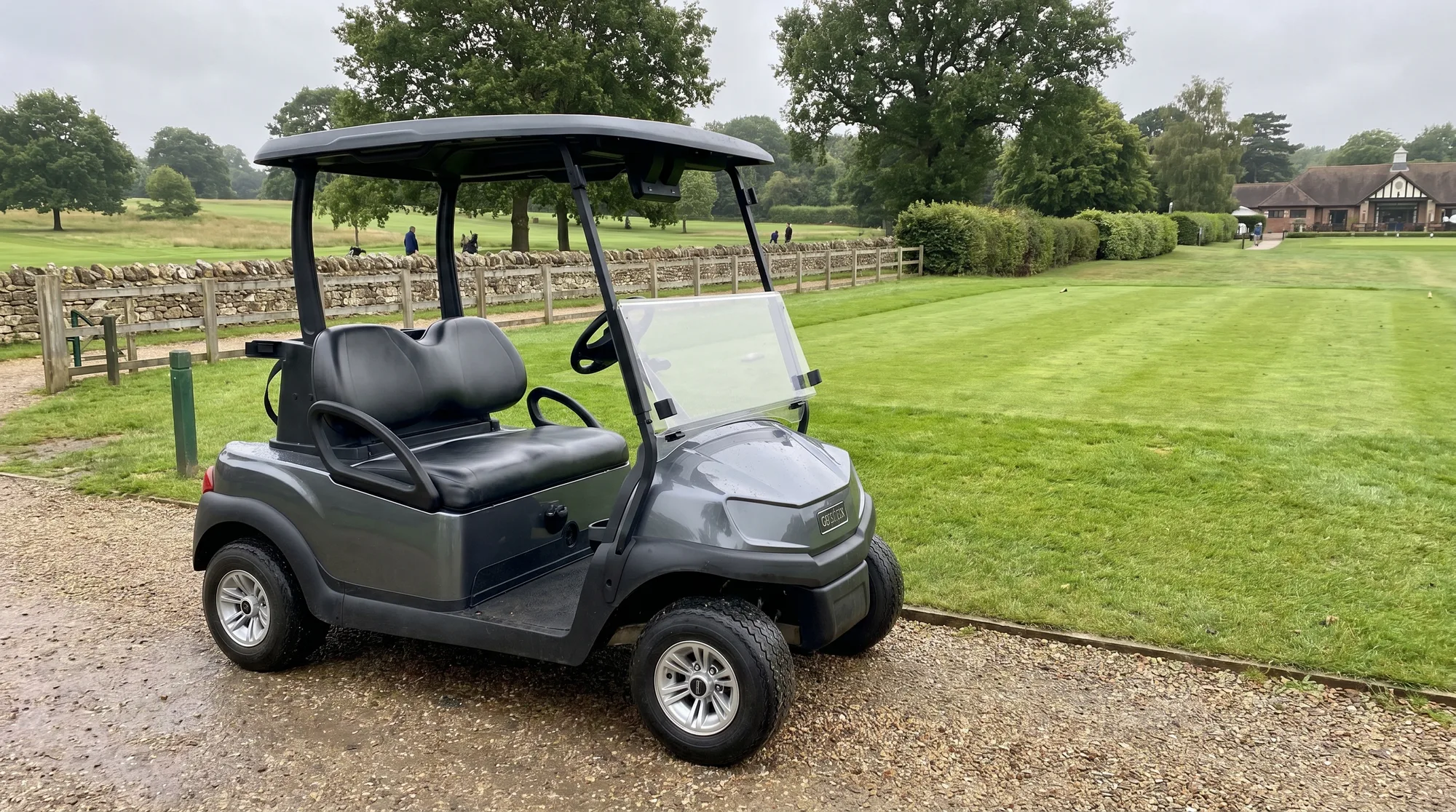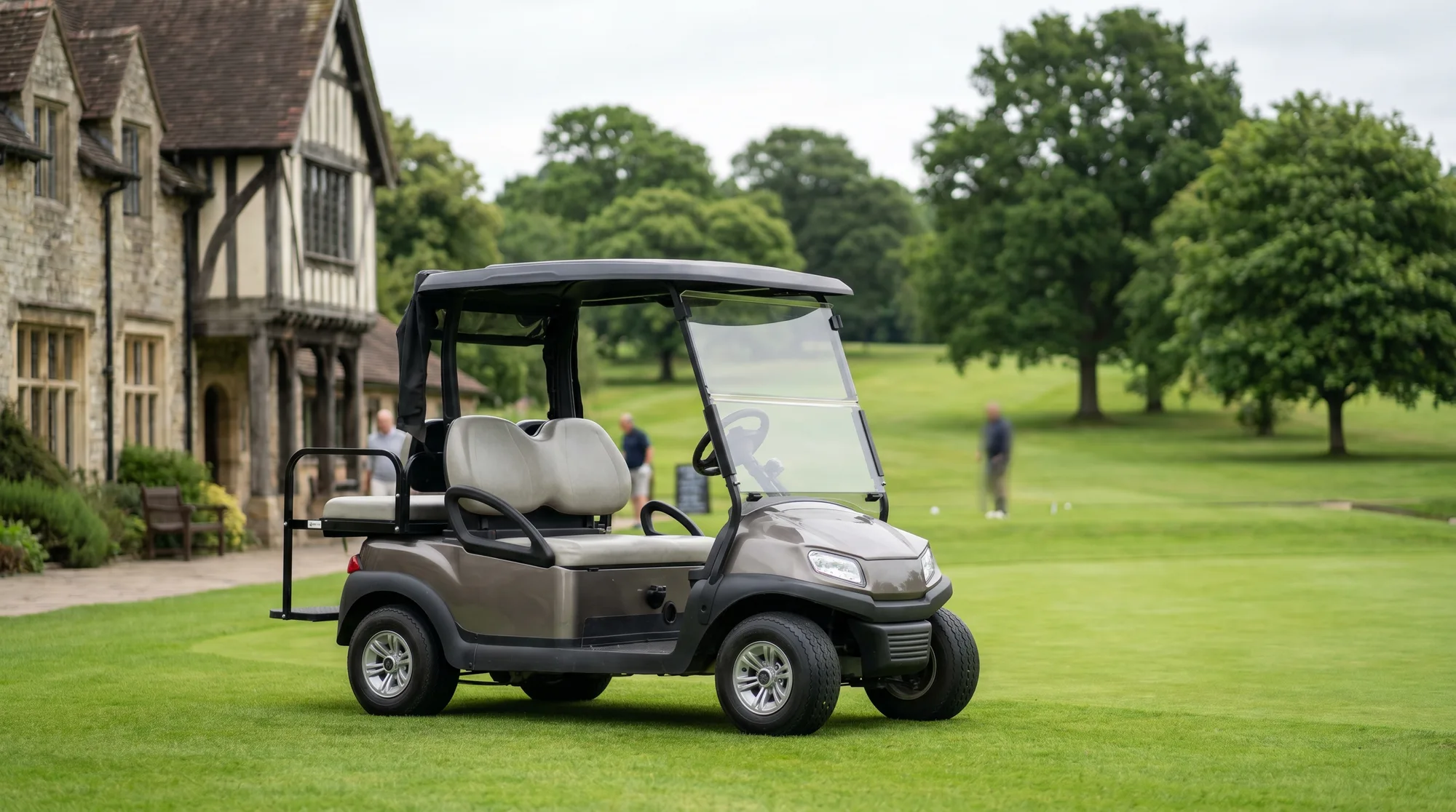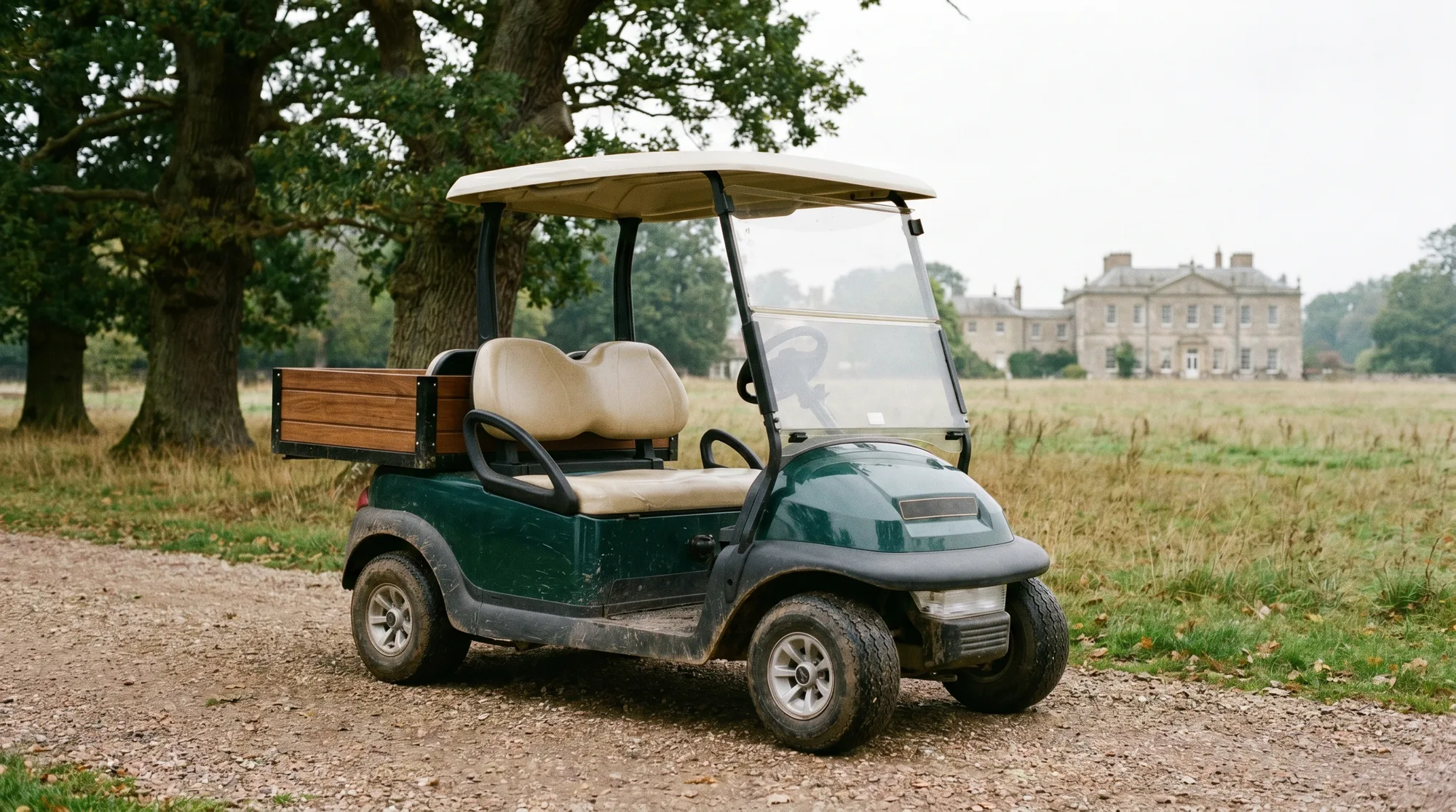

Can you drive a golf buggy on the road in the UK? In almost all cases, no, not a standard one. A golf buggy is designed and supplied for use on private land, which covers golf courses, country estates, holiday parks, large grounds and similar closed sites. The moment you want to use a public road, you move into vehicle classification, registration and insurance rules, and most golf buggies are simply not built to meet them. The honest answer is that it depends on how the vehicle is classified, and the default classification is off-road, private use only.
That is not a brush-off. It is genuinely the most important thing to understand before you buy, because it changes which vehicle is right for you. If you only ever drive within your own boundary you have nothing to worry about. If you need to cross or travel along a public highway, that is a different conversation, and one worth having early. You can read more across our guides, and if you already know your site we can talk specifics through a tailored quote.
Private land: where a golf buggy belongs
On private land a golf buggy is in its natural home, and the rules are refreshingly simple. There is no requirement to register a buggy with the DVLA, no road tax and no compulsory road insurance to drive across your own ground. You are responsible for safe use, and sensible operators carry their own liability cover, but you are not subject to the rules that govern public roads.
- Golf courses, both the fairways and the cart paths.
- Private country estates and the tracks and lawns within them.
- Holiday parks, caravan parks and resort grounds.
- Showgrounds, sports grounds, schools, hospitals and large commercial sites.
- Any land you own or control, used with the landowner's permission.
Public roads: why the default answer is no
A public road is any road the public can use, including the lane outside a clubhouse and the car park access road that the public can drive on. To use one legally a vehicle has to be registered and roadworthy for that road, and that is where a standard golf buggy falls short. It is not about the buggy being electric or slow. It is about the equipment and paperwork the law expects of a road vehicle.
Broadly, a vehicle used on a public road in the UK is expected to have proper lighting, indicators, mirrors, a horn, a registration, valid insurance and, depending on type, an MOT once it reaches the relevant age. A golf buggy supplied for private use usually has none of the road paperwork and only some of the equipment. So the lawful default is that it stays off the public road.
- Question
- Not required
- Private land
- Generally required
- Public road
- Question
- Optional, but wise
- Private land
- Required
- Public road
- Question
- Not required by law
- Private land
- Required
- Public road
- Question
- Yes
- Private land
- No
- Public road
- Question
- Drive freely
- Private land
- Not road legal as standard
- Public road
| Question | Private land | Public road | |
|---|---|---|---|
| DVLA registration | Not required | Generally required | |
| Road insurance | Optional, but wise | Required | |
| Lights, mirrors, indicators | Not required by law | Required | |
| Typical golf buggy supplied this way | Yes | No | |
| Practical answer | Drive freely | Not road legal as standard |
Low-speed classification and crossing a road
People often ask whether a low maximum speed makes a buggy road legal automatically. It does not. A low top speed can make a vehicle eligible for certain low-speed classifications, but eligibility is not the same as compliance. The vehicle still has to be built, equipped and registered to the standard that classification requires, and a buggy supplied for private use will not be.
A common real-world need is not driving along a road but crossing one, for example moving between two parts of a course or estate that a public lane separates. That still counts as using the road, even briefly. Sites handle this in different ways, and the right approach depends on the specific crossing, so treat it as something to design for rather than assume.
Tell us where your buggy will be used
If road crossings or boundary access matter to your site, say so up front. We will be honest about what is and is not possible and tailor the specification and quote to your real situation.
How to think about it before you buy
- 01
Map your route
Walk the actual journey the buggy will make. Note any point where it touches, crosses or runs along a public road.
- 02
Confirm the land status
Check whether each section is private land you control, private land you use by permission, or public highway.
- 03
Decide the use case honestly
If everything is private, a standard buggy is ideal. If any of it is public road, flag it now, not after delivery.
- 04
Get advice in writing
For road or registration questions, confirm the position with the DVLA and your insurer for your exact vehicle and use.
- 05
Specify accordingly
Tell us the outcome so the buggy is specified for the way you will genuinely use it.
Most of our customers buy for private land and never need any of the road conversation. For them the choice is about the range, seats, comfort and finish rather than registration. If your needs are different, the team would rather know early. You may also find our note on registering a golf buggy with the DVLA helpful, and the wider electric golf buggy buyer's guide covers spec choices once the use case is clear.
Frequently asked questions
Are golf buggies road legal in the UK?+
Not as standard. A typical golf buggy is supplied for private land and is not built or registered to the standard a public road requires. Whether any on-road use is possible depends on classification, equipment and registration.
Can I drive my golf buggy on my own driveway or estate road?+
Yes, if it is private land you own or control. Private roads, drives and estate tracks are not public roads, so the public-road rules do not apply, though the landowner may set site rules.
Can I cross a public road in a golf buggy?+
Crossing a public road counts as road use, even briefly. Do not assume it is exempt. If your site is split by a public lane, take advice from the DVLA and your insurer for your specific situation.
Does a low top speed make a buggy road legal?+
No. A low speed may make a vehicle eligible for certain low-speed classifications, but the vehicle still has to be equipped and registered to that standard, which a standard golf buggy is not.
What if I genuinely need some road or crossing use?+
Tell us before you order. We will be honest about what is feasible, point you to the right checks with the DVLA and insurer, and tailor the specification and quote to your real use.
Related solutions
Ready to explore what we build?
See the vehicles and the setting this applies to, or get a tailored quote built around your site.

Ready to find the right buggy?
Tell us how and where it will work and we will specify a vehicle and a tailored quote built around you. Every build comes with a 3-year warranty and a 24-hour priority call-out.