It's a fair question to ask before you spend the money, and it's easy to confuse two different things. People often mean the battery when they ask how long a buggy lasts, but the vehicle itself is a separate story. A well-built buggy is a long-haul machine. The frame, body and motor are designed to keep working for years, well beyond the life of any single battery. This guide is about the golf buggy lifespan as a whole vehicle, what stretches it, what shortens it, and when it's smarter to repair than replace.
How long does a golf buggy last as a vehicle?
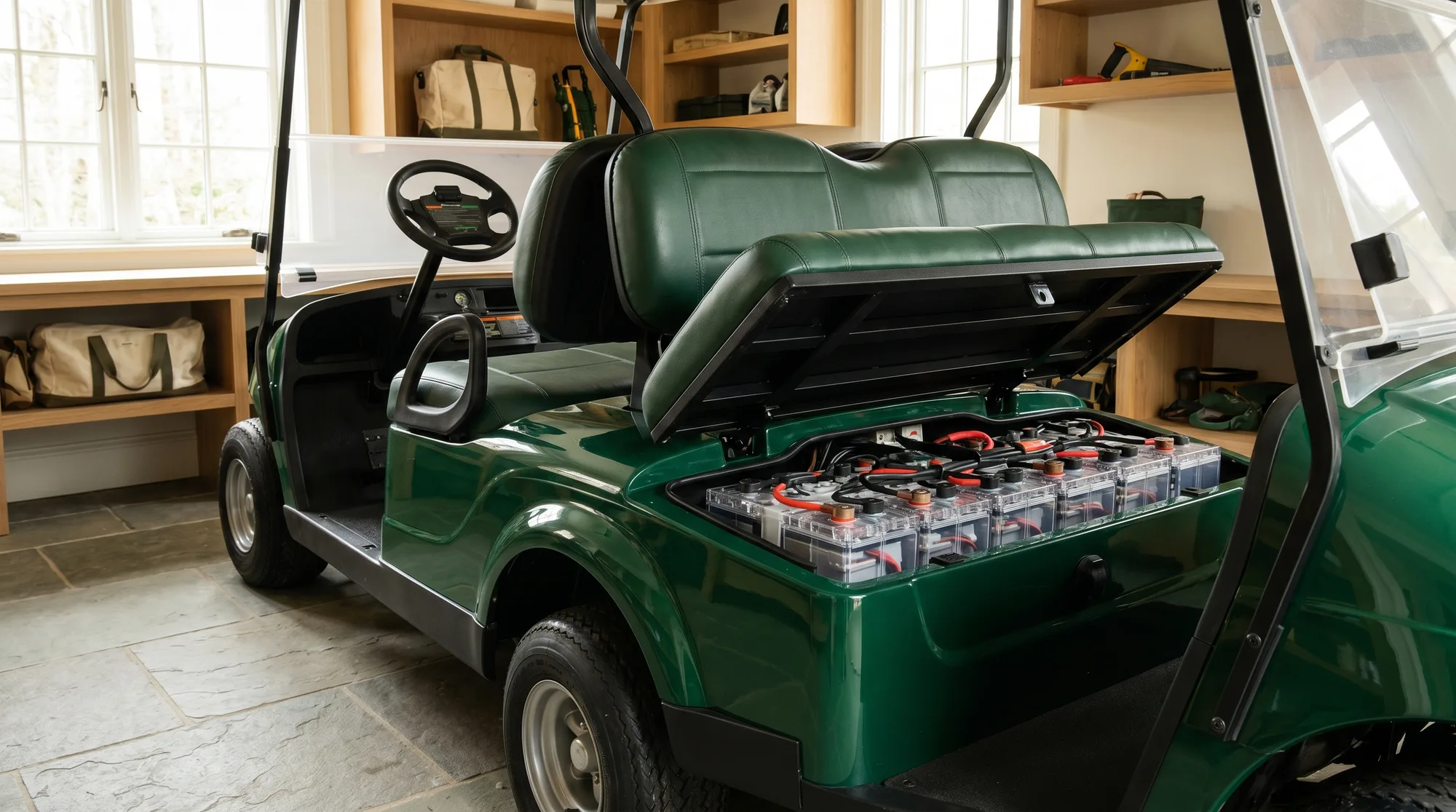
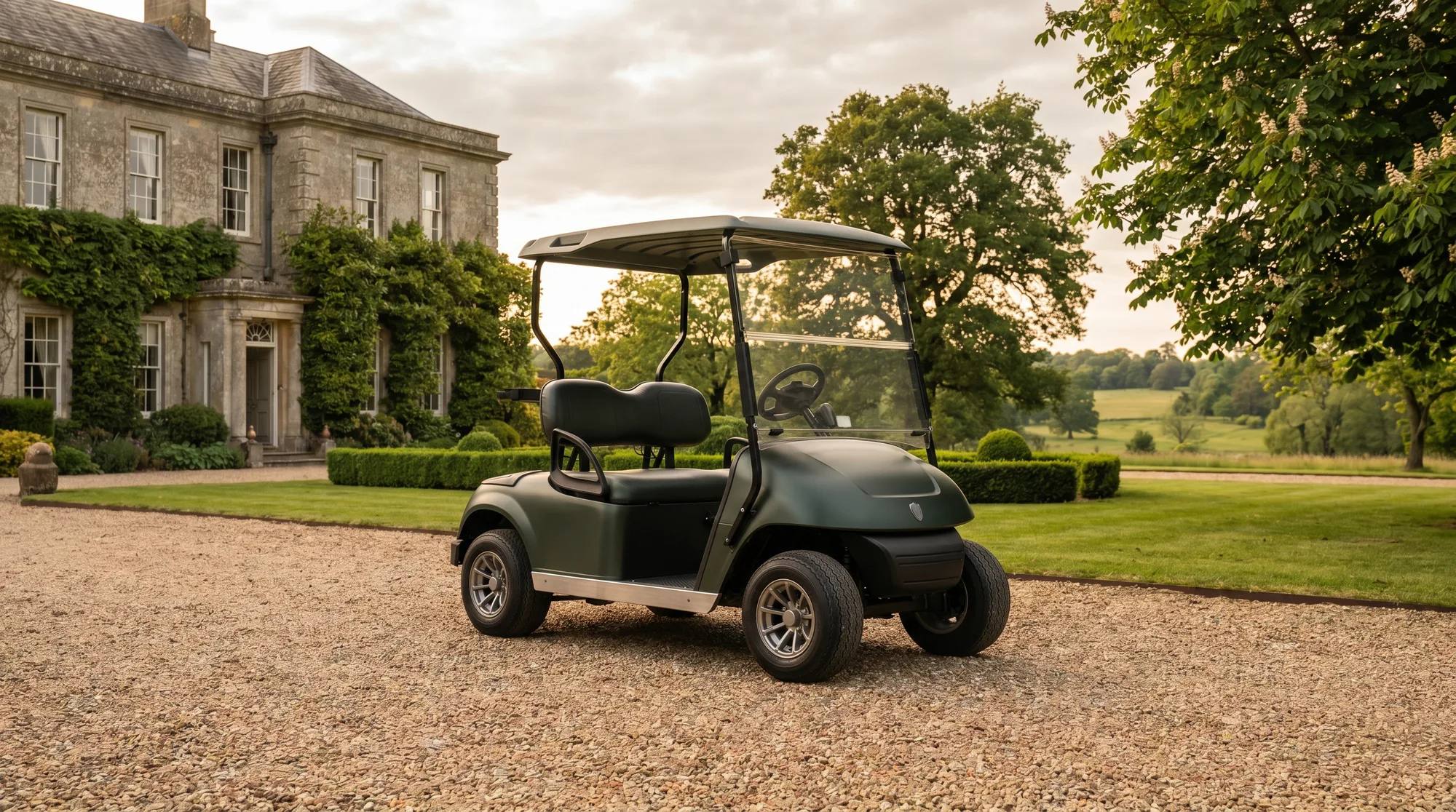
A quality electric buggy, looked after, lasts many years. We don't put a single magic number on it, because honest use varies far too much for that. A private buggy doing a few short runs a week lives a gentle life and can keep going for a very long time. A resort or club fleet vehicle working all day, every day, racks up the same wear far faster. The point that matters is this: the body and the running gear usually outlast several battery sets. You'll likely replace the battery once or twice over the life of the buggy long before the rest of it gives up.
So when someone says a buggy is past it, they often mean the battery is tired, not the vehicle. Swap the pack and a sound buggy carries on. That distinction changes how you think about both buying and keeping one.
What makes a golf buggy last longer?
Lifespan isn't luck. It comes down to a handful of things, some you choose at purchase and some you control every week. Get them right and a buggy keeps earning its keep for years.
- Build quality. A solid frame, a corrosion-resistant body, decent brakes and good bearings are what carry a buggy through the years. A cheap build saves money once and costs you repeatedly.
- Regular maintenance. Tyres, brakes, steering, connections and a quick clean. Small jobs done on time stop small problems becoming big ones.
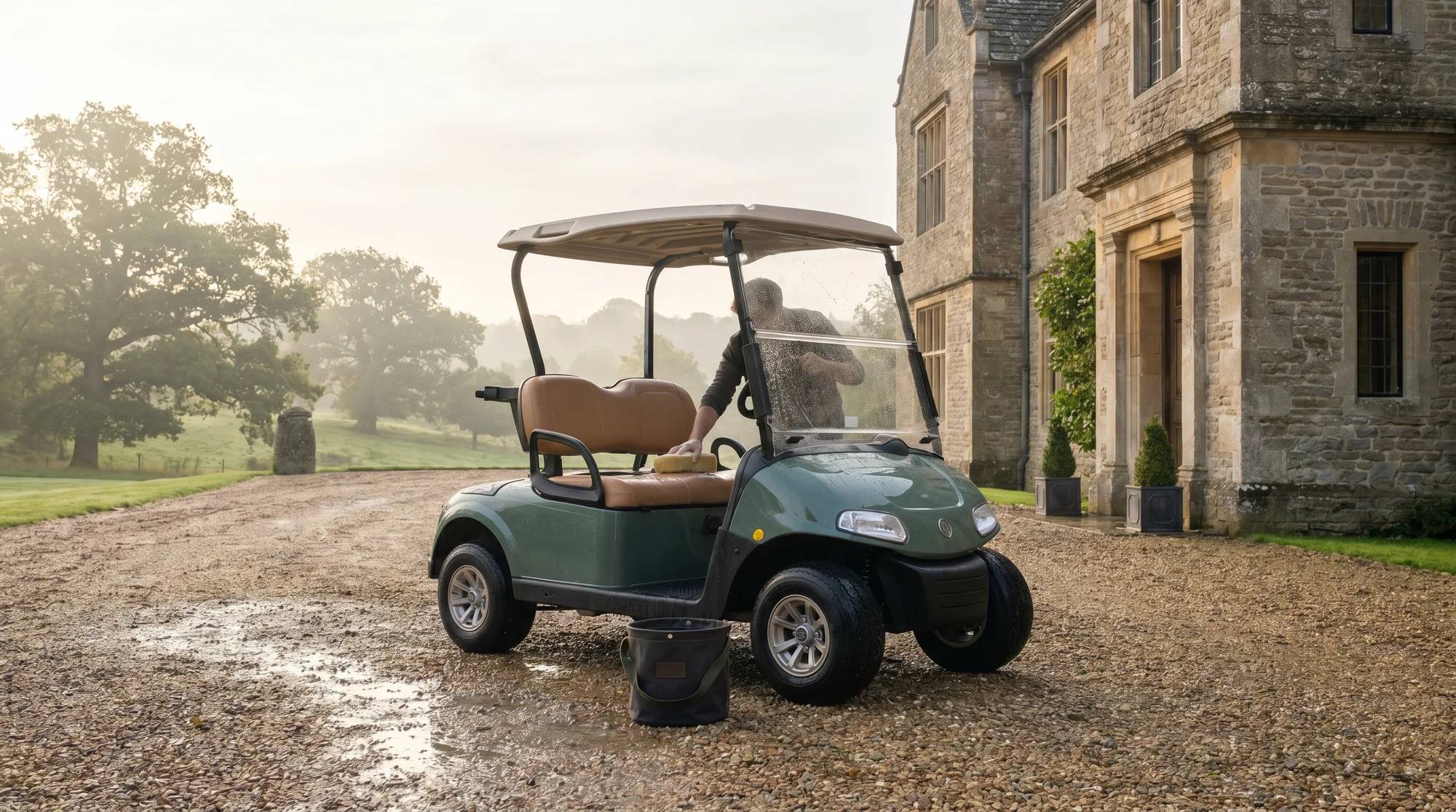
- Dry, sheltered storage. Damp and frost are hard on electrics, terminals and trim. A buggy kept under cover ages far more slowly than one left out in the weather.
- The right battery. A good lithium pack lasts longer and stresses the rest of the vehicle less than constant deep-cycling, which helps the whole buggy hold up.
- Sensible use. Loading to spec rather than overloading, and easing off rough ground, keeps the running gear healthy for longer.
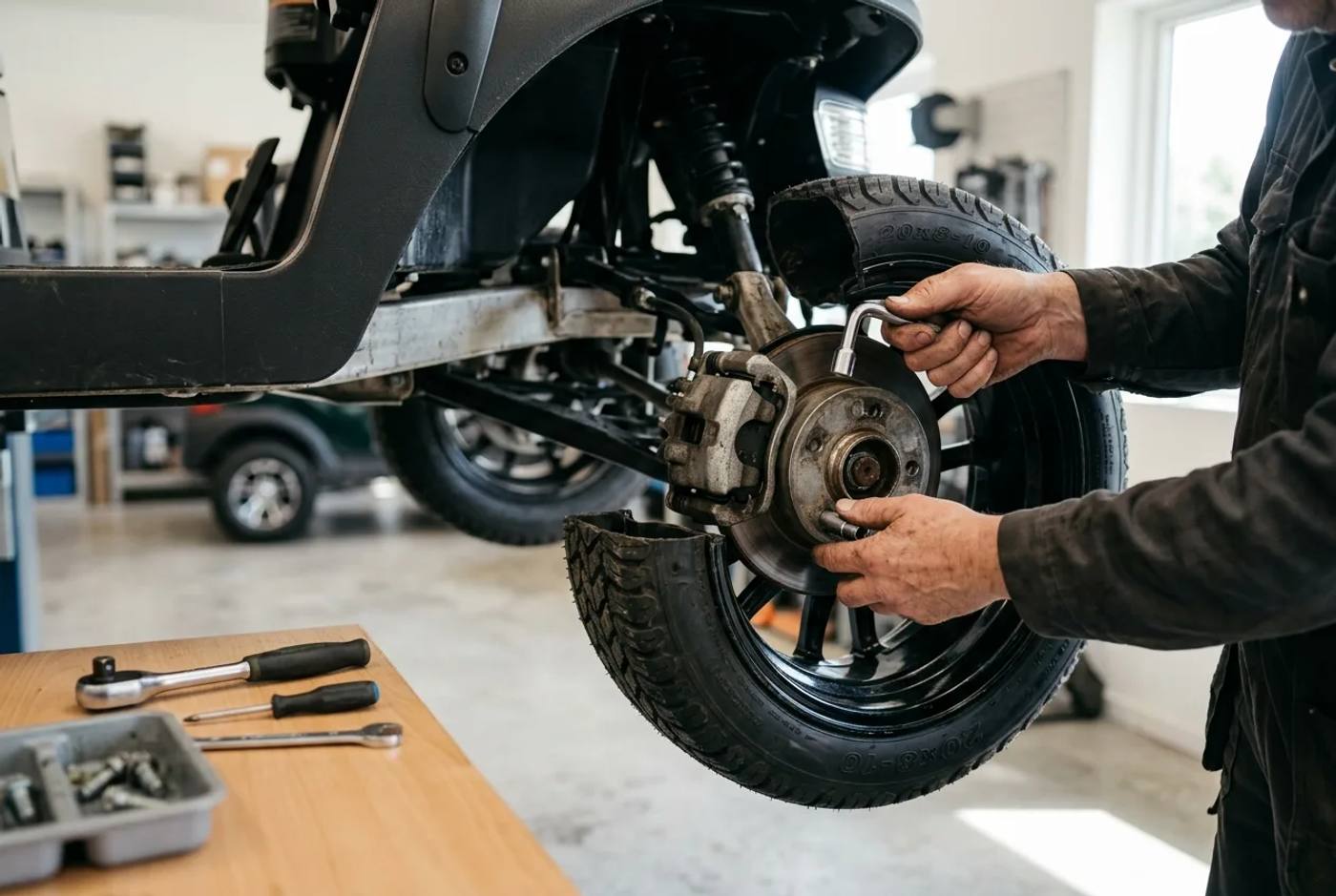
Maintenance is the biggest lever you control. It doesn't take much, but it has to be regular. Our electric golf buggy maintenance checklist sets out exactly what to check and how often, so nothing slips through the cracks.
What shortens a buggy's life?
Most buggies that fail early aren't worn out by honest work. They're let down by avoidable neglect. The usual culprits stack up quietly over a season or two.
- Leaving it out in the weather. Standing water, frost and salt air corrode metal, perish trim and find their way into electrics.
- Skipped servicing. Worn brakes, soft tyres and loose connections turn into bigger, costlier faults if they're ignored.
- Running a dead battery into the ground. A failing pack drags everything harder. Replace it rather than nursing it for another season.
- Overloading and hard use. Constantly carrying more than the buggy is built for, or hammering it over rough ground, wears the frame, motor and suspension fast.
- Cheap repairs and the wrong parts. A bodged fix or an ill-fitting spare often causes more harm than the original fault.
Does the battery decide when a buggy is finished?
No, and this is the bit worth being clear about. Lead-acid packs typically last a few years; a good lithium battery lasts far longer. Either way, the battery reaches the end of its life while the vehicle still has plenty left. Replacing a pack is routine. It does not mean the buggy is done. Lithium also helps here, because it lasts longer between replacements and is kinder to the rest of the vehicle, which is part of why we lean towards it for anything used regularly.
A tired battery is a part you replace, not a buggy you scrap. The vehicle is built to outlast several packs.
Repair or replace: when is it time?
Sooner or later every owner faces the question. The honest test is the cost of fixing it against what you'd get from a new build, set over the years you'll keep using it. A buggy with a sound frame and a fault or two is almost always worth repairing. A buggy with a corroded chassis, failing running gear and a dead battery all at once is usually telling you it's done.
- Lean towards repair
- Sound, no serious corrosion
- Lean towards replace
- Corroded or cracked chassis
- Lean towards repair
- A single part: battery, brakes, tyres
- Lean towards replace
- Several major parts at once
- Lean towards repair
- Small next to the buggy's value
- Lean towards replace
- Approaching the cost of a new build
- Lean towards repair
- Light to moderate, plenty of life left
- Lean towards replace
- Heavy daily fleet use, near worn out
- Lean towards repair
- The buggy still fits the job
- Lean towards replace
- You've outgrown its size or spec
| Lean towards repair | Lean towards replace | |
|---|---|---|
| Frame and body | Sound, no serious corrosion | Corroded or cracked chassis |
| What's failed | A single part: battery, brakes, tyres | Several major parts at once |
| Cost of the fix | Small next to the buggy's value | Approaching the cost of a new build |
| How you use it | Light to moderate, plenty of life left | Heavy daily fleet use, near worn out |
| Your needs | The buggy still fits the job | You've outgrown its size or spec |
If you're weighing the longer-term sums, our guide on whether electric golf buggies are worth it puts lifespan in the context of running cost. And whatever you decide, our ownership and care pages cover servicing, warranty and the 24-hour priority call-out that keep a buggy on the road for the long haul.
Build a buggy that lasts
Tell us how and where it'll work and we'll specify a vehicle built to last, with the right battery and a 3-year warranty, then confirm it on a tailored quote.
Frequently asked questions
How long do golf buggies last?+
A well-built golf buggy lasts many years and outlives several sets of batteries. The frame, body and motor are the long-haul parts, while the battery is a wear item you replace once or twice over the vehicle's life. Build quality, regular servicing and dry storage all stretch how long a buggy lasts.
Is it the battery or the buggy that wears out first?+
Almost always the battery. Lead-acid packs last a few years and a good lithium pack lasts longer, but either reaches the end of its life while the vehicle still has plenty left. Replacing the battery is routine and does not mean the buggy itself is finished.
How do I make a golf buggy last longer?+
Keep up regular maintenance, store it dry and frost-free, use the right battery, and avoid overloading or hard use over rough ground. Maintenance and storage are the biggest levers you control, and both cost little next to the years they add.
When should I replace a golf buggy instead of repairing it?+
Repair a buggy with a sound frame and a single fault, like a tired battery or worn brakes. Lean towards replacing when several major parts fail at once, the chassis is corroded, or the cost of fixing it approaches that of a new build over the time you'll keep using it.
Do electric golf buggies last longer than petrol ones?+
Electric buggies have far fewer moving parts and nothing in the way of engine servicing, so there's less to wear out and less to go wrong. With sensible care, that simplicity usually means a long, low-fuss life for the vehicle, with the battery as the main part you plan to replace.
Related solutions
Ready to explore what we build?
See the vehicles and the setting this applies to, or get a tailored quote built around your site.
Ready to find the right buggy?
Tell us how and where it will work and we will specify a vehicle and a tailored quote built around you. Every build comes with a 3-year warranty and a 24-hour priority call-out.